The Story
Plant Bio
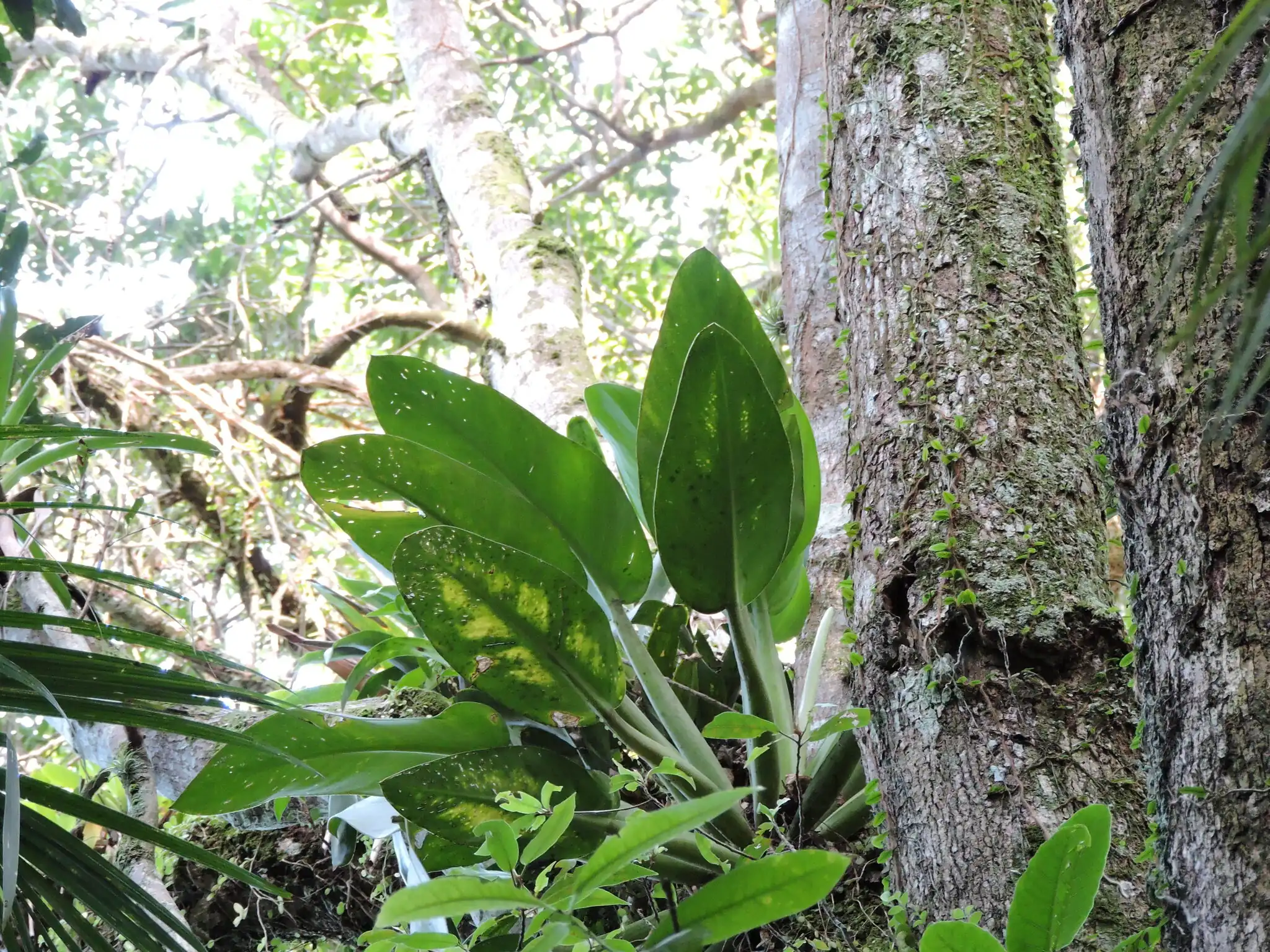
Philodendron martianum is an upright, clump-forming, non-climbing tropical aroid native to South America, distinguished by an extremely short stem and swollen, flask-shaped petioles. The large, glossy, lanceolate leaves emerge bright green and mature to a deep, rich green, forming a self-supporting rosette that requires no climbing support.
The spongy, air-filled petioles function as water-storage organs, giving the plant its characteristic swollen, thick-stemmed appearance. Unlike most climbing members of the genus, this species maintains a compact, vase-like growth habit that remains well-suited to container culture.
Uses & Benefits:
Essentials
At a Glance
Plant Type
Tropical
Height
36"
Width
36"
Light
Partial Sun, Shade
Zones
10
Water
Moderate
Humidity
High
Lifespan
Long-lived
Native To
South America (Brazil)
Toxicity
Toxic to pets and humans
Bloom period
Spring – Summer
In flower about 6 months of the year
Planting
How to Grow
- Select a container with multiple drainage holes and fill it with a highly porous, organic aroid mix containing orchid bark, perlite, and peat coir.
- Position the plant so that the short central stem and the bases of the swollen petioles sit entirely above or flush with the soil surface.
- Place the container in a location that receives bright, indirect light, avoiding direct midday sun which scorches the glossy foliage.
- Water thoroughly only when the top two inches of the potting medium have dried out completely, allowing all excess water to drain freely.
Pro Tip
Keep the entire base of the swollen petioles and the short central stem completely above the soil line; burying these structures traps moisture against the tissue and invariably triggers fatal stem rot.
Keep It Thriving
Care Guide
Do
- Grow in a highly porous, fast-draining potting mix to ensure rapid drainage around the roots.
- Maintain high humidity levels to support optimal leaf development and glossy foliage.
- Apply a balanced liquid fertilizer at half strength monthly during the active spring and summer growing seasons.
Don't
- Do not bury the swollen petiole bases below the soil surface, as this leads to rot.
- Do not expose the plant to direct, harsh midday sunlight, which causes leaf scorching.
- Do not allow the potting medium to remain soggy or waterlogged.
Seasonal Care Calendar
| Task | Jan | Feb | Mar | Apr | May | Jun | Jul | Aug | Sep | Oct | Nov | Dec |
|---|---|---|---|---|---|---|---|---|---|---|---|---|
| Fertilize | ||||||||||||
| Pest Check | ||||||||||||
| Prune | ||||||||||||
| Winter Prep |
Watch Out For
Pests & Diseases
Common Pests
Common Diseases
In the Garden
Landscape Uses & Companions
Landscape Uses
Companion Plants
Multiply
Propagation Methods
Good to Know
Common Questions
Flask Philodendron questions
What zones can Flask Philodendron grow in?
Flask Philodendron is hardy in USDA Zone 10. Inside that range it survives winter in the ground; outside it, grow it as an annual or a container plant you protect.
When does Flask Philodendron bloom?
Flask Philodendron typically blooms in spring through summer. Exact timing shifts a week or two with your zone — Sow's bloom calendar maps it to your garden.
Does Flask Philodendron need full sun?
Flask Philodendron does best in part shade.
More Philodendron to compare
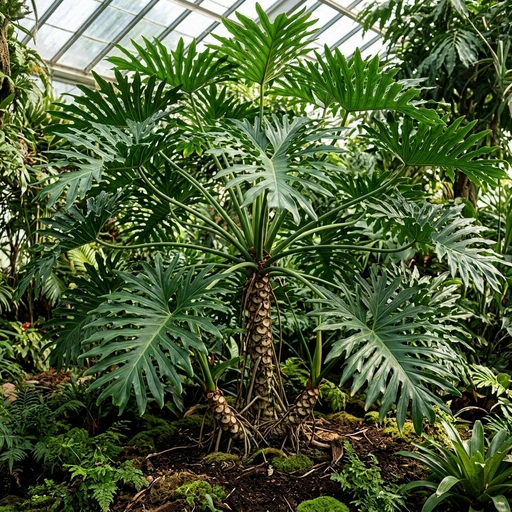
Lacy Tree Philodendron
Philodendron bipinnatifidum
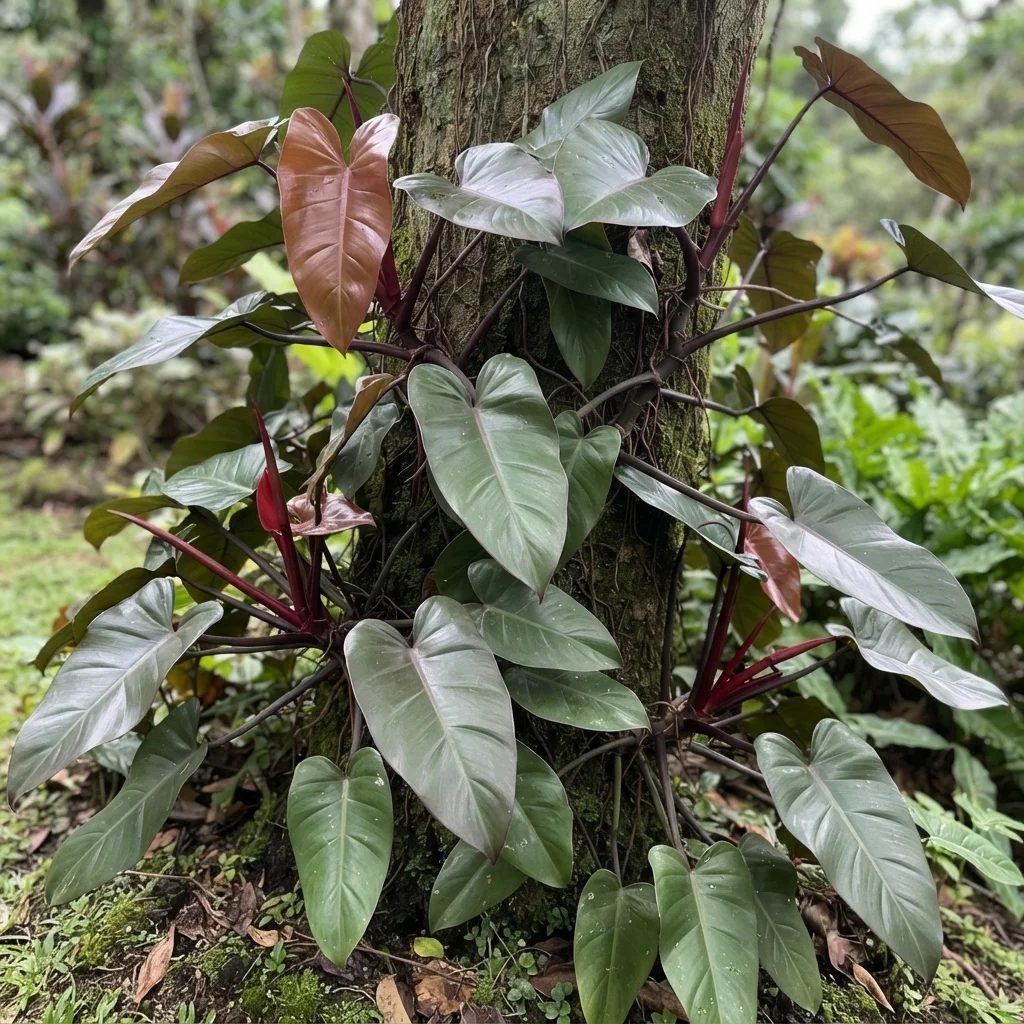
Blushing Philodendron
Philodendron erubescens
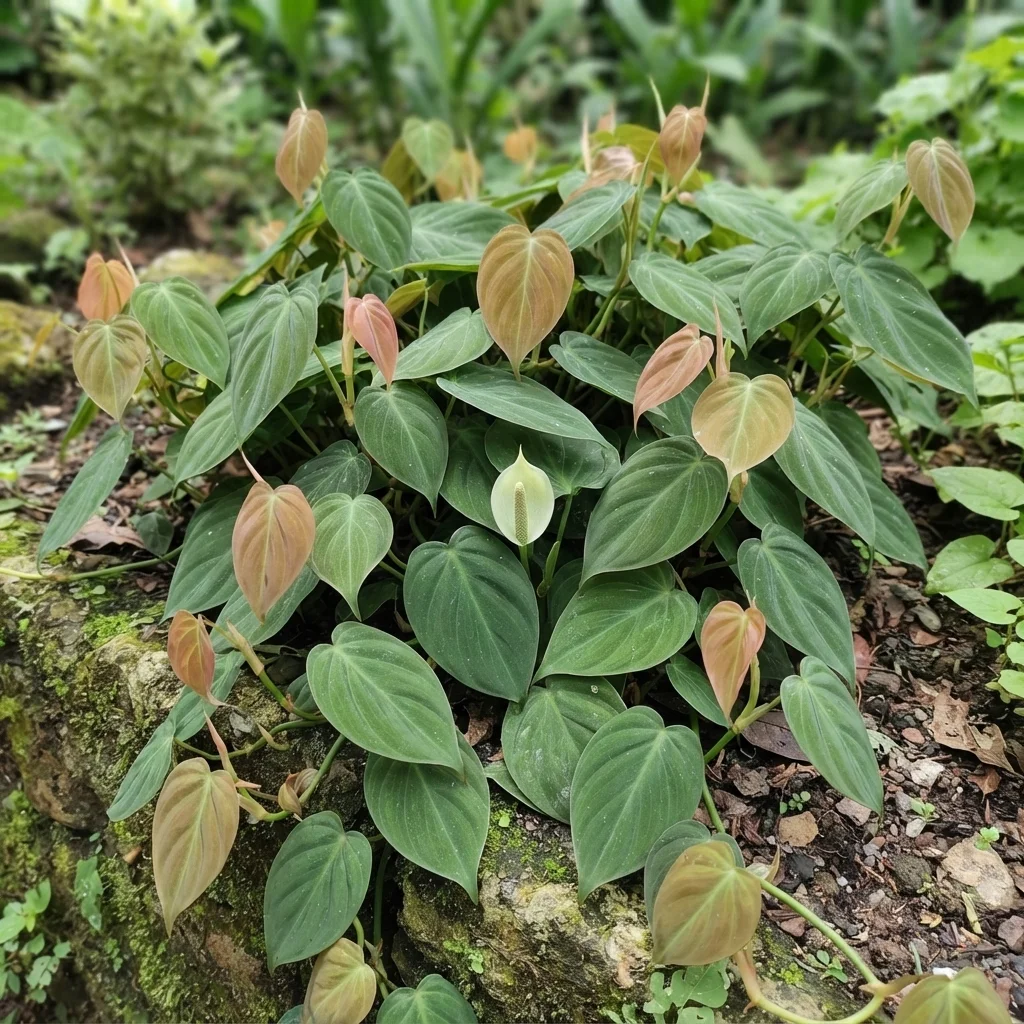
Heartleaf Philodendron
Philodendron hederaceum
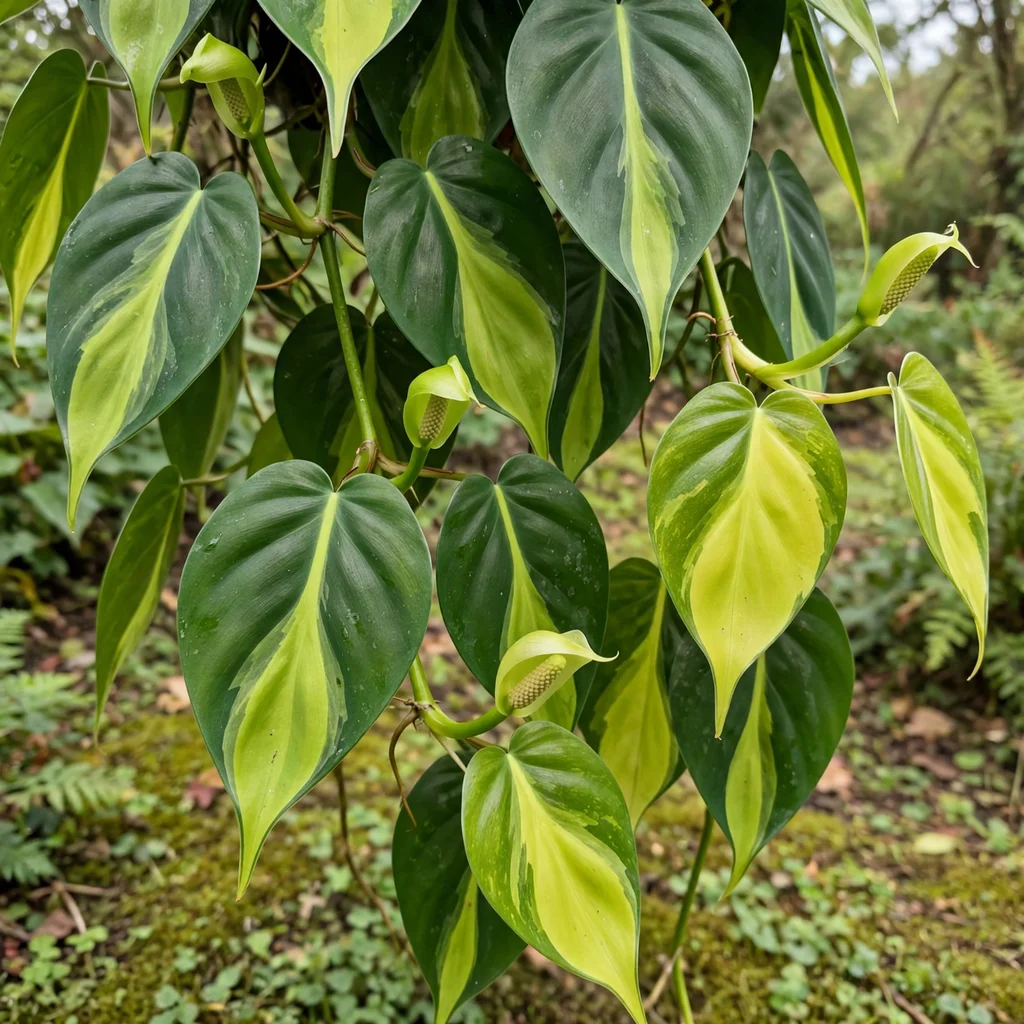
Brasil Philodendron
Philodendron hederaceum 'Brasil'
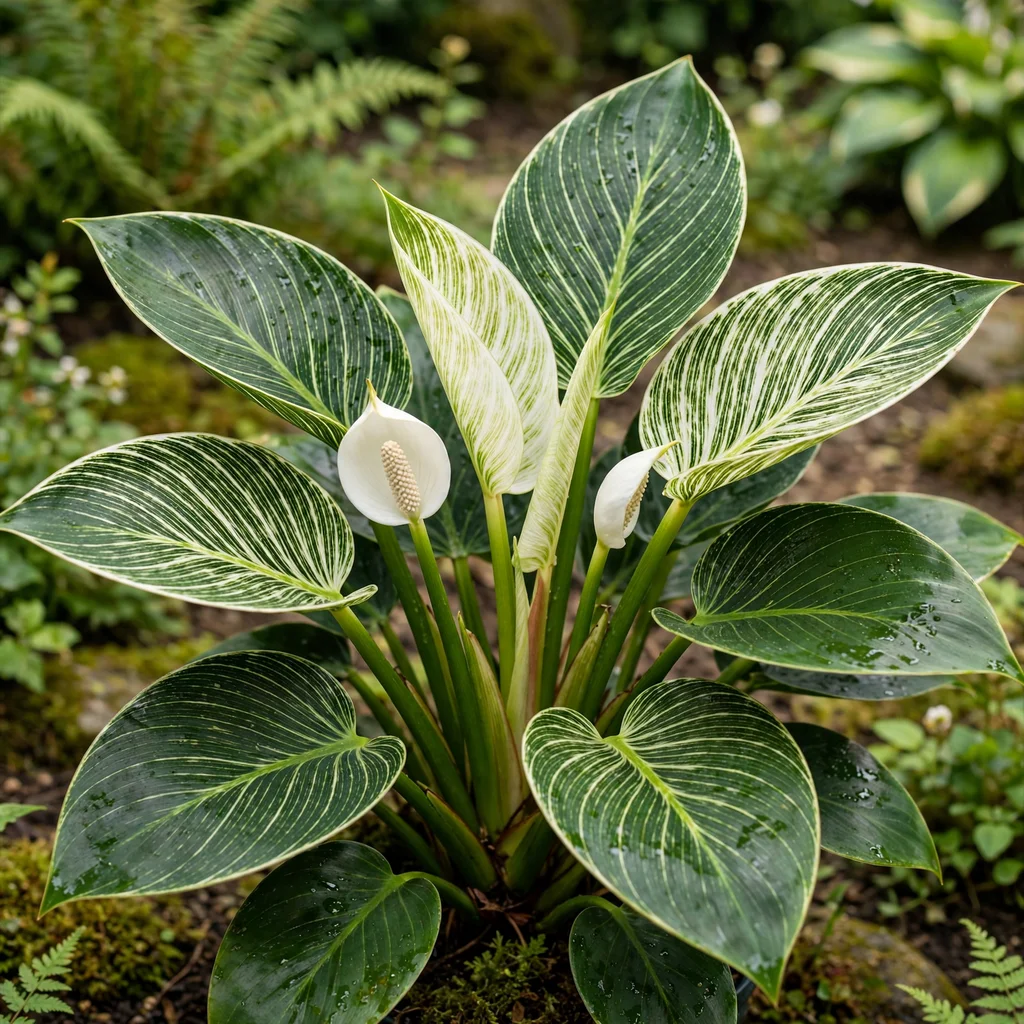
Birkin Philodendron
Philodendron x hybrida 'Birkin'
Keep exploring
Explore the genus
Hardy in your zone?
Grow Flask Philodendron with confidence
See it in a design of your actual yard, get zone-matched care reminders, and track it season by season in your garden journal.