The Story
Plant Bio
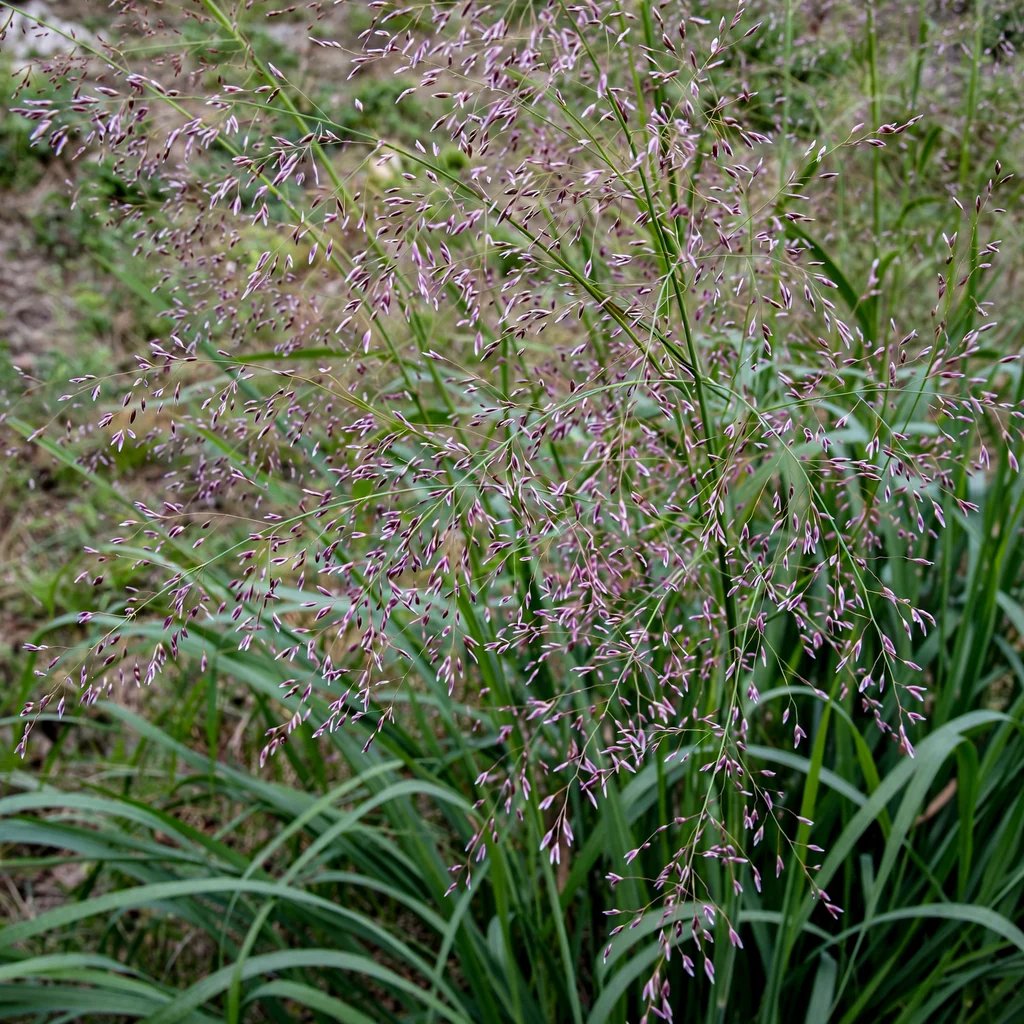
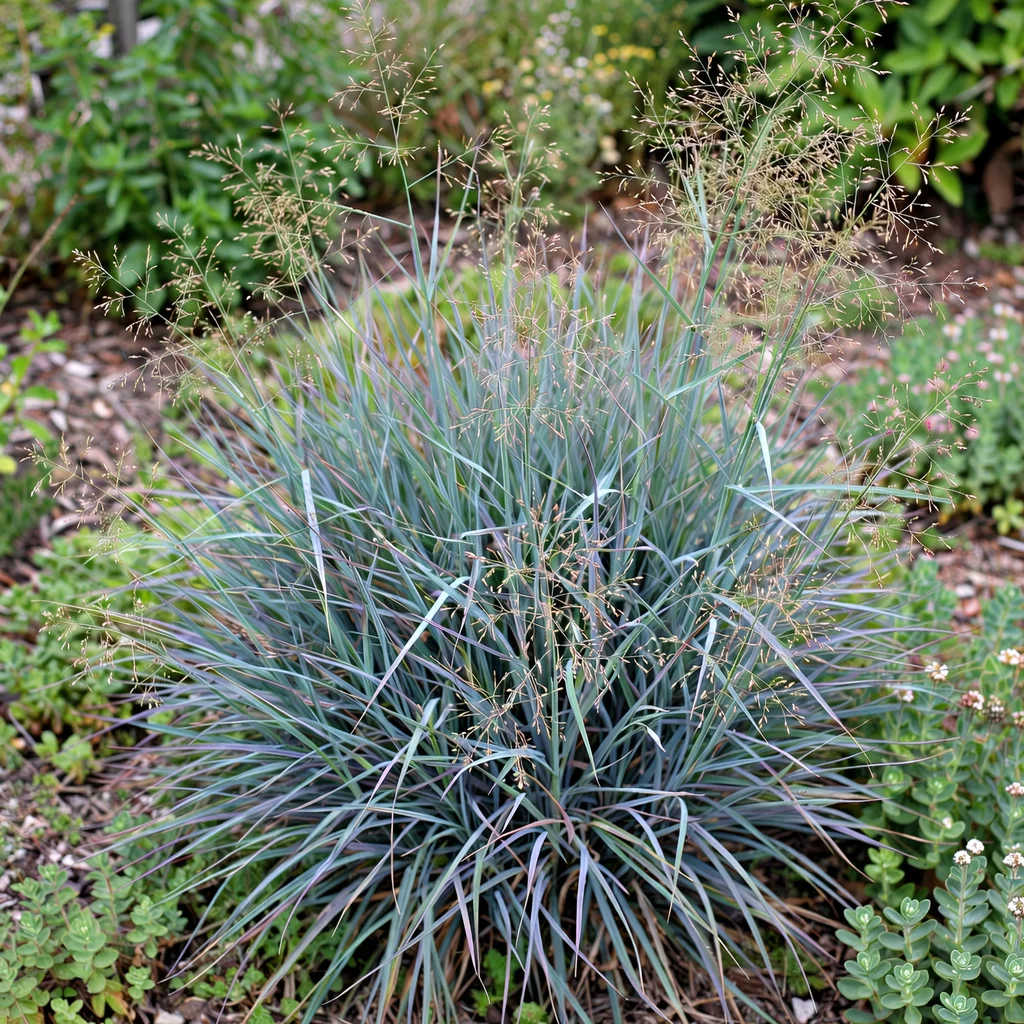
Eragrostis trichodes, commonly called sand lovegrass, is a densely tufted warm-season perennial bunchgrass native to North America. It produces narrow dark green leaf blades that roll inward under dry conditions and turn rusty-tan in winter.
In summer, the plant produces loose, diffuse panicles of hair-like delicate branches bearing purple-tinted spikelets that form a floating mist above the foliage. Stems arch late in the season, and self-seeded stands provide nesting material for native bees alongside seed forage for birds.
Uses & Benefits:
Essentials
At a Glance
Plant Type
Grass
Height
47"
Width
35"
Light
Full Sun
Zones
5, 6, 7, 8, 9
Water
Low
Humidity
Moderate
Lifespan
Perennial
Native To
North America
Toxicity
Non-toxic
Bloom period
Summer
In flower about 3 months of the year
Planting
How to Grow
- Select a site in full sun with deep, lean sandy soil or sharply drained loams.
- Sow seeds on the soil surface in spring or set out nursery plugs spaced 24 to 36 inches apart.
- Water sparingly during the first season until established, then withhold supplemental irrigation.
- Cut all foliage down to soil level in late winter before new spring growth breaks.
Pro Tip
Cut old foliage back hard to ground level in late winter before new growth emerges, and avoid applying fertilizer, which weakens stems and causes lodging.
Keep It Thriving
Care Guide
Do
- Plant in lean, sandy, or sharply drained soil.
- Prune back hard to the ground in late winter.
- Provide full sun to maintain stiff, upright stems.
Don't
- Do not apply nitrogen fertilizer, which causes weak, floppy growth.
- Do not plant in wet, heavy clays or poorly drained hollows.
- Do not shear foliage during the active summer growing season.
Seasonal Care Calendar
| Task | Jan | Feb | Mar | Apr | May | Jun | Jul | Aug | Sep | Oct | Nov | Dec |
|---|---|---|---|---|---|---|---|---|---|---|---|---|
| Divide | ||||||||||||
| Pest Check | ||||||||||||
| Plant | ||||||||||||
| Propagate | ||||||||||||
| Prune |
Watch Out For
Pests & Diseases
Common Pests
Common Diseases
In the Garden
Landscape Uses & Companions
Landscape Uses
Multiply
Propagation Methods
Good to Know
Common Questions
Sand Lovegrass questions
What zones can Sand Lovegrass grow in?
Sand Lovegrass is hardy in USDA Zones 5–9. Inside that range it survives winter in the ground; outside it, grow it as an annual or a container plant you protect.
Is Sand Lovegrass deer resistant?
Not reliably. Deer may browse Sand Lovegrass, especially tender spring growth — plan on repellents or fencing where pressure is high.
When does Sand Lovegrass bloom?
Sand Lovegrass typically blooms in summer through summer. Exact timing shifts a week or two with your zone — Sow's bloom calendar maps it to your garden.
Does Sand Lovegrass need full sun?
Sand Lovegrass does best in full sun (6+ hours).
Is Sand Lovegrass drought tolerant?
Yes — once established (usually after the first full season), Sand Lovegrass handles dry spells with minimal watering. Water deeply its first year to build the root system that makes that possible.
More Eragrostis to compare
Keep exploring
Explore the genus
Hardy in your zone?
Grow Sand Lovegrass with confidence
See it in a design of your actual yard, get zone-matched care reminders, and track it season by season in your garden journal.