

The Story
Plant Bio
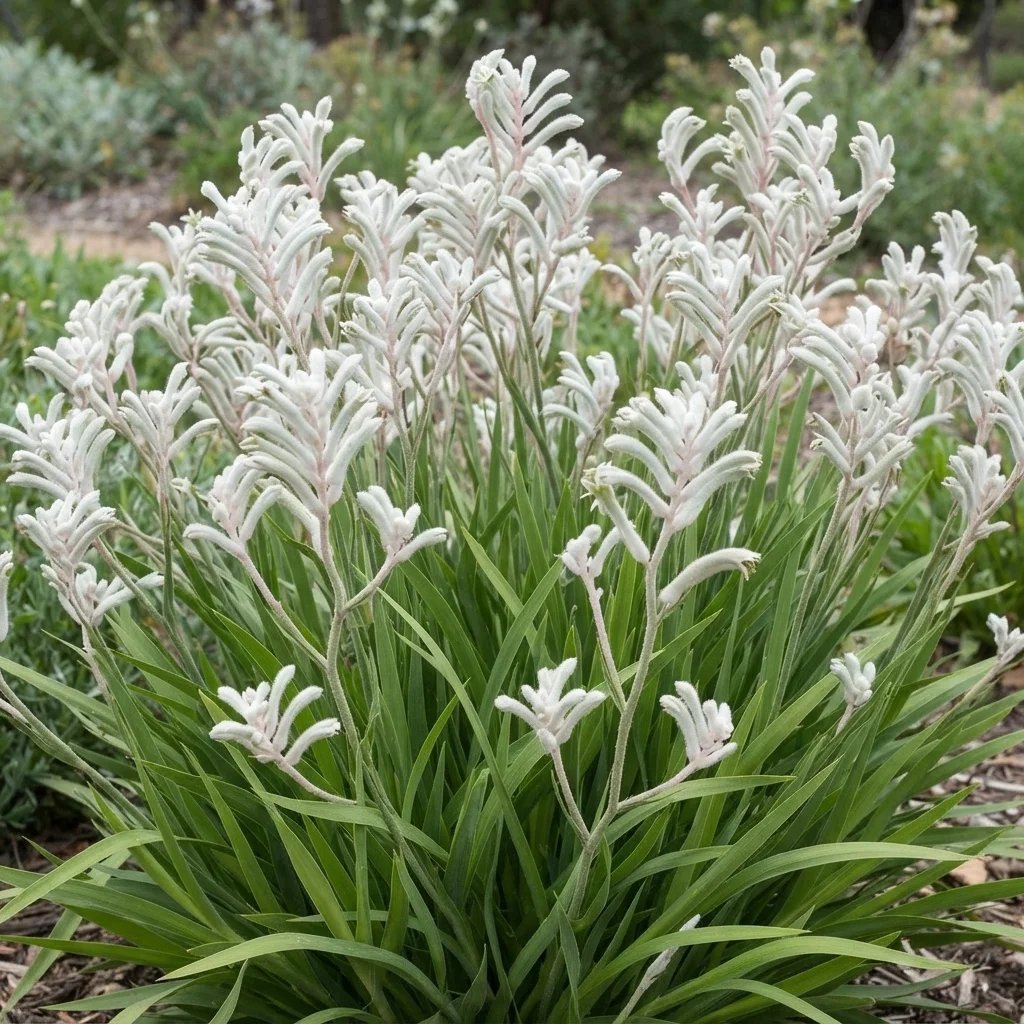
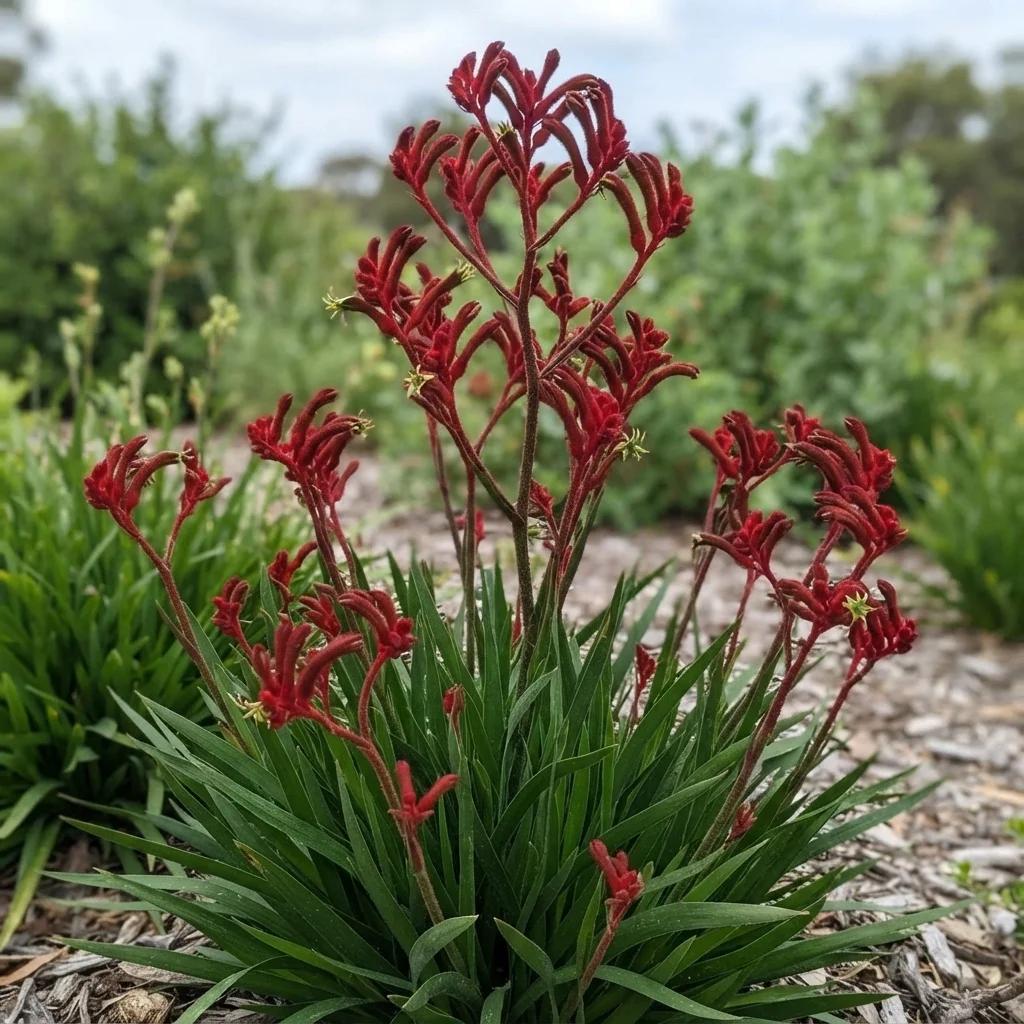
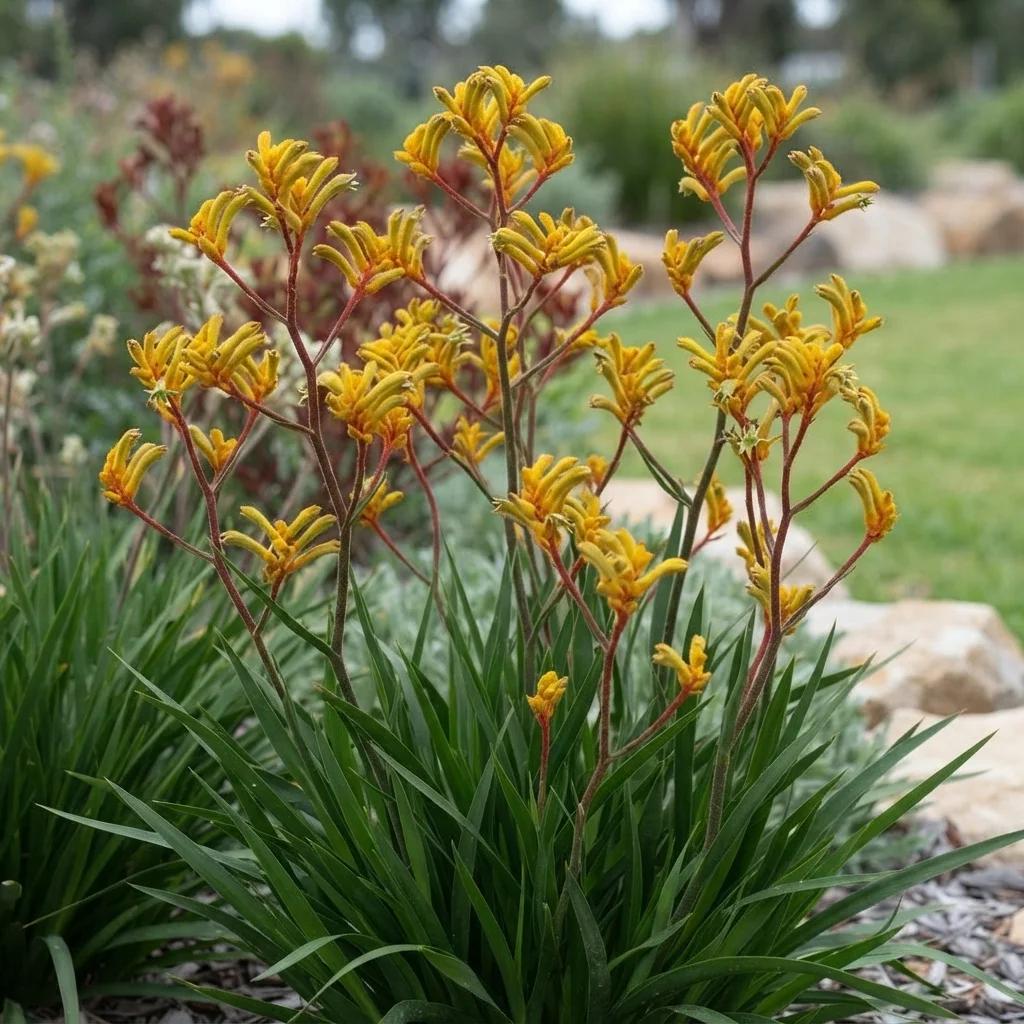
Anigozanthos is a genus of evergreen, rhizomatous perennials native to Western Australia, characterized by fans of strap-like foliage and upright, branched flowering stems. The tubular flowers are covered in dense, velvety hairs and feature curved, split lobes resembling animal paws.
'Bush Diamond' is a compact, clumping cultivar distinguished by its snow-white to off-white flowers that develop soft pink or blush overtones at the base and on the stems in cooler temperatures. This tissue-culture mutation of 'Bush Pearl' forms a dense basal rosette of rigid, light green leaves and reaches up to three feet tall when in bloom.
Uses & Benefits:
Essentials
At a Glance
Plant Type
Perennial
Height
36"
Width
24"
Light
Full Sun, Partial Sun
Zones
9, 10
Water
Low
Humidity
Low
Lifespan
Perennial
Native To
Australia
Toxicity
Non-toxic
Bloom period
Spring – Fall
In flower about 9 months of the year
Planting
How to Grow
- Select a planting site in full sun with gritty, sandy, or loamy soil that drains rapidly.
- Dig a hole twice as wide as the root ball but at the exact same depth to keep the crown level with the soil surface.
- Water thoroughly at the base immediately after planting, avoiding wetting the foliage.
- Apply a thin layer of organic mulch around the plant, keeping it clear of the immediate crown to prevent rot.
Pro Tip
Each individual foliage fan blooms only once in its lifetime; maintain long-term vigor by cutting spent fans cleanly to the ground to stimulate new rhizomatous shoots.
Keep It Thriving
Care Guide
Do
- Cut spent flowering stems and their associated foliage fans cleanly to ground level after blooming.
- Provide supplemental water during active growth and bud formation to maximize the floral display.
- Use a balanced, low-phosphorus slow-release fertilizer sparingly in spring.
Don't
- Do not allow the plant to sit in standing water or heavy, poorly drained clay soils.
- Do not overhead water, as wet foliage combined with poor airflow encourages powdery mildew.
- Do not shear the plant like a hedge or leave dead stem stubble above the ground.
Seasonal Care Calendar
| Task | Jan | Feb | Mar | Apr | May | Jun | Jul | Aug | Sep | Oct | Nov | Dec |
|---|---|---|---|---|---|---|---|---|---|---|---|---|
| Fertilize | ||||||||||||
| Pest Check | ||||||||||||
| Prune | ||||||||||||
| Winter Prep |
Watch Out For
Pests & Diseases
Common Pests
Common Diseases
In the Garden
Landscape Uses & Companions
Landscape Uses
Companion Plants
Multiply
Propagation Methods
Good to Know
Common Questions
White Kangaroo Paw questions
What zones can White Kangaroo Paw grow in?
White Kangaroo Paw is hardy in USDA Zones 9–10. Inside that range it survives winter in the ground; outside it, grow it as an annual or a container plant you protect.
Is White Kangaroo Paw deer resistant?
Yes — White Kangaroo Paw is rated deer-resistant. Deer typically pass it over, though extreme hunger can override any plant's defenses.
When does White Kangaroo Paw bloom?
White Kangaroo Paw typically blooms in spring through fall. Exact timing shifts a week or two with your zone — Sow's bloom calendar maps it to your garden.
Does White Kangaroo Paw need full sun?
White Kangaroo Paw does best in full sun to part shade. In hot climates, afternoon shade keeps blooms fresher longer.
Is White Kangaroo Paw drought tolerant?
Yes — once established (usually after the first full season), White Kangaroo Paw handles dry spells with minimal watering. Water deeply its first year to build the root system that makes that possible.
More Anigozanthos to compare
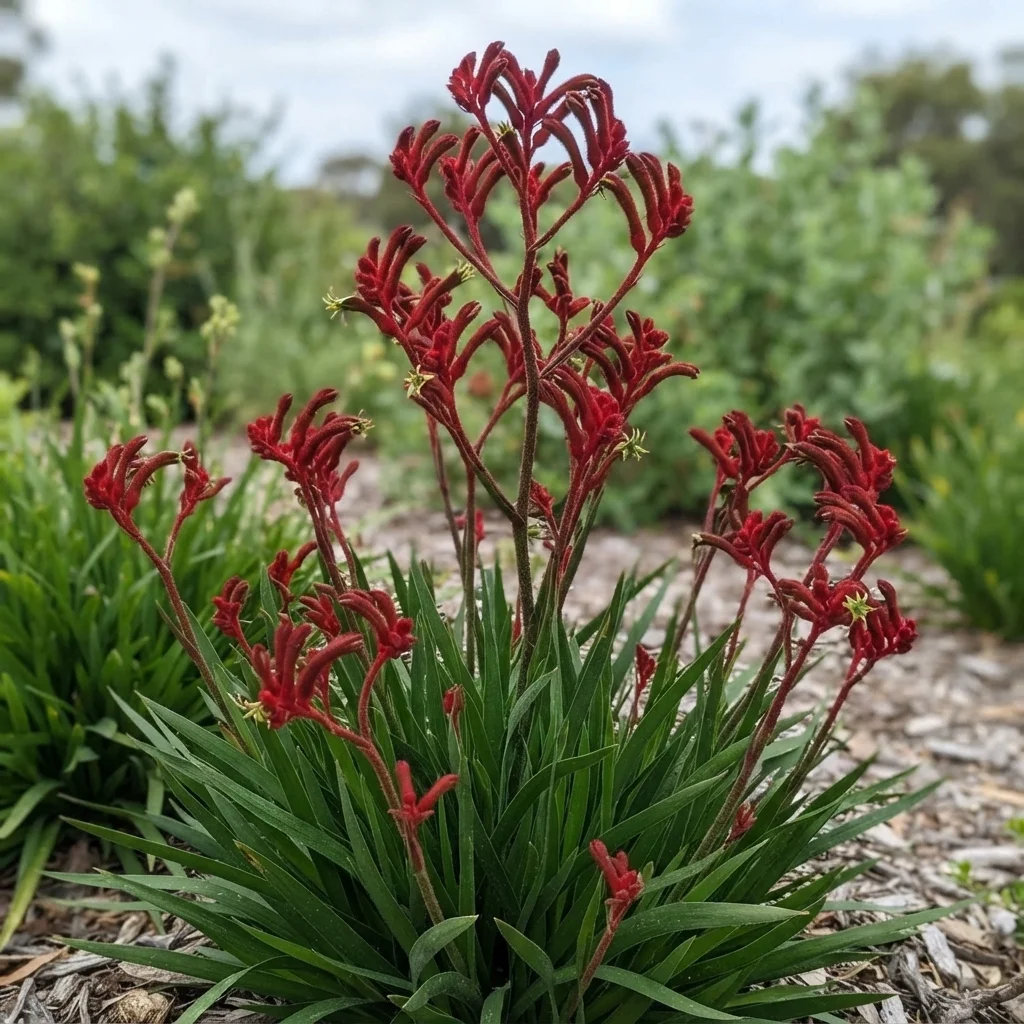
Kangaroo Paw
Anigozanthos hybrid 'Ruby Velvet'
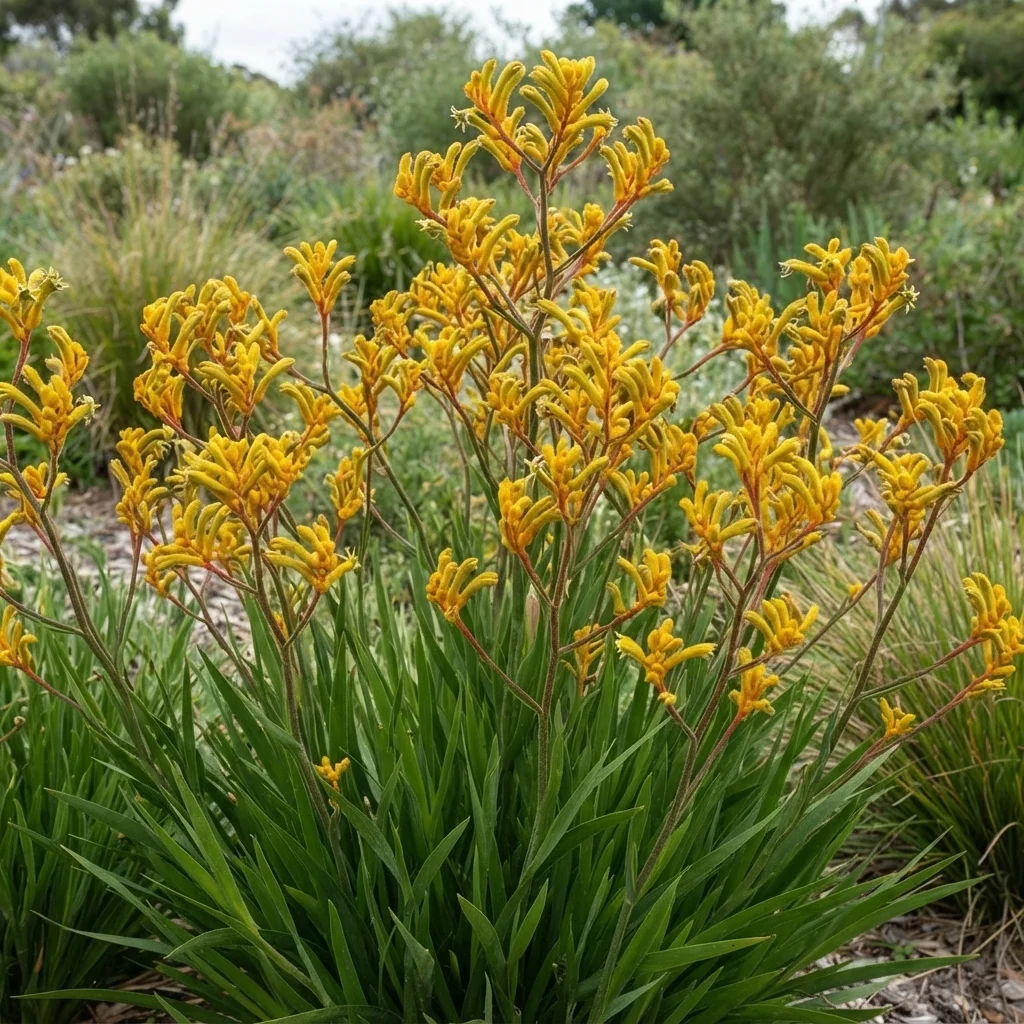
Bush Gold Kangaroo Paw
Anigozanthos x hybrida 'Bush Gold'
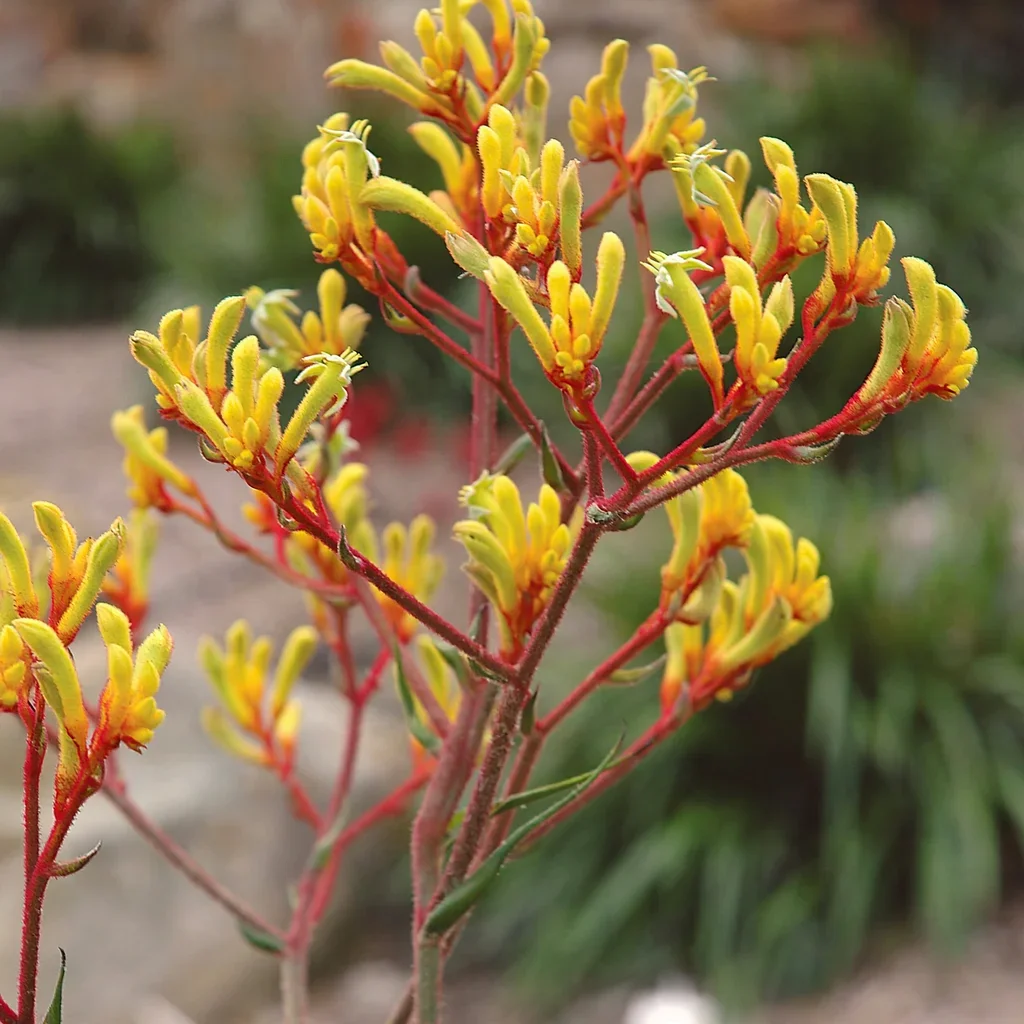
Harmony Kangaroo Paw
Anigozanthos manglesii 'Harmony'
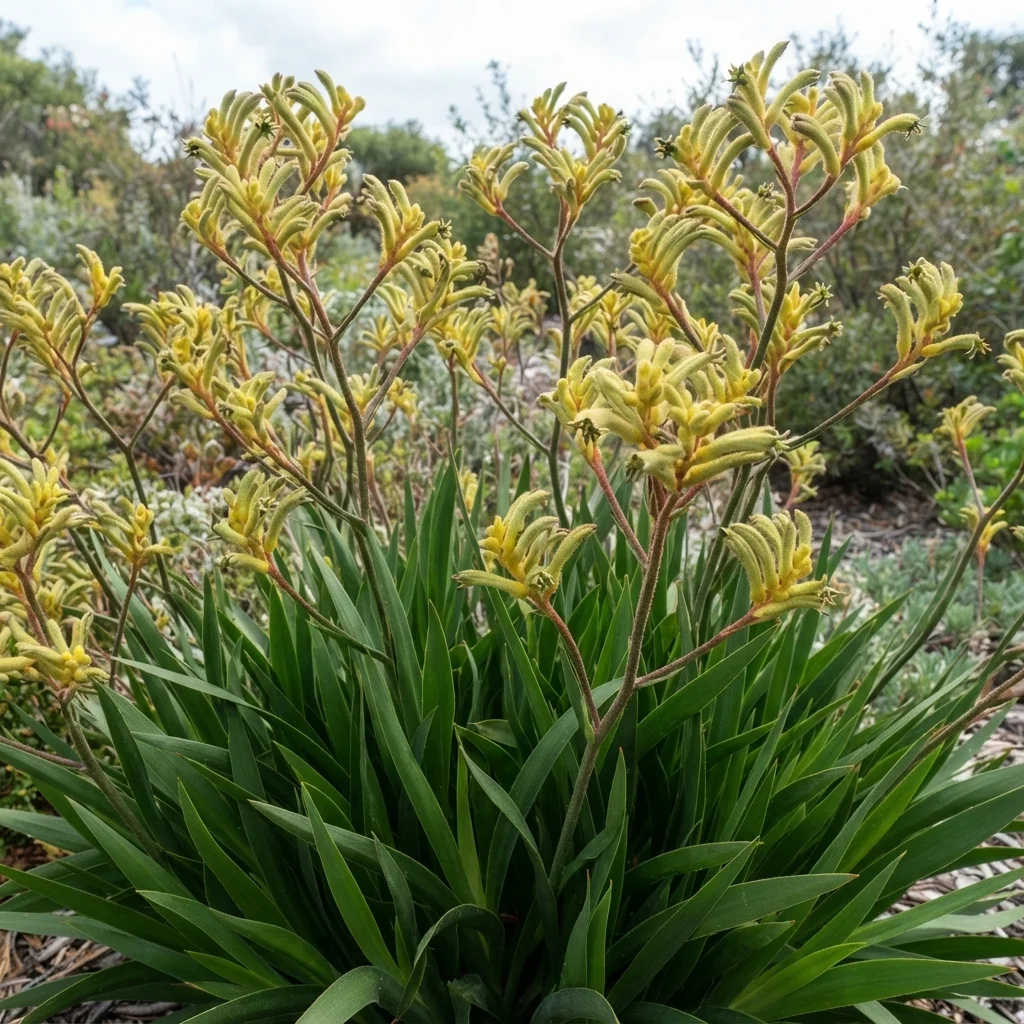
Tall Kangaroo Paw
Anigozanthos flavidus
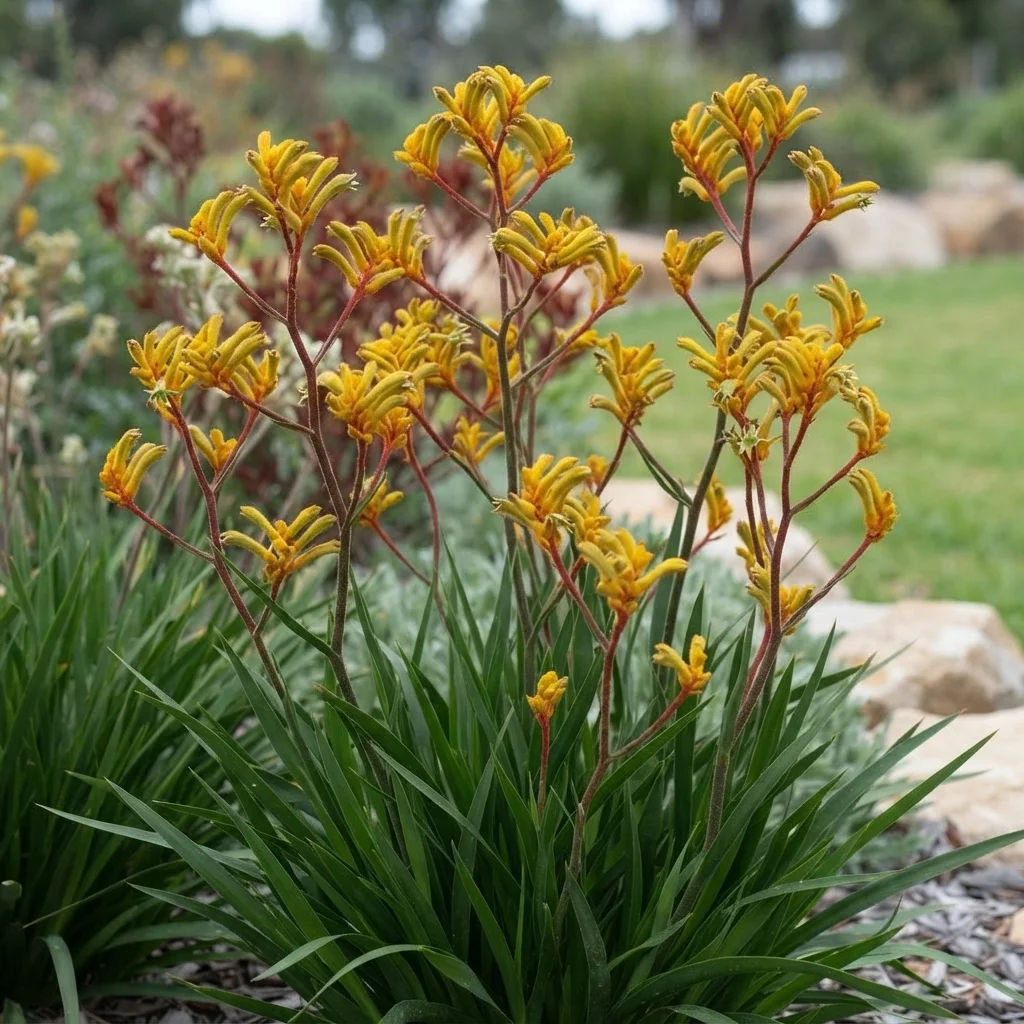
Gold Velvet Kangaroo Paw
Anigozanthos hybrid 'Gold Velvet'
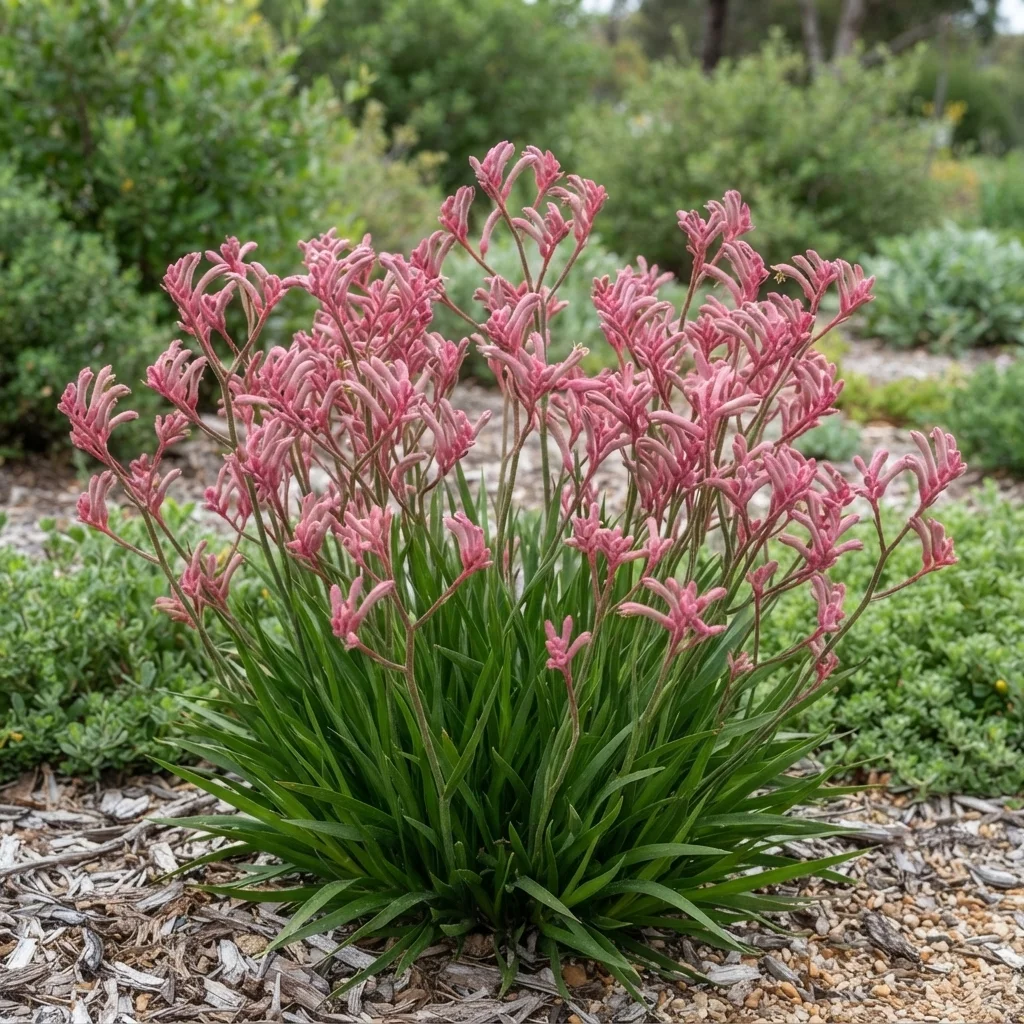
Kangaroo Paw 'Bush Pearl'
Anigozanthos x hybrida 'Bush Pearl'
Keep exploring
Explore the genus
Hardy in your zone?
Grow White Kangaroo Paw with confidence
See it in a design of your actual yard, get zone-matched care reminders, and track it season by season in your garden journal.