1 named cultivar
The Story
Plant Bio
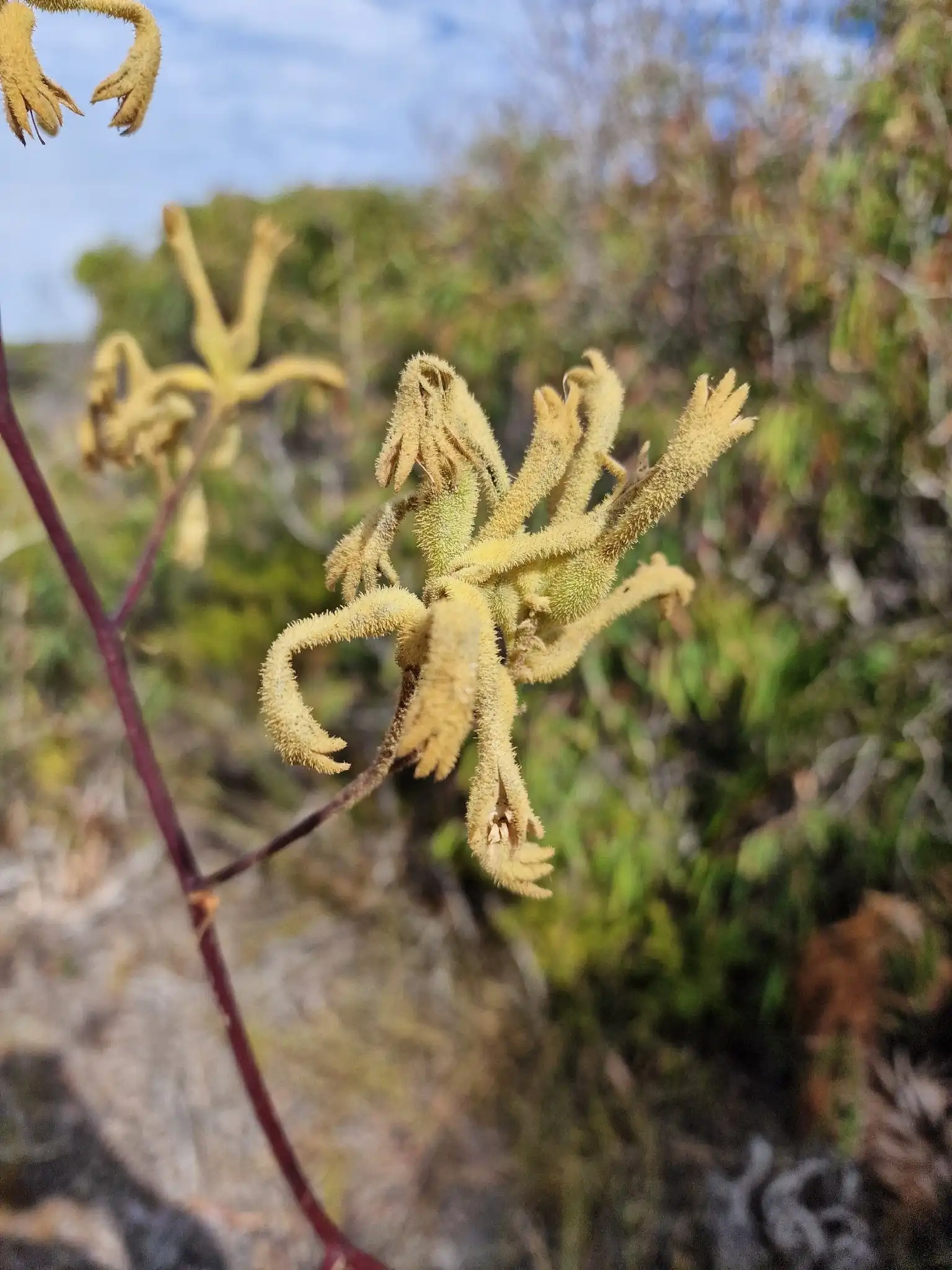
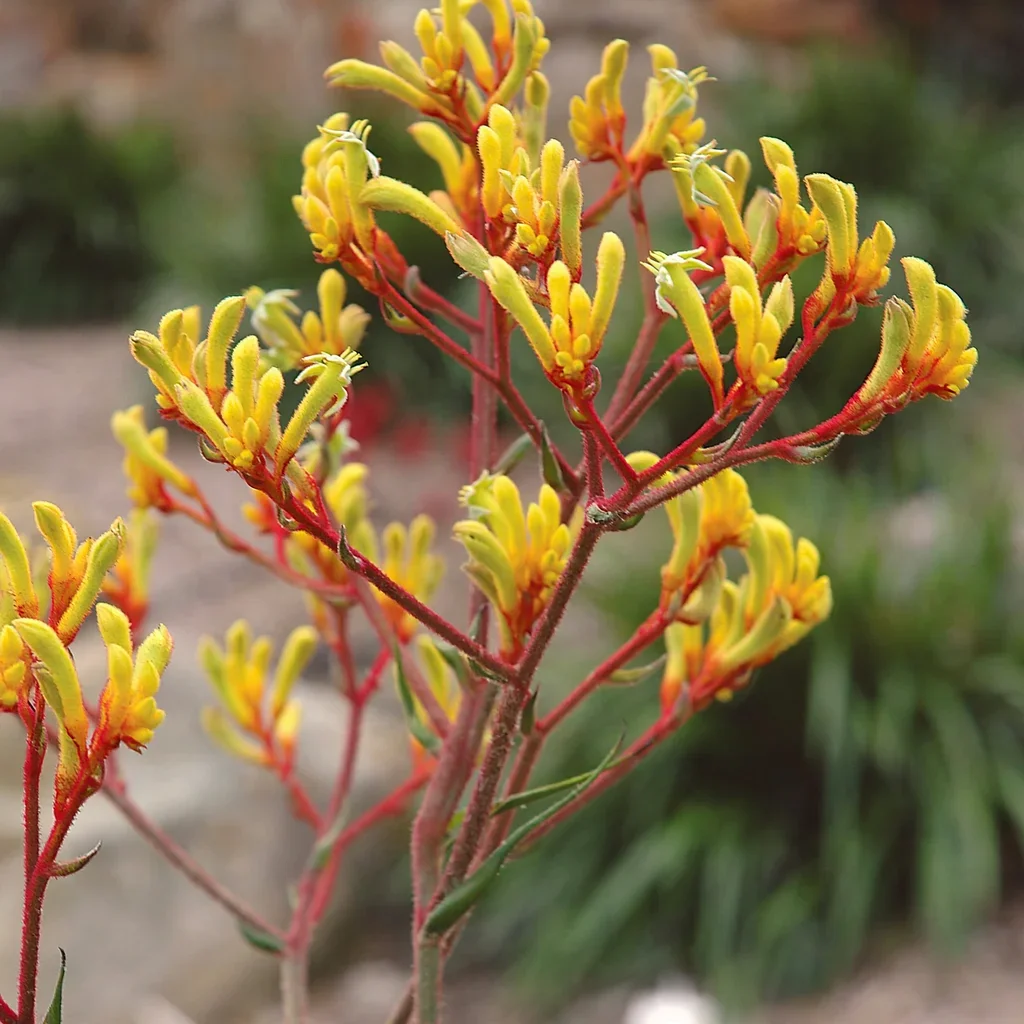
Anigozanthos flavidus, the tall kangaroo paw, is a robust, evergreen perennial herb native to southwest Western Australia, forming dense, grassy clumps of rigid, strap-shaped leaves. It produces tall, branching, leafless stems topped with tubular, curved flowers covered in velvety hairs that resemble a kangaroo's paw.
Unlike other members of its genus, this species is exceptionally long-lived, highly tolerant of summer humidity, and capable of surviving in seasonally damp soils. The wild form displays greenish-yellow flowers, though cultivated selections extend the color range to red, pink, and orange.
Uses & Benefits:
Essentials
At a Glance
Plant Type
Perennial
Height
79"
Width
47"
Light
Full Sun, Partial Sun
Zones
9, 10
Water
Low to Moderate
Humidity
High
Lifespan
Perennial
Native To
Australia
Toxicity
Non-toxic (hairs may irritate skin)
Planting
How to Grow
- Select a planting site in full sun with well-draining sandy loam or clay loam soil.
- Dig a hole twice the width of the root ball and plant at the same depth as the container.
- Water deeply to settle the soil, then establish a regular watering schedule during the first growing season.
- Apply a thin layer of organic mulch around the base, keeping it clear of the central crown to prevent rot.
Pro Tip
Cut the entire clump back hard to two to four inches above the ground immediately after flowering finishes in late winter to eliminate ink-spot-damaged foliage and stimulate clean, vigorous new shoots from the rhizome.
Keep It Thriving
Care Guide
Do
- Cut the entire plant back to two inches above the ground in late winter to stimulate fresh, disease-free growth.
- Use a certified low-phosphorus fertilizer formulated specifically for native plants.
- Ensure excellent air circulation around the foliage to minimize fungal leaf spot.
Don't
- Do not prune into old, leafless wood, as this prevents proper recovery and regrowth.
- Do not apply standard high-phosphorus garden fertilizers or heavy manures.
- Do not overwater during the winter dormancy period when the plant's active growth slows.
Seasonal Care Calendar
| Task | Jan | Feb | Mar | Apr | May | Jun | Jul | Aug | Sep | Oct | Nov | Dec |
|---|---|---|---|---|---|---|---|---|---|---|---|---|
| Divide | ||||||||||||
| Fertilize | ||||||||||||
| Pest Check | ||||||||||||
| Prune |
Watch Out For
Pests & Diseases
Common Pests
Common Diseases
In the Garden
Landscape Uses & Companions
Landscape Uses
Companion Plants
Multiply
Propagation Methods
Good to Know
Common Questions
Tall Kangaroo Paw questions
What zones can Tall Kangaroo Paw grow in?
Tall Kangaroo Paw is hardy in USDA Zones 9–10. Inside that range it survives winter in the ground; outside it, grow it as an annual or a container plant you protect.
Is Tall Kangaroo Paw deer resistant?
Yes — Tall Kangaroo Paw is rated deer-resistant. Deer typically pass it over, though extreme hunger can override any plant's defenses.
When does Tall Kangaroo Paw bloom?
Tall Kangaroo Paw typically blooms in spring through summer. Exact timing shifts a week or two with your zone — Sow's bloom calendar maps it to your garden.
Does Tall Kangaroo Paw need full sun?
Tall Kangaroo Paw does best in full sun to part shade. In hot climates, afternoon shade keeps blooms fresher longer.
Is Tall Kangaroo Paw drought tolerant?
Yes — once established (usually after the first full season), Tall Kangaroo Paw handles dry spells with minimal watering. Water deeply its first year to build the root system that makes that possible.
More Anigozanthos to compare
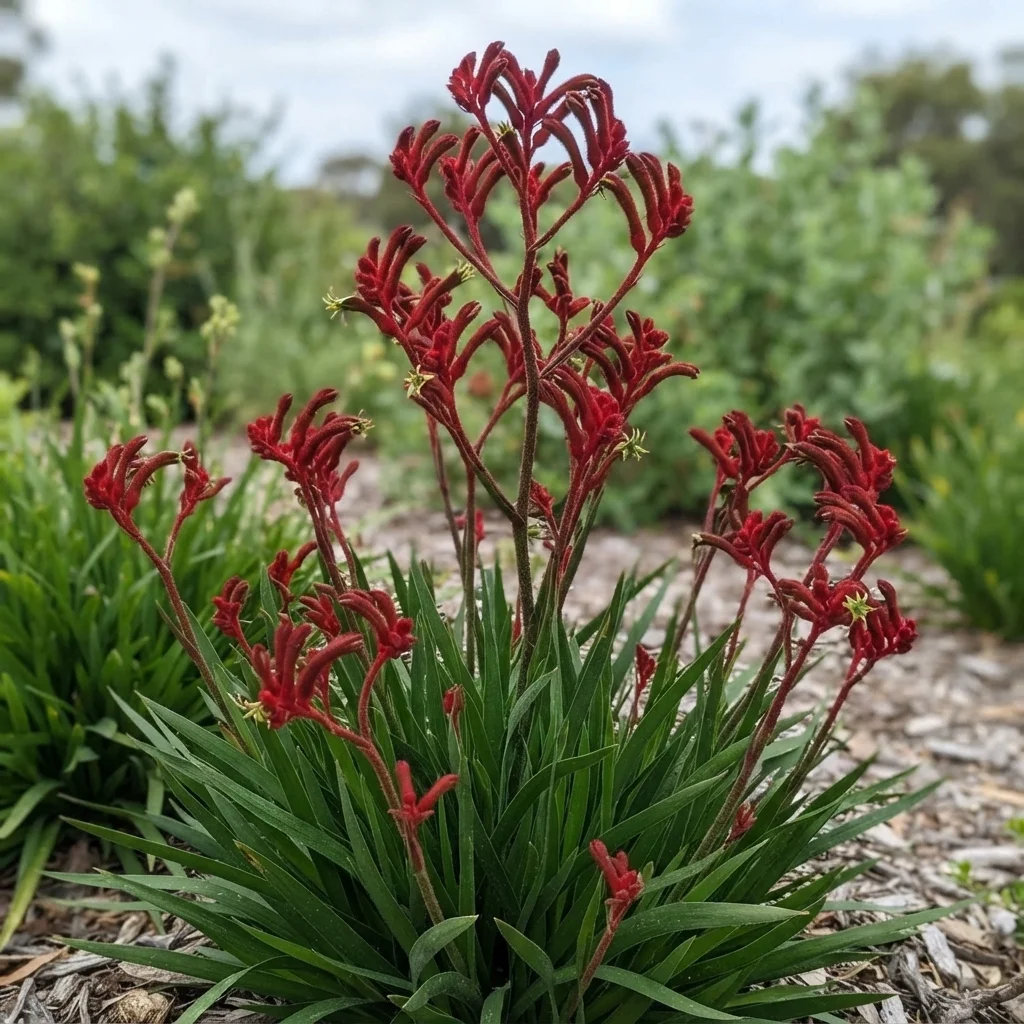
Kangaroo Paw
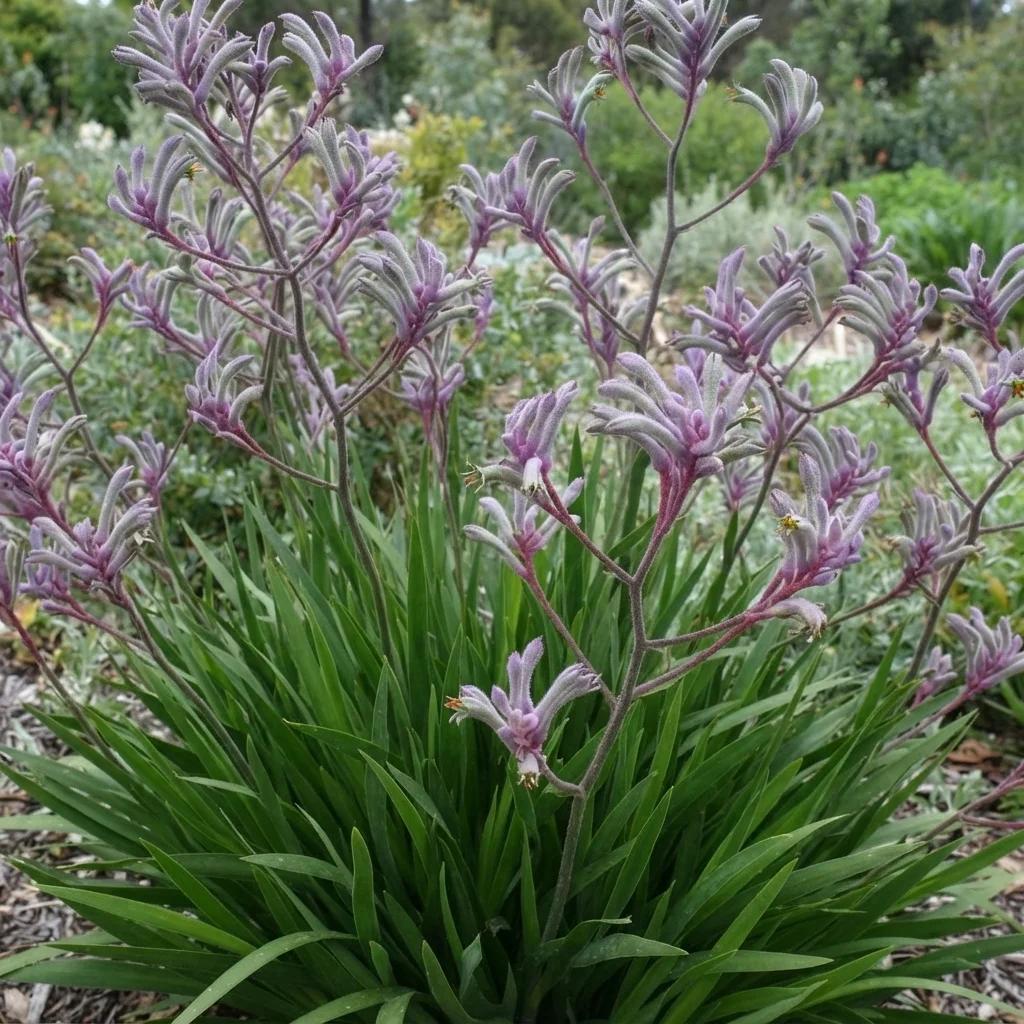
Anigozanthos hybrid 'Ruby Velvet'
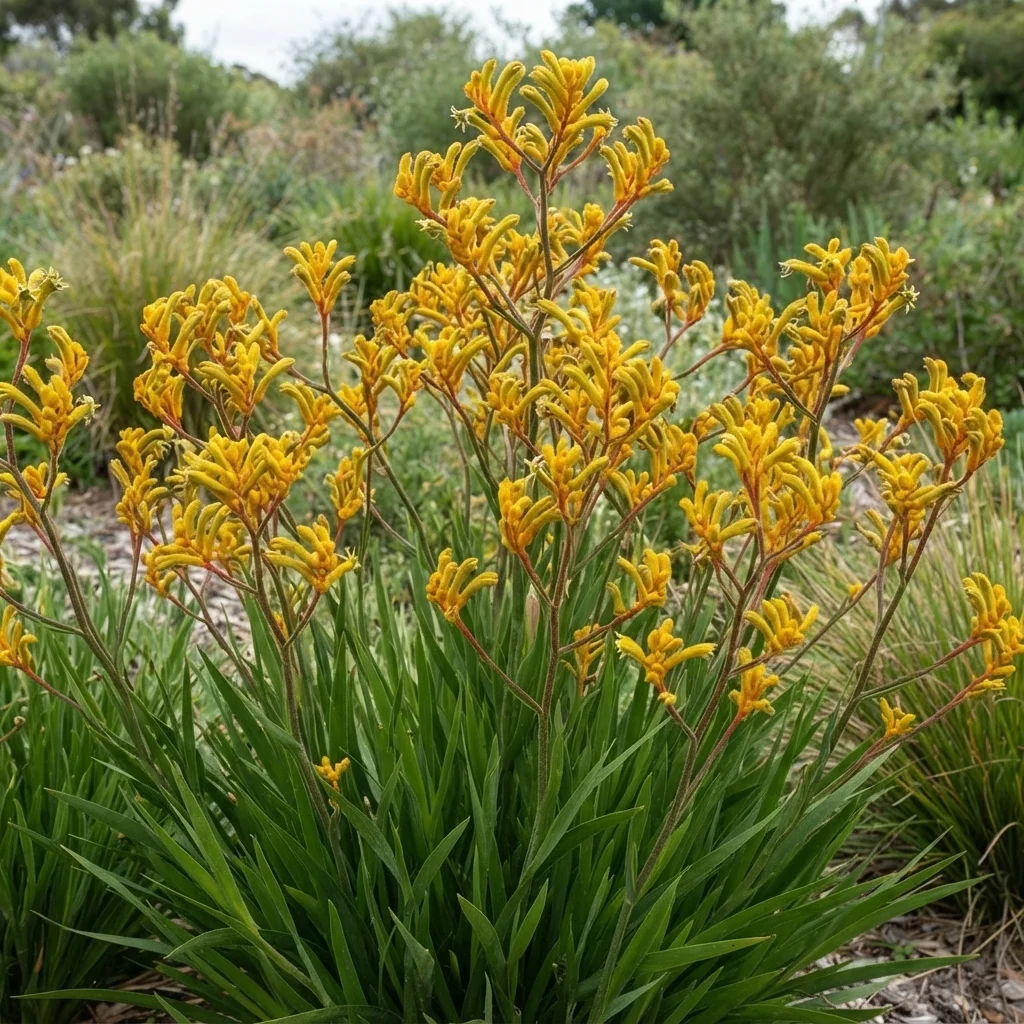
Bush Gold Kangaroo Paw
Anigozanthos x hybrida 'Bush Gold'
Harmony Kangaroo Paw
Anigozanthos manglesii 'Harmony'
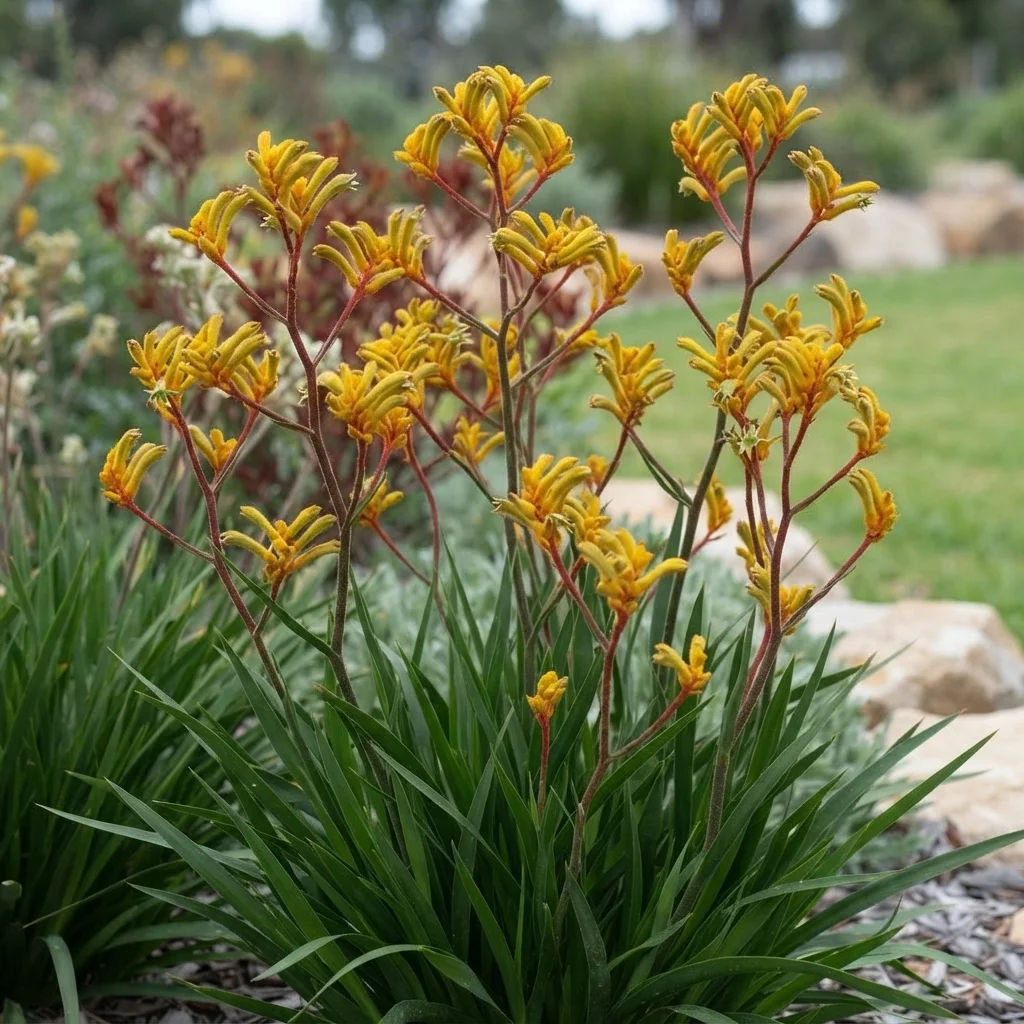
Gold Velvet Kangaroo Paw
Anigozanthos hybrid 'Gold Velvet'
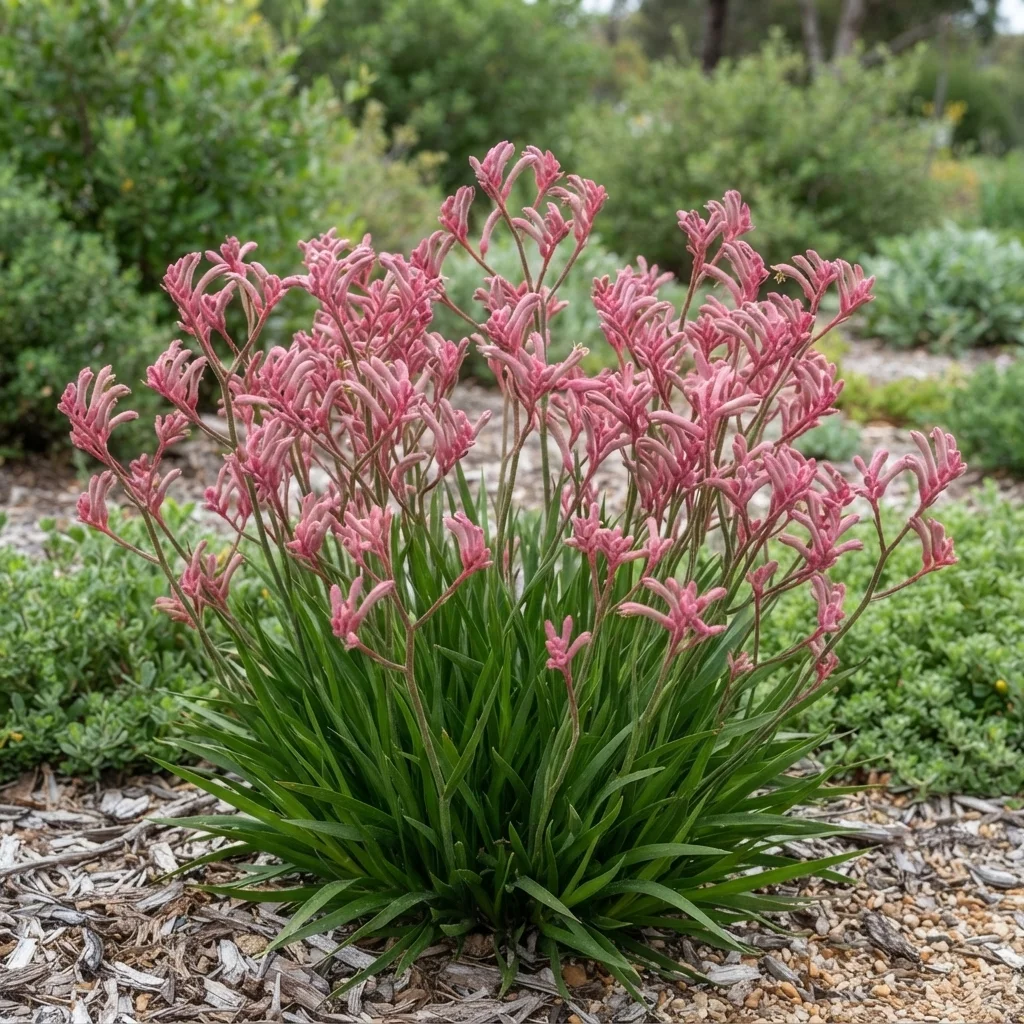
Kangaroo Paw 'Bush Pearl'
Anigozanthos x hybrida 'Bush Pearl'
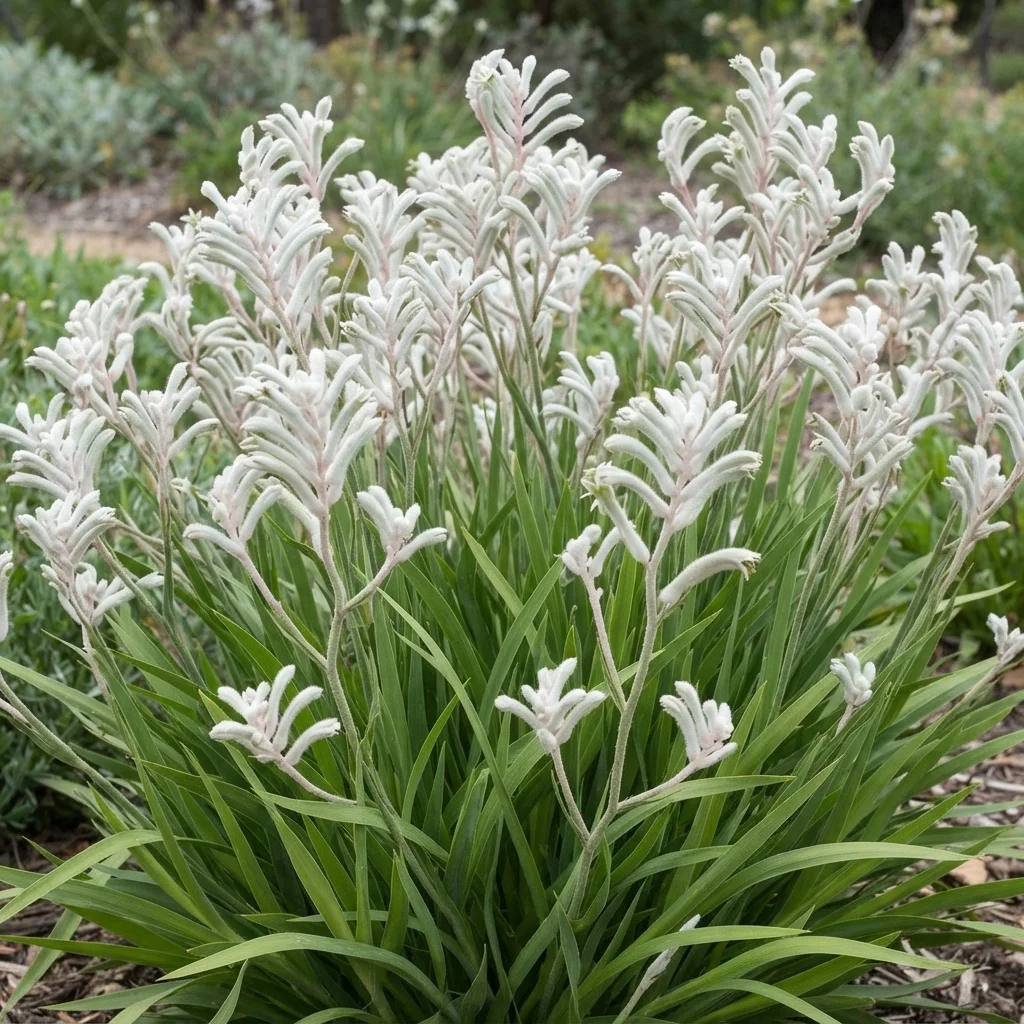
White Kangaroo Paw
Anigozanthos hybrid 'Bush Diamond'
Keep exploring
Explore the genus
Hardy in your zone?
Grow Tall Kangaroo Paw with confidence
See it in a design of your actual yard, get zone-matched care reminders, and track it season by season in your garden journal.