
The Story
Plant Bio
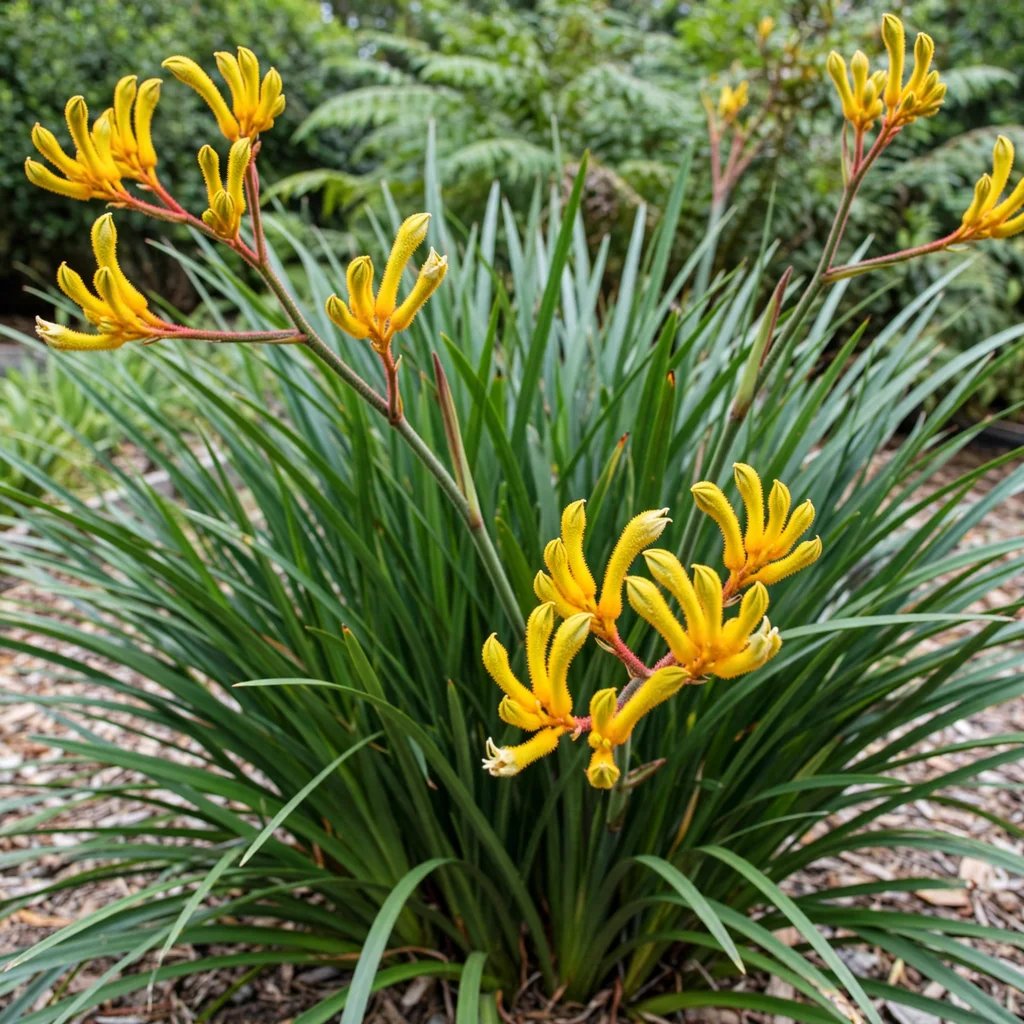
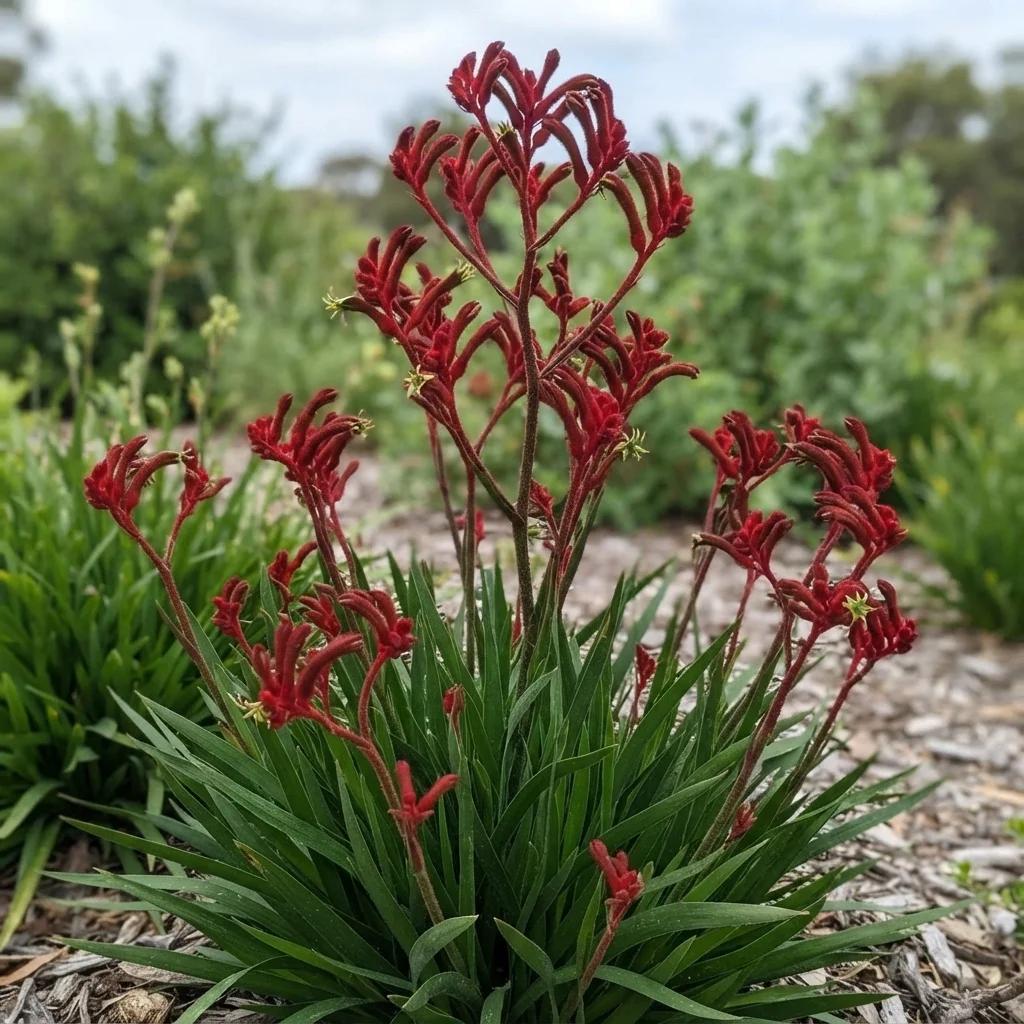
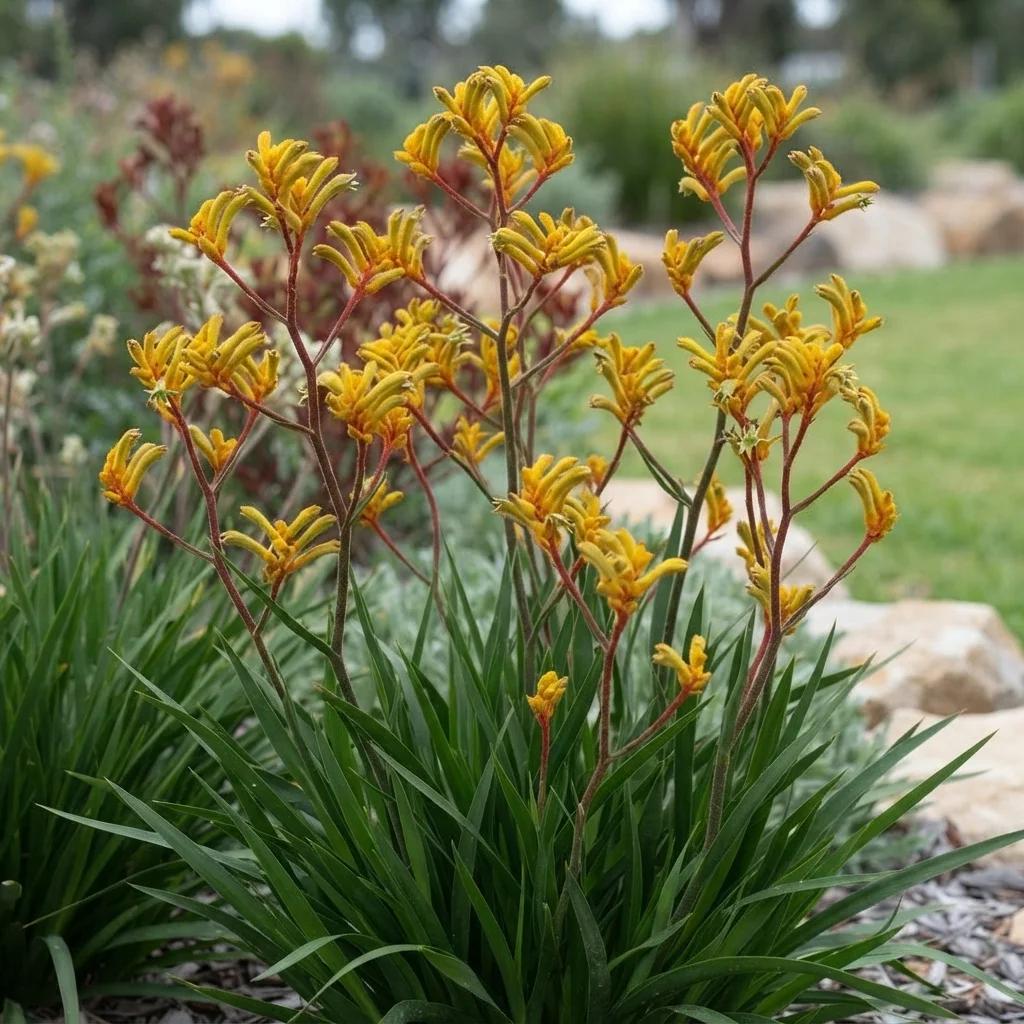
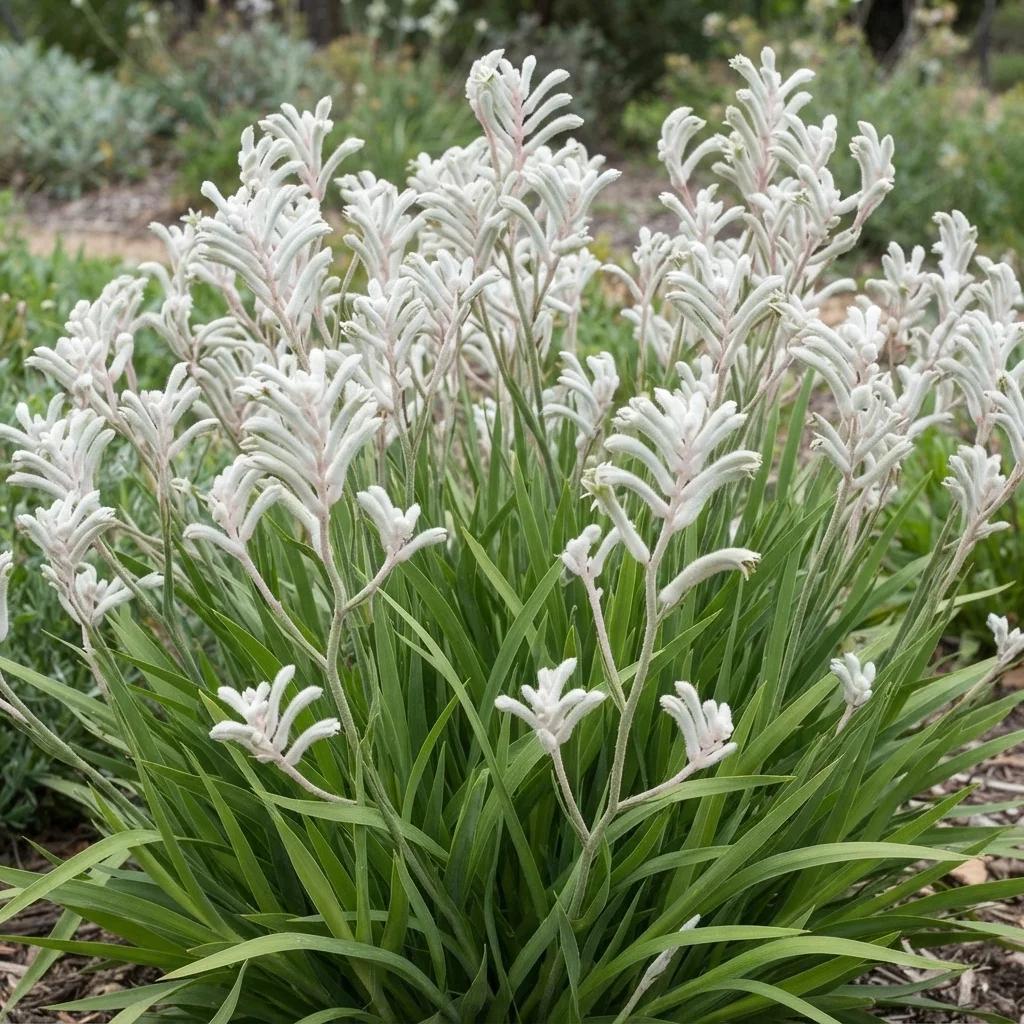
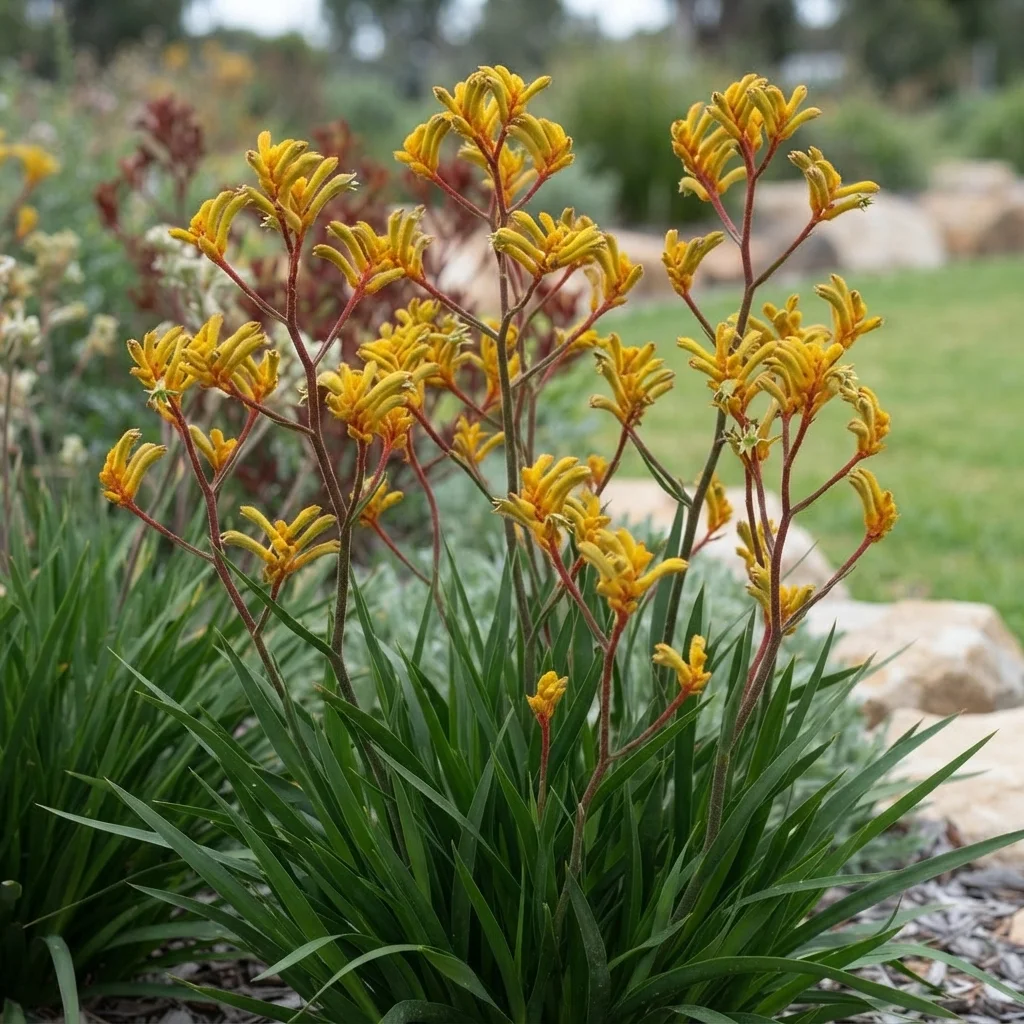
Anigozanthos is a genus of clump-forming evergreen perennials native to Western Australia, characterized by fans of strap-like basal leaves and unique, velvet-textured flowers. The tubular blooms are covered in fine, dense hairs and split at the apex into curved lobes that resemble a kangaroo's paw.
'Yellow Gem' is a tall, vigorous hybrid cultivar featuring deep yellow flowers held on contrasting red-tinted stems. Reaching up to six feet in height, this selection offers superior cold hardiness and disease resistance compared to dwarf varieties.
Uses & Benefits:
Essentials
At a Glance
Plant Type
Perennial
Height
79"
Width
39"
Light
Full Sun
Zones
9, 10
Water
Low
Humidity
Low to Moderate
Lifespan
Perennial
Native To
Australia (cultivar origin)
Toxicity
Skin Irritant
Bloom period
Spring – Summer
In flower about 6 months of the year
Planting
How to Grow
- Select a planting site in full sun with exceptionally well-draining sandy loam or loamy soil.
- Dig a hole twice the width of the root ball and plant at the same depth as the container level, ensuring the crown is not buried.
- Water deeply at the base to settle the soil, then allow the top few inches to dry out completely between subsequent waterings.
- Apply a low-phosphorus, controlled-release native plant fertilizer once a year in early spring to support the upcoming bloom cycle.
Pro Tip
Prune old flower spikes and their associated leaf fans right down to ground level immediately after flowering; cutting back to the rhizome prevents fungal build-up and stimulates clean, vigorous new growth.
Keep It Thriving
Care Guide
Do
- Water at the base of the plant to keep the foliage dry and reduce the risk of fungal diseases.
- Cut spent flower stems and their surrounding leaf fans directly to the ground after blooming.
- Wear gloves and long sleeves when pruning to avoid skin irritation from the microscopic plant hairs.
Don't
- Do not overwater or allow the soil to remain waterlogged, which quickly triggers rhizome rot.
- Do not use standard high-phosphorus fertilizers, as these can damage the plant's sensitive root system.
- Do not plant in crowded, humid areas with poor air circulation.
Seasonal Care Calendar
| Task | Jan | Feb | Mar | Apr | May | Jun | Jul | Aug | Sep | Oct | Nov | Dec |
|---|---|---|---|---|---|---|---|---|---|---|---|---|
| Divide | ||||||||||||
| Fertilize | ||||||||||||
| Pest Check | ||||||||||||
| Prune |
Watch Out For
Pests & Diseases
Common Pests
Common Diseases
In the Garden
Landscape Uses & Companions
Landscape Uses
Companion Plants
Multiply
Propagation Methods
Good to Know
Common Questions
Yellow Kangaroo Paw questions
What zones can Yellow Kangaroo Paw grow in?
Yellow Kangaroo Paw is hardy in USDA Zones 9–10: in that range it survives winter in the ground. Colder than Zone 9, grow it in a container you can move to shelter for the winter, or as an annual.
Is Yellow Kangaroo Paw deer resistant?
Not reliably. Deer may browse Yellow Kangaroo Paw, especially tender spring growth — plan on repellents or fencing where pressure is high.
When does Yellow Kangaroo Paw bloom?
Yellow Kangaroo Paw typically blooms from spring to summer. Exact timing shifts a week or two with your zone — Sow's bloom calendar maps it to your garden.
Does Yellow Kangaroo Paw need full sun?
Yellow Kangaroo Paw does best in full sun (6+ hours).
Is Yellow Kangaroo Paw drought tolerant?
Yes — once established (usually after the first full season), Yellow Kangaroo Paw handles dry spells with minimal watering. Water deeply its first year to build the root system that makes that possible.
More Anigozanthos to compare
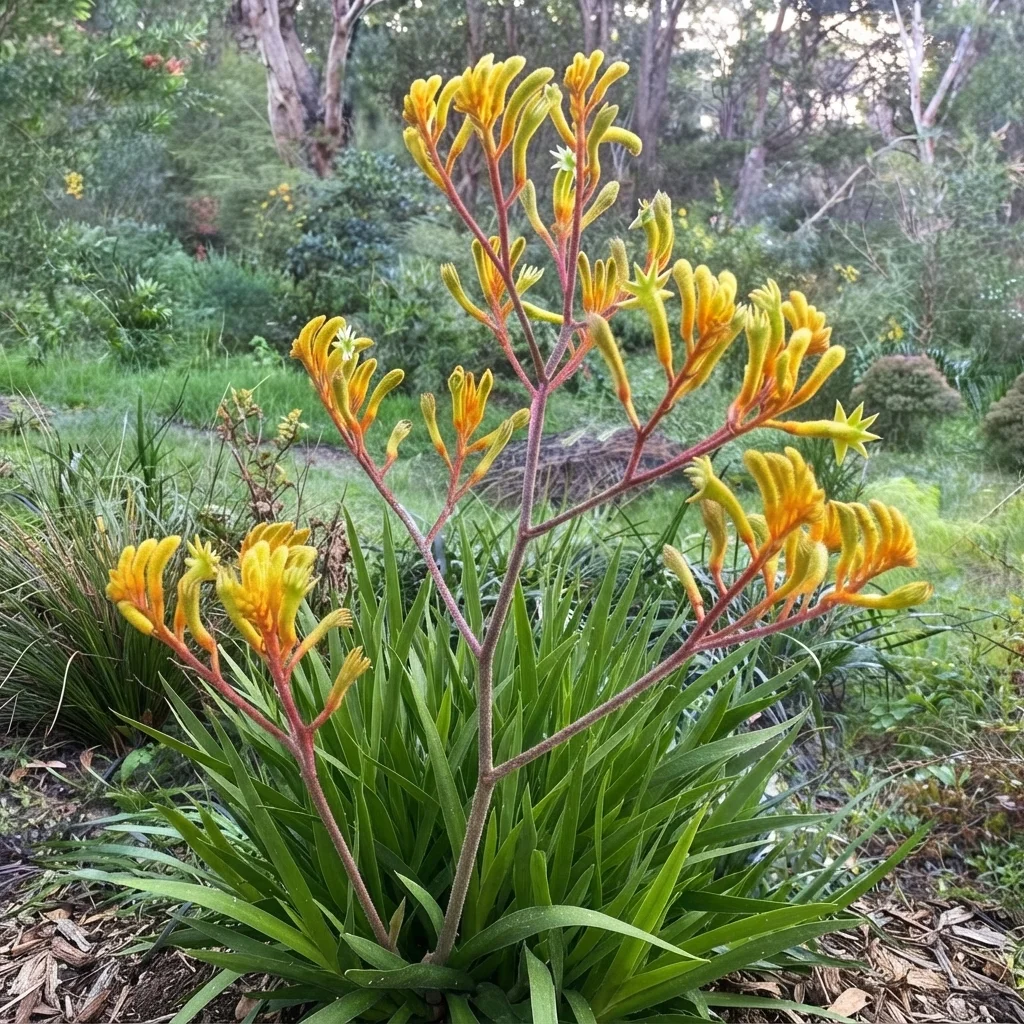
Kangaroo Paw
Anigozanthos x hybrida 'Landscape Gold'
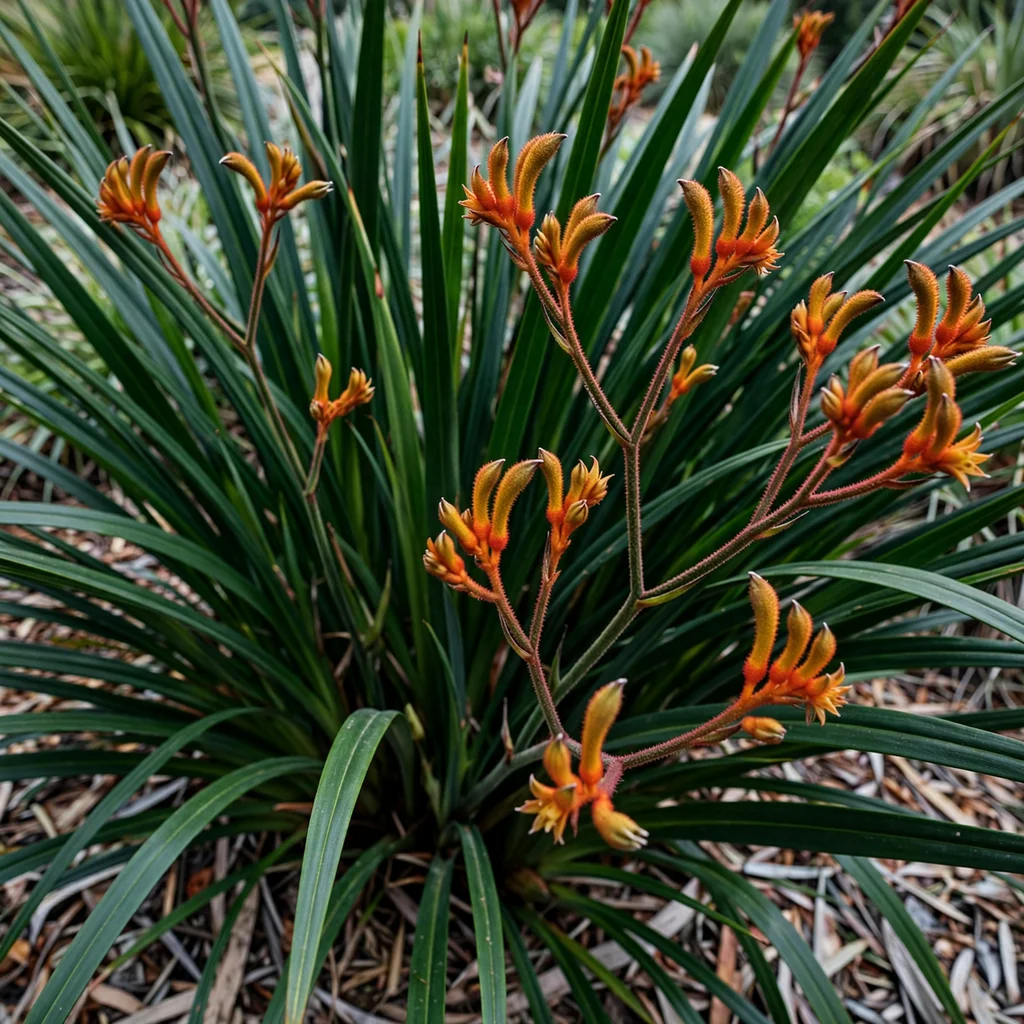
Amber Velvet Kangaroo Paw
Anigozanthos hybrid 'Amber Velvet'
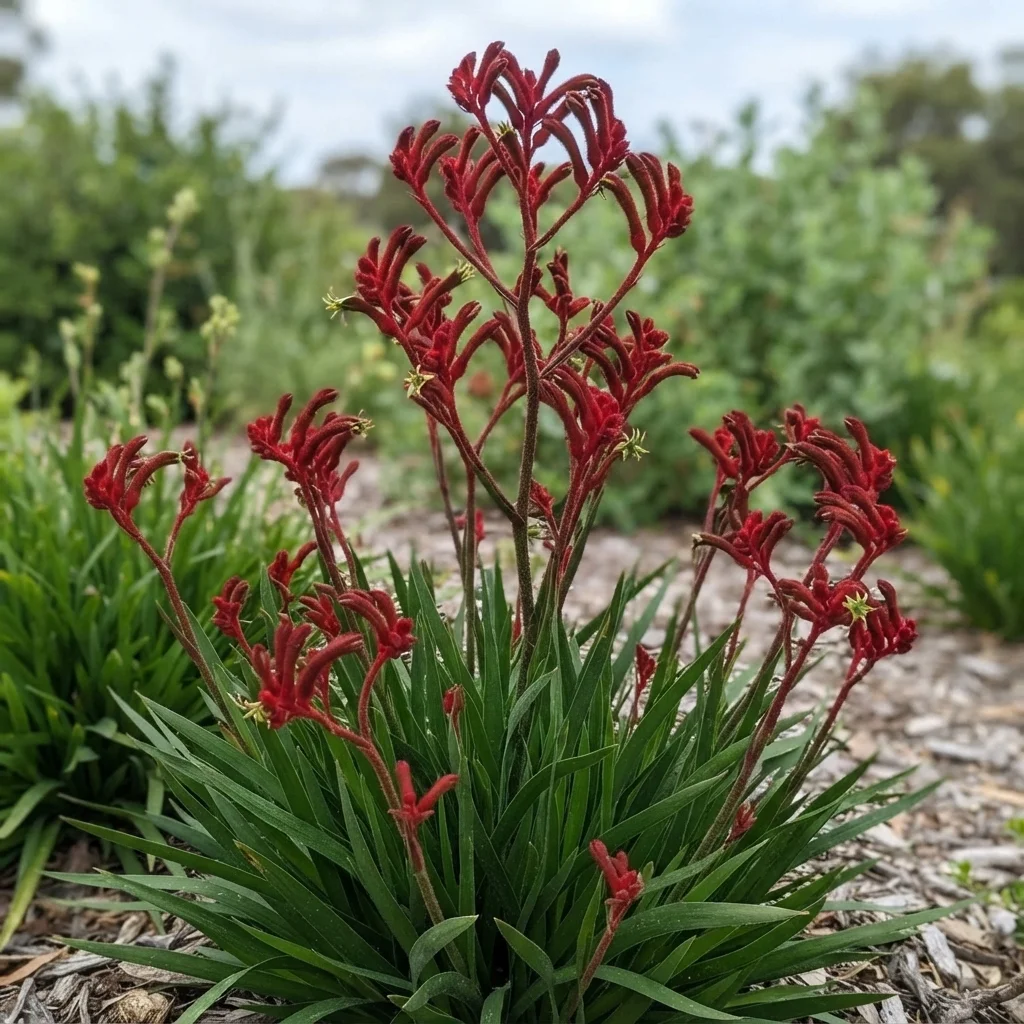
Ruby Velvet Kangaroo Paw
Anigozanthos hybrid 'Ruby Velvet'
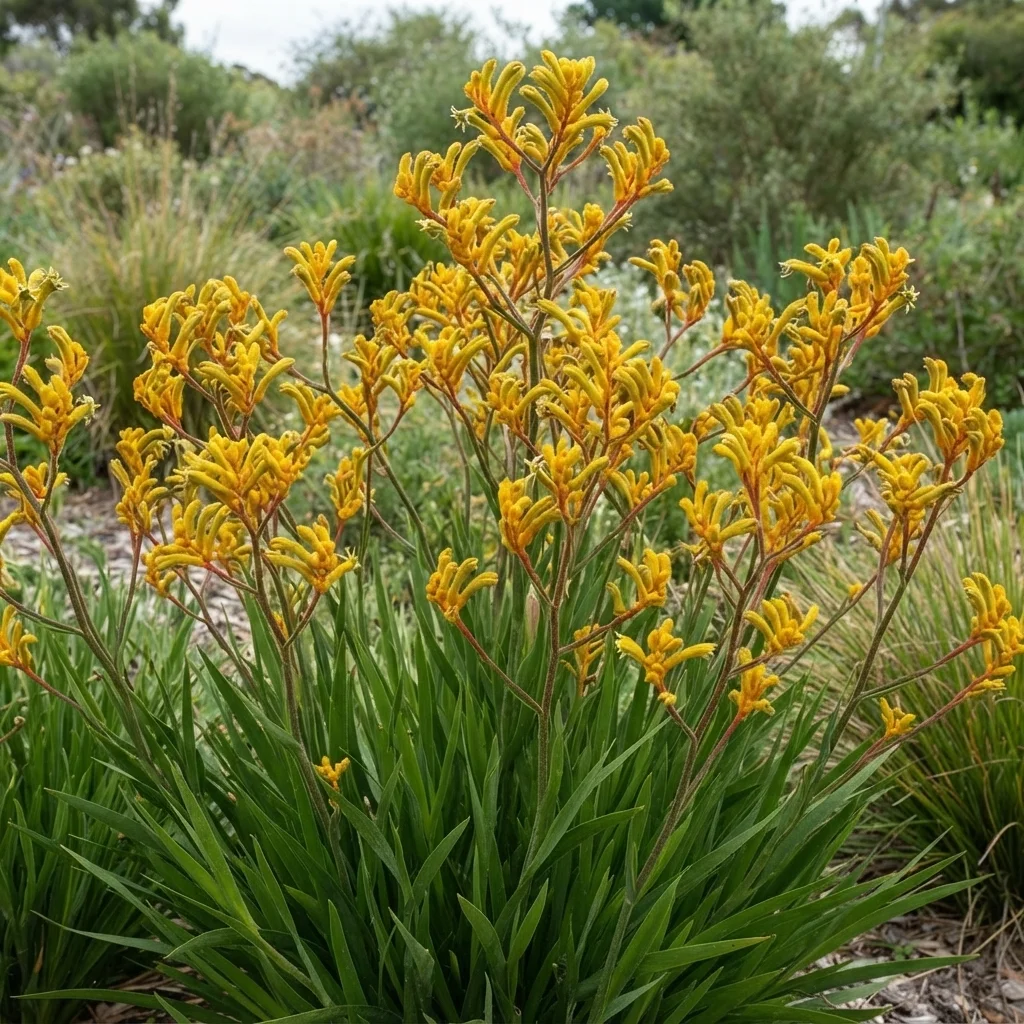
Bush Gold Kangaroo Paw
Anigozanthos x hybrida 'Bush Gold'
Gold Velvet Kangaroo Paw
Anigozanthos hybrid 'Gold Velvet'
Dwarf Kangaroo Paw
Anigozanthos x hybrida 'Bush Ranger'
Keep exploring
Explore the genus
Hardy in your zone?
Grow Yellow Kangaroo Paw with confidence
See it in a design of your actual yard, get zone-matched care reminders, and track it season by season in your garden journal.