

The Story
Plant Bio
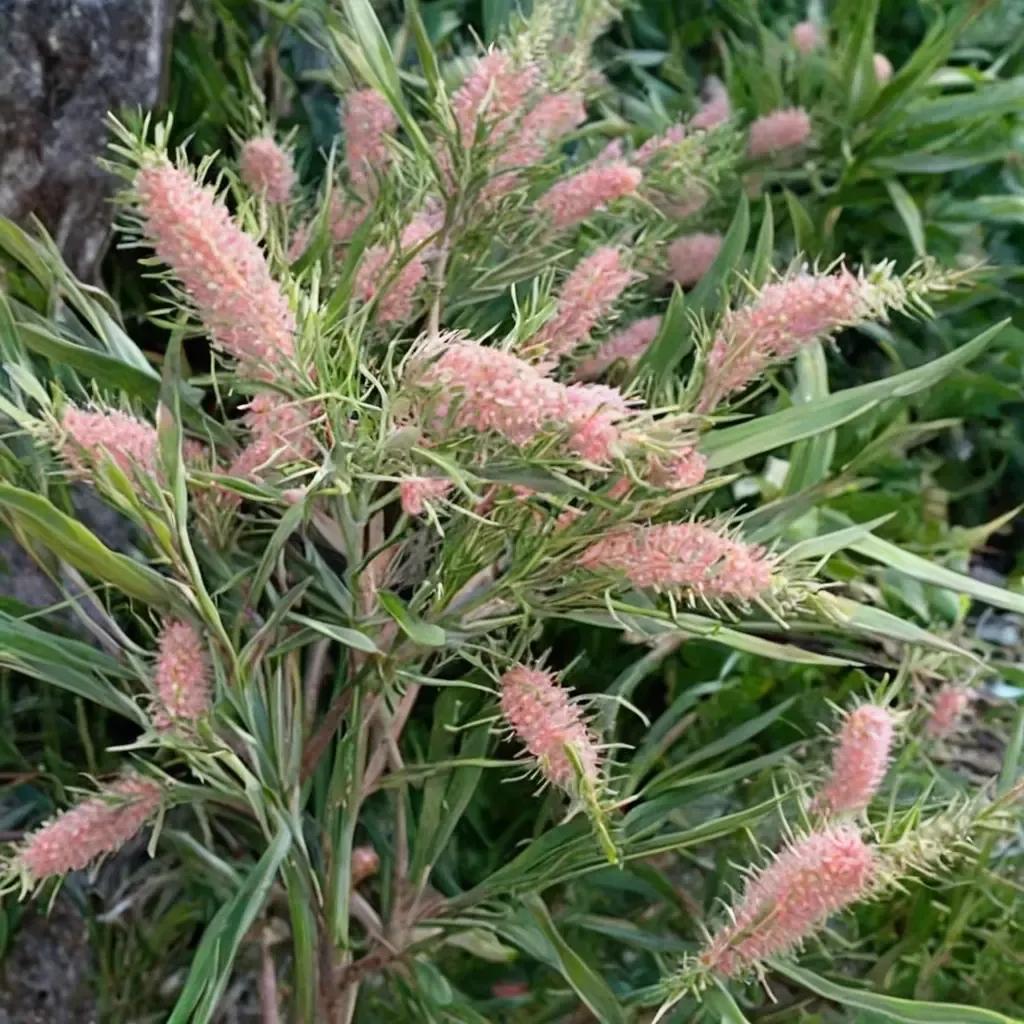
Callistemon citrinus, the crimson bottlebrush, is an evergreen Australian shrub reaching three to five feet in cultivation, with narrow leathery leaves that smell of lemon when crushed. The flowers have no petals to speak of; the display comes from dense cylindrical spikes of bright red stamens held at the shoot tips, produced in flushes through the season.
New growth continues from the tip beyond each flower spike, so the old brushes are carried along the stem rather than at the ends, and cutting them off is what keeps the plant looking deliberate. It is hardy only to zone 9, and north of that it is a container plant that overwinters in a bright, cool, frost-free room.
Uses & Benefits:
Essentials
At a Glance
Plant Type
Shrub
Height
48"
Width
30"
Light
Full Sun, Partial Sun
Zones
8, 9, 10
Water
Medium
Humidity
Average
Lifespan
Perennial
Native To
Australia
Toxicity
Non-toxic
Marketplace
Where to Buy
Shipping costs Year-round shipping Free shipping
Planting
How to Grow
- Plant in spring in full sun.
- Choose moist, fertile, free-draining soil.
- Water regularly while establishing, then less often.
- Trim spent flower spikes back to a leaf joint after each flush.
- Feed lightly in spring; it dislikes rich phosphorus feeds.
- Overwinter containers in a bright, cool, frost-free room.
Pro Tip
Prune just behind each spent brush; cutting further back into old bare wood gives slow, patchy regrowth.
Keep It Thriving
Care Guide
Do
- Give it full sun for the heaviest flowering ☀️
- Trim spent brushes after each flush ✂️
- Keep it in free-draining soil 🪨
- Overwinter it frost-free in cold regions ❄️
Don't
- Expose it to frost below zone 9 ❌
- Feed it heavily with high-phosphorus fertiliser ❌
- Cut back hard into bare old wood ❌
Seasonal Care Calendar
| Task | Jan | Feb | Mar | Apr | May | Jun | Jul | Aug | Sep | Oct | Nov | Dec |
|---|---|---|---|---|---|---|---|---|---|---|---|---|
| Protect | ||||||||||||
| Prune |
Watch Out For
Pests & Diseases
Common Pests
Common Diseases
In the Garden
Landscape Uses & Companions
Landscape Uses
Companion Plants
Multiply
Propagation Methods
Good to Know
Common Questions
Crimson Bottlebrush questions
What zones can Crimson Bottlebrush grow in?
Crimson Bottlebrush is hardy in USDA Zones 8–10. Inside that range it survives winter in the ground; outside it, grow it as an annual or a container plant you protect.
Is Crimson Bottlebrush deer resistant?
Yes — Crimson Bottlebrush is rated deer-resistant. Deer typically pass it over, though extreme hunger can override any plant's defenses.
When does Crimson Bottlebrush bloom?
Crimson Bottlebrush typically blooms in repeated flushes, mainly late spring to fall through early summer. Exact timing shifts a week or two with your zone — Sow's bloom calendar maps it to your garden.
Does Crimson Bottlebrush need full sun?
Crimson Bottlebrush does best in full sun to part shade. In hot climates, afternoon shade keeps blooms fresher longer.
Is Crimson Bottlebrush drought tolerant?
Yes — once established (usually after the first full season), Crimson Bottlebrush handles dry spells with minimal watering. Water deeply its first year to build the root system that makes that possible.
More Callistemon to compare
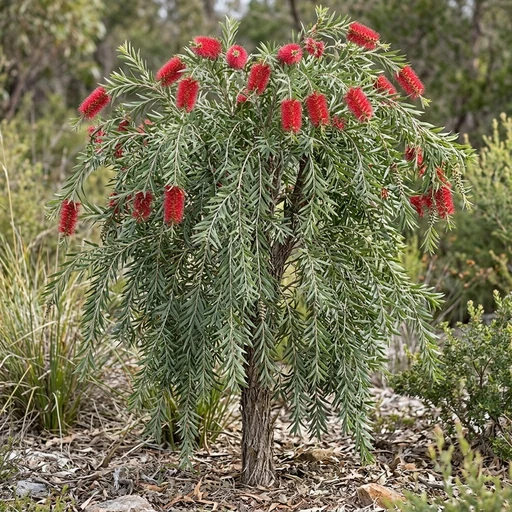
Weeping Bottlebrush
Callistemon viminalis
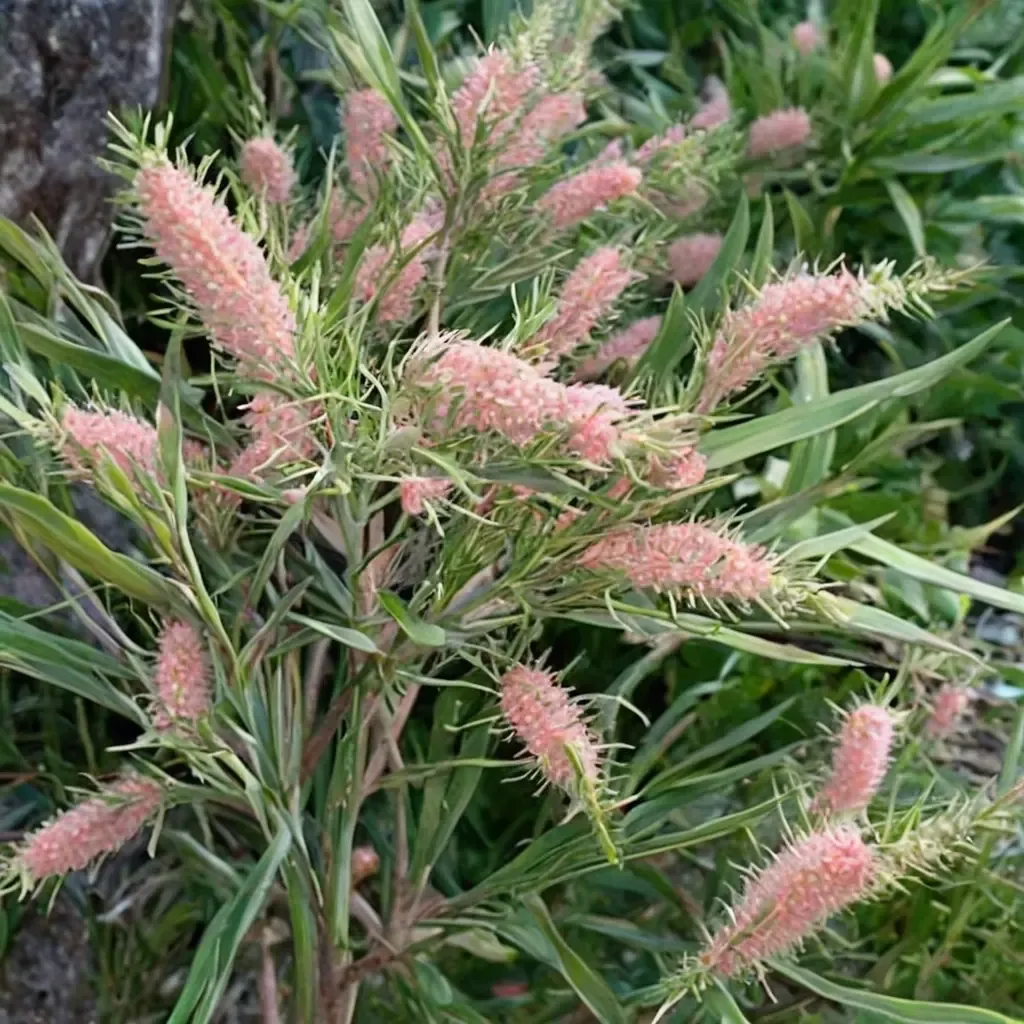
Cane's Hybrid Bottlebrush
Callistemon citrinus 'Cane's Hybrid'
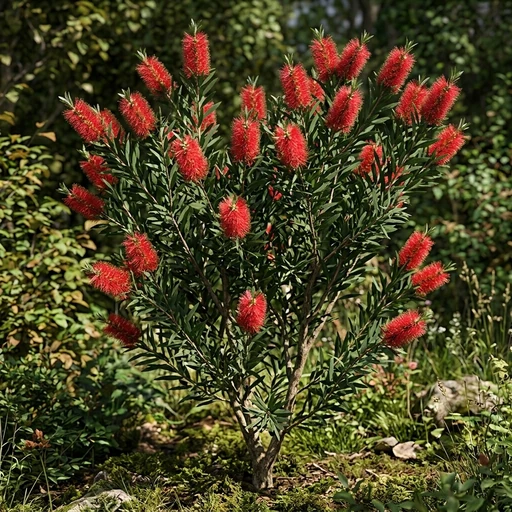
Woodlander's Hardy Bottlebrush
Callistemon x hybrida 'Woodlander'S Hardy'
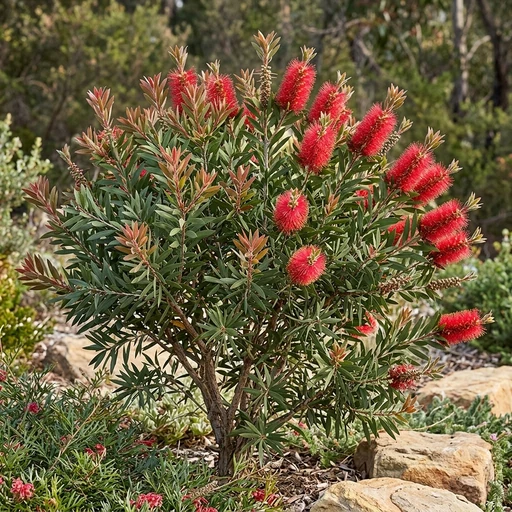
Little John Dwarf Bottlebrush
Callistemon citrinus 'Little John'
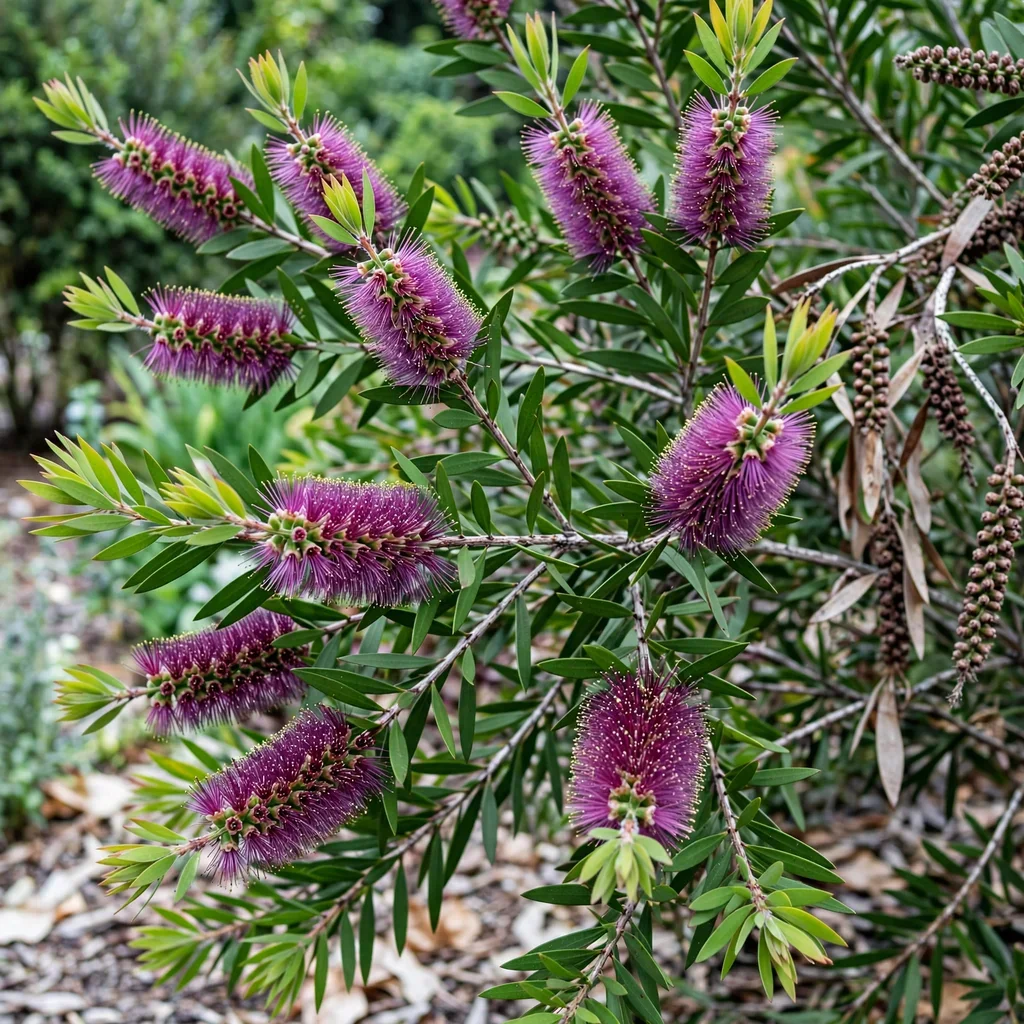
Violet Bottlebrush
Callistemon x hybrida 'Violaceus'
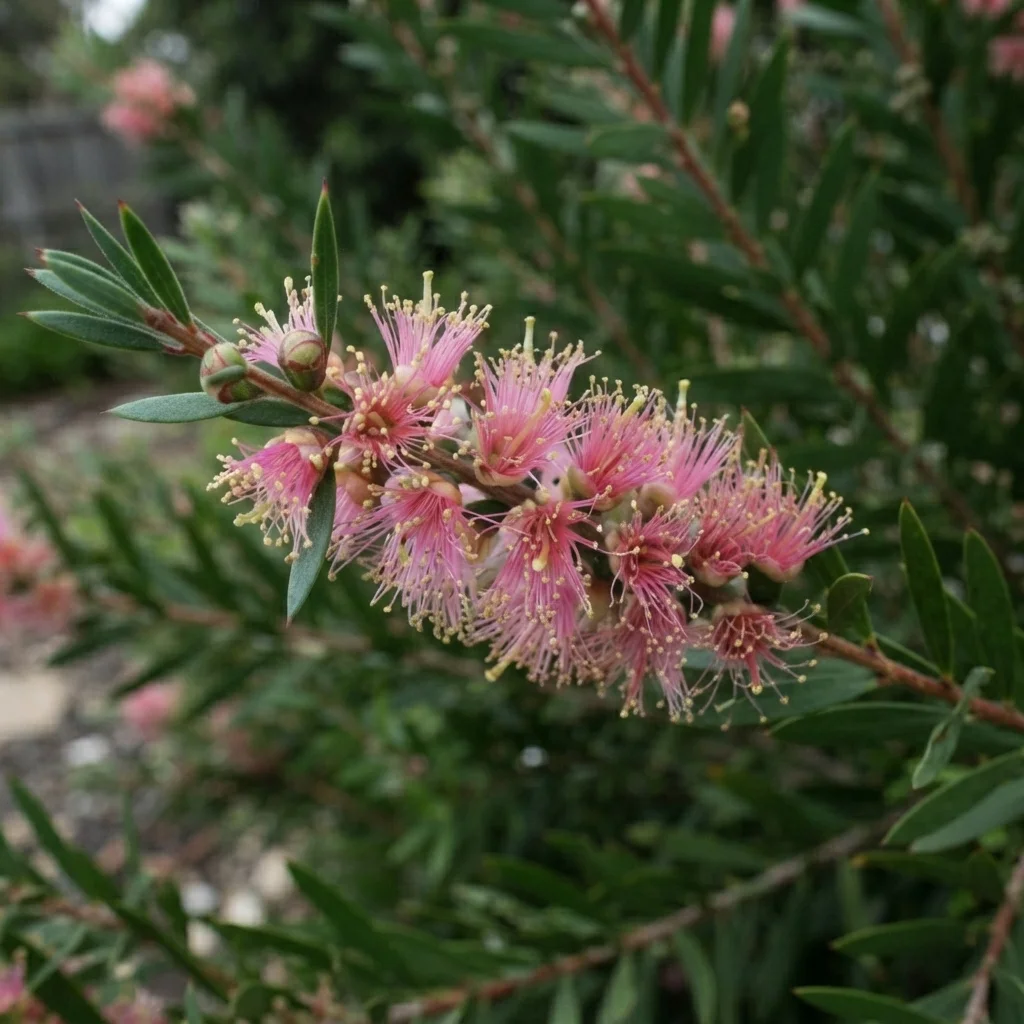
River Bottlebrush
Callistemon sieberi
Keep exploring
Explore the genus
Hardy in your zone?
Grow Crimson Bottlebrush with confidence
See it in a design of your actual yard, get zone-matched care reminders, and track it season by season in your garden journal.