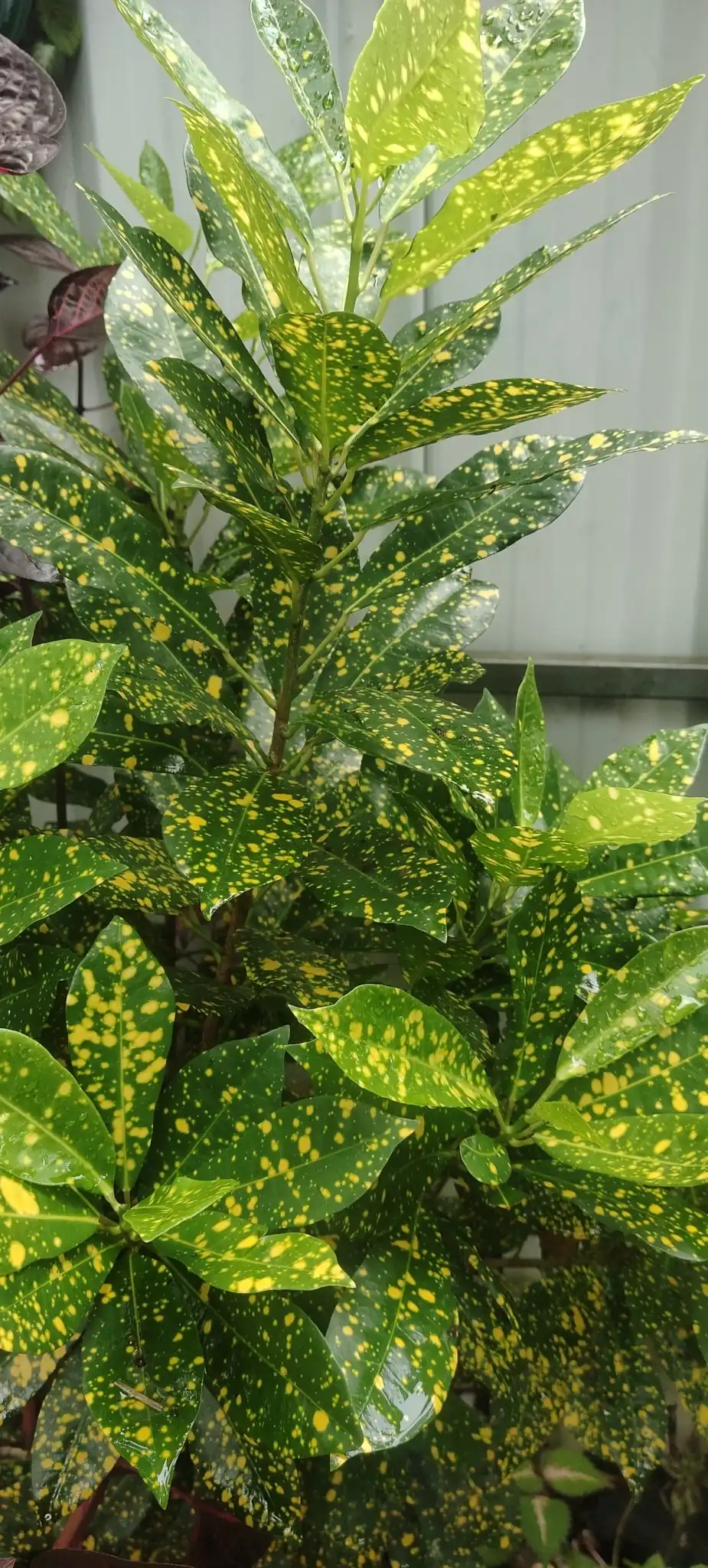
2 named cultivars
The Story
Plant Bio
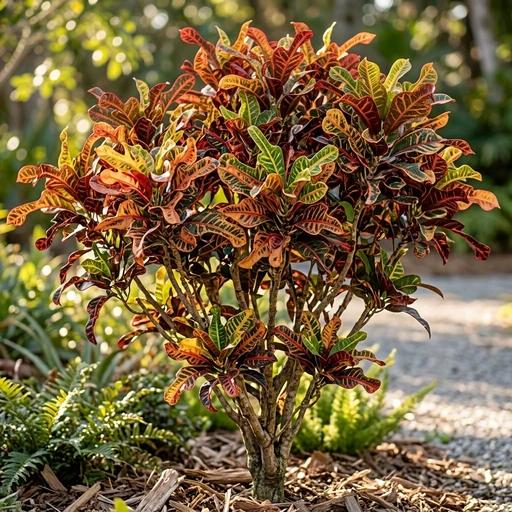
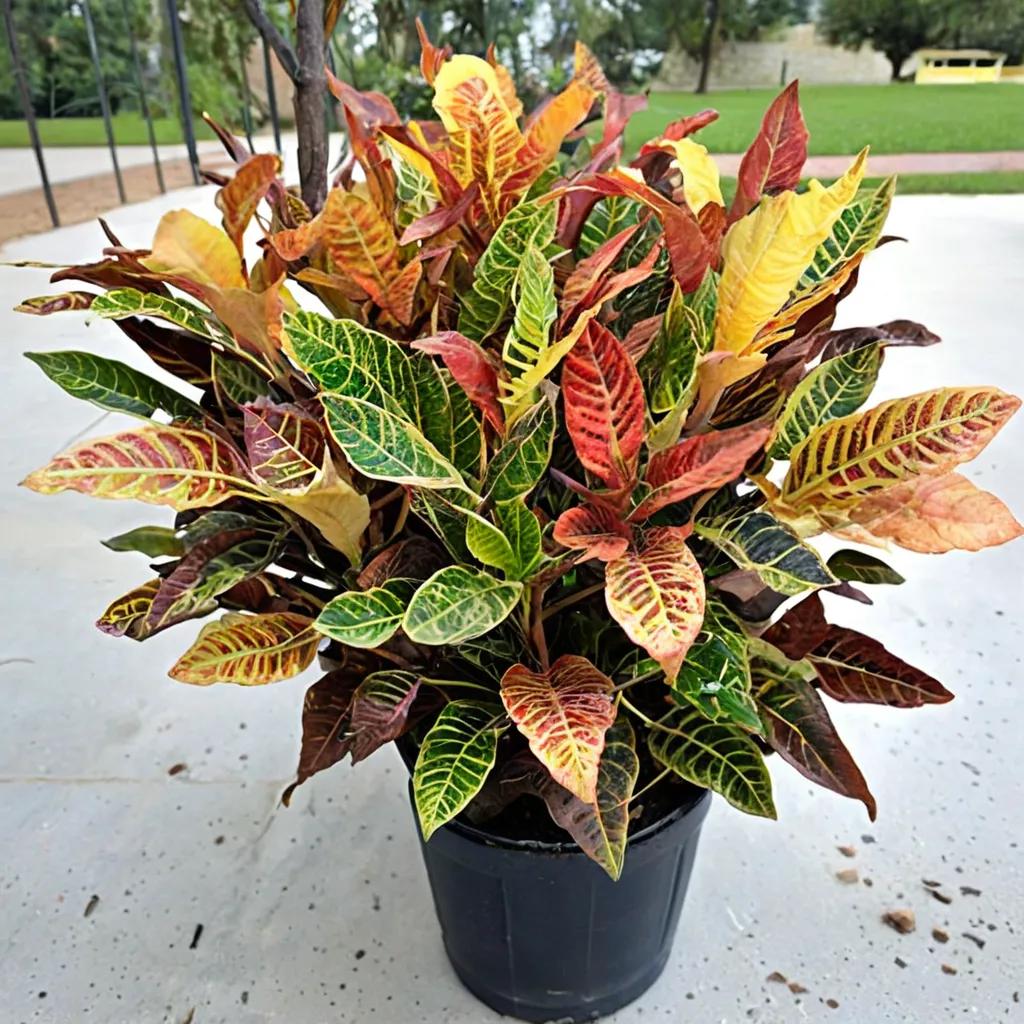
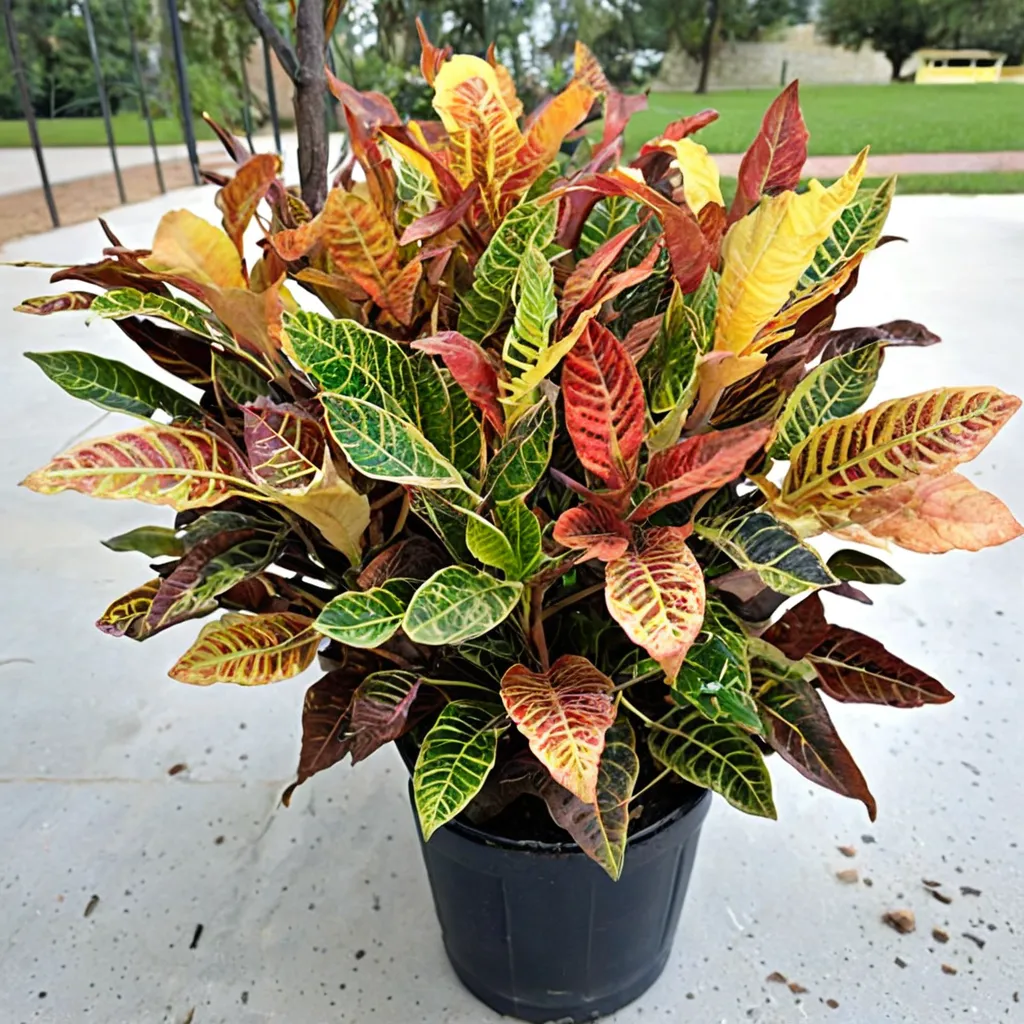
Codiaeum variegatum, the garden croton, is a broadleaf evergreen shrub from Malaysia, the Pacific islands and northern Australia, reaching two to eight feet. It is grown entirely for its leathery leaves, which come in an extraordinary range of shapes and are splashed and veined in green, yellow, orange, red and near-black, often several colours on one plant.
Leaf colour depends on light: in a dim corner a croton reverts to plain green and never recovers its markings, so the brightest position you have is the whole trick. The milky sap blisters skin and is toxic if chewed, so wear gloves when pruning and keep it away from pets. Sudden leaf drop is almost always a draught or a temperature swing.
Uses & Benefits:
Essentials
At a Glance
Plant Type
Shrub
Height
54"
Width
36"
Light
Full Sun, Partial Sun
Zones
10
Water
Moderate
Humidity
High
Lifespan
Perennial
Native To
Malaysia, the Pacific islands and northern Australia
Toxicity
Sap blisters skin; toxic if chewed
Planting
How to Grow
- Give it the brightest light you have, with some direct sun.
- Keep it above 60F and away from cold draughts.
- Water when the top inch of compost dries.
- Raise humidity by grouping plants or using a pebble tray.
- Wear gloves when pruning; the sap irritates skin.
- Move it gradually rather than suddenly between positions.
Pro Tip
Dropped leaves after a move are shock, not disease — keep conditions steady and it releafs rather than needing anything done to it.
Keep It Thriving
Care Guide
Do
- Give it the brightest spot available ☀️
- Keep temperatures steady above 60F 🌡️
- Raise humidity around the plant 💦
- Wear gloves when cutting it 🧤
Don't
- Keep it in a dim corner ❌
- Stand it in a draught or by a cold door ❌
- Let pets or children chew the leaves ❌
Seasonal Care Calendar
| Task | Jan | Feb | Mar | Apr | May | Jun | Jul | Aug | Sep | Oct | Nov | Dec |
|---|---|---|---|---|---|---|---|---|---|---|---|---|
| Feed | ||||||||||||
| Repot |
Watch Out For
Pests & Diseases
Common Pests
Common Diseases
In the Garden
Landscape Uses & Companions
Landscape Uses
Companion Plants
Multiply
Propagation Methods
Good to Know
Common Questions
Croton questions
What zones can Croton grow in?
Croton is hardy in USDA Zone 10. Inside that range it survives winter in the ground; outside it, grow it as an annual or a container plant you protect.
Is Croton deer resistant?
Yes — Croton is rated deer-resistant. Deer typically pass it over, though extreme hunger can override any plant's defenses.
When does Croton bloom?
Croton typically blooms in rarely flowers indoors through late summer. Exact timing shifts a week or two with your zone — Sow's bloom calendar maps it to your garden.
Does Croton need full sun?
Croton does best in full sun to part shade. In hot climates, afternoon shade keeps blooms fresher longer.
More Codiaeum to compare
Keep exploring
Explore the genus
Hardy in your zone?
Grow Croton with confidence
See it in a design of your actual yard, get zone-matched care reminders, and track it season by season in your garden journal.