The Story
Plant Bio
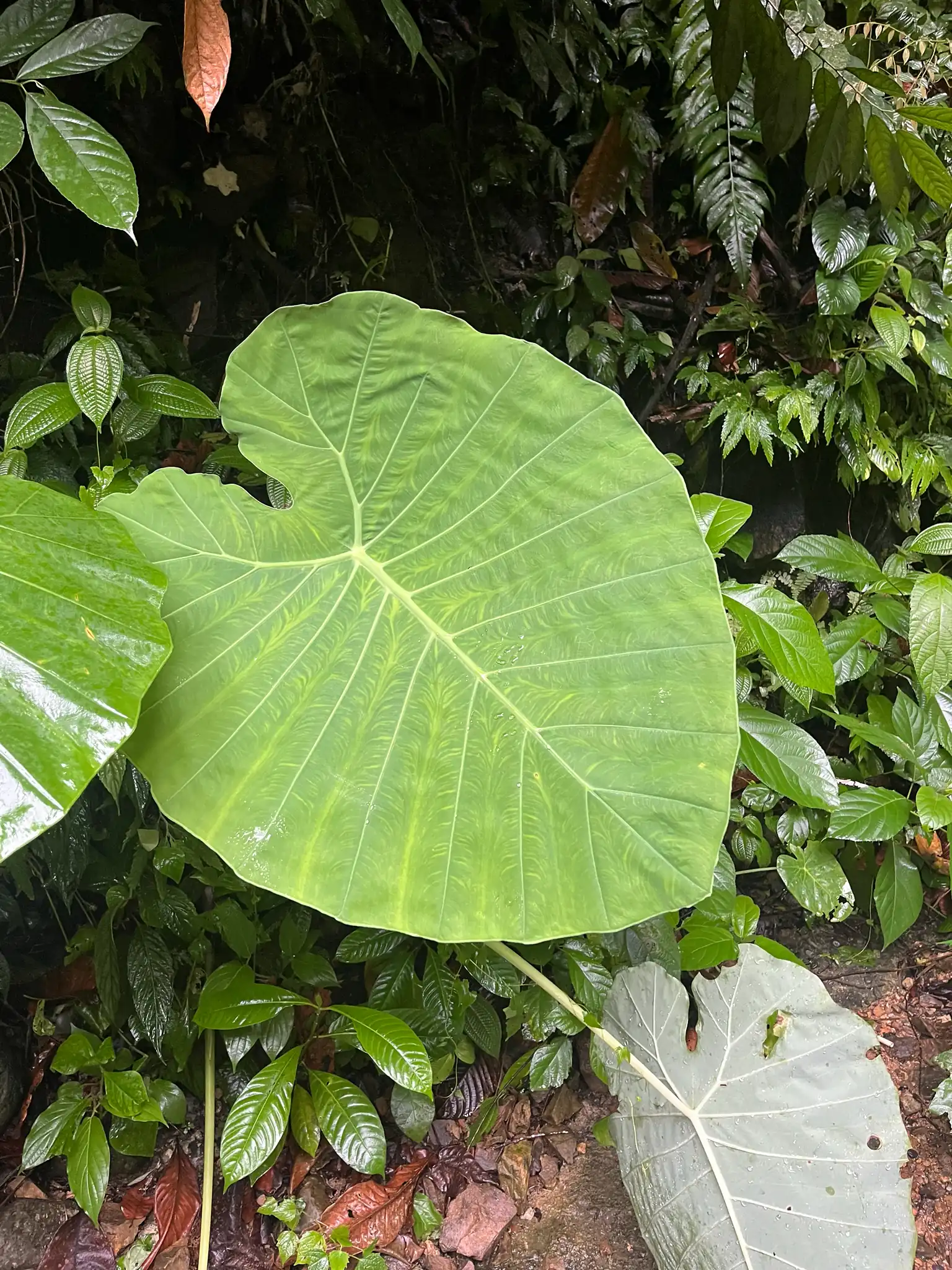
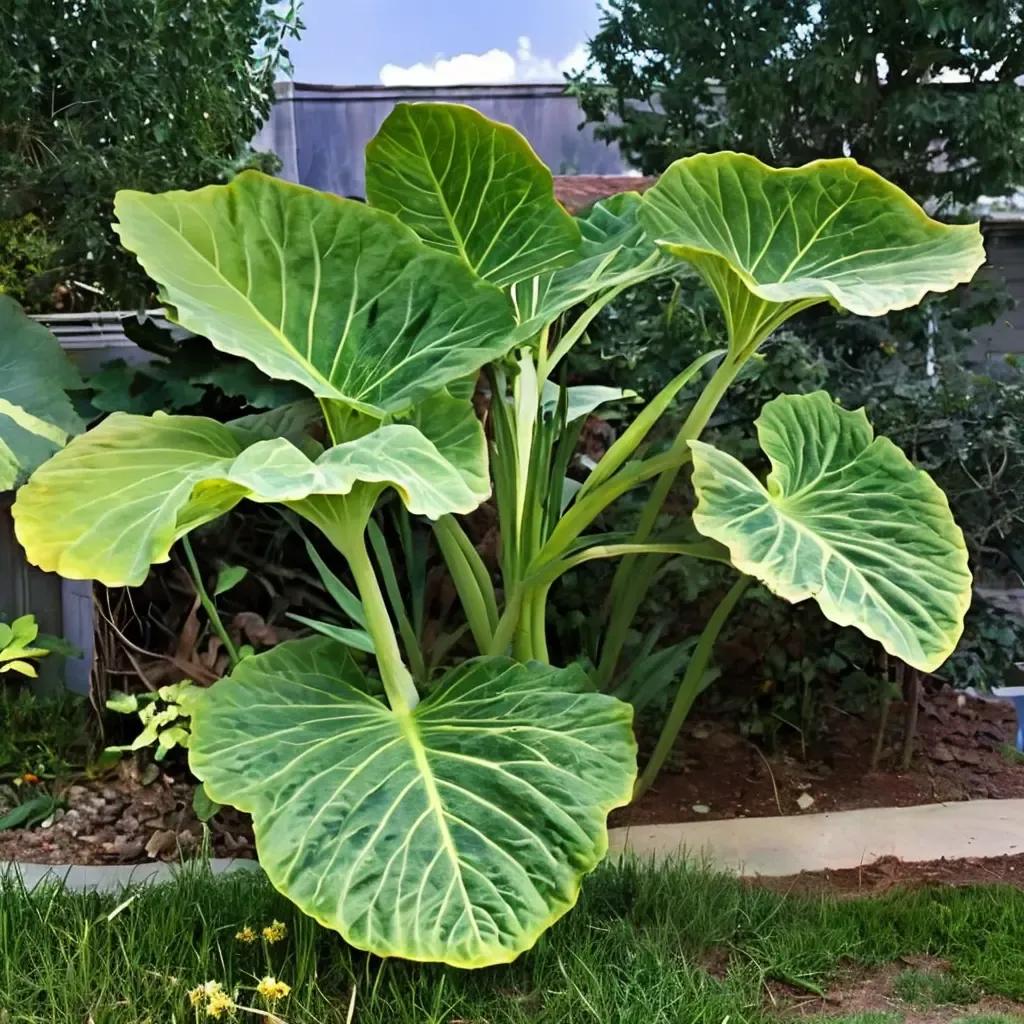
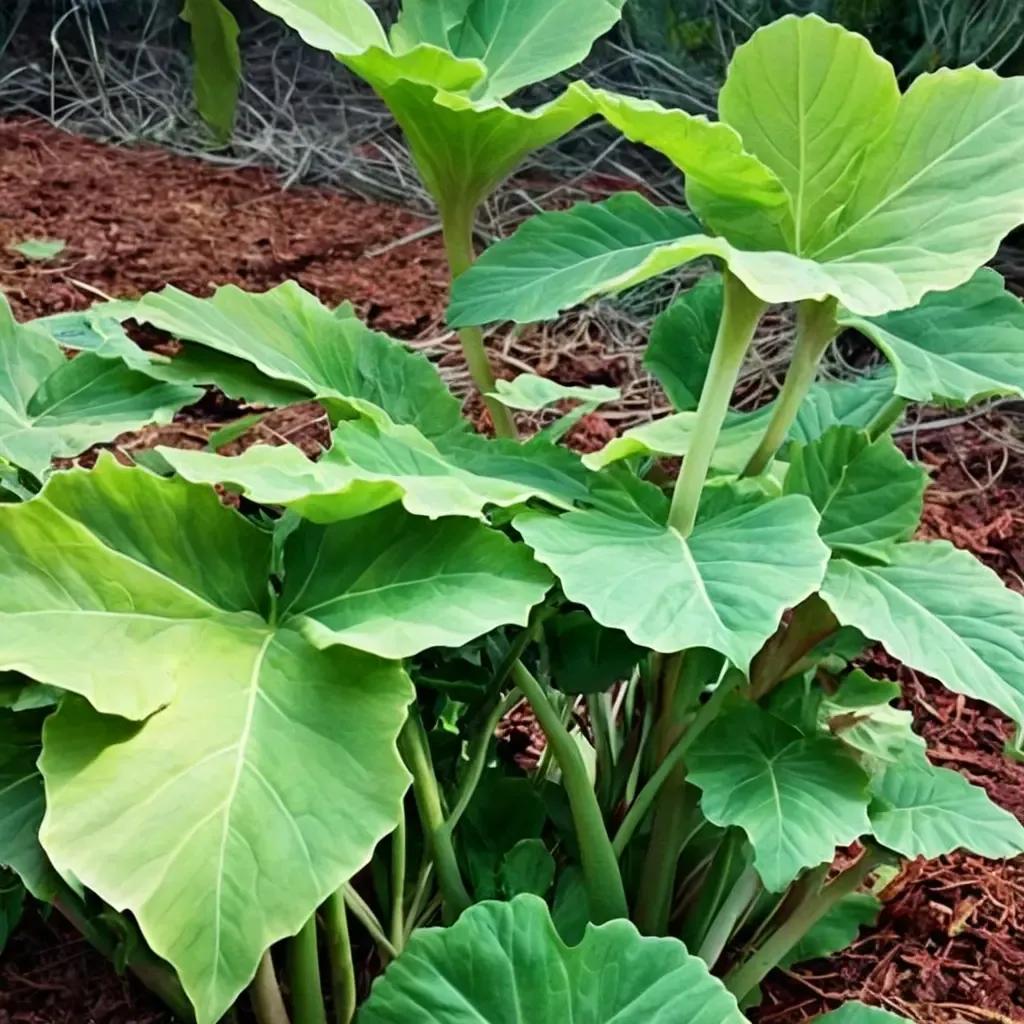
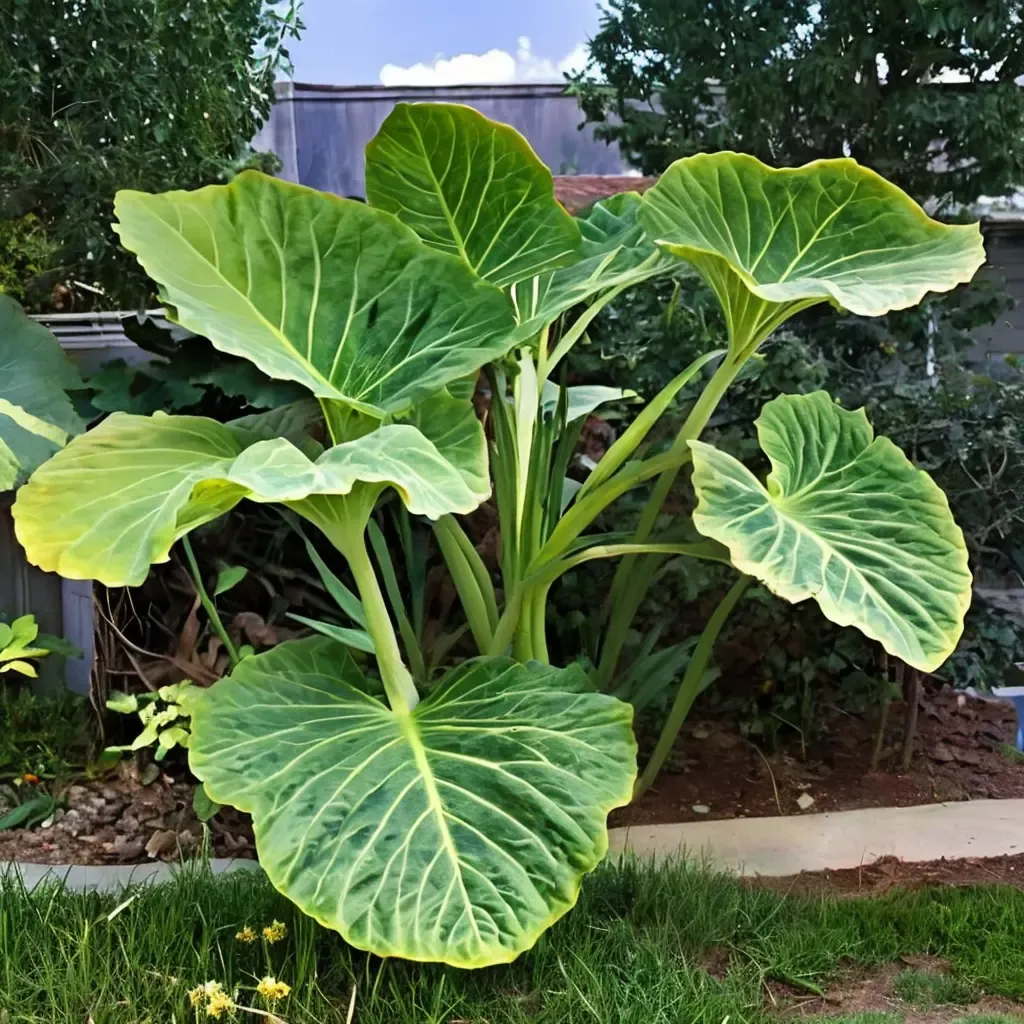
Colocasia gigantea, the giant elephant's ear, is a clump-forming perennial from southeastern Asia growing four to seven feet high and as wide. Enormous heart-shaped leaves, matt green and held on thick upright stalks, are the entire display. Yellowish-white spathes appear low among the foliage from April to June and are easily missed.
The leaves are large enough to be shredded by wind, so a sheltered position matters as much as the moisture it demands. All parts contain calcium oxalate crystals that burn the mouth if chewed, so despite its close relatives being food crops, site it away from where children play and never treat it as edible.
Uses & Benefits:
Essentials
At a Glance
Plant Type
Bulb Corm Tuber
Height
72"
Width
84"
Light
Full Sun, Partial Sun
Zones
8, 9, 10
Water
High
Humidity
High
Lifespan
Perennial
Native To
Southeastern Asia
Toxicity
Toxic if ingested raw
Marketplace
Where to Buy
Shipping costs Year-round shipping Free shipping
Planting
How to Grow
- Plant after the last frost in rich, moist to wet soil.
- Choose a sheltered position out of strong wind.
- Give full sun to part shade, with shade in hot regions.
- Water heavily; it will grow in boggy ground.
- Feed generously through the growing season.
- Lift and store the tubers over winter below zone 8.
Pro Tip
Shelter matters more than most gardeners expect; a single windy site turns the leaves to tatters by midsummer.
Keep It Thriving
Care Guide
Do
- Keep the soil constantly moist to wet 💧
- Site it out of strong wind 🌬️
- Feed it generously in growth 🌿
- Lift and store tubers in cold regions ❄️
Don't
- Let the soil dry out at any stage ❌
- Plant it in an exposed, windy spot ❌
- Treat it as edible; the raw plant burns the mouth ❌
Seasonal Care Calendar
| Task | Jan | Feb | Mar | Apr | May | Jun | Jul | Aug | Sep | Oct | Nov | Dec |
|---|---|---|---|---|---|---|---|---|---|---|---|---|
| Feed | ||||||||||||
| Lift |
Watch Out For
Pests & Diseases
Common Pests
Common Diseases
In the Garden
Landscape Uses & Companions
Landscape Uses
Companion Plants
Multiply
Propagation Methods
Good to Know
Common Questions
Giant Elephant's Ear questions
What zones can Giant Elephant's Ear grow in?
Giant Elephant's Ear is hardy in USDA Zones 8–10. Inside that range it survives winter in the ground; outside it, grow it as an annual or a container plant you protect.
Is Giant Elephant's Ear deer resistant?
Yes — Giant Elephant's Ear is rated deer-resistant. Deer typically pass it over, though extreme hunger can override any plant's defenses.
When does Giant Elephant's Ear bloom?
Giant Elephant's Ear typically blooms in mid to late spring; flowers inconspicuous through early fall. Exact timing shifts a week or two with your zone — Sow's bloom calendar maps it to your garden.
Does Giant Elephant's Ear need full sun?
Giant Elephant's Ear does best in full sun to part shade. In hot climates, afternoon shade keeps blooms fresher longer.
More Colocasia to compare
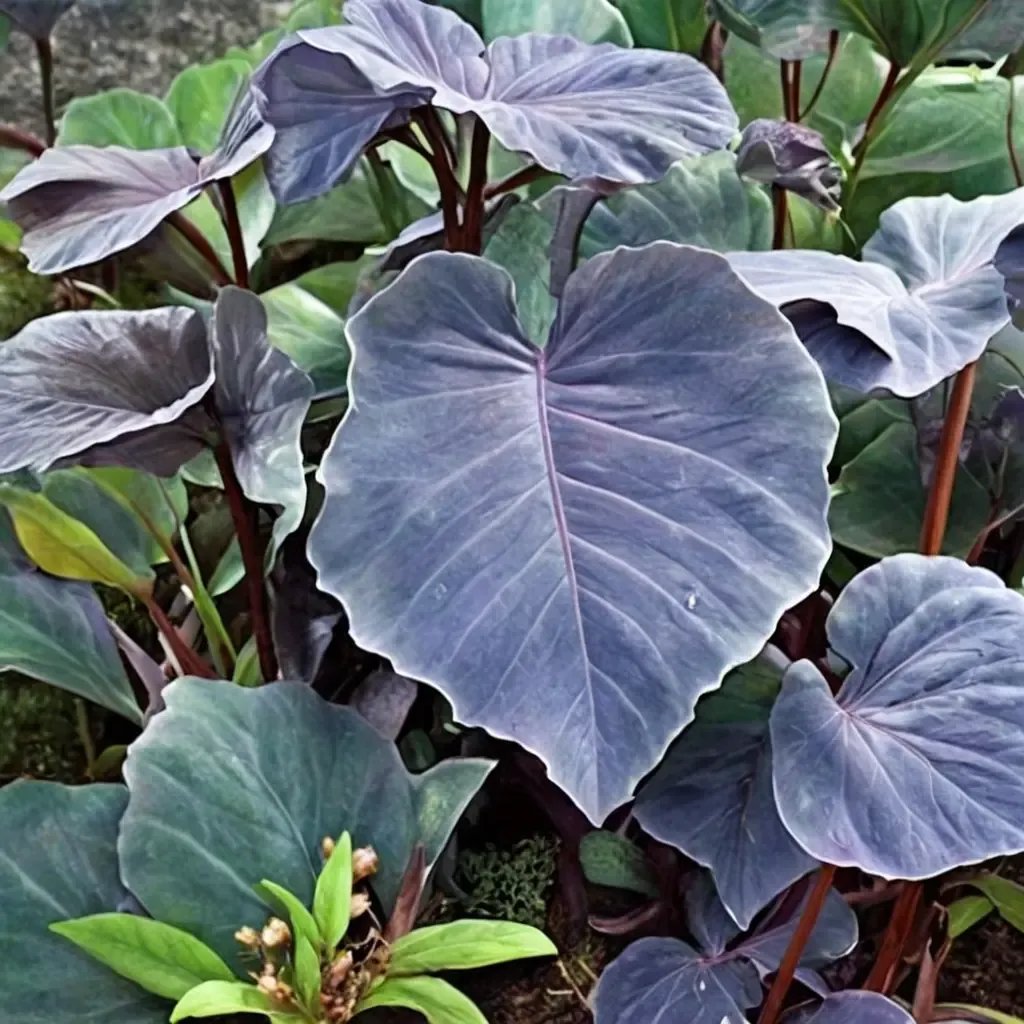
Black Runner Taro
Colocasia esculenta 'Black Runner'
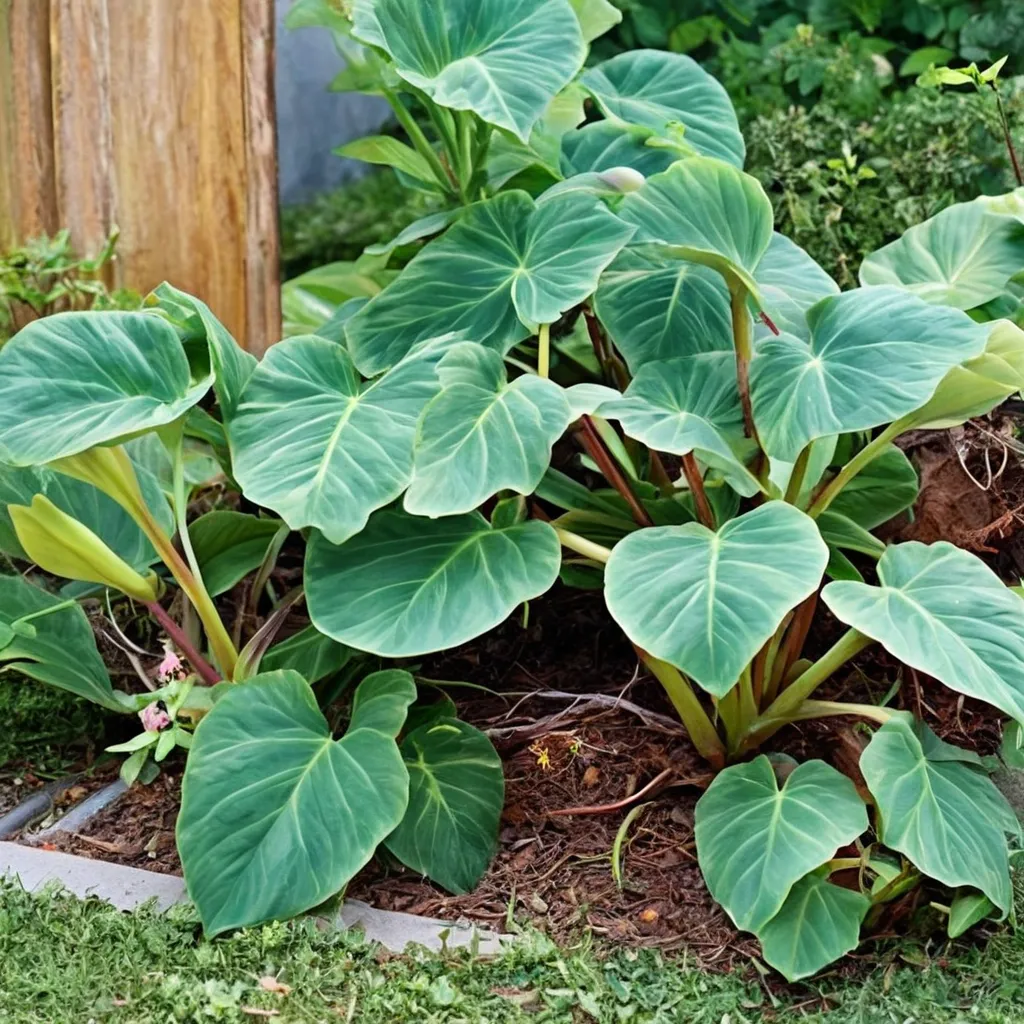
Taro
Colocasia esculenta
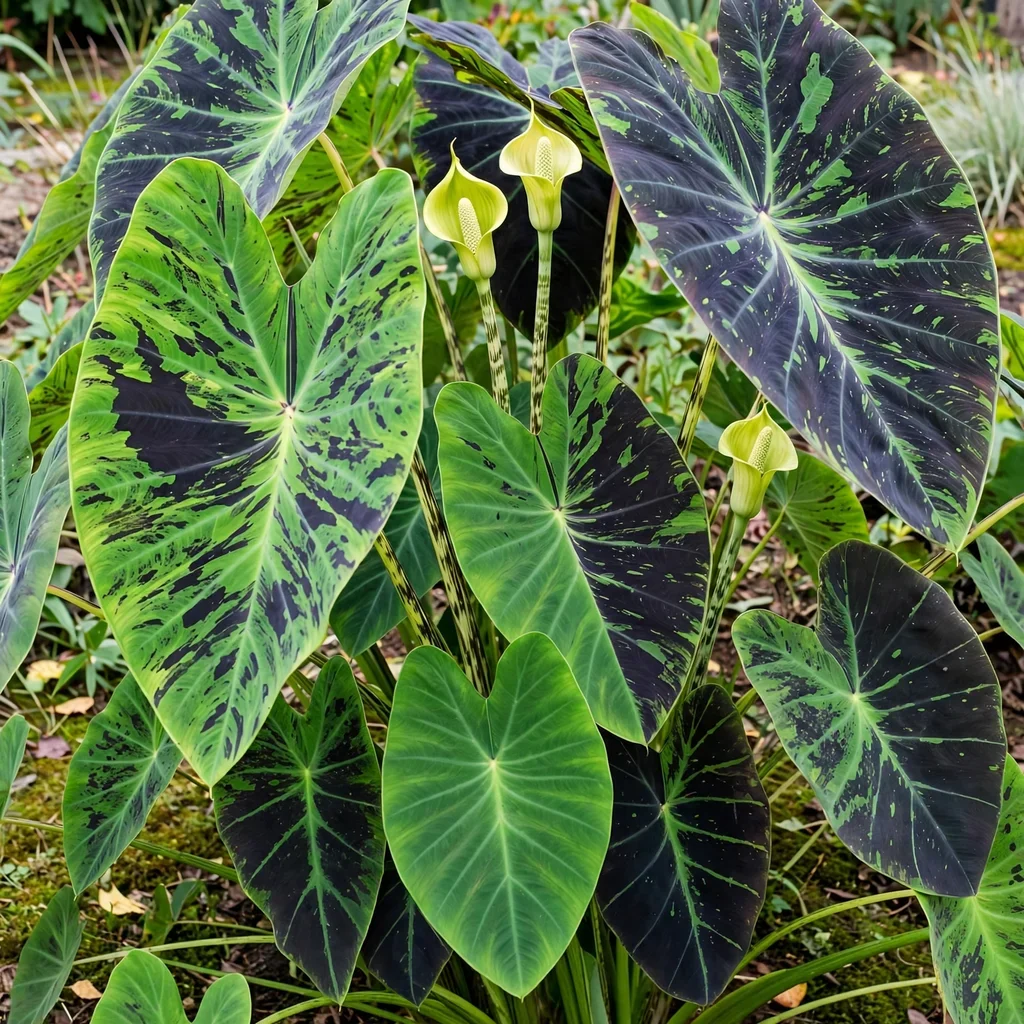
Elephant Ear
Colocasia esculenta 'Chicago Harlequin'
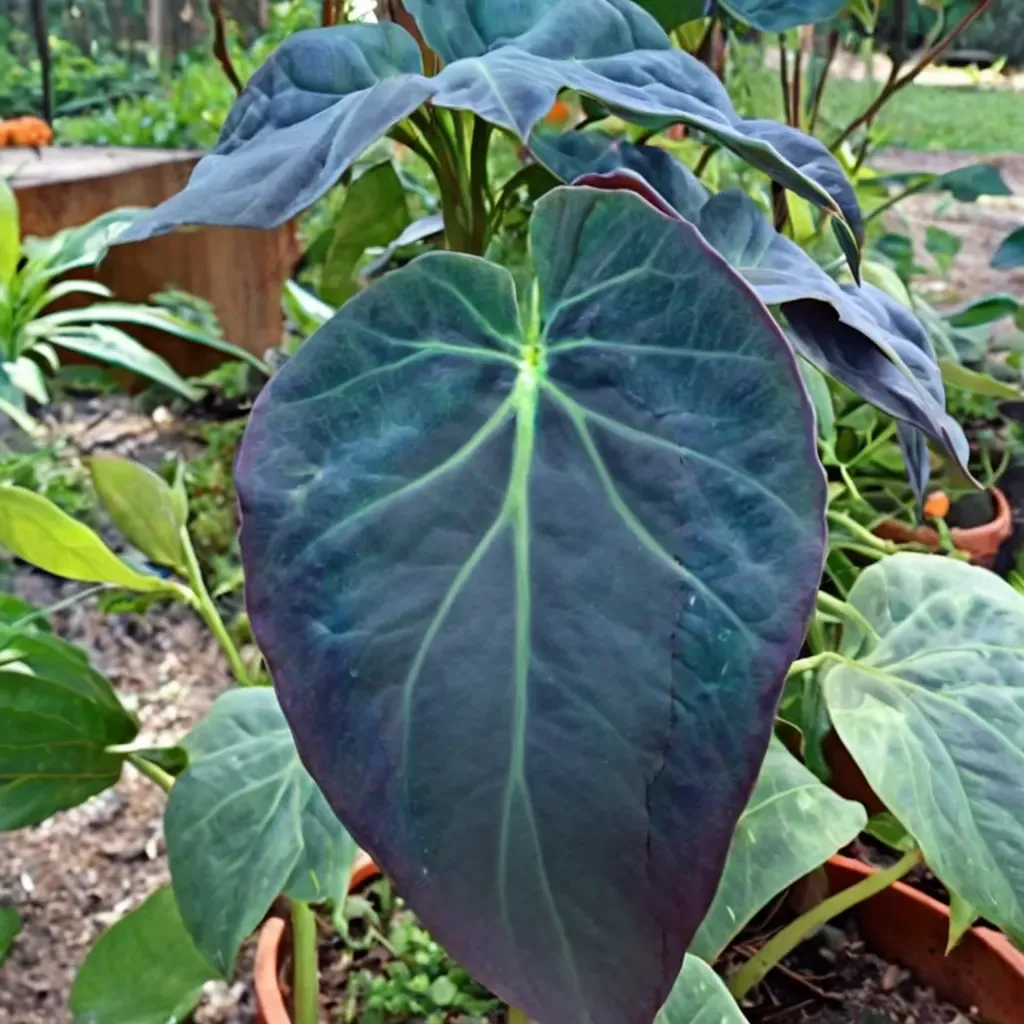
Black Beauty Taro
Colocasia esculenta 'Black Beauty'
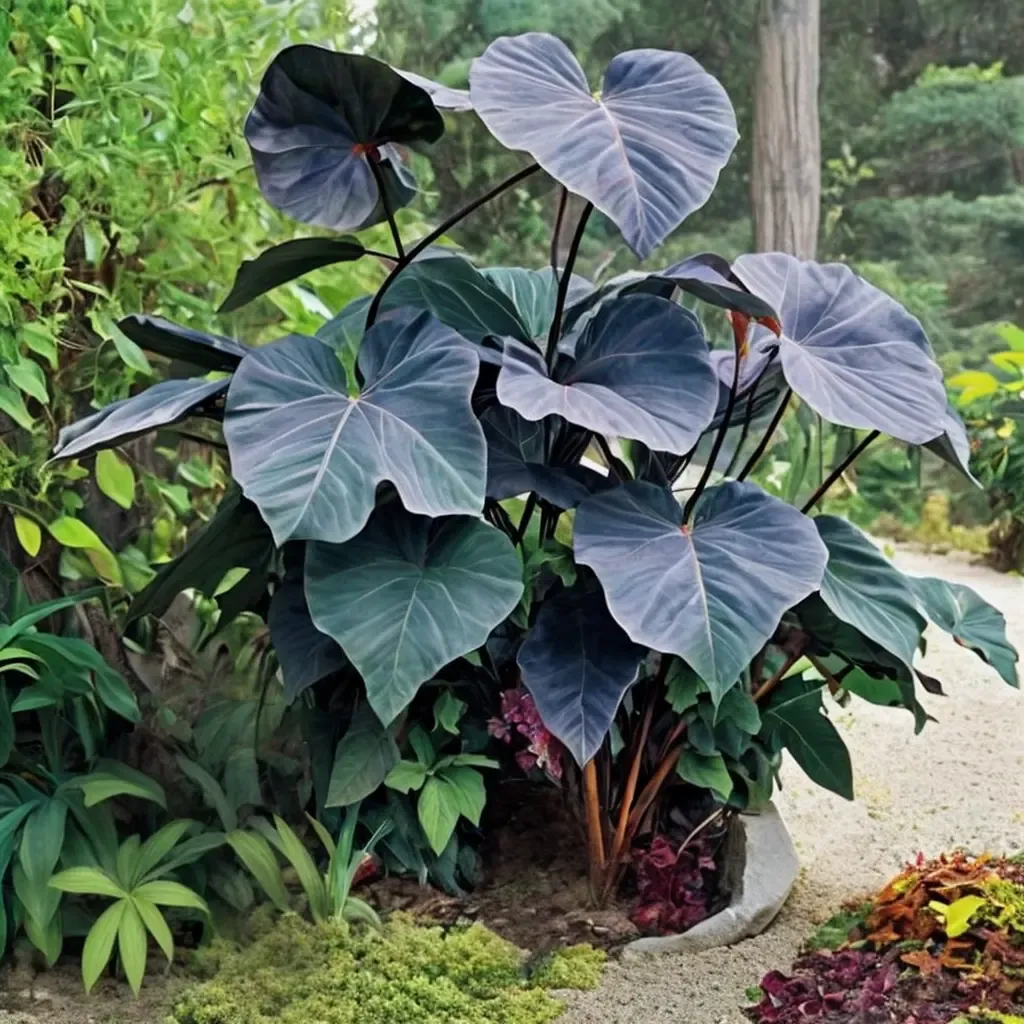
Black Magic Taro
Colocasia esculenta 'Black Magic'
Thailand Giant Taro
Colocasia gigantea 'Thailand Giant'
Keep exploring
Explore the genus
Hardy in your zone?
Grow Giant Elephant's Ear with confidence
See it in a design of your actual yard, get zone-matched care reminders, and track it season by season in your garden journal.