The Story
Plant Bio
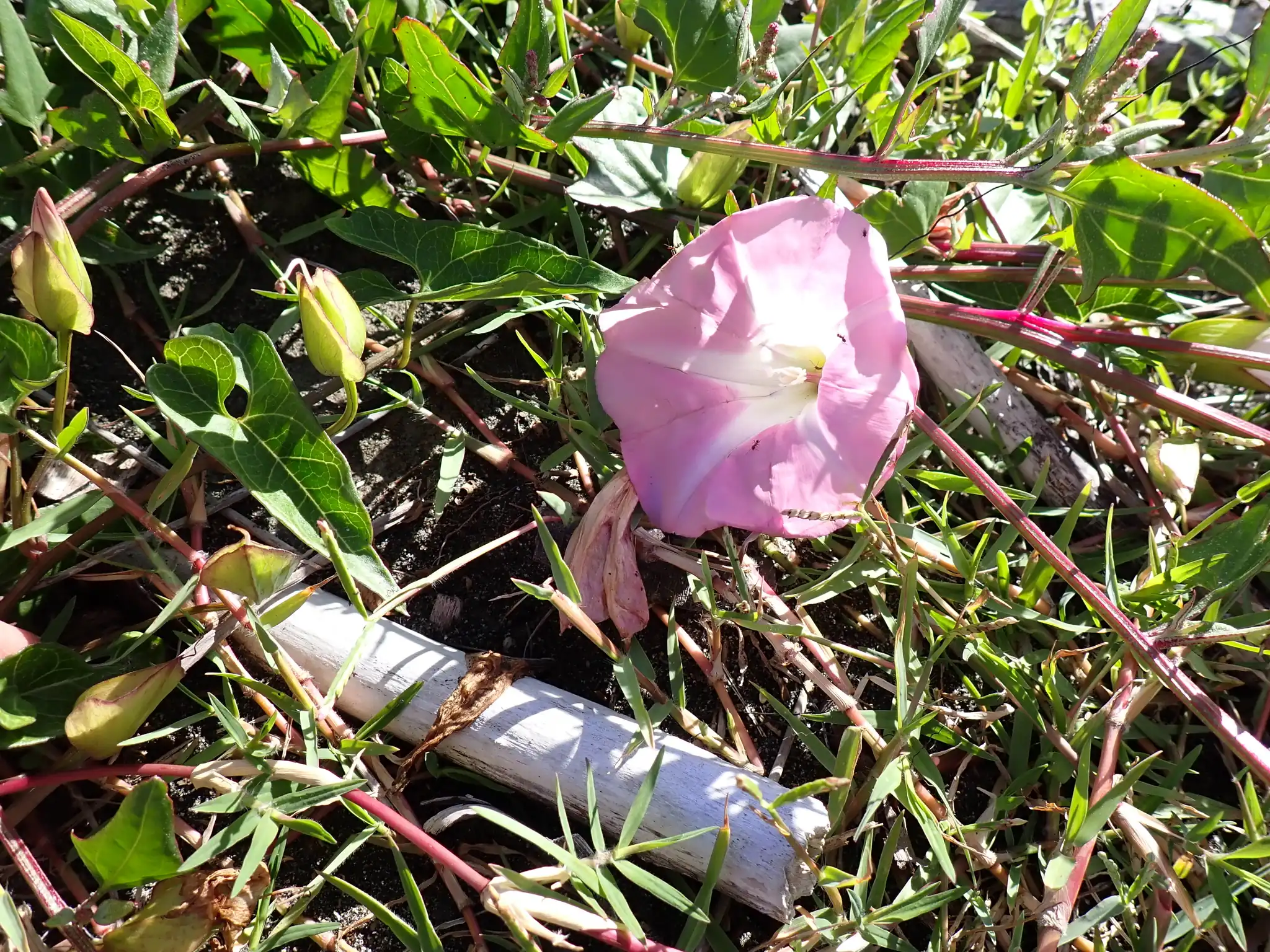
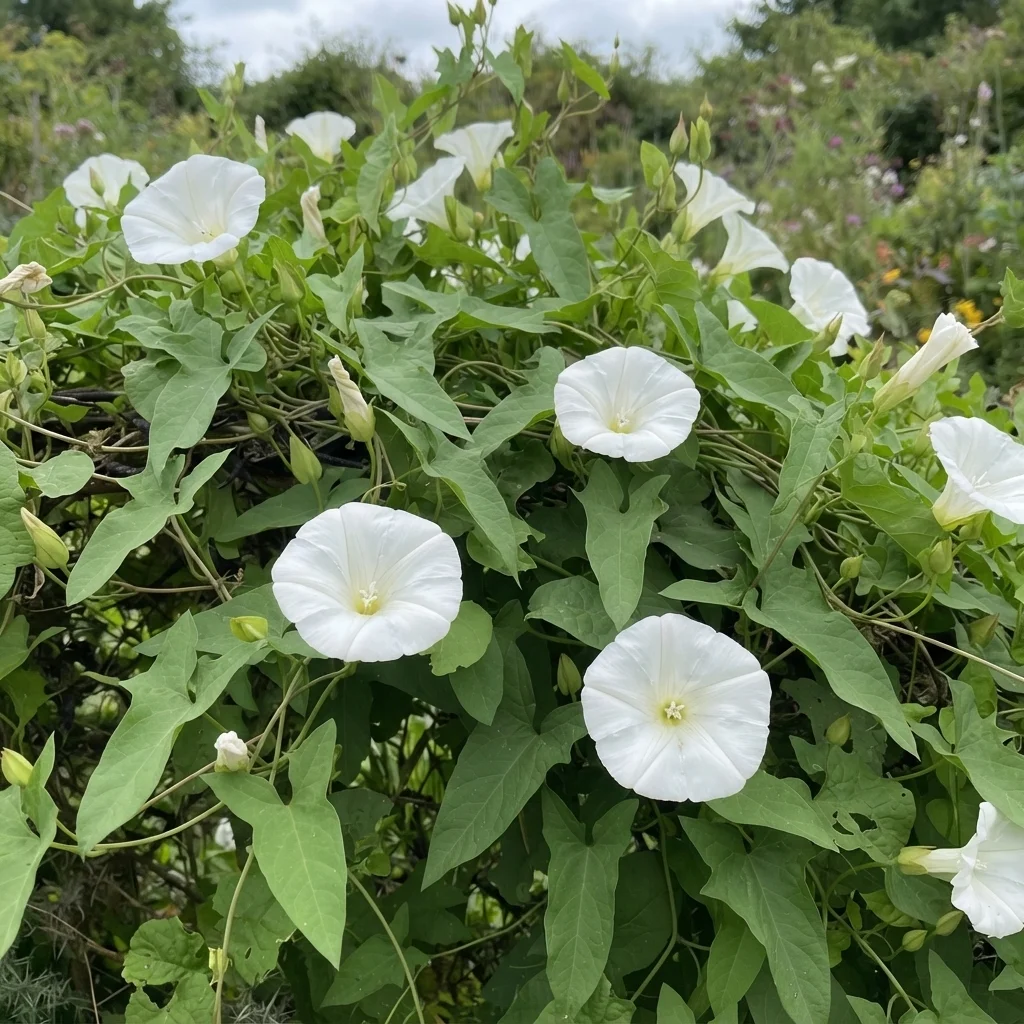
Calystegia sepium is a vigorous herbaceous perennial vine that climbs by twining its slender stems counter-clockwise around any available support. The alternate, arrow-shaped foliage provides a dense green backdrop for large, funnel-shaped flowers that open during the day.
This species features solitary, white to pale pink blossoms subtended by two large, leafy bracts that completely enclose the calyx. Beneath the soil, an extensive network of fleshy rhizomes allows the plant to spread rapidly and persist through freezing winter temperatures.
Uses & Benefits:
Essentials
At a Glance
Plant Type
Vine
Height
1180"
Width
118"
Light
Full Sun, Partial Sun
Zones
4, 5, 6, 7, 8, 9
Water
Moderate
Humidity
High
Lifespan
Perennial
Native To
Northern and Southern Hemispheres
Toxicity
Toxic if Ingested / Skin Irritant
Bloom period
Summer – Autumn
In flower about 6 months of the year
Planting
How to Grow
- Select a site in full sun to partial shade with moist, fertile loam, clay, or sandy soil.
- Install a sturdy trellis, fence, or support structure for the twining stems to climb.
- Plant container-grown specimens or rhizome divisions in spring, watering thoroughly to settle the soil.
- Monitor the planting area continuously to prevent the rhizomes from invading adjacent garden beds.
Pro Tip
Pulling up top growth leaves behind subterranean rhizome fragments that quickly regenerate; complete root extraction or targeted systemic controls are necessary to eradicate established colonies.
Keep It Thriving
Care Guide
Do
- Provide a strong, isolated support structure to prevent the vine from smothering neighboring plants.
- Wear gloves when handling the plant to avoid potential skin irritation from the sap.
- Cut the stems back to the ground in late winter to manage the overall mass of the vine.
Don't
- Do not leave severed root or stem fragments in the soil, as they readily sprout into new plants.
- Avoid applying high-nitrogen fertilizers, which trigger excessive, unmanageable vegetative growth.
- Do not plant this vine near delicate or slow-growing species that can be easily overwhelmed.
Seasonal Care Calendar
| Task | Jan | Feb | Mar | Apr | May | Jun | Jul | Aug | Sep | Oct | Nov | Dec |
|---|---|---|---|---|---|---|---|---|---|---|---|---|
| Pest Check | ||||||||||||
| Propagate | ||||||||||||
| Prune | ||||||||||||
| Spring Cleanup |
Watch Out For
Pests & Diseases
Common Pests
Common Diseases
In the Garden
Landscape Uses & Companions
Landscape Uses
Multiply
Propagation Methods
Good to Know
Common Questions
Hedge Bindweed questions
What zones can Hedge Bindweed grow in?
Hedge Bindweed is hardy in USDA Zones 4–9. Inside that range it survives winter in the ground; outside it, grow it as an annual or a container plant you protect.
Is Hedge Bindweed deer resistant?
Not reliably. Deer may browse Hedge Bindweed, especially tender spring growth — plan on repellents or fencing where pressure is high.
When does Hedge Bindweed bloom?
Hedge Bindweed typically blooms in summer through autumn. Exact timing shifts a week or two with your zone — Sow's bloom calendar maps it to your garden.
Does Hedge Bindweed need full sun?
Hedge Bindweed does best in full sun to part shade. In hot climates, afternoon shade keeps blooms fresher longer.
Is Hedge Bindweed drought tolerant?
Yes — once established (usually after the first full season), Hedge Bindweed handles dry spells with minimal watering. Water deeply its first year to build the root system that makes that possible.
More Calystegia to compare
Keep exploring
Explore the genus
Grow Hedge Bindweed with confidence
See it in a design of your actual yard, get zone-matched care reminders, and track it season by season in your garden journal.