2 named cultivars

The Story
Plant Bio
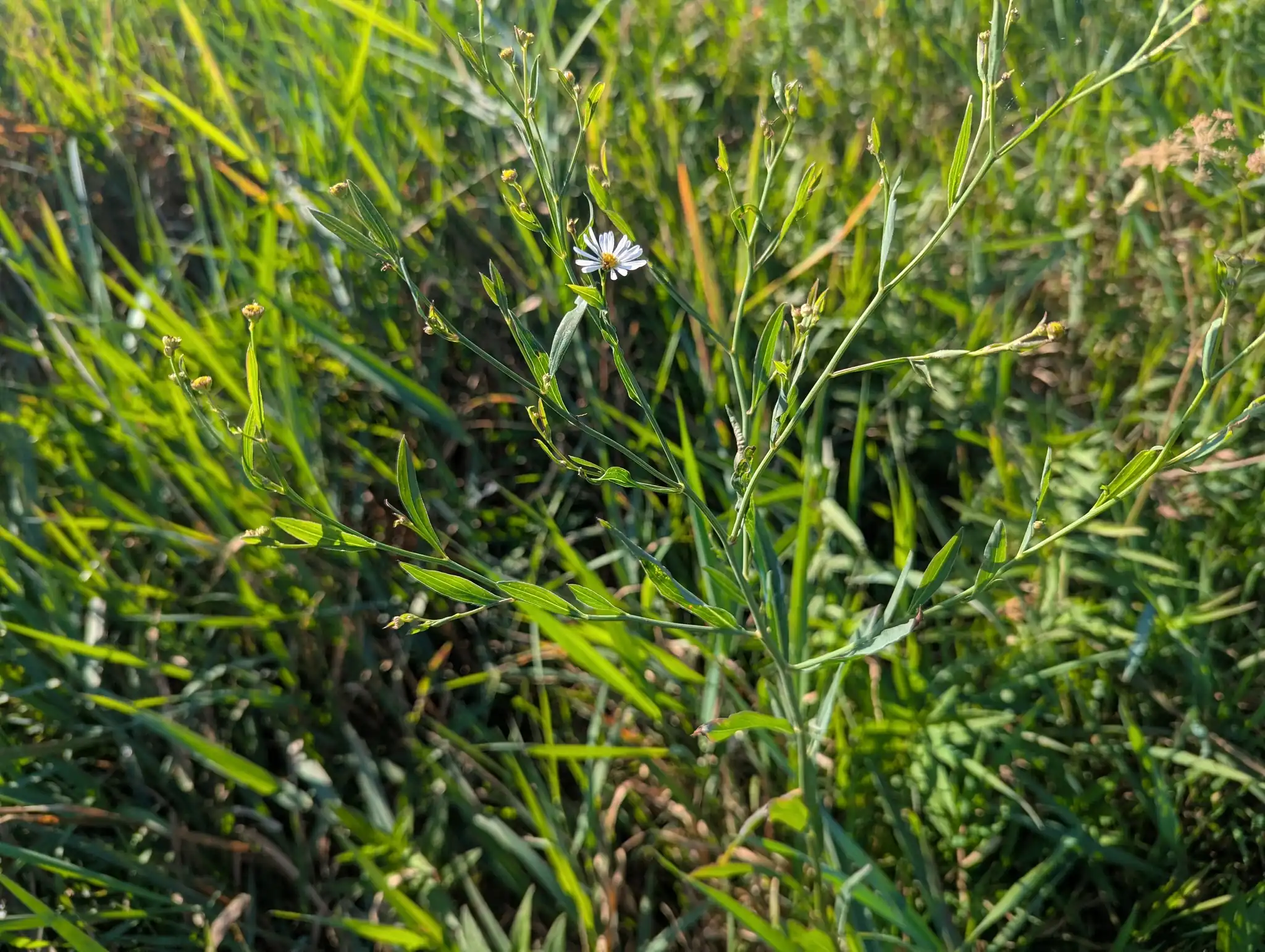
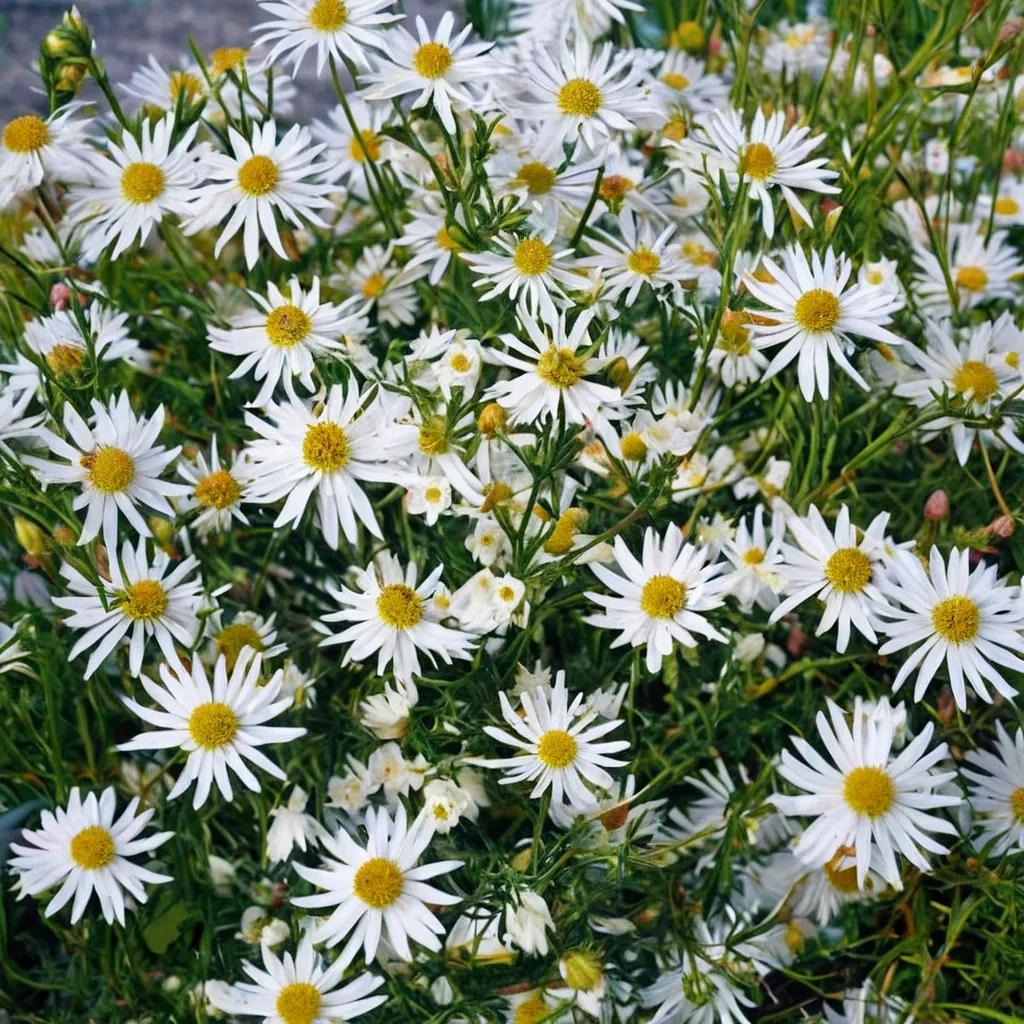
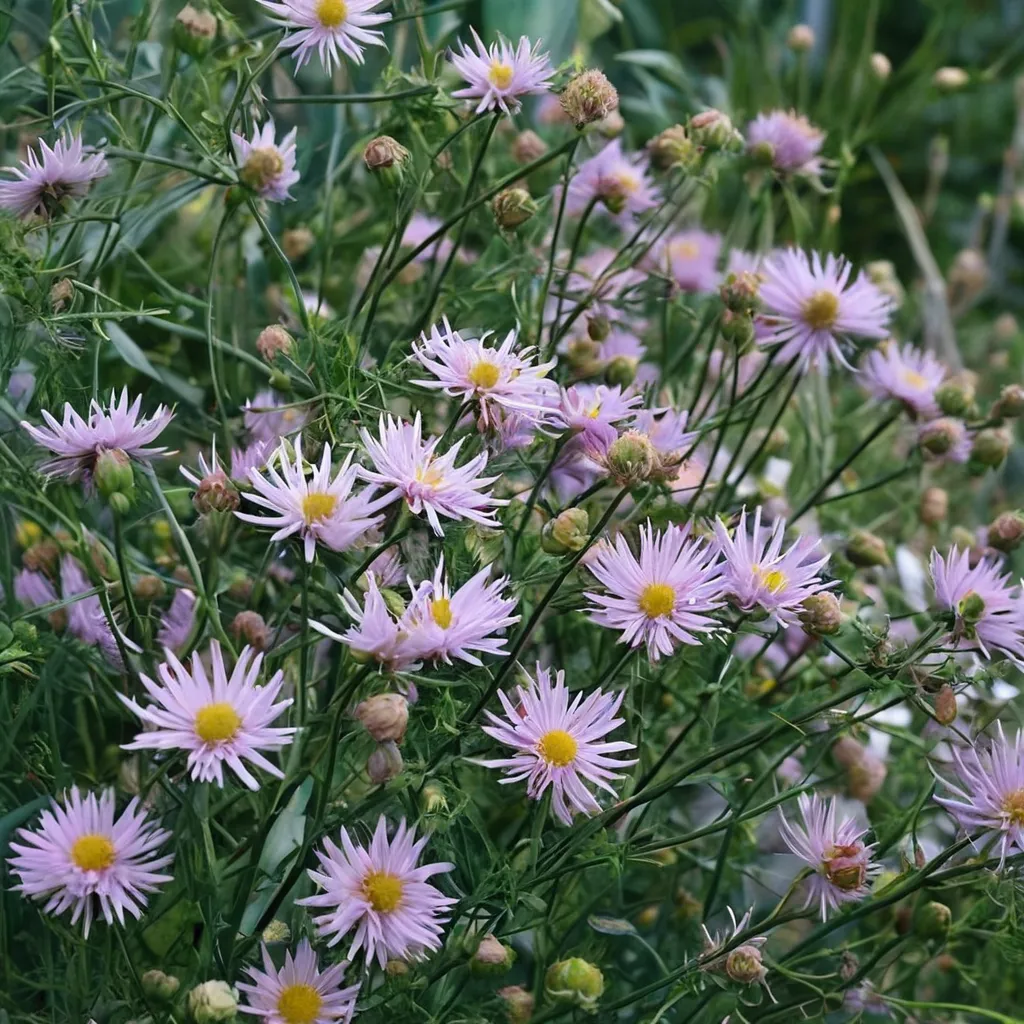
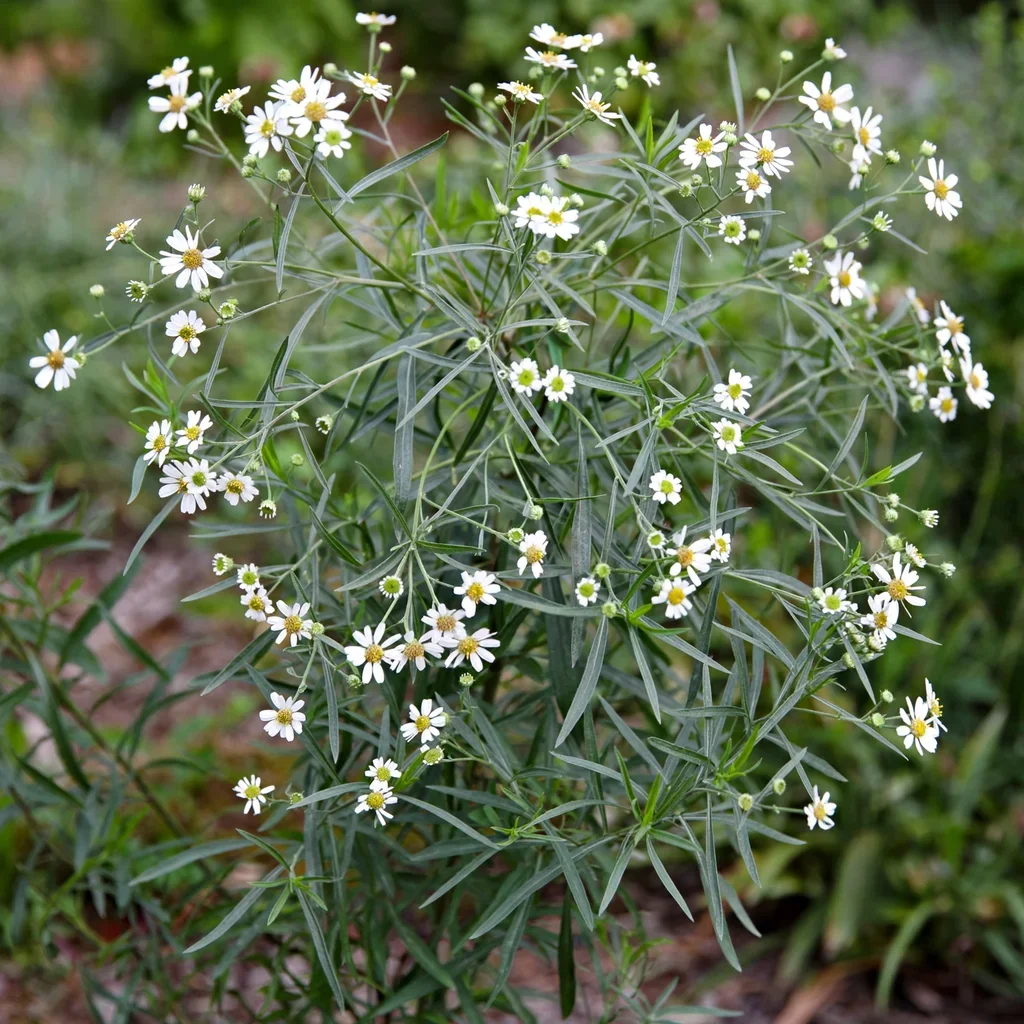
Boltonia asteroides, false aster, is an upright clumping perennial native to eastern North America, reaching three to five feet. Narrow grey-green leaves up to five inches long clothe the stems, and dense panicles of small white to pale pink daisies with yellow centres smother the plant from August into October.
The flower count is extraordinary — a mature clump carries hundreds of blooms at once and reads as a white cloud rather than as individual daisies. It looks much like an aster but is a distinct genus, and it is notably more mildew-resistant than the asters it resembles, which is much of its garden value.
Uses & Benefits:
Essentials
At a Glance
Plant Type
Perennial
Height
48"
Width
30"
Light
Full Sun, Partial Sun
Zones
4, 5, 6, 7, 8, 9, 10
Water
Moderate to high
Humidity
Moderate
Lifespan
Perennial
Native To
Eastern North America
Toxicity
Non-toxic
Planting
How to Grow
- Plant in spring in moist, average soil.
- Choose full sun for upright stems.
- Allow two to three feet of width.
- Keep the soil moist; it tolerates occasional flooding.
- Cut back by a third in early summer to limit height.
- Divide every three years to keep clumps vigorous.
Pro Tip
Pinch it back in early June — at five feet it flops in rich soil, and the cut costs nothing in flower.
Keep It Thriving
Care Guide
Do
- Plant in full sun and moist soil ☀️
- Cut back by a third in early summer ✂️
- Divide every three years 🌱
- Leave seed heads for winter birds 🐦
Don't
- Plant in dry soil ❌
- Feed it richly; growth gets lax ❌
- Crowd it against other tall perennials ❌
Seasonal Care Calendar
| Task | Jan | Feb | Mar | Apr | May | Jun | Jul | Aug | Sep | Oct | Nov | Dec |
|---|---|---|---|---|---|---|---|---|---|---|---|---|
| Divide | ||||||||||||
| Prune |
Watch Out For
Pests & Diseases
Common Pests
Common Diseases
In the Garden
Landscape Uses & Companions
Landscape Uses
Multiply
Propagation Methods
Good to Know
Common Questions
Boltonia questions
What zones can Boltonia grow in?
Boltonia is hardy in USDA Zones 4–10. Inside that range it survives winter in the ground; outside it, grow it as an annual or a container plant you protect.
Is Boltonia deer resistant?
Yes — Boltonia is rated deer-resistant. Deer typically pass it over, though extreme hunger can override any plant's defenses.
When does Boltonia bloom?
Boltonia typically blooms in late summer to fall through late fall. Exact timing shifts a week or two with your zone — Sow's bloom calendar maps it to your garden.
Does Boltonia need full sun?
Boltonia does best in full sun to part shade. In hot climates, afternoon shade keeps blooms fresher longer.
More Boltonia to compare
Keep exploring
Explore the genus
Grow Boltonia with confidence
See it in a design of your actual yard, get zone-matched care reminders, and track it season by season in your garden journal.