The Story
Plant Bio
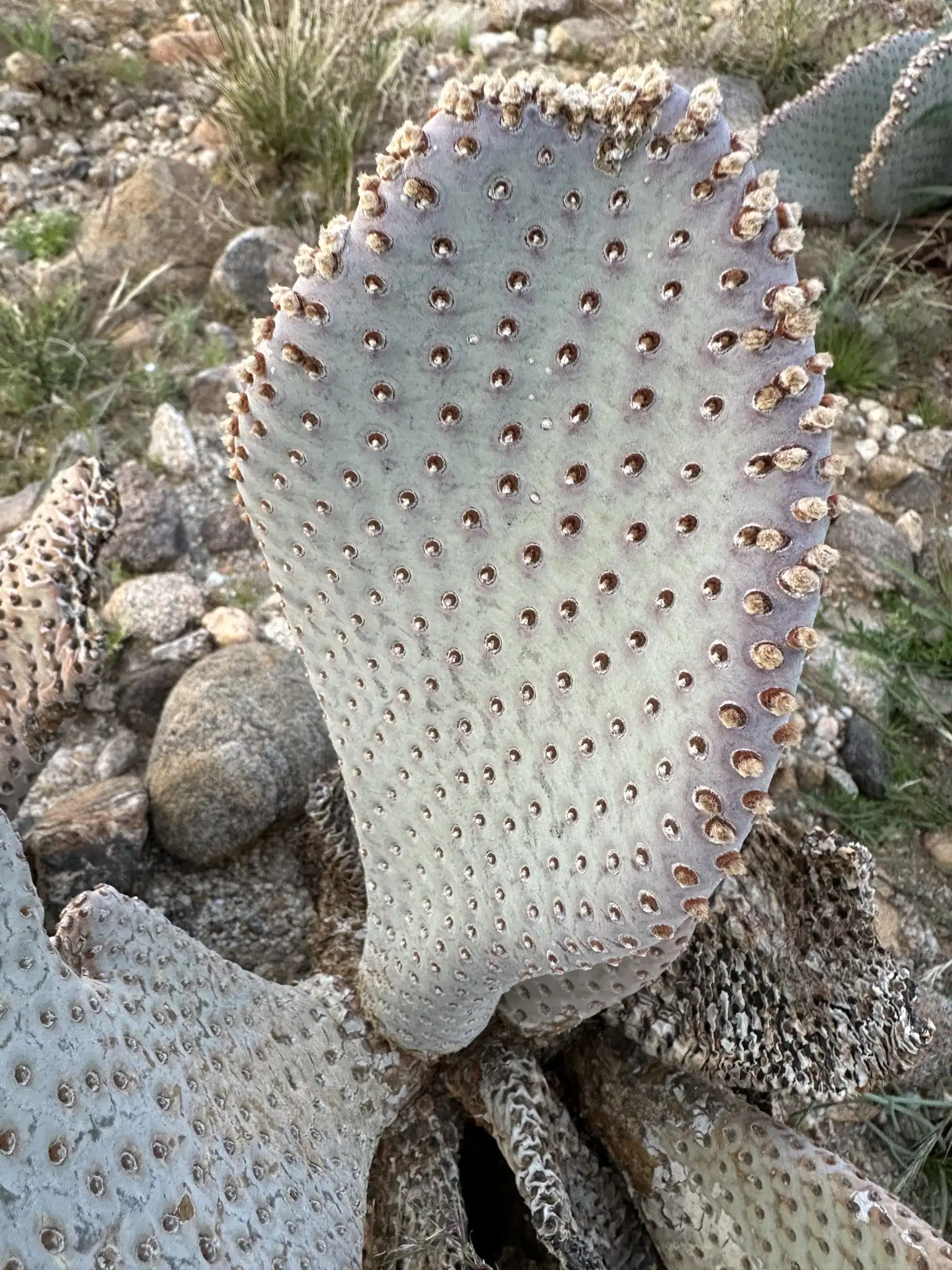
Opuntia basilaris, the beavertail cactus, is a low-growing, clump-forming succulent shrub native to the arid deserts of the Southwestern United States and northwestern Mexico. The plant forms spreading mats of fleshy, flattened, fan-shaped pads that lack long spines but are covered in velvety, minute blue-green to purplish skin.
This species is distinguished by its brilliant rose-pink to magenta cup-shaped flowers that line the upper margins of the pads from spring to early summer. Under drought or temperature stress, the pads take on a deep purplish hue, providing year-round structural interest in dry gardens.
Uses & Benefits:
Essentials
At a Glance
Plant Type
Cactus Succulent
Height
24"
Width
72"
Light
Full Sun
Zones
5, 6, 7, 8, 9
Water
Low
Humidity
Low
Lifespan
Perennial
Native To
North America
Toxicity
Non-toxic (physical hazard from glochids)
Bloom period
Spring – Early summer
In flower about 4 months of the year
Planting
How to Grow
- Select a planting site in full sun with exceptionally sharp, fast-draining sandy or gravelly soil.
- Dig a shallow hole and position the root ball or callused pad, ensuring the crown sits slightly above the surrounding soil level.
- Backfill with a lean, mineral-heavy soil mix, avoiding any organic compost or rich loam.
- Withhold water entirely for the first two weeks to allow any damaged roots or tissues to callus over before moisture is introduced.
Pro Tip
Plant in a lean, strictly mineral-based gritty soil mix and withhold all summer water to simulate its native desert environment; planting in rich organic loam or overwatering triggers rapid, fatal root rot.
Keep It Thriving
Care Guide
Do
- Wear heavy leather gloves or use tongs when handling the pads to avoid the microscopic barbed glochids.
- Ensure absolute sharp drainage in pots by using a high proportion of pumice, perlite, or coarse sand.
- Clear away fallen leaves and garden debris from around the base of the plant to prevent moisture retention.
Don't
- Do not plant in heavy clay, rich organic soils, or areas where water pools after rain.
- Do not overwater during the summer months or apply heavy, nitrogen-rich fertilizers.
- Do not prune into old, woody main stems when removing damaged pads.
Seasonal Care Calendar
| Task | Jan | Feb | Mar | Apr | May | Jun | Jul | Aug | Sep | Oct | Nov | Dec |
|---|---|---|---|---|---|---|---|---|---|---|---|---|
| Fertilize | ||||||||||||
| Pest Check | ||||||||||||
| Plant | ||||||||||||
| Propagate | ||||||||||||
| Winter Prep |
Watch Out For
Pests & Diseases
Common Pests
Common Diseases
In the Garden
Landscape Uses & Companions
Landscape Uses
Companion Plants
Multiply
Propagation Methods
Good to Know
Common Questions
Beavertail Cactus questions
What zones can Beavertail Cactus grow in?
Beavertail Cactus is hardy in USDA Zones 5–9. Inside that range it survives winter in the ground; outside it, grow it as an annual or a container plant you protect.
Is Beavertail Cactus deer resistant?
Yes — Beavertail Cactus is rated deer-resistant. Deer typically pass it over, though extreme hunger can override any plant's defenses.
When does Beavertail Cactus bloom?
Beavertail Cactus typically blooms in spring through early summer. Exact timing shifts a week or two with your zone — Sow's bloom calendar maps it to your garden.
Does Beavertail Cactus need full sun?
Beavertail Cactus does best in full sun (6+ hours).
Is Beavertail Cactus drought tolerant?
Yes — once established (usually after the first full season), Beavertail Cactus handles dry spells with minimal watering. Water deeply its first year to build the root system that makes that possible.
More Opuntia to compare
Keep exploring
Explore the genus
Hardy in your zone?
Grow Beavertail Cactus with confidence
See it in a design of your actual yard, get zone-matched care reminders, and track it season by season in your garden journal.