The Story
Plant Bio
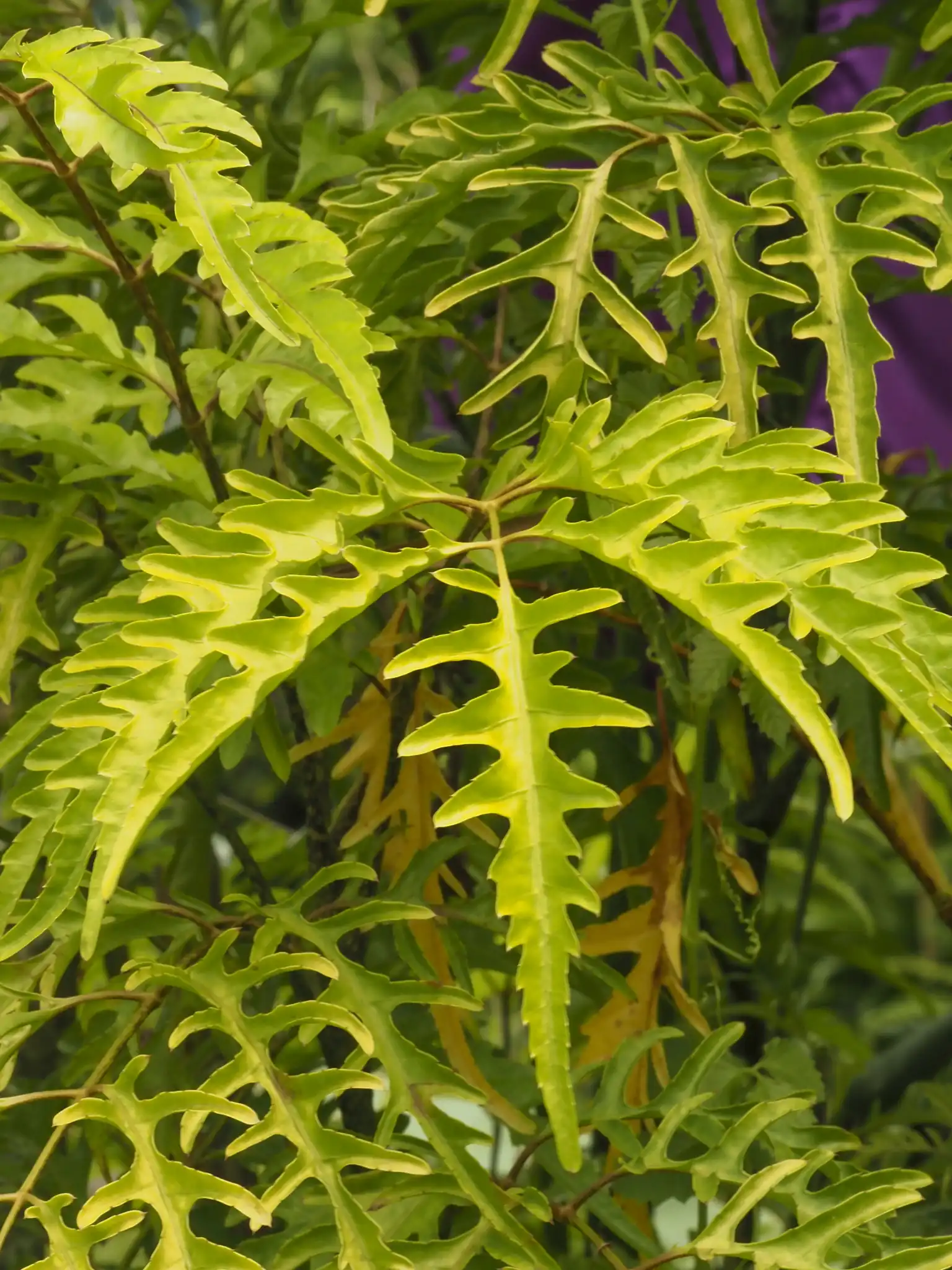
Polyscias fruticosa is an upright, multi-stemmed evergreen tropical shrub with highly architectural, woody stems and finely divided, lacelike foliage. The tripinnate leaves feature glossy dark green leaflets with serrated margins, creating a dense, canopy-like crown that resembles a miniature tree.
This species is highly prized for its elegant, bonsai-like growth habit and deeply cut foliage that brings a delicate texture to indoor spaces. New growth emerges in a soft, light green that contrasts sharply with the mature, dark green canopy.
Uses & Benefits:
Essentials
At a Glance
Plant Type
Tropical
Height
72"
Width
48"
Light
Full Sun, Partial Sun
Water
Moderate
Humidity
Moderate to High
Lifespan
Long-lived
Native To
India to Polynesia
Toxicity
Mildly toxic to pets and humans
Bloom period
Summer
In flower about 3 months of the year
Planting
How to Grow
- Place the plant in a location with bright, indirect or filtered sunlight, such as near an east- or south-facing window.
- Water thoroughly when the top one to two inches of soil feels dry, ensuring all excess water drains completely from the pot.
- Maintain moderate to high indoor humidity by using a humidifier or placing the pot on a pebble tray filled with water.
- Apply a balanced liquid fertilizer diluted to half-strength every four to six weeks during the active spring and summer growth phases.
Pro Tip
Avoid moving the container once established, as sudden changes in light, temperature, or drafts trigger rapid leaf drop; maintain a consistent watering schedule where only the top inch of soil dries out.
Keep It Thriving
Care Guide
Do
- Keep the plant in a stable environment free from cold drafts and heating vents.
- Use a well-draining potting mix rich in organic matter.
- Prune the tips of active stems to encourage denser branching.
Don't
- Do not allow the pot to sit in standing water, which rapidly causes root rot.
- Avoid pruning heavily into old, leafless wood as regrowth is extremely slow.
- Do not fertilize during the dormant fall and winter months.
Seasonal Care Calendar
| Task | Jan | Feb | Mar | Apr | May | Jun | Jul | Aug | Sep | Oct | Nov | Dec |
|---|---|---|---|---|---|---|---|---|---|---|---|---|
| Fertilize | ||||||||||||
| Pest Check | ||||||||||||
| Prune |
Watch Out For
Pests & Diseases
Common Pests
Common Diseases
In the Garden
Landscape Uses & Companions
Landscape Uses
Companion Plants
Multiply
Propagation Methods
Good to Know
Common Questions
Ming Aralia questions
Is Ming Aralia deer resistant?
Not reliably. Deer may browse Ming Aralia, especially tender spring growth — plan on repellents or fencing where pressure is high.
When does Ming Aralia bloom?
Ming Aralia typically blooms in summer through summer. Exact timing shifts a week or two with your zone — Sow's bloom calendar maps it to your garden.
Does Ming Aralia need full sun?
Ming Aralia does best in full sun to part shade. In hot climates, afternoon shade keeps blooms fresher longer.
Keep exploring
Explore the genus
Grow Ming Aralia with confidence
See it in a design of your actual yard, get zone-matched care reminders, and track it season by season in your garden journal.