

The Story
Plant Bio
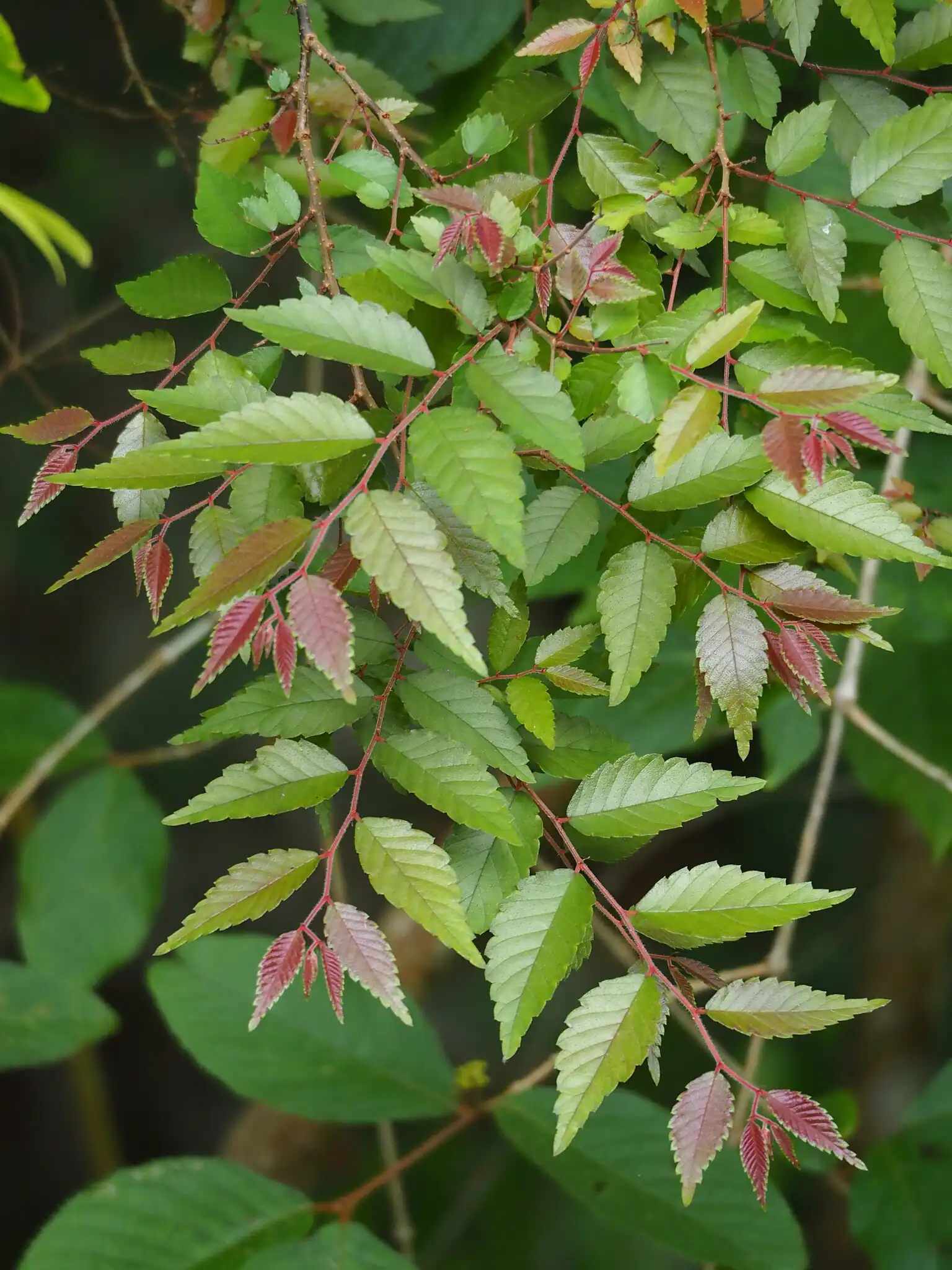
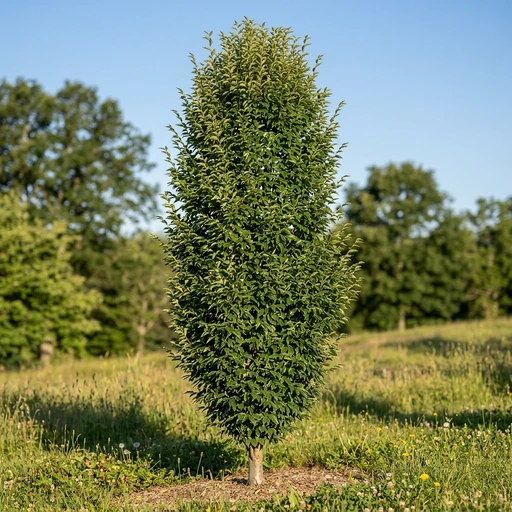
Zelkova serrata, the Japanese zelkova, is a large deciduous tree from China, Japan, Korea, Taiwan and eastern Russia that reaches 50 to 80 ft tall and about as much across. Growth is vase-shaped and open, on a short trunk that divides into a spray of upright limbs. The sharply serrated leaves colour yellow, orange or deep red in autumn.
The smooth grey-white bark flakes in later life to show orange-brown patches beneath. It is closely related to the elms and shares their vase shape, but resists Dutch elm disease, which is why it replaced American elm on so many streets. Narrow branch forks on young trees are its structural weak point.
Uses & Benefits:
Essentials
At a Glance
Plant Type
Tree
Height
780"
Width
780"
Light
Full Sun
Zones
5, 6, 7, 8
Water
Moderate while young; drought tolerant later
Humidity
Average
Lifespan
Long-lived; over 100 years
Native To
China, Japan, Korea, Taiwan and eastern Russia
Toxicity
Non-toxic
Planting
How to Grow
- Plant in full sun with at least 50 ft of clear space overhead.
- Set the root flare at the surface and firm the soil gently.
- Water deeply through the first three summers.
- Prune in late winter to select well-spaced scaffold limbs.
- Remove any narrow forks with bark pinched into the union.
- Mulch a wide ring, kept clear of the trunk itself.
Pro Tip
Thin the crowded upright limbs while they are thumb-thick; left alone they form tight included-bark forks that split in storms.
Keep It Thriving
Care Guide
Do
- Give it a large open site with room for the vase to spread 🌳
- Prune structurally in the first fifteen years ✂️
- Water deeply but infrequently while young 💧
- Mulch a wide ring to keep mowers off the trunk 🪵
Don't
- Do not plant it in a small garden or close to a house ❌
- Do not leave narrow V-shaped forks to develop ❌
- Do not pile mulch against the bark ❌
Seasonal Care Calendar
| Task | Jan | Feb | Mar | Apr | May | Jun | Jul | Aug | Sep | Oct | Nov | Dec |
|---|---|---|---|---|---|---|---|---|---|---|---|---|
| Structural Pruning |
Watch Out For
Pests & Diseases
Common Pests
Common Diseases
In the Garden
Landscape Uses & Companions
Landscape Uses
Companion Plants
Multiply
Propagation Methods
Good to Know
Common Questions
Japanese Zelkova questions
What zones can Japanese Zelkova grow in?
Japanese Zelkova is hardy in USDA Zones 5–8. Inside that range it survives winter in the ground; outside it, grow it as an annual or a container plant you protect.
Is Japanese Zelkova deer resistant?
Yes — Japanese Zelkova is rated deer-resistant. Deer typically pass it over, though extreme hunger can override any plant's defenses.
When does Japanese Zelkova bloom?
Japanese Zelkova typically blooms in spring, insignificant through mid-spring. Exact timing shifts a week or two with your zone — Sow's bloom calendar maps it to your garden.
Does Japanese Zelkova need full sun?
Japanese Zelkova does best in full sun (6+ hours).
Is Japanese Zelkova drought tolerant?
Yes — once established (usually after the first full season), Japanese Zelkova handles dry spells with minimal watering. Water deeply its first year to build the root system that makes that possible.
More Zelkova to compare
Keep exploring
Explore the genus
Hardy in your zone?
Grow Japanese Zelkova with confidence
See it in a design of your actual yard, get zone-matched care reminders, and track it season by season in your garden journal.