The Story
Plant Bio
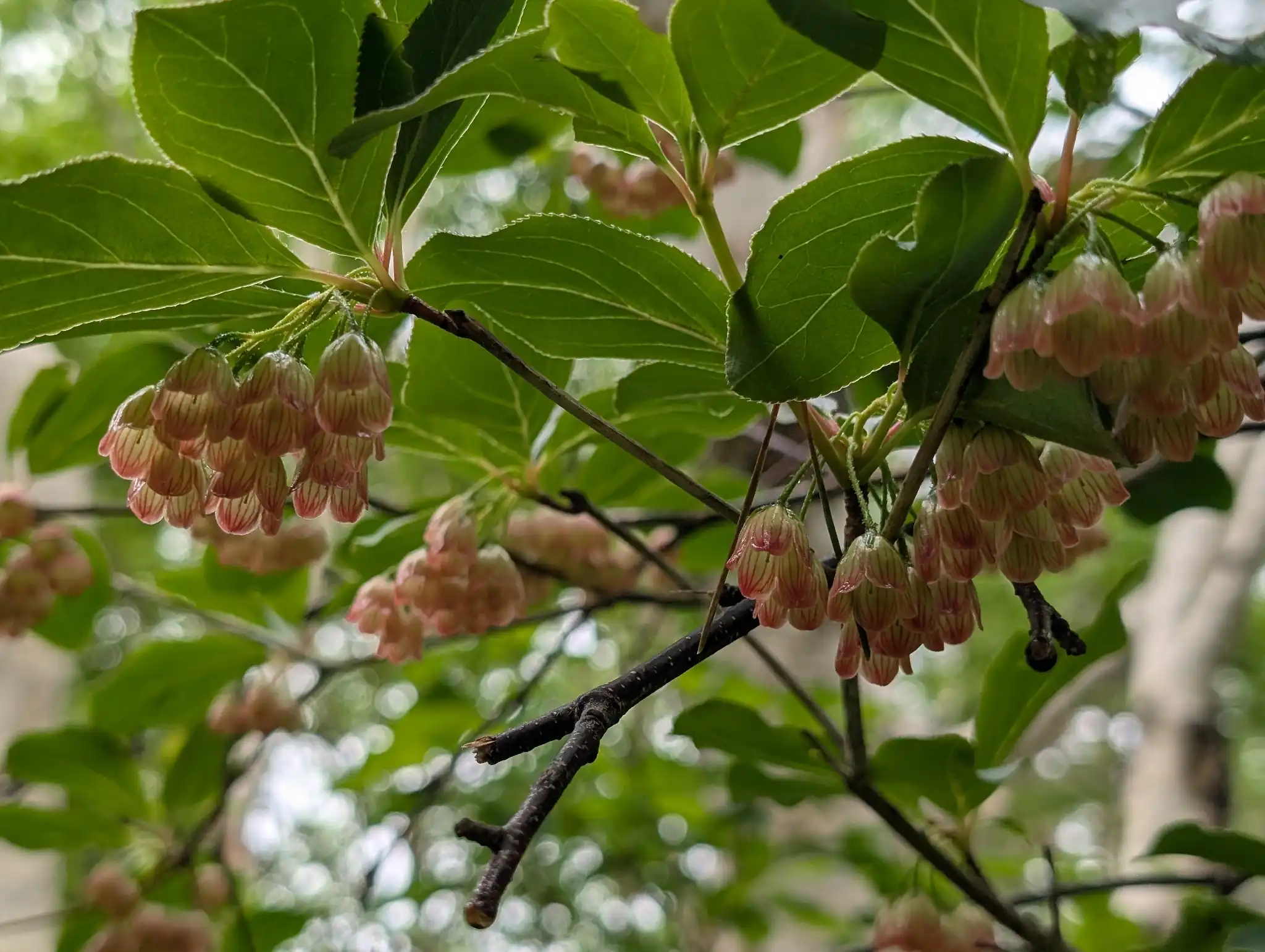
Enkianthus campanulatus is an upright, multi-stemmed deciduous shrub native to the mountain woodlands of Japan. It features a distinctive tiered or whorled branching structure and elliptic leaves that turn brilliant shades of orange, red, and purple in the fall.
The species is distinguished by its pendulous, umbrella-like clusters of nodding, bell-shaped flowers that emerge in late spring. Each creamy-yellow or light pink bloom is marked with detailed, dark red veining that gives the plant its common name.
Uses & Benefits:
Essentials
At a Glance
Plant Type
Shrub
Height
118"
Width
118"
Light
Full Sun, Partial Sun
Zones
4, 5, 6, 7, 8
Water
Medium
Humidity
Moderate
Lifespan
Multi-decade
Native To
Japan
Toxicity
Non-toxic
Bloom period
Late spring – Early summer
In flower about 2 months of the year
Planting
How to Grow
- Select a planting site with acidic soil (pH below 6.0) that is rich in organic matter and drains freely.
- Dig a hole twice as wide as the root ball and set the shrub at the same depth it was growing in its container.
- Backfill with native soil amended with peat moss or compost, tamping down gently to remove air pockets.
- Water thoroughly and apply a thick layer of organic mulch to conserve soil moisture and keep roots cool.
Pro Tip
Prune immediately after flowering concludes in summer; cutting back in late winter or spring removes the current season's flower buds, which form on the previous year's growth.
Keep It Thriving
Care Guide
Do
- Maintain consistent soil moisture, especially during dry summer periods.
- Apply an acid-forming organic fertilizer designed for ericaceous plants in early spring.
- Mulch annually with leaf mold or pine needles to preserve soil acidity.
Don't
- Do not plant in alkaline soils, which will cause leaf chlorosis.
- Do not shear into old, leafless wood, as it fails to sprout new growth.
- Do not allow the soil to dry out completely or waterlog.
Seasonal Care Calendar
| Task | Jan | Feb | Mar | Apr | May | Jun | Jul | Aug | Sep | Oct | Nov | Dec |
|---|---|---|---|---|---|---|---|---|---|---|---|---|
| Fertilize | ||||||||||||
| Mulch | ||||||||||||
| Pest Check | ||||||||||||
| Prune |
Watch Out For
Pests & Diseases
Common Pests
Common Diseases
In the Garden
Landscape Uses & Companions
Landscape Uses
Companion Plants
Multiply
Propagation Methods
Good to Know
Common Questions
Redvein Enkianthus questions
What zones can Redvein Enkianthus grow in?
Redvein Enkianthus is hardy in USDA Zones 4–8. Inside that range it survives winter in the ground; outside it, grow it as an annual or a container plant you protect.
Is Redvein Enkianthus deer resistant?
Yes — Redvein Enkianthus is rated deer-resistant. Deer typically pass it over, though extreme hunger can override any plant's defenses.
When does Redvein Enkianthus bloom?
Redvein Enkianthus typically blooms in late spring through early summer. Exact timing shifts a week or two with your zone — Sow's bloom calendar maps it to your garden.
Does Redvein Enkianthus need full sun?
Redvein Enkianthus does best in full sun to part shade. In hot climates, afternoon shade keeps blooms fresher longer.
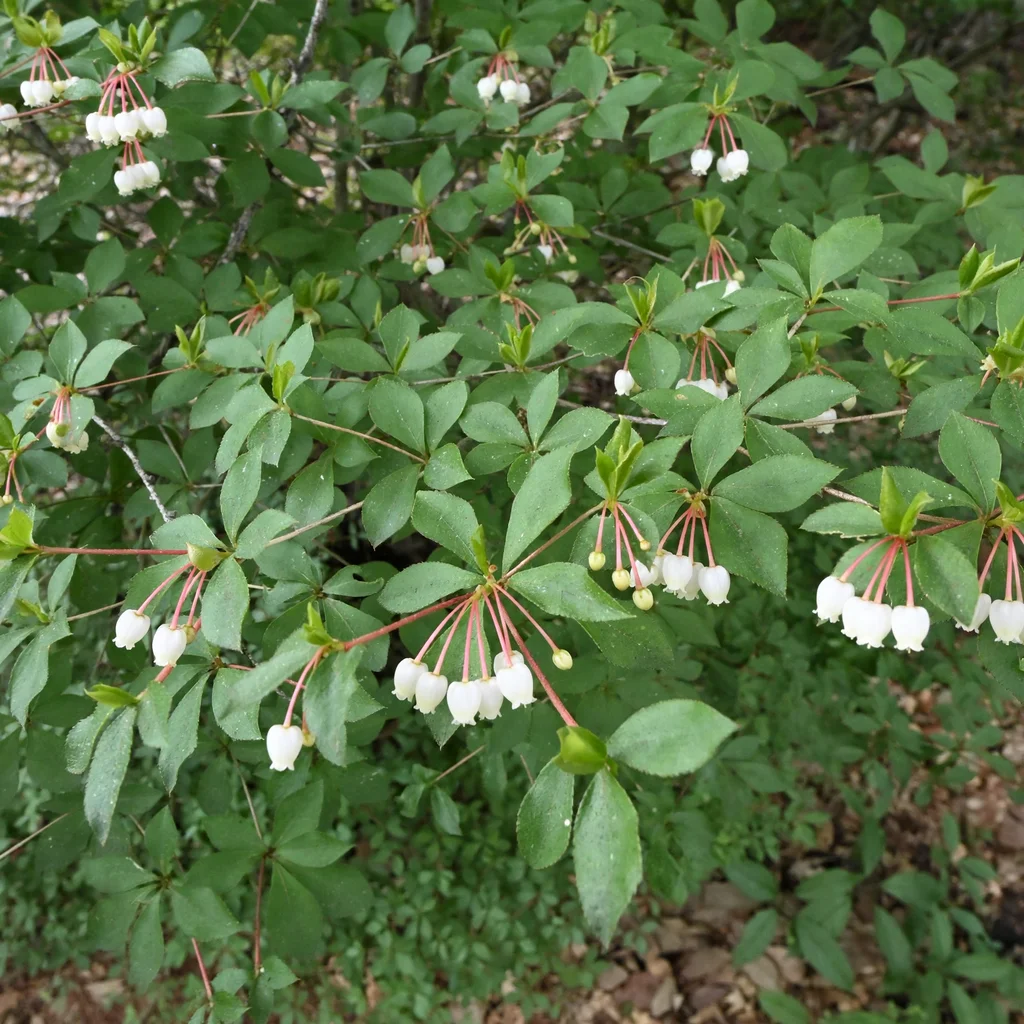
More Enkianthus to compare
Keep exploring
Explore the genus
Hardy in your zone?
Grow Redvein Enkianthus with confidence
See it in a design of your actual yard, get zone-matched care reminders, and track it season by season in your garden journal.