The Story
Plant Bio
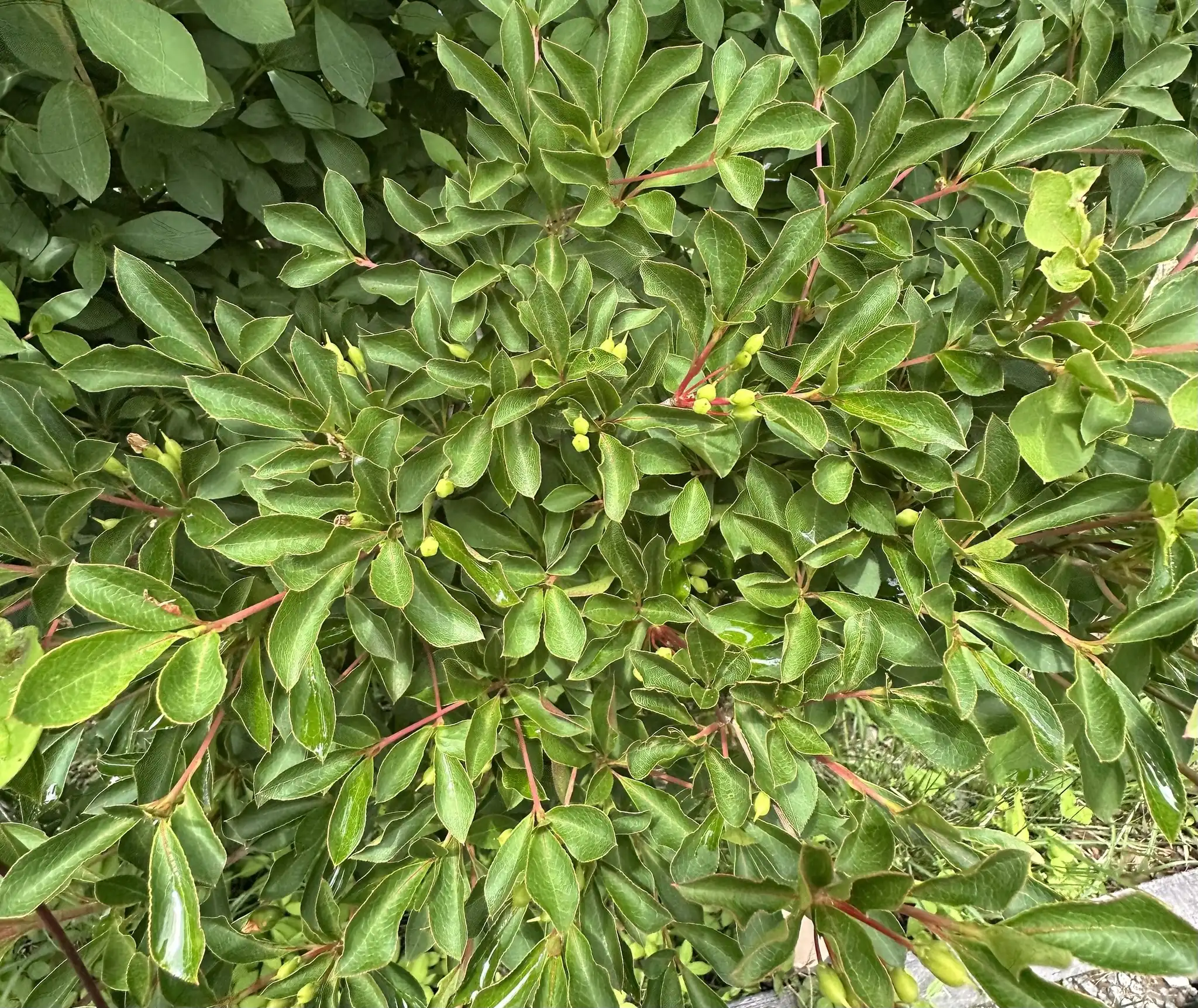
Enkianthus perulatus is a slow-growing, multi-stemmed deciduous shrub native to sunny woodlands and mountain thickets of Japan. It develops a compact, rounded habit of dense branches with young shoots that emerge a shiny red before maturing to reddish-brown.
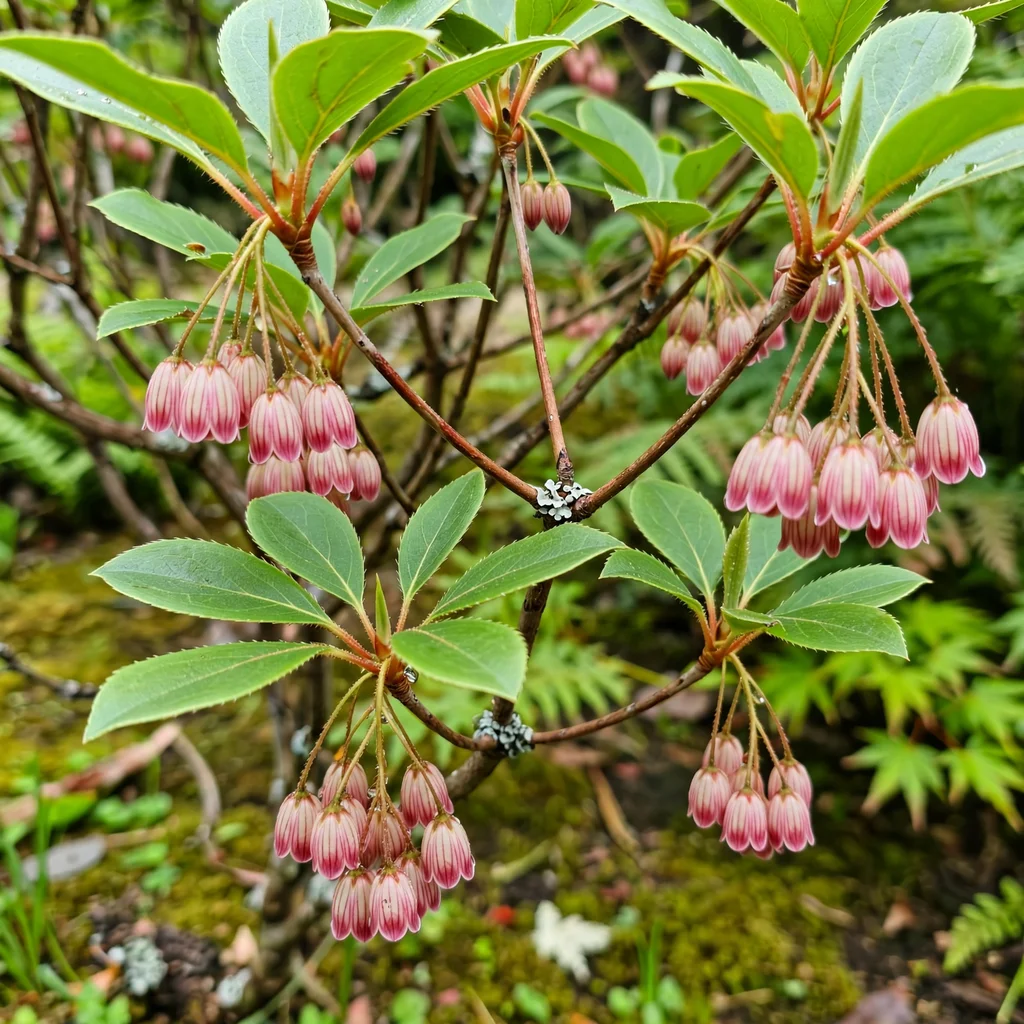
This species is distinguished by its nodding, umbel-like clusters of snowy white, urn-shaped flowers that open in spring just before or alongside the emerging foliage. In fall, the medium green leaves turn shades of yellow, orange, and scarlet red.
Uses & Benefits:
Essentials
At a Glance
Plant Type
Shrub
Height
71"
Width
94"
Light
Full Sun, Partial Sun
Zones
6, 7, 8, 9, 10
Water
Medium
Humidity
Moderate
Lifespan
Long-lived
Native To
Japan
Toxicity
Minor grayanotoxins if ingested in quantity
Bloom period
Spring
In flower about 3 months of the year
Planting
How to Grow
- Select a planting site with acidic, lime-free soil rich in organic matter and peat.
- Position the shrub in full sun or partial shade, ensuring protection from hot afternoon sun in warmer climates.
- Dig a hole twice as wide as the root ball and backfill with compost-amended soil, ensuring the crown sits level with the ground.
- Water deeply at planting and maintain consistent moisture, as the shallow root system does not tolerate drying out.
Pro Tip
Prune only immediately after spring flowering to avoid cutting off next year's buds, which form on the prior season's wood.
Keep It Thriving
Care Guide
Do
- Mulch the root zone to retain soil moisture and keep roots cool.
- Water regularly during dry summer spells to prevent leaf scorch.
- Use an acidifying, slow-release organic fertilizer formulated for ericaceous plants.
Don't
- Do not plant in alkaline or lime-rich soils, which cause chlorosis.
- Do not allow the soil to dry out completely or sit in standing water.
- Do not prune heavily into old, leafless wood, as recovery is slow and patchy.
Seasonal Care Calendar
| Task | Jan | Feb | Mar | Apr | May | Jun | Jul | Aug | Sep | Oct | Nov | Dec |
|---|---|---|---|---|---|---|---|---|---|---|---|---|
| Fertilize | ||||||||||||
| Mulch | ||||||||||||
| Pest Check | ||||||||||||
| Prune |
Watch Out For
Pests & Diseases
Common Pests
Common Diseases
In the Garden
Landscape Uses & Companions
Landscape Uses
Companion Plants
Multiply
Propagation Methods
Good to Know
Common Questions
White Enkianthus questions
What zones can White Enkianthus grow in?
White Enkianthus is hardy in USDA Zones 6–10. Inside that range it survives winter in the ground; outside it, grow it as an annual or a container plant you protect.
When does White Enkianthus bloom?
White Enkianthus typically blooms in spring through spring. Exact timing shifts a week or two with your zone — Sow's bloom calendar maps it to your garden.
Does White Enkianthus need full sun?
White Enkianthus does best in full sun to part shade. In hot climates, afternoon shade keeps blooms fresher longer.
More Enkianthus to compare
Keep exploring
Explore the genus
Hardy in your zone?
Grow White Enkianthus with confidence
See it in a design of your actual yard, get zone-matched care reminders, and track it season by season in your garden journal.