The Story
Plant Bio
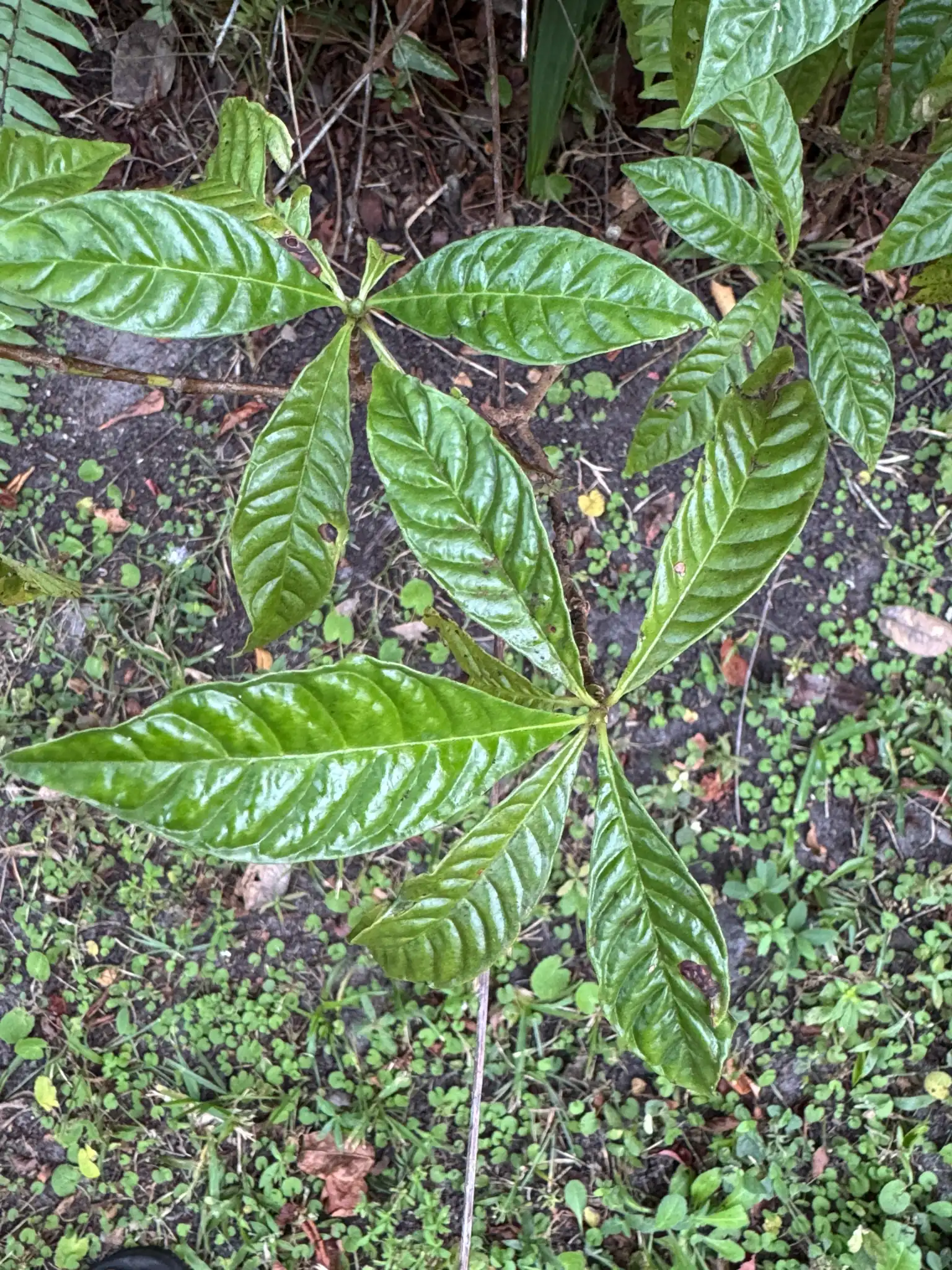
Psychotria nervosa, commonly known as wild coffee, is an upright, multi-stemmed evergreen shrub native to the understories of Florida, the Caribbean, and Central America. The species is distinguished by its highly glossy, dark green leaves with deeply impressed veins that create a distinct puckered texture, and clusters of small white flowers that produce bright red drupes.
This species provides high wildlife value in warm-climate gardens, attracting native bees and butterflies while its abundant red fruits serve as a critical food source for songbirds. Unlike true coffee plants, its seeds contain no caffeine and can cause gastrointestinal distress if consumed.
Uses & Benefits:
Essentials
At a Glance
Plant Type
Shrub
Height
72"
Width
48"
Light
Partial Sun, Shade
Zones
9, 10
Water
Moderate
Humidity
High
Lifespan
Perennial
Native To
North America, Caribbean, Central America, South America
Toxicity
Seeds are toxic if ingested
Bloom period
Spring – Summer
In flower about 6 months of the year
Planting
How to Grow
- Select a planting site in partial to deep shade, ideally beneath a canopy of larger trees or palms to mimic its natural hammock habitat.
- Amend the planting area with organic matter to ensure a rich, well-drained soil structure that prevents waterlogging.
- Dig a hole twice the width of the root ball, set the plant at the same depth as its nursery container, and backfill gently.
- Water deeply at planting and maintain consistent moisture for the first few months until the root system is fully established.
Pro Tip
Always site this shrub in dappled understory shade rather than direct sun; full sun exposure triggers severe leaf chlorosis and stunts the plant into an unnaturally dense, yellowed form.
Keep It Thriving
Care Guide
Do
- Apply a balanced, slow-release fertilizer sparingly two to three times during the active spring and summer growing seasons.
- Maintain a layer of organic mulch around the base to preserve soil moisture and replicate forest floor conditions.
- Prune lightly in early spring to shape the canopy or manage the shrub's overall size.
Don't
- Do not plant in low-lying areas or heavy clay soils where standing water can accumulate and cause root rot.
- Never cut hard back into old, leafless wood, as it lacks dormant buds and will result in slow, patchy regrowth.
- Avoid planting in open, unshaded locations where direct afternoon sun will bleach and yellow the foliage.
Seasonal Care Calendar
| Task | Jan | Feb | Mar | Apr | May | Jun | Jul | Aug | Sep | Oct | Nov | Dec |
|---|---|---|---|---|---|---|---|---|---|---|---|---|
| Fertilize | ||||||||||||
| Mulch | ||||||||||||
| Pest Check | ||||||||||||
| Prune |
Watch Out For
Pests & Diseases
Common Pests
Common Diseases
In the Garden
Landscape Uses & Companions
Landscape Uses
Companion Plants
Multiply
Propagation Methods
Good to Know
Common Questions
Wild Coffee questions
What zones can Wild Coffee grow in?
Wild Coffee is hardy in USDA Zones 9–10. Inside that range it survives winter in the ground; outside it, grow it as an annual or a container plant you protect.
Is Wild Coffee deer resistant?
Not reliably. Deer may browse Wild Coffee, especially tender spring growth — plan on repellents or fencing where pressure is high.
When does Wild Coffee bloom?
Wild Coffee typically blooms in spring through summer. Exact timing shifts a week or two with your zone — Sow's bloom calendar maps it to your garden.
Does Wild Coffee need full sun?
Wild Coffee does best in part shade.
Is Wild Coffee drought tolerant?
Yes — once established (usually after the first full season), Wild Coffee handles dry spells with minimal watering. Water deeply its first year to build the root system that makes that possible.
Keep exploring
Explore the genus
Hardy in your zone?
Grow Wild Coffee with confidence
See it in a design of your actual yard, get zone-matched care reminders, and track it season by season in your garden journal.