The Story
Plant Bio
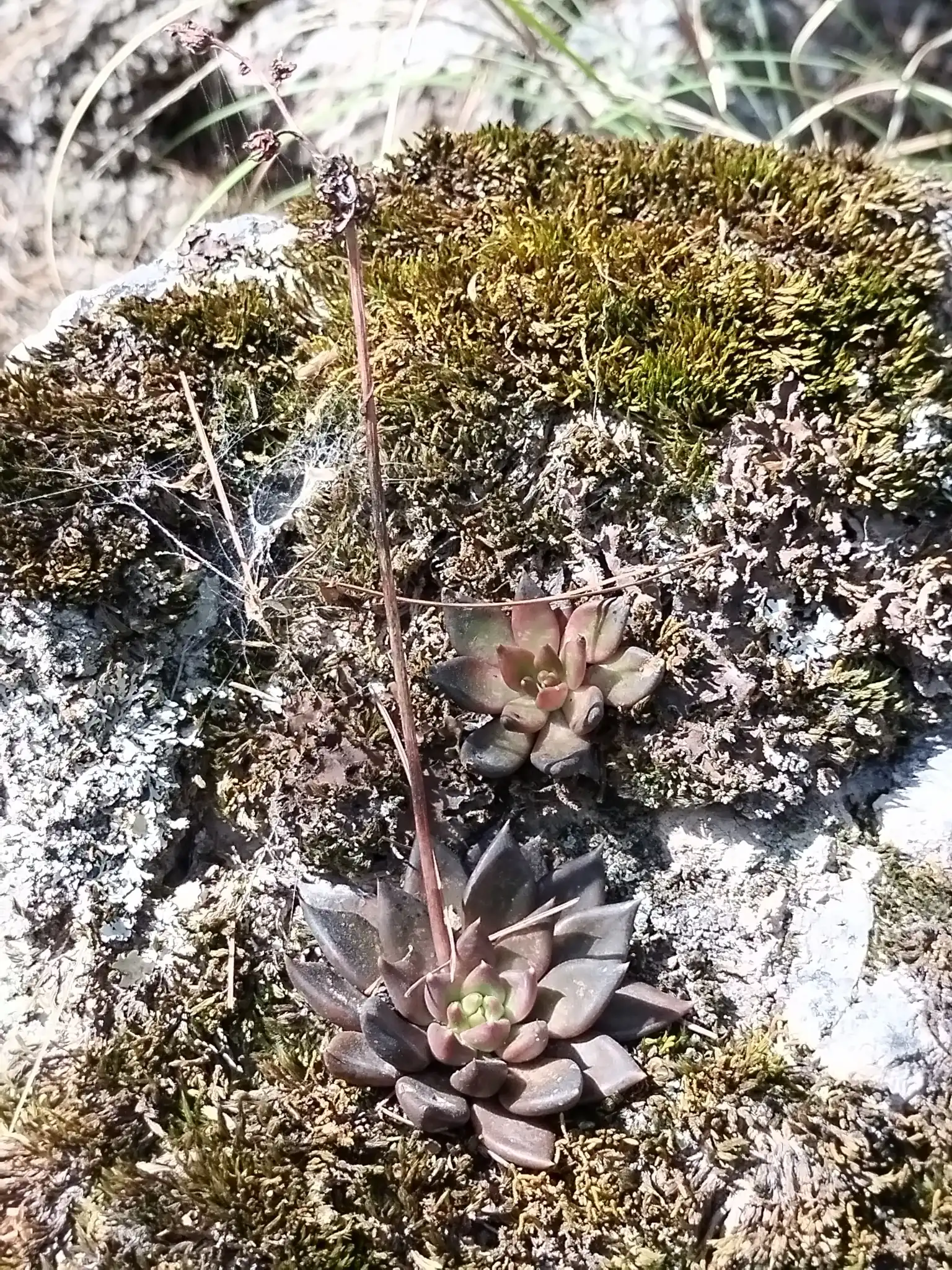
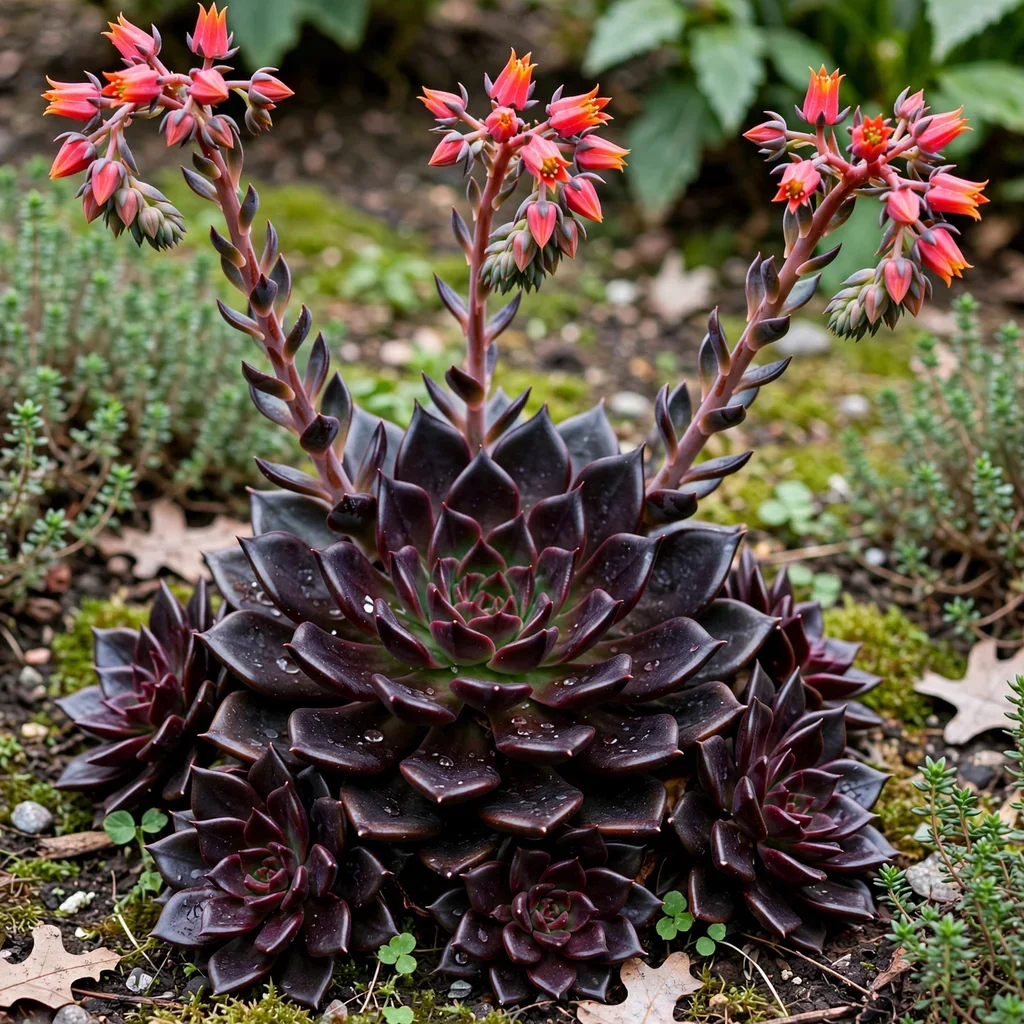
Echeveria affinis, the black echeveria, is a small, short-stemmed evergreen succulent forming compact rosettes of thick, fleshy, upcurved leaves that terminate in sharp points. The foliage ranges from brownish-olive to a deep chocolate-black with yellowish-green bases, providing a stark contrast to the bright scarlet, bell-shaped flowers that rise on erect stems in summer.
This species is distinguished by its exceptionally dark, near-black coloration, which intensifies under bright sunlight and may develop a subtle, protective powdery farina. While frequently confused in cultivation with its popular selection 'Black Knight', the true species maintains a highly symmetrical, low-growing form that rarely exceeds six inches in diameter.
Uses & Benefits:
Essentials
At a Glance
Plant Type
Cactus Succulent
Height
4"
Width
6"
Light
Full Sun, Partial Sun
Zones
9, 10
Water
Low
Humidity
Low
Lifespan
Perennial
Native To
Mexico
Toxicity
Non-toxic
Bloom period
Summer
In flower about 3 months of the year
Planting
How to Grow
- Select a planting site or container with exceptional drainage, using a gritty, porous cactus and succulent soil mix.
- Position the plant in full sun to partial shade, ensuring it receives bright light to maintain its deep chocolate-black leaf color.
- Water deeply only when the soil is completely dry, directing the stream at the base of the plant rather than overhead.
- Protect the plant from freezing temperatures and hard frosts by moving containers indoors or providing shelter during winter.
Pro Tip
Never allow water to pool inside the tight central rosette during irrigation, as trapped moisture quickly triggers fatal stem and root rot.
Keep It Thriving
Care Guide
Do
- Water strictly at the soil level to keep the central rosette dry.
- Provide bright, direct sunlight to preserve the dark foliage coloration.
- Clear away withered, dead lower leaves to prevent decay against the stem.
Don't
- Do not overwater or allow the plant to sit in stagnant, soggy soil.
- Do not prune into old, leafless wood.
- Do not grow in deep shade, which causes the stems to stretch and leaves to turn green.
Seasonal Care Calendar
| Task | Jan | Feb | Mar | Apr | May | Jun | Jul | Aug | Sep | Oct | Nov | Dec |
|---|---|---|---|---|---|---|---|---|---|---|---|---|
| Fertilize | ||||||||||||
| Pest Check | ||||||||||||
| Propagate | ||||||||||||
| Winter Prep |
Watch Out For
Pests & Diseases
Common Pests
Common Diseases
In the Garden
Landscape Uses & Companions
Landscape Uses
Companion Plants
Multiply
Propagation Methods
Good to Know
Common Questions
Black Echeveria questions
What zones can Black Echeveria grow in?
Black Echeveria is hardy in USDA Zones 9–10. Inside that range it survives winter in the ground; outside it, grow it as an annual or a container plant you protect.
Is Black Echeveria deer resistant?
Not reliably. Deer may browse Black Echeveria, especially tender spring growth — plan on repellents or fencing where pressure is high.
When does Black Echeveria bloom?
Black Echeveria typically blooms in summer through summer. Exact timing shifts a week or two with your zone — Sow's bloom calendar maps it to your garden.
Does Black Echeveria need full sun?
Black Echeveria does best in full sun to part shade. In hot climates, afternoon shade keeps blooms fresher longer.
Is Black Echeveria drought tolerant?
Yes — once established (usually after the first full season), Black Echeveria handles dry spells with minimal watering. Water deeply its first year to build the root system that makes that possible.
More Echeveria to compare
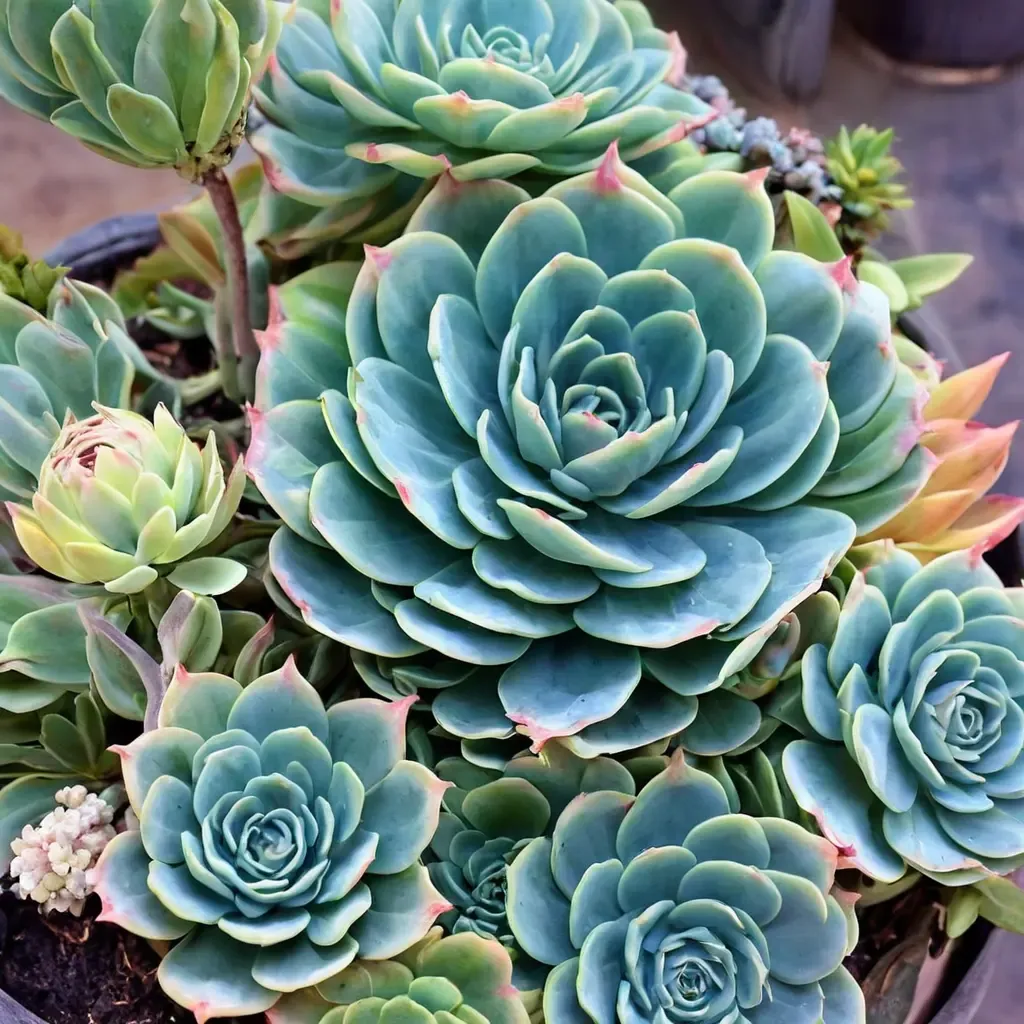
Blue Rose Echeveria
Echeveria imbricata
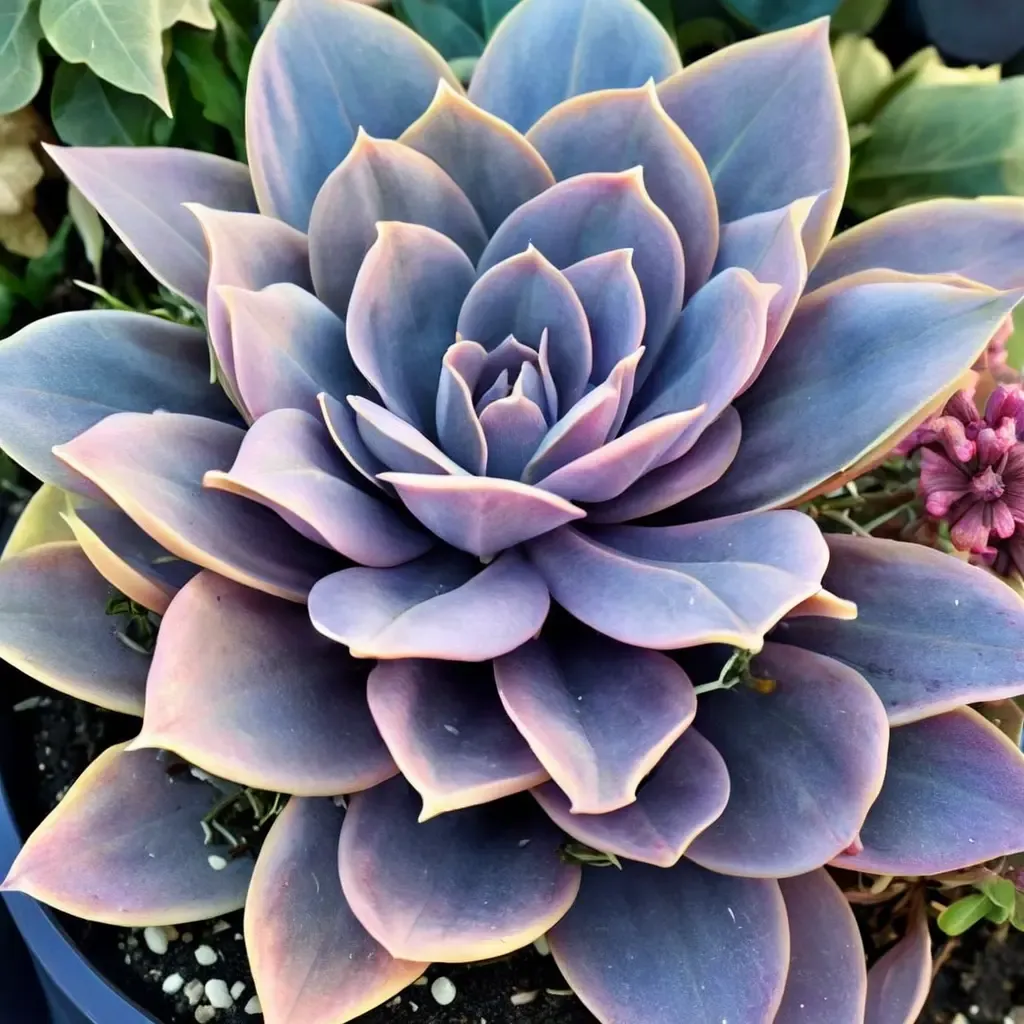
Perle Von Nurnberg
Echeveria secunda 'Perle Von Nurnberg'
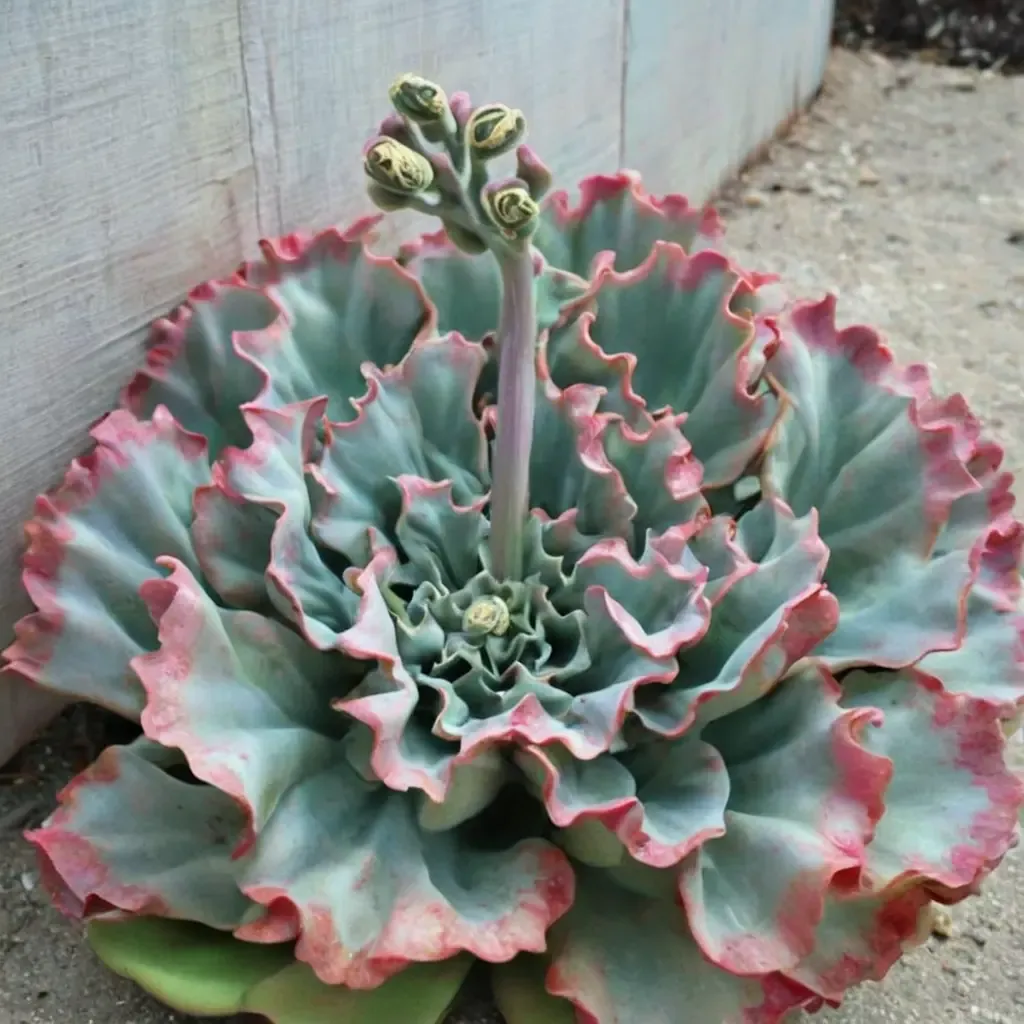
Lady Aquarius Echeveria
Echeveria gibbiflora 'Lady Aquarius'
Echeveria Black Prince
Echeveria secunda 'Black Prince'
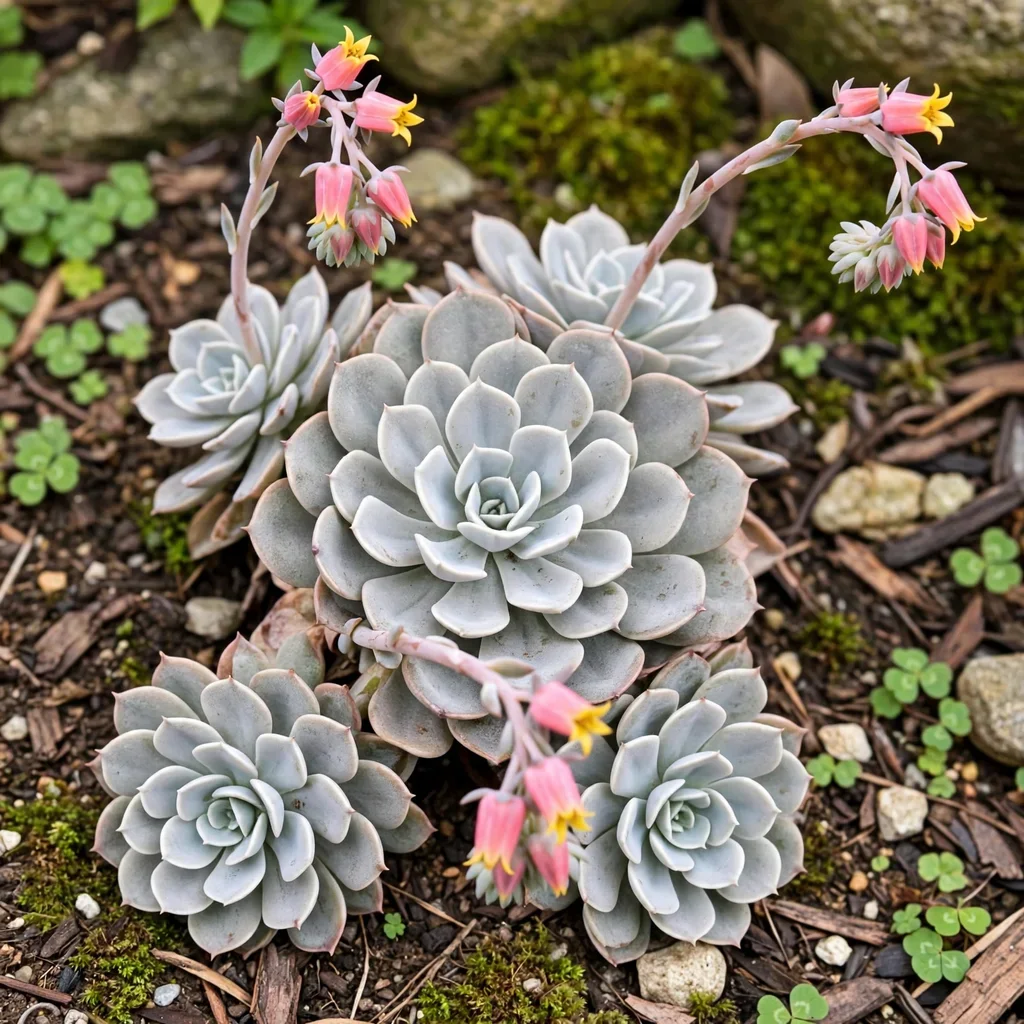
Mexican Snowball
Echeveria elegans 'Mexican Snowball'
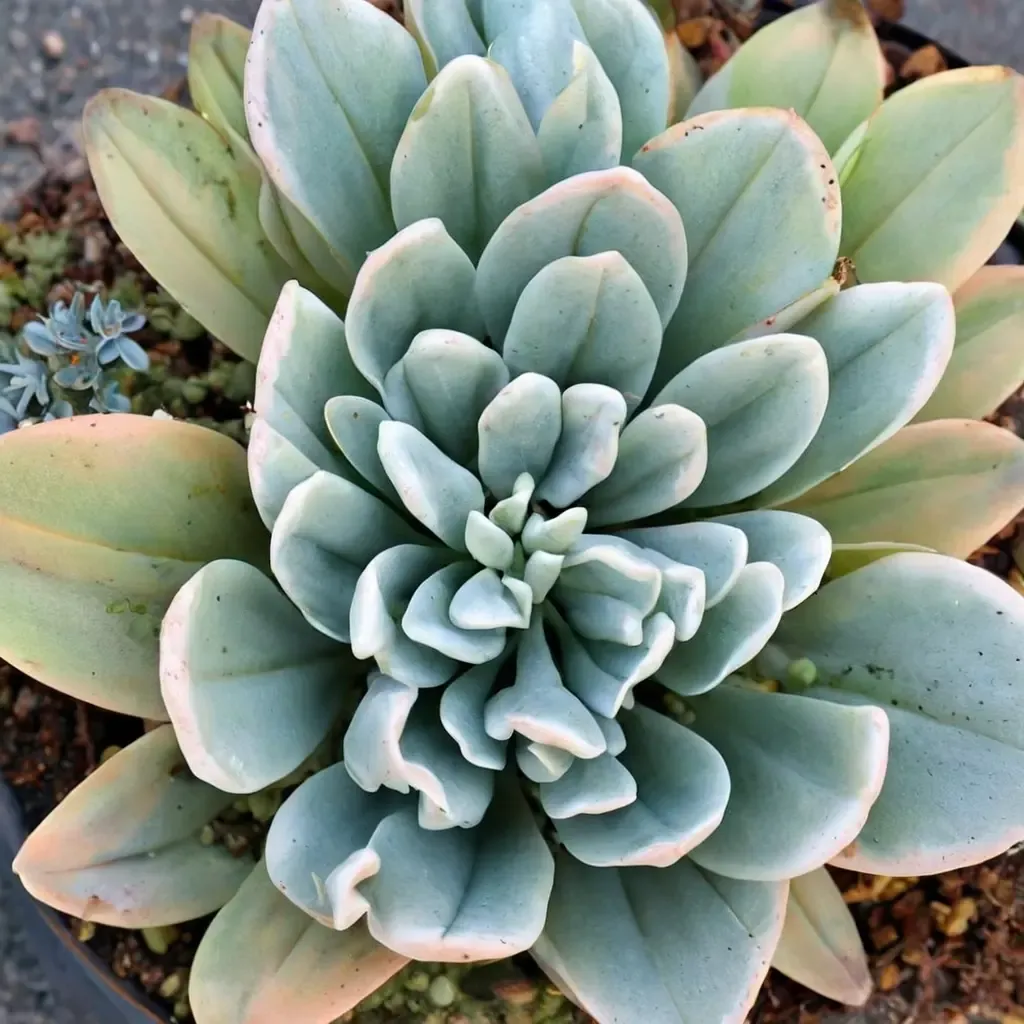
Caribbean Echeveria Echeveria Caribbean
Echeveria runyonii 'Caribbean'
Keep exploring
Explore the genus
Hardy in your zone?
Grow Black Echeveria with confidence
See it in a design of your actual yard, get zone-matched care reminders, and track it season by season in your garden journal.