Also known as Ghost Plant · 8 saves
Graptopetalum
Graptopetalum, the genus most gardeners know as ghost plant. We track 5 varieties; the ones most used by real gardeners.
The 5 most-saved Graptopetalum varieties
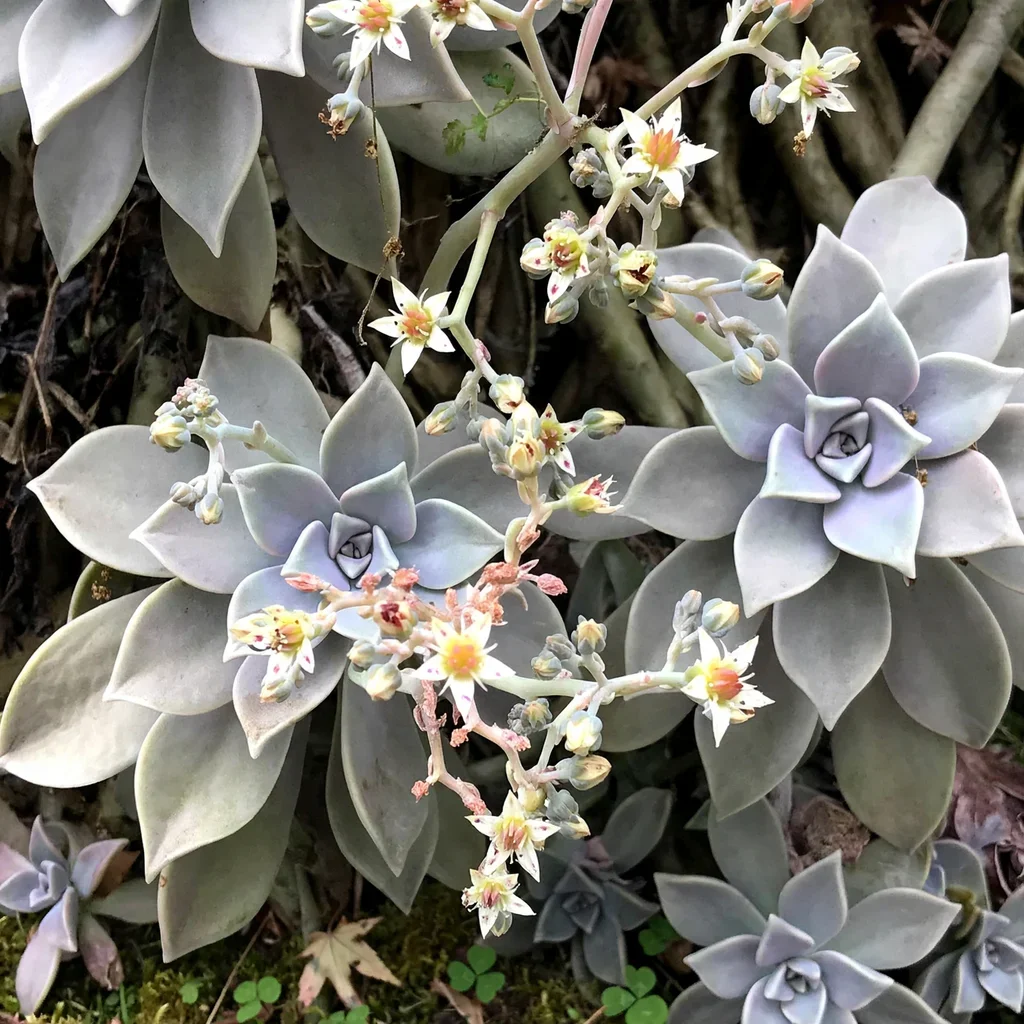
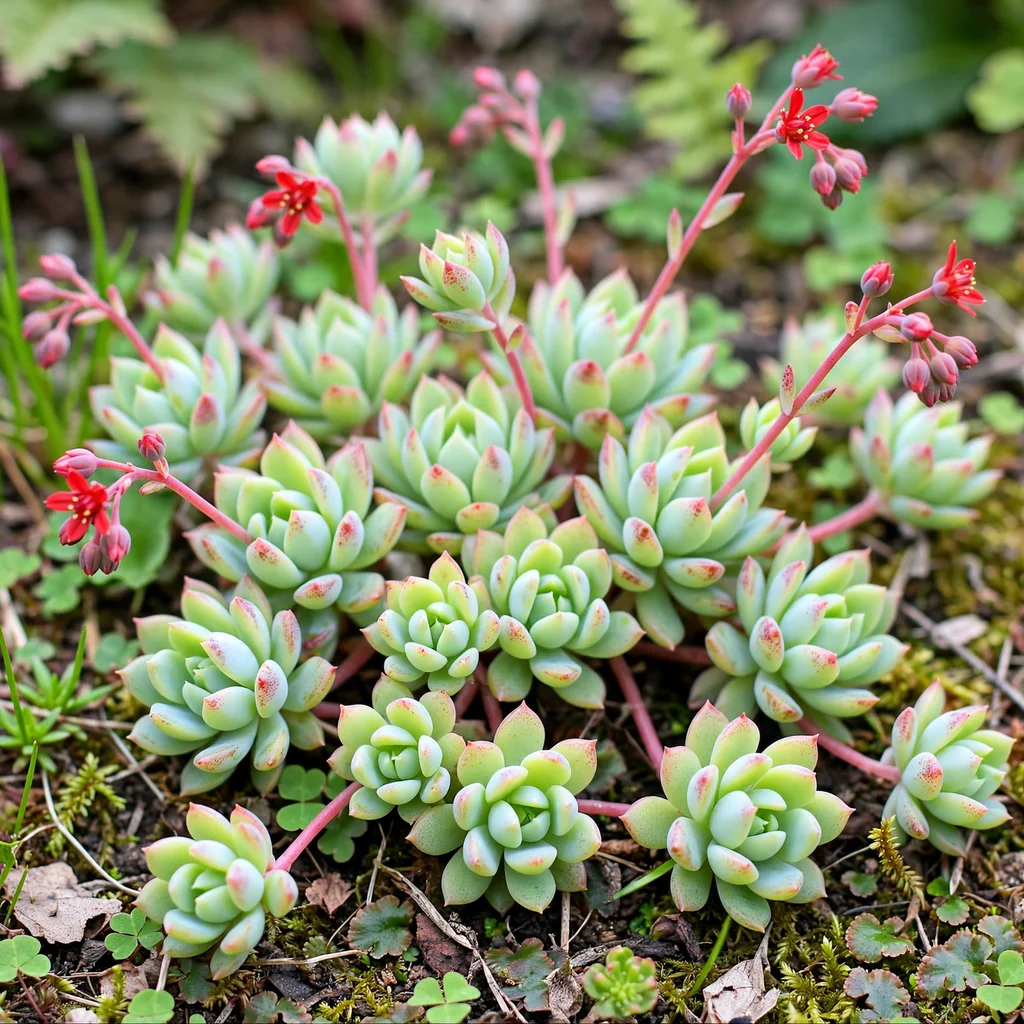

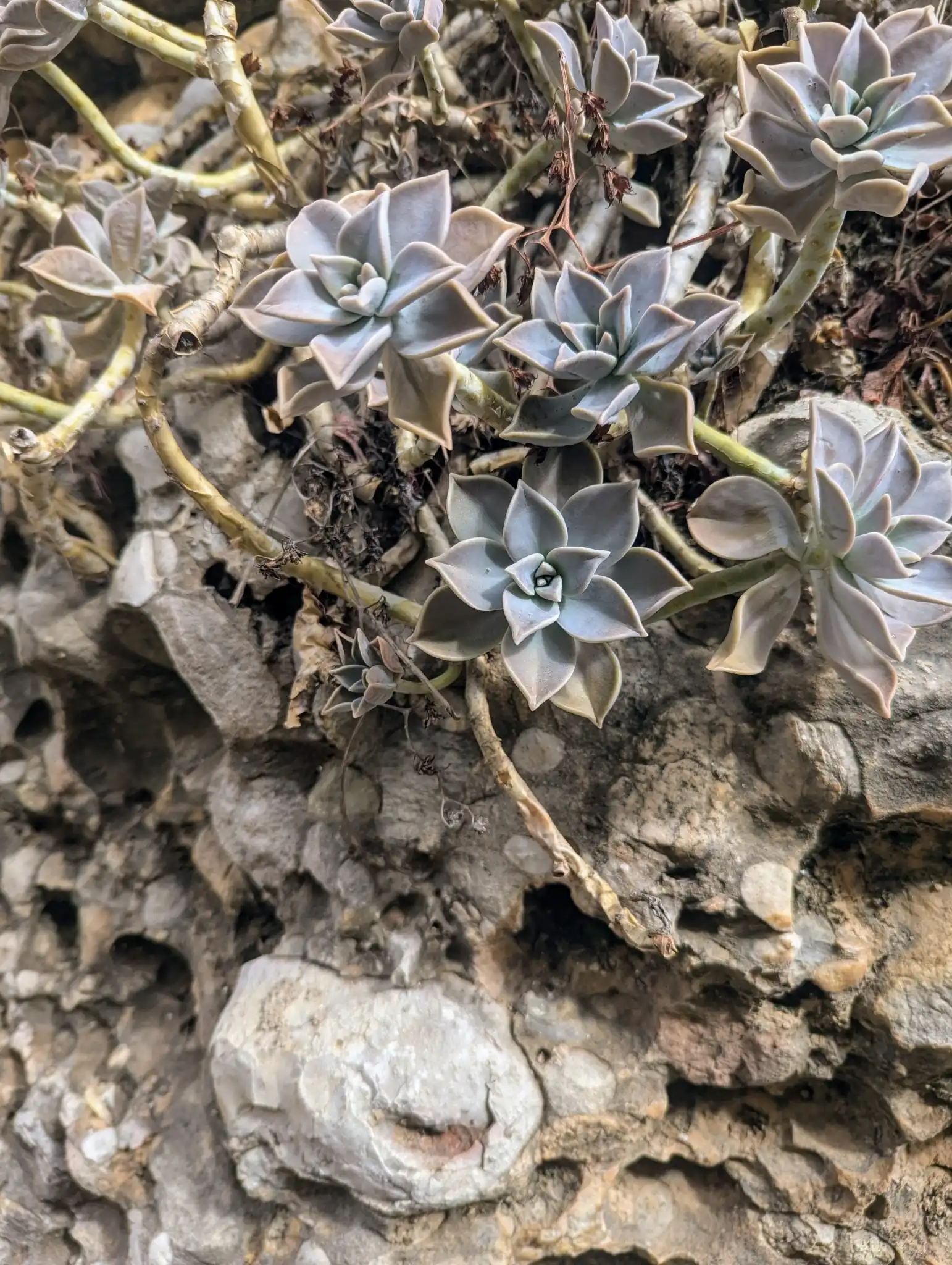

4 species of Graptopetalum
Each one is a parent of the varieties above.
Track your Graptopetalum in Sow
Save the Graptopetalum you grow and get care reminders timed to your zone.
How to grow Graptopetalum
Whats common across all Graptopetalum varieties in our catalog — drawn from the care records of the 5 most-grown of them.
The Graptopetalum year
- PlantApril and May80% of varieties
Plant outdoors in well-draining soil after frost danger passes
- Check for PestsJune–August80% of varieties
Inspect for mealybugs, especially near the center of rosettes
- FertilizeApril–June60% of varieties
Apply diluted low-nitrogen succulent fertilizer once or twice
- PropagateMay and June60% of varieties
Propagate using leaf cuttings or separating offsets
- Winter PrepOctober60% of varieties
Move indoors before frost; keep above 32F and barely moist.


Do
- Provide plenty of sunlight for vibrant color and compact growth 🌞
- Allow soil to dry out completely between waterings 💧
- Use well-draining soil to prevent root rot 🌱
- Repot every 2-3 years to refresh soil and check root health
- Apply cactus fertilizer during active growing months
Avoid
- Overwater, as it causes root rot ❌
- Place in low light or shaded areas ❌
- Use heavy, clay soil that retains moisture ❌
- Neglect watering during the growing season ❌
What goes wrong with Graptopetalum
| Problem | What you'll see | What to do |
|---|---|---|
| Mealybugs | White cottony masses on leaves and stems | Apply neem oil or insecticidal soap regularly |
| Aphids | Sticky residue and distorted growth | Use insecticidal soap or neem oil |
| Spider mites | Fine stippling and webbing on leaves in hot dry conditions. | Rinse foliage, raise humidity around plant, and treat with insecticidal soap or neem oil. |
| Vine weevil | Rosettes topple as grubs eat the roots away out of sight | Check the compost when repotting and use biological controls while the soil is warm |
| Root rot | Wilting and blackened roots | Improve drainage and reduce watering |
| Root and stem rot | Stems blacken and go soft at the base after compost has stayed wet | Use gritty compost, water only once dry, and keep it drier still in winter |
| Fungal spots | Brown or black spots on leaves | Apply a fungicide and remove affected parts |
Making more Graptopetalum
Leaf cuttings
- Twist a firm outer leaf cleanly from the rosette.
- Let the leaf end callus for 2-3 days.
- Lay on dry gritty mix without burying.
- Mist lightly after roots and a new rosette appear.
Stem cuttings
- Select a healthy stem and let it callus for 2 days.
- Plant the callused end into dry, well-draining soil.
- Water lightly after planting and keep in bright, indirect light.
- Roots develop in 3-4 weeks, then resume regular care.
Graptopetalum questions
How many types of Graptopetalum are there?
The Sow catalog tracks 5 distinct Graptopetalum varieties. The most popular — ranked by 8 real gardeners — are shown first above.
What zones does Graptopetalum grow in?
Across its varieties, Graptopetalum covers USDA Zones 9–10. Individual varieties differ — each plant page lists its exact range, and Sow filters the catalog to your zone automatically.
When does Graptopetalum bloom?
Most Graptopetalum varieties bloom from spring to summer.
Which Graptopetalum should I choose?
Start from the most-saved varieties above — popularity across thousands of gardens is a strong signal of reliability — then filter by your zone and sun. In the Sow app you can preview any of them in a photo of your actual yard before you buy.