20 named cultivars
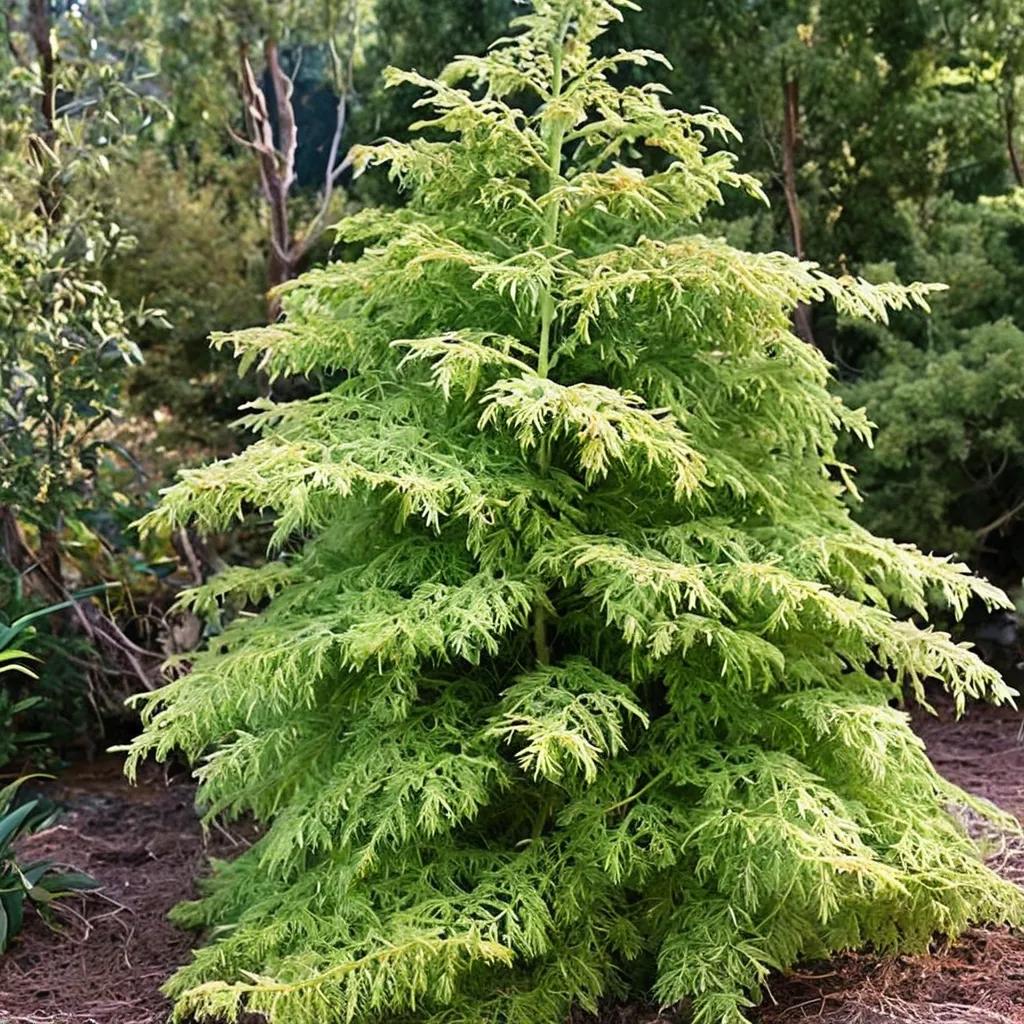 ‘Elegans Aurea’Golden Japanese Cedar
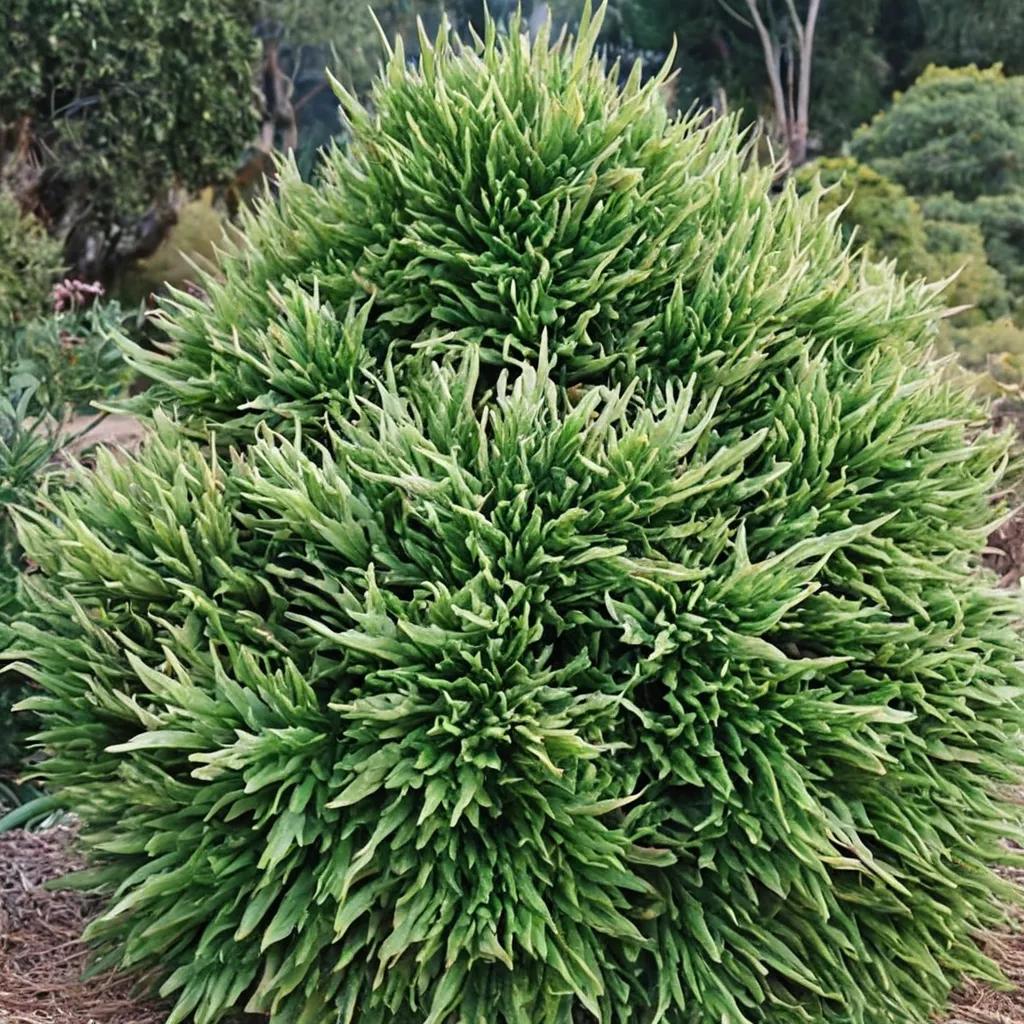 ‘Mitama’Mitama Japanese Cedar
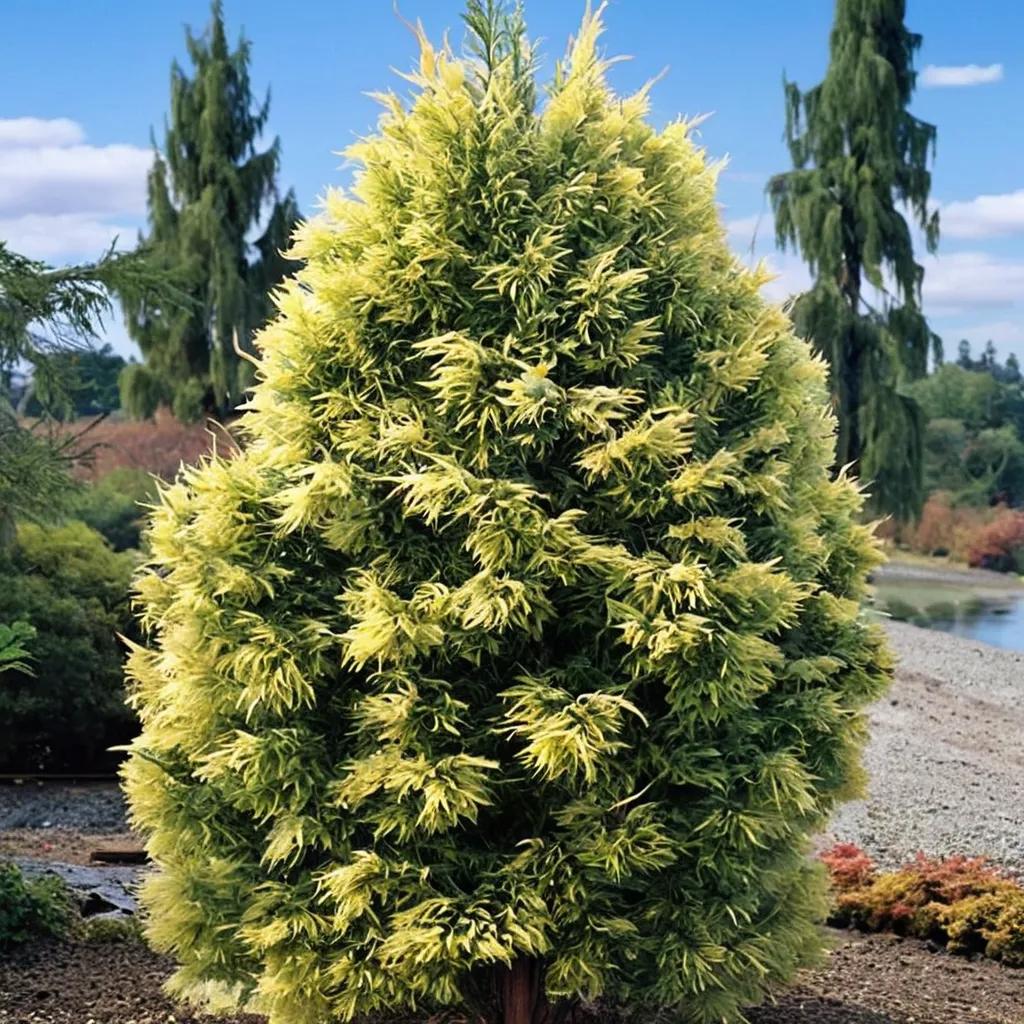 ‘Sekkan’Japanese Cedar Sekkan
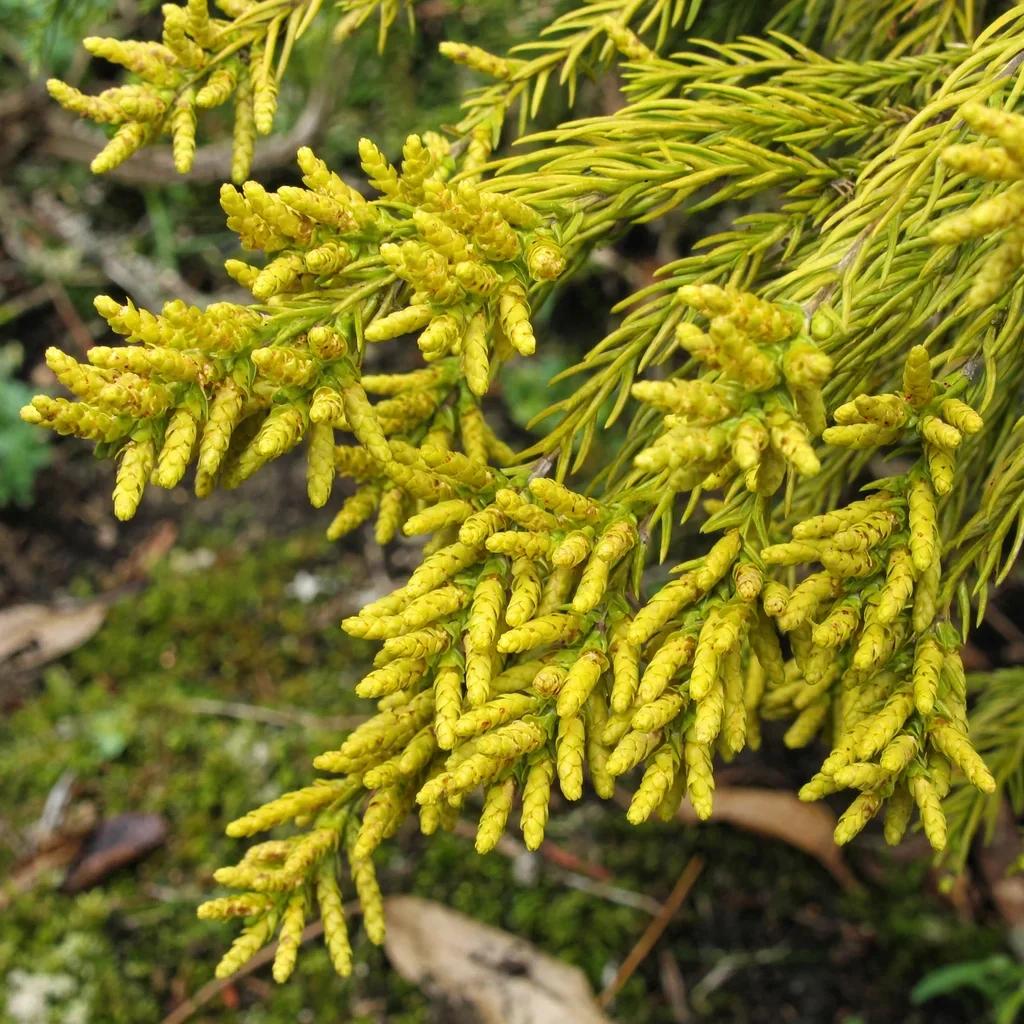 ‘Yellow Twig’Japanese Cedar Yellow Twig
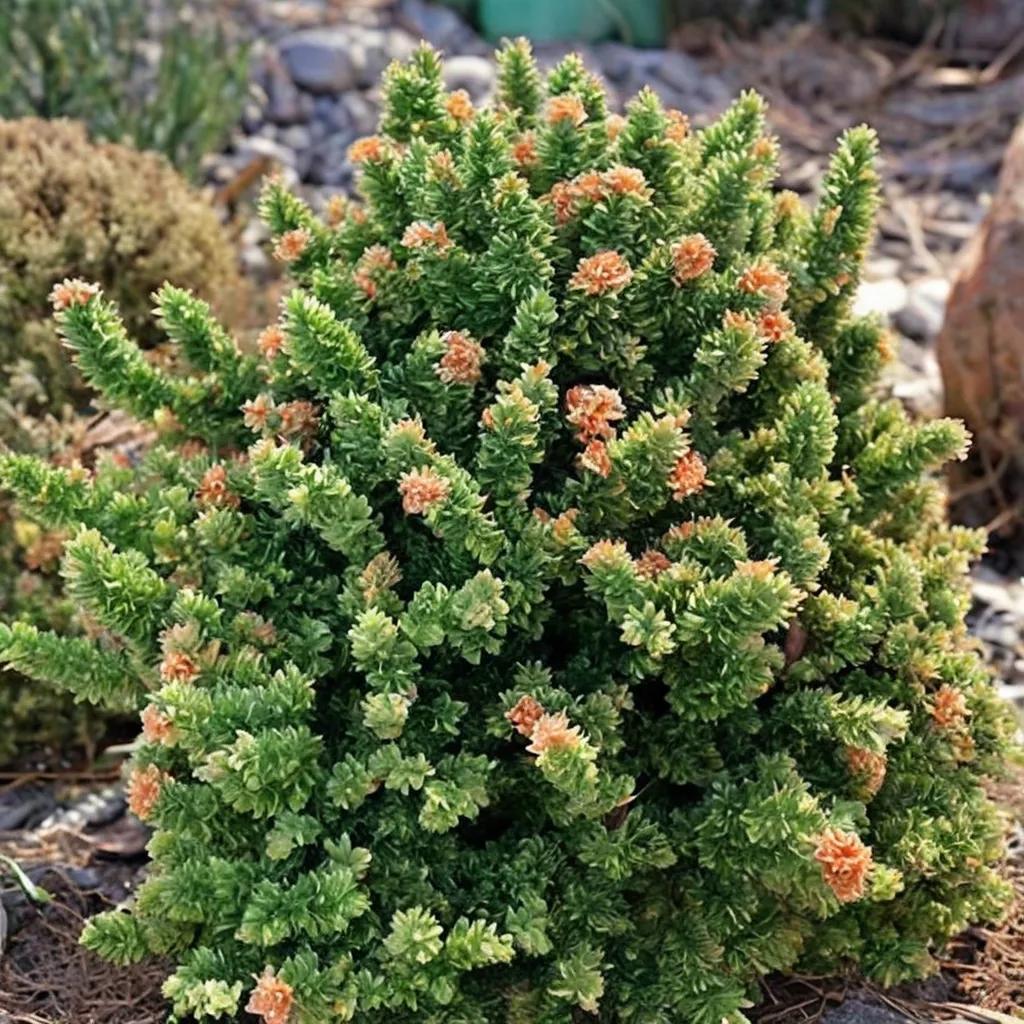 ‘Vilmoriniana’Vilmorin Dwarf Japanese Cedar
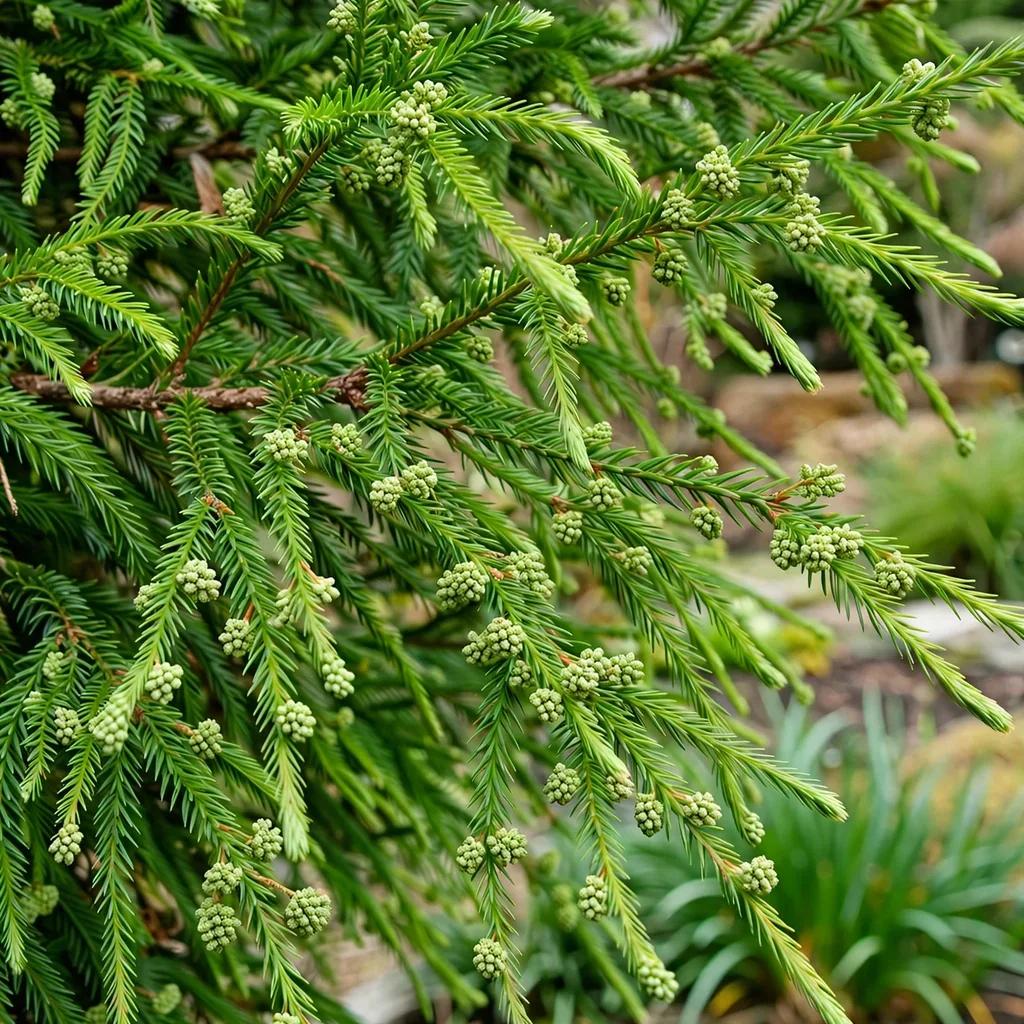 ‘Jindai’Japanese Cedar Jindai
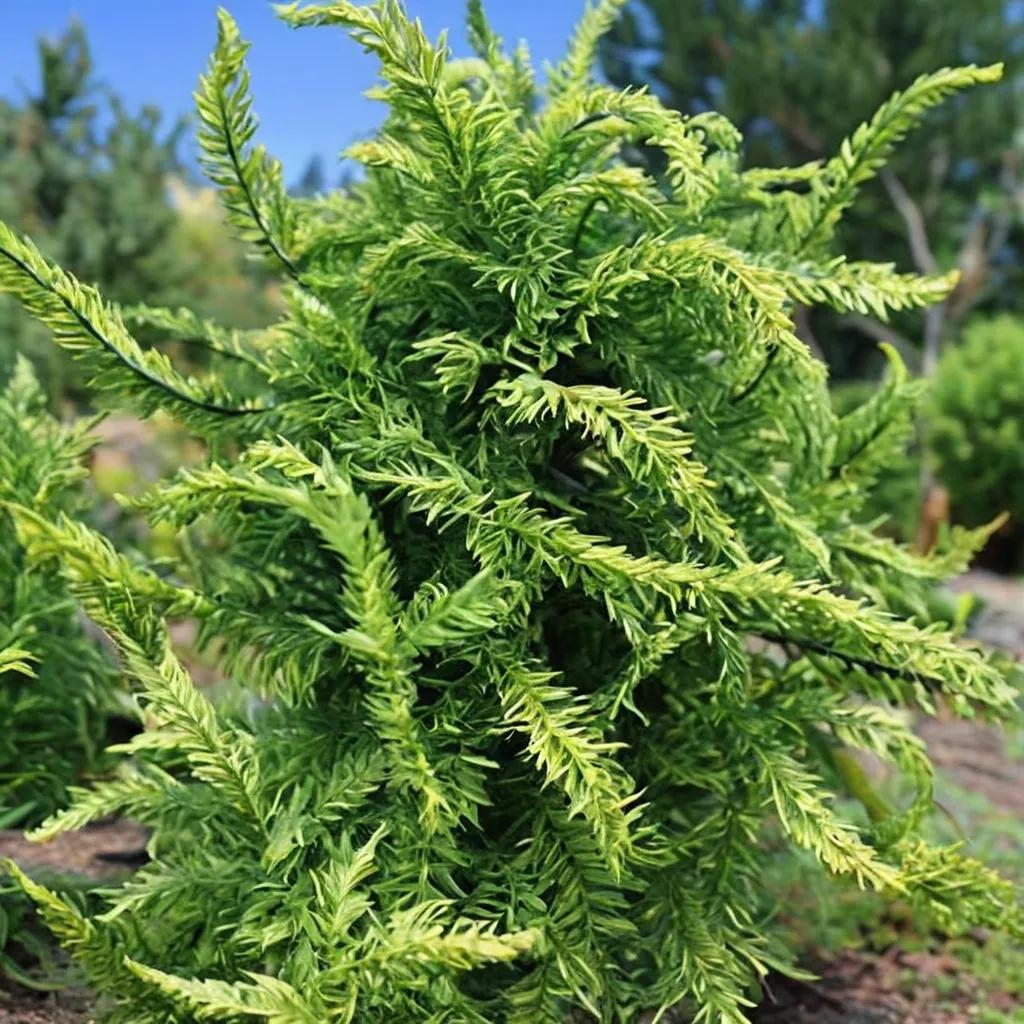 ‘Spiraliter Falcata’Spiraliter Falcata Japanese Cedar
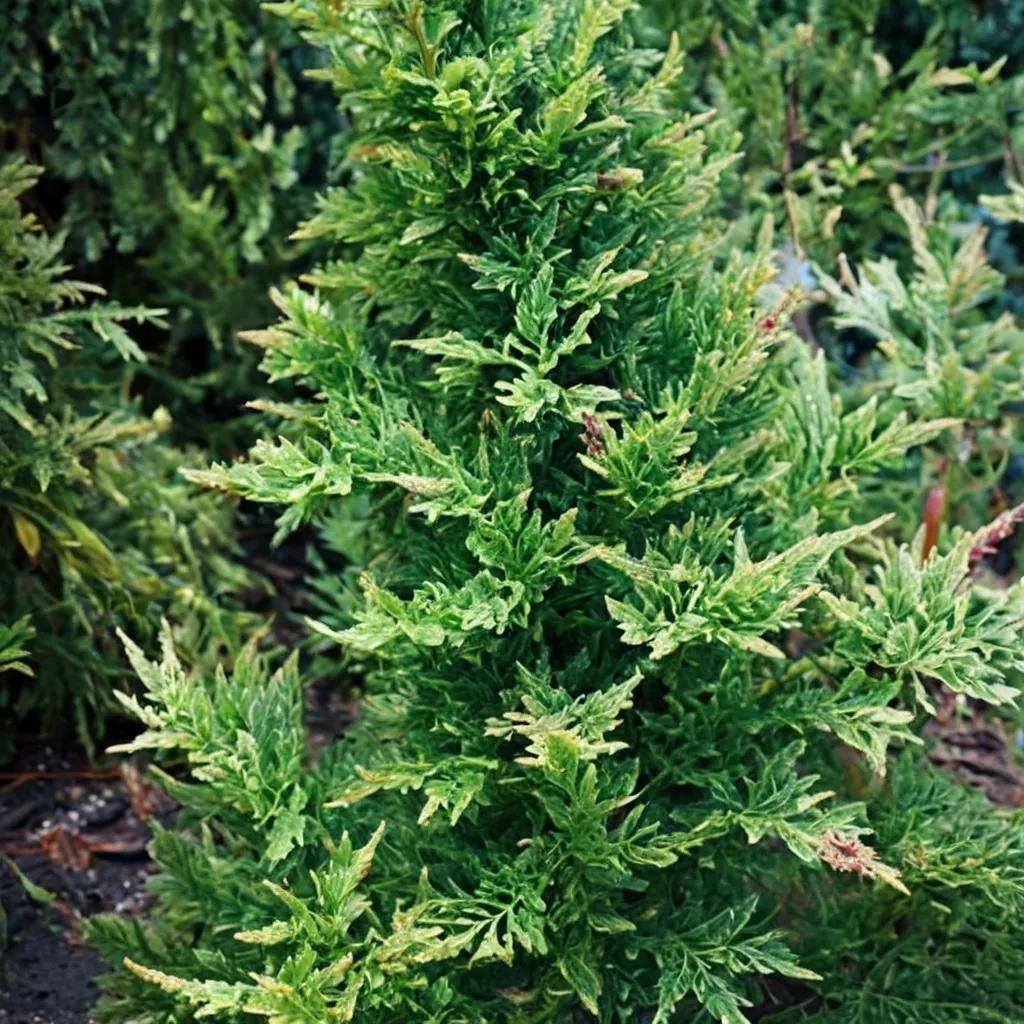 ‘Taisho Tamasugi’Japanese Cedar Taisho Tamasugi
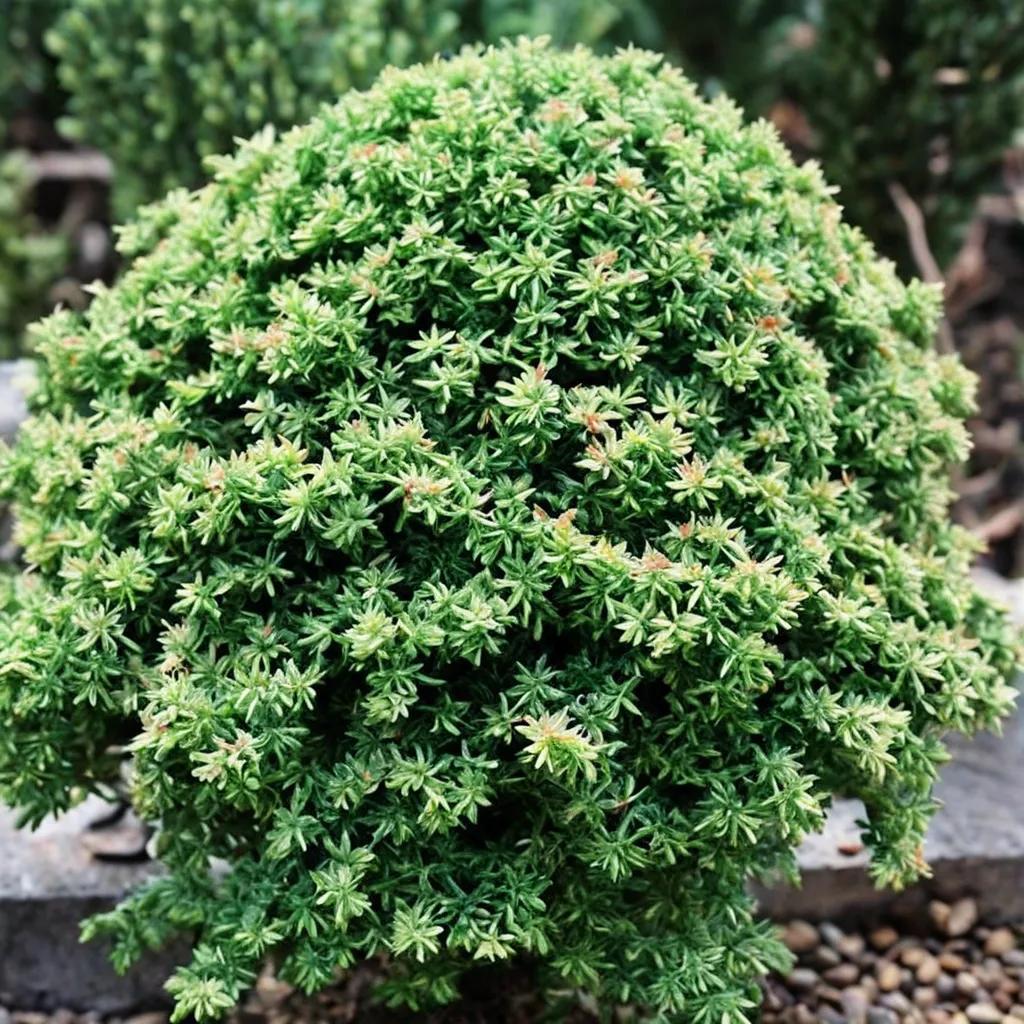 ‘Compressa’Japanese Cryptomeria
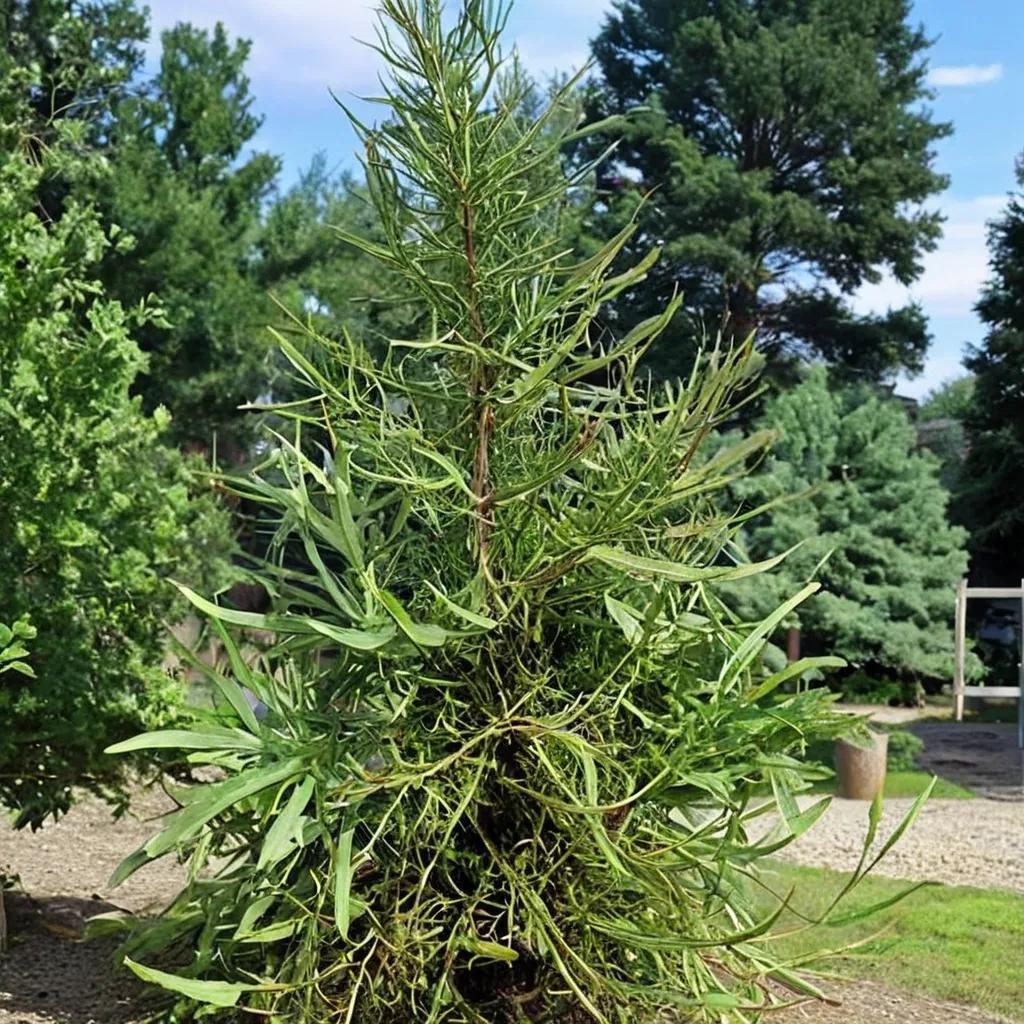 ‘Araucarioides’Japanese Cryptomeria Araucarioides
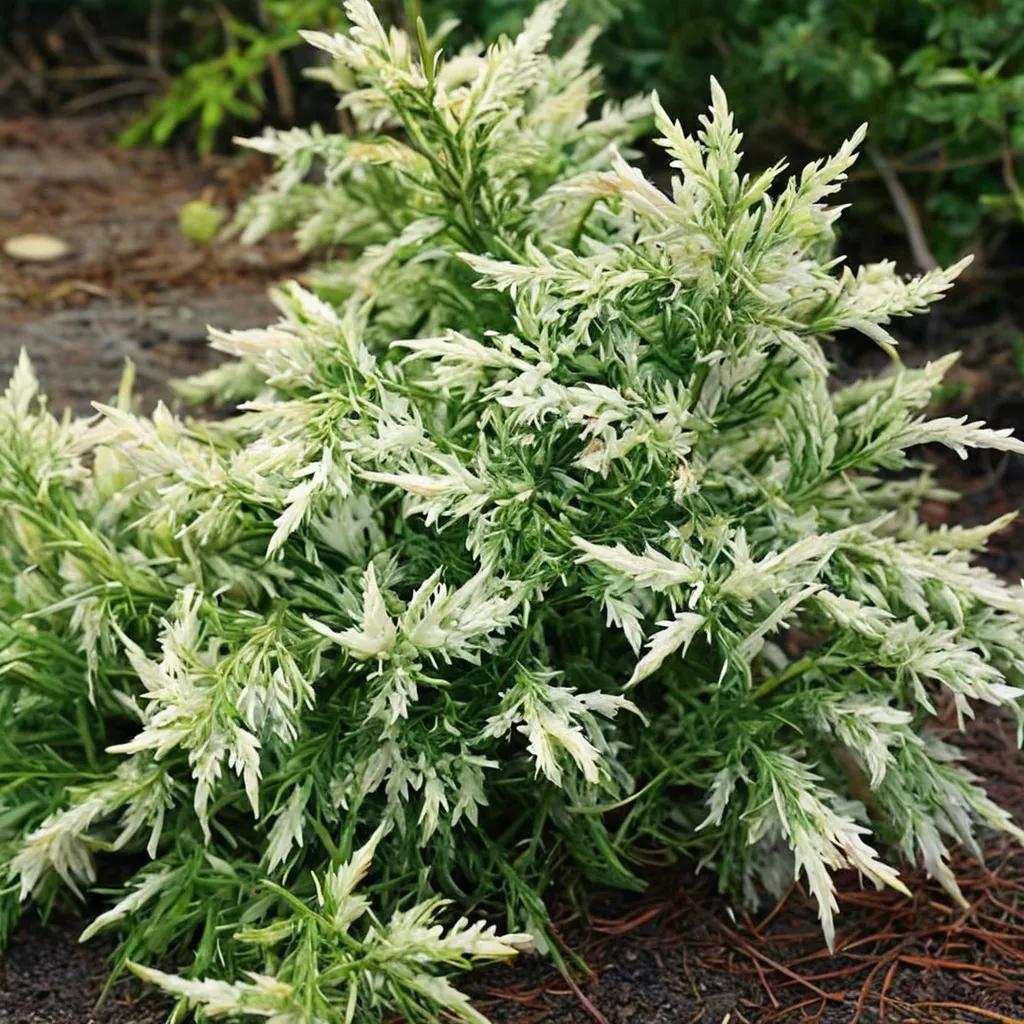 ‘Knaptonensis’Knaptonensis Japanese Cedar
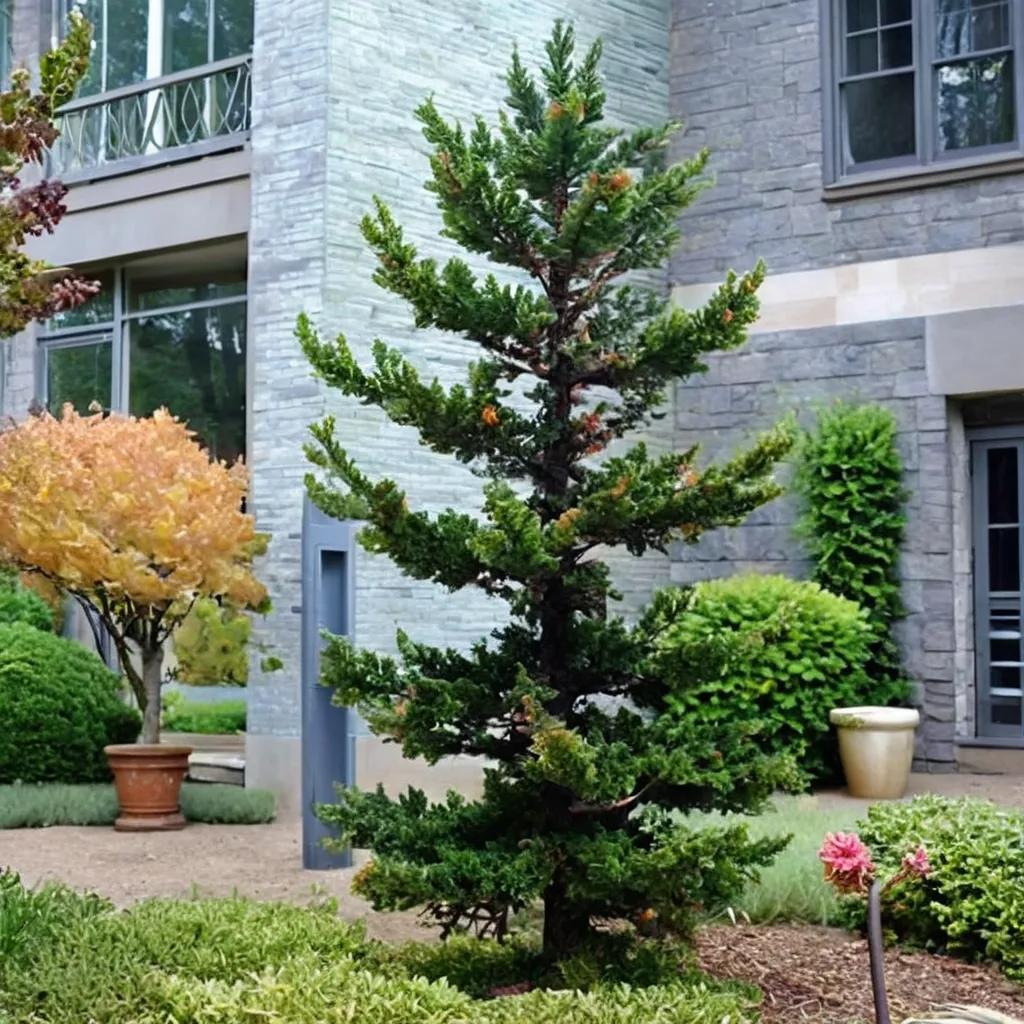 ‘Black Dragon’Black Dragon Cryptomeria
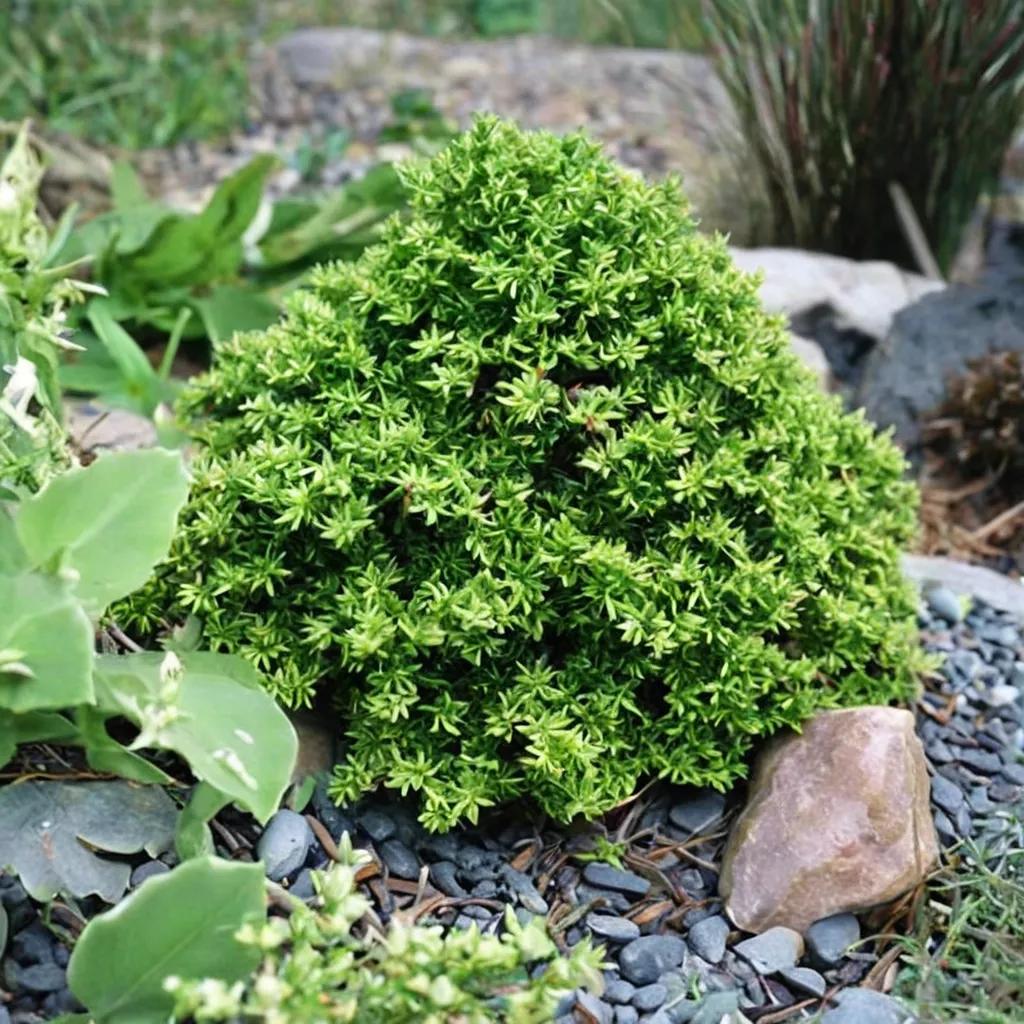 ‘Tsukumo’Japanese Cedar Tsukumo
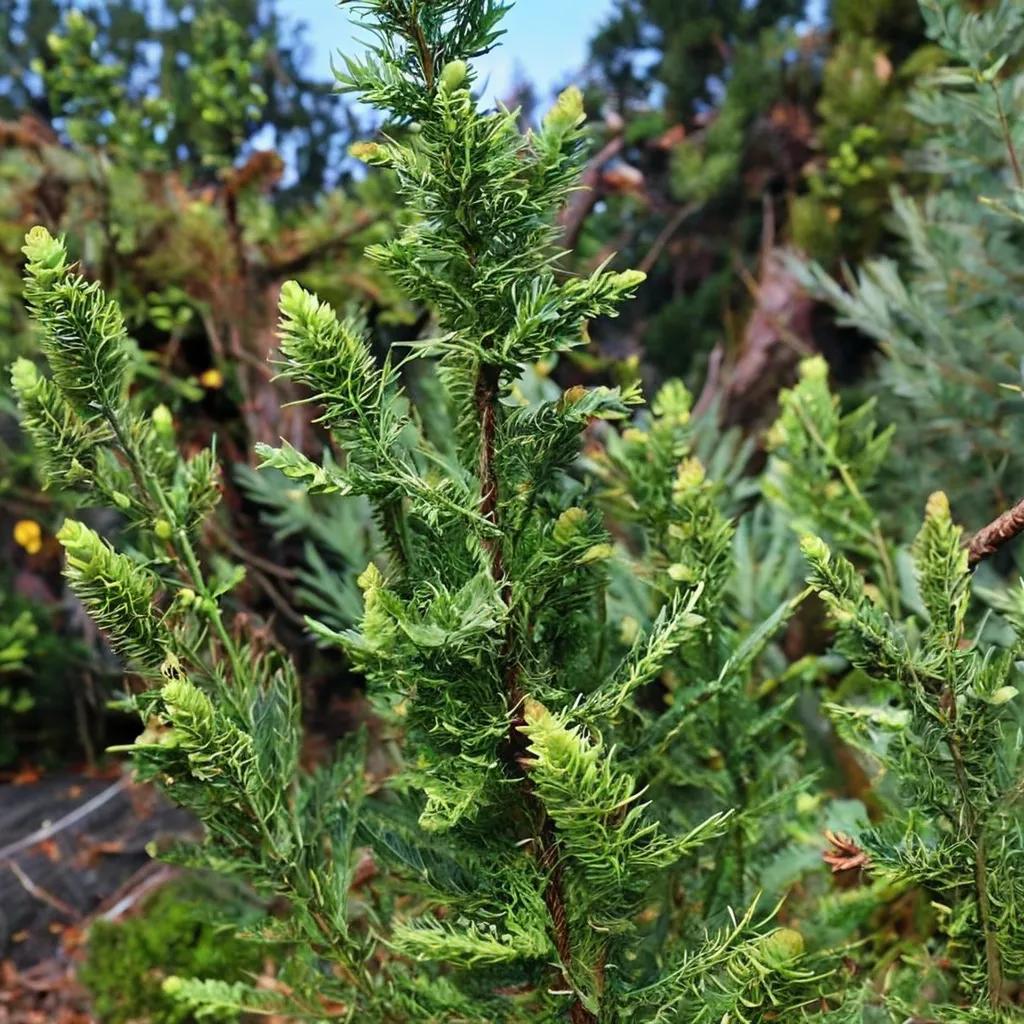 ‘Rasen’Rasen Japanese Cedar
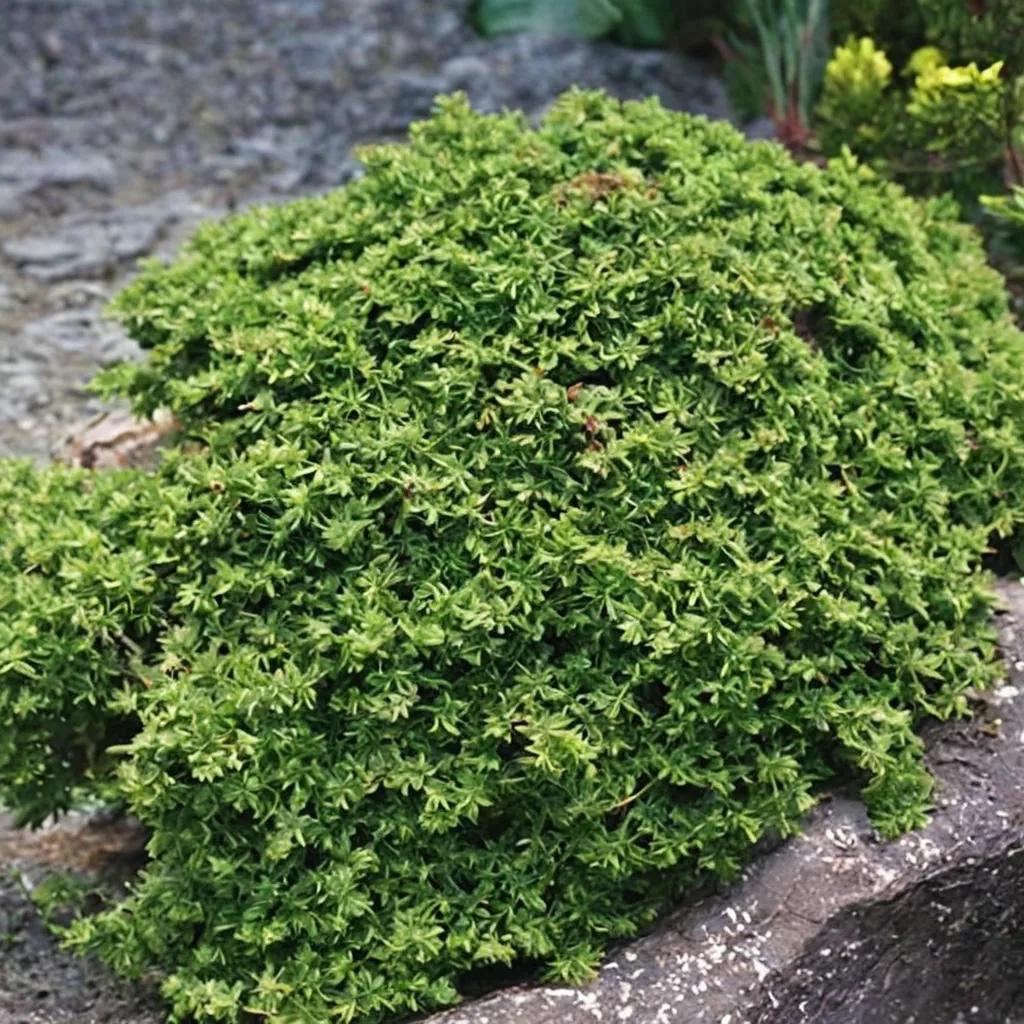 ‘Tenzan Yatsabusa’Tenzan Yatsabusa Cryptomeria
 ‘Yoshino’Yoshino Japanese Cedar
 ‘Radicans’Radicans Japanese Cedar
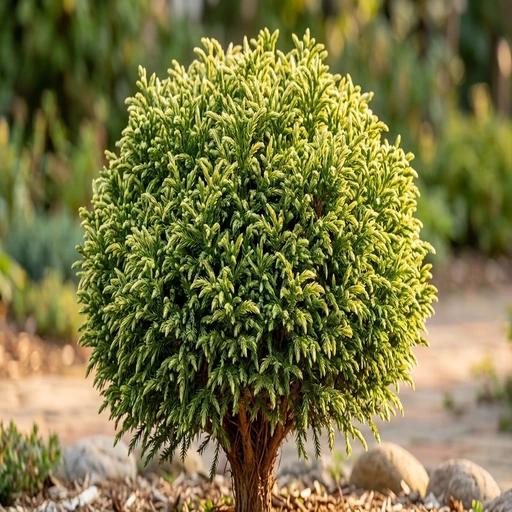 ‘Dragon Prince’Dragon Prince Cryptomeria
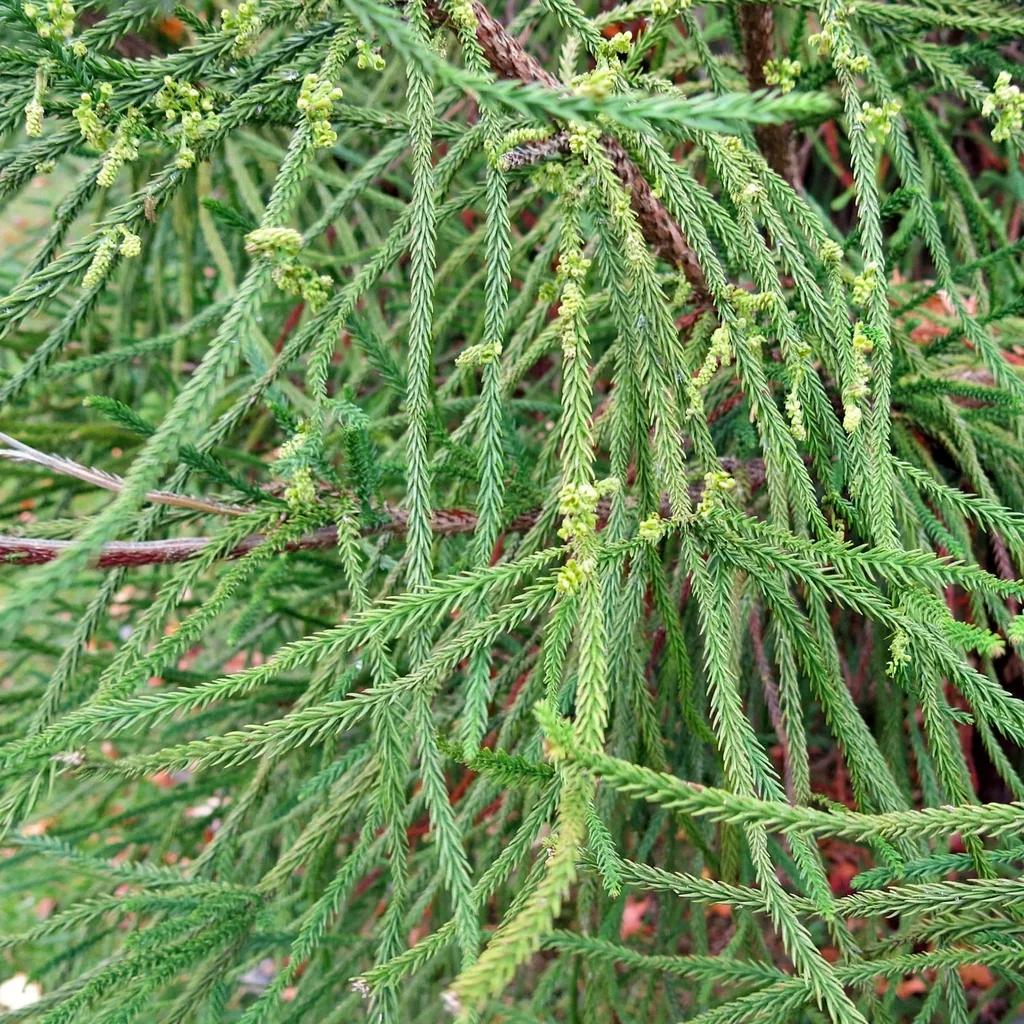 ‘Ikari’Japanese Cedar Ikari
 ‘Globosa Nana’Dwarf Japanese Cedar
The Story
Plant Bio
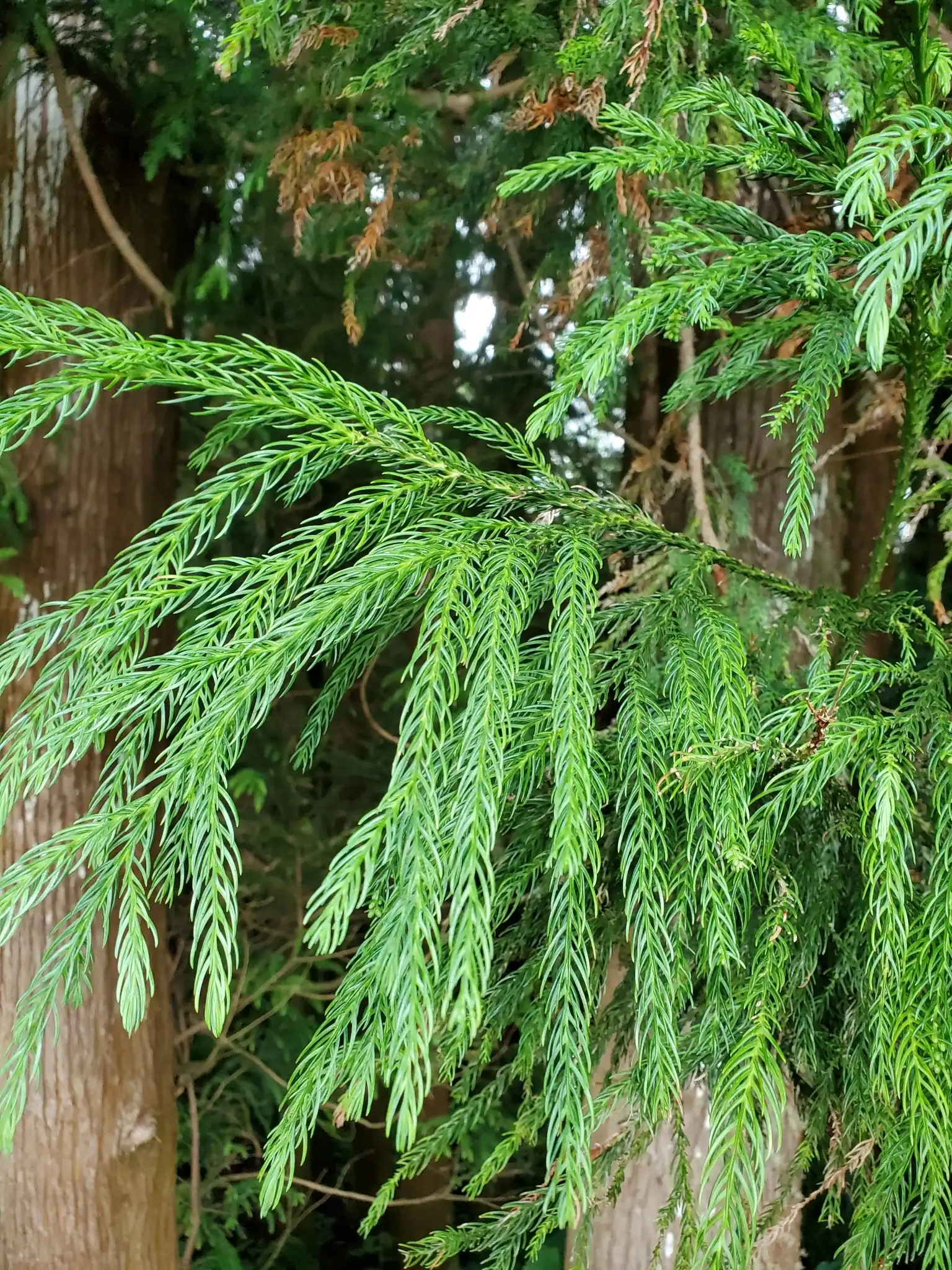
Cryptomeria japonica, Japanese cedar, is a large evergreen conifer native to central and southern Japan and China, reaching fifty to seventy feet with a narrow conical crown. Awl-shaped needles spiral around the shoots in soft feathery sprays, and reddish-brown bark peels in long fibrous strips. Small round cones about an inch across ripen in autumn.
The foliage bronzes noticeably in cold weather, which surprises people expecting a uniformly green conifer — it greens up again in spring and is not a sign of trouble. It is the national tree of Japan and grown as a timber species there; the many dwarf cultivars in garden centres behave nothing like the seventy-foot species.
Uses & Benefits:
Essentials
At a Glance
Plant Type
Tree
Height
720"
Width
300"
Light
Full Sun, Partial Sun
Zones
5, 6, 7, 8
Water
Moderate
Humidity
Moderate
Lifespan
Perennial
Native To
Central and southern Japan and China
Toxicity
Non-toxic
Marketplace
Where to Buy
Shipping costs Year-round shipping Free shipping
Planting
How to Grow
- Plant in spring in moist, well-drained, slightly acidic soil.
- Choose full sun to partial shade with shelter from drying wind.
- Check the mature size of your selection before siting.
- Water through the first two seasons.
- Mulch to keep roots cool and moist.
- Prune only to remove dead wood.
Pro Tip
Expect winter bronzing — the foliage turns rusty in cold and greens again in spring, and many people replace healthy trees thinking they have died.
Keep It Thriving
Care Guide
Do
- Check mature size; forms range 3-70 ft 📏
- Shelter from drying wind 🌲
- Keep soil moist and slightly acidic 🌱
- Accept winter bronzing as normal 🍂
Don't
- Plant in dry or exposed sites ❌
- Assume a garden-centre plant stays small ❌
- Panic at winter colour change ❌
Seasonal Care Calendar
| Task | Jan | Feb | Mar | Apr | May | Jun | Jul | Aug | Sep | Oct | Nov | Dec |
|---|---|---|---|---|---|---|---|---|---|---|---|---|
| Monitor | ||||||||||||
| Prune |
Watch Out For
Pests & Diseases
Common Pests
Common Diseases
In the Garden
Landscape Uses & Companions
Landscape Uses
Companion Plants
Multiply
Propagation Methods
Good to Know
Common Questions
Japanese Cedar questions
What zones can Japanese Cedar grow in?
Japanese Cedar is hardy in USDA Zones 5–8. Inside that range it survives winter in the ground; outside it, grow it as an annual or a container plant you protect.
Is Japanese Cedar deer resistant?
Yes — Japanese Cedar is rated deer-resistant. Deer typically pass it over, though extreme hunger can override any plant's defenses.
When does Japanese Cedar bloom?
Japanese Cedar typically blooms in spring through late fall. Exact timing shifts a week or two with your zone — Sow's bloom calendar maps it to your garden.
Does Japanese Cedar need full sun?
Japanese Cedar does best in full sun to part shade. In hot climates, afternoon shade keeps blooms fresher longer.
More Cryptomeria to compare
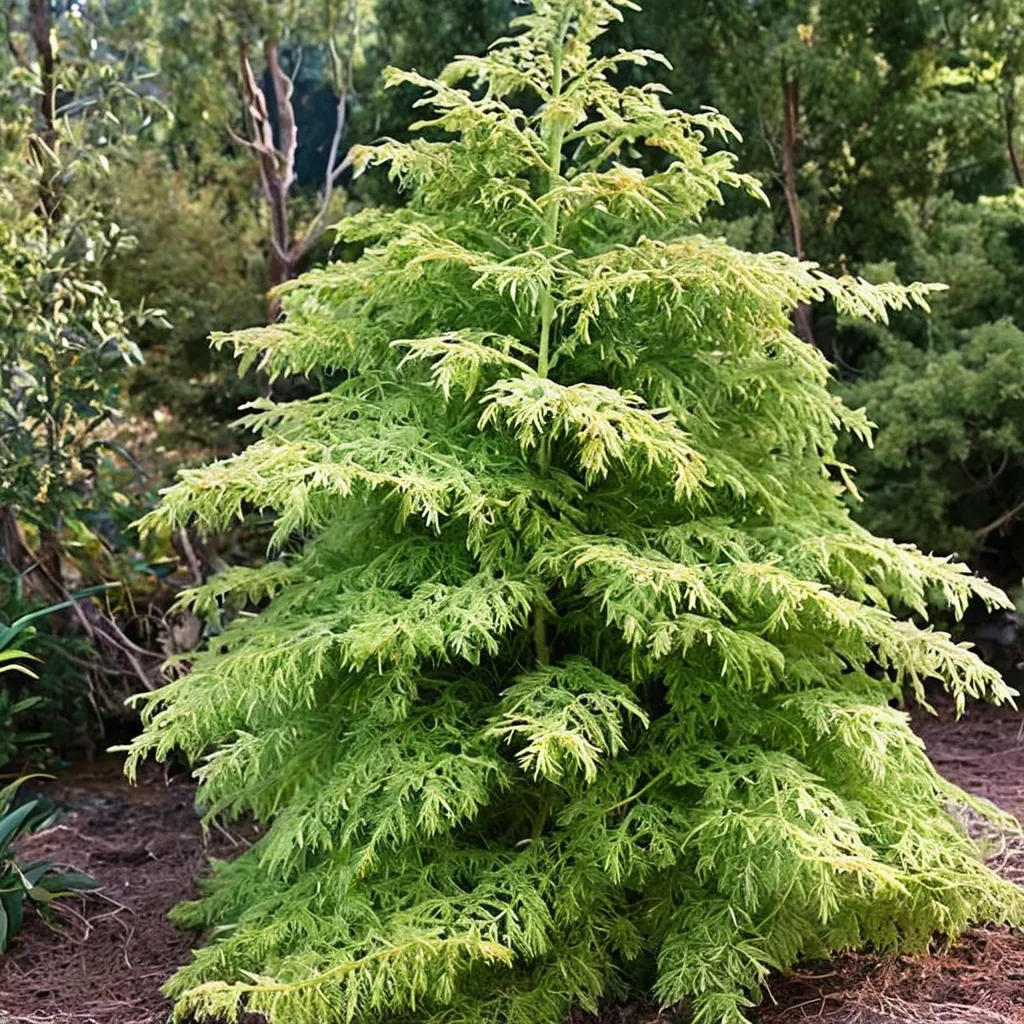
Golden Japanese Cedar
Cryptomeria japonica 'Elegans Aurea'
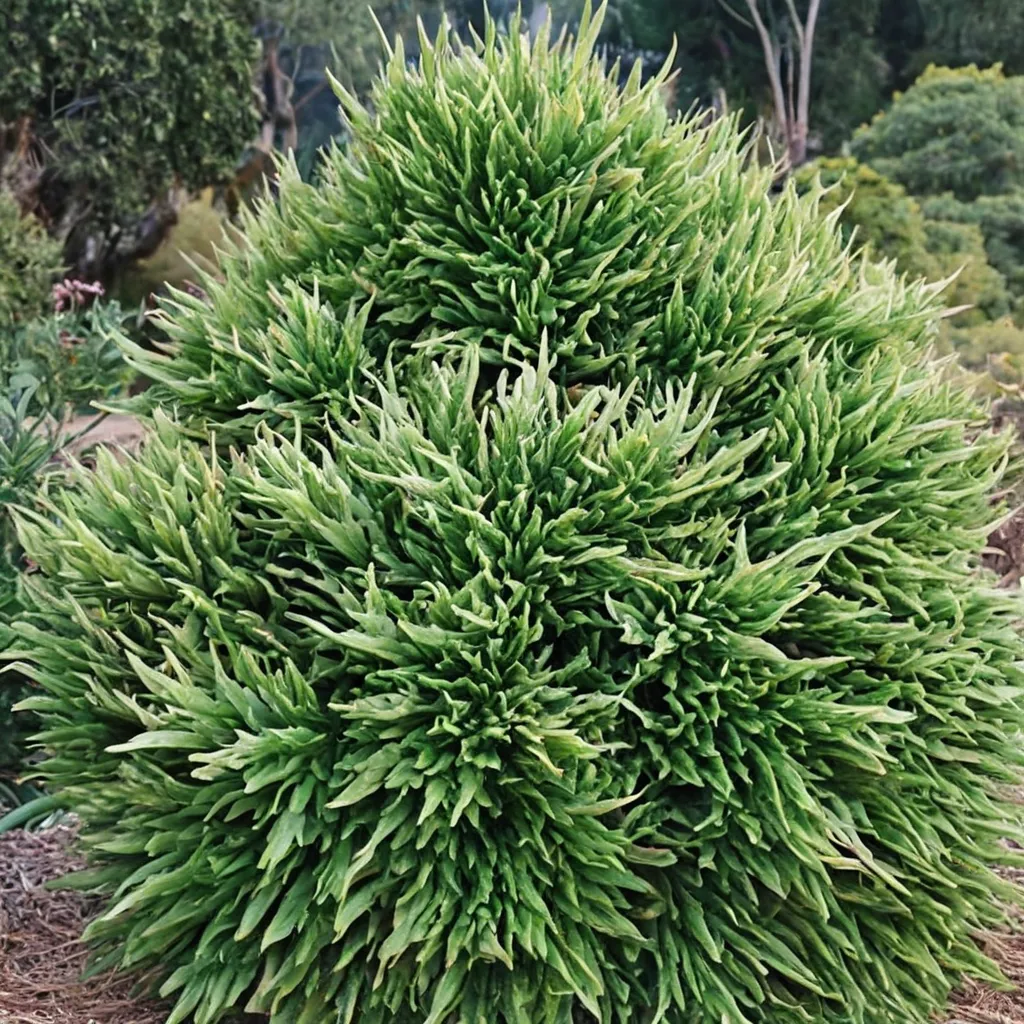
Mitama Japanese Cedar
Cryptomeria japonica 'Mitama'
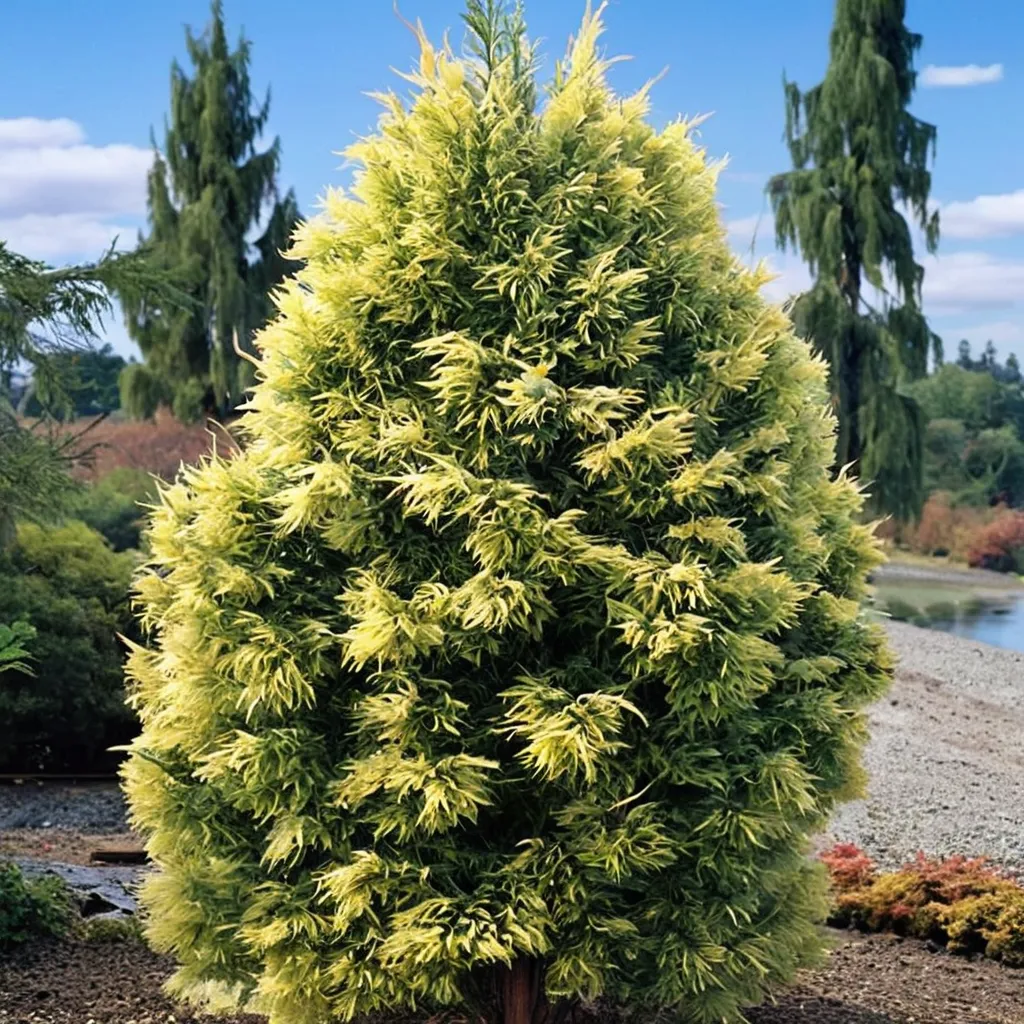
Japanese Cedar Sekkan
Cryptomeria japonica 'Sekkan'
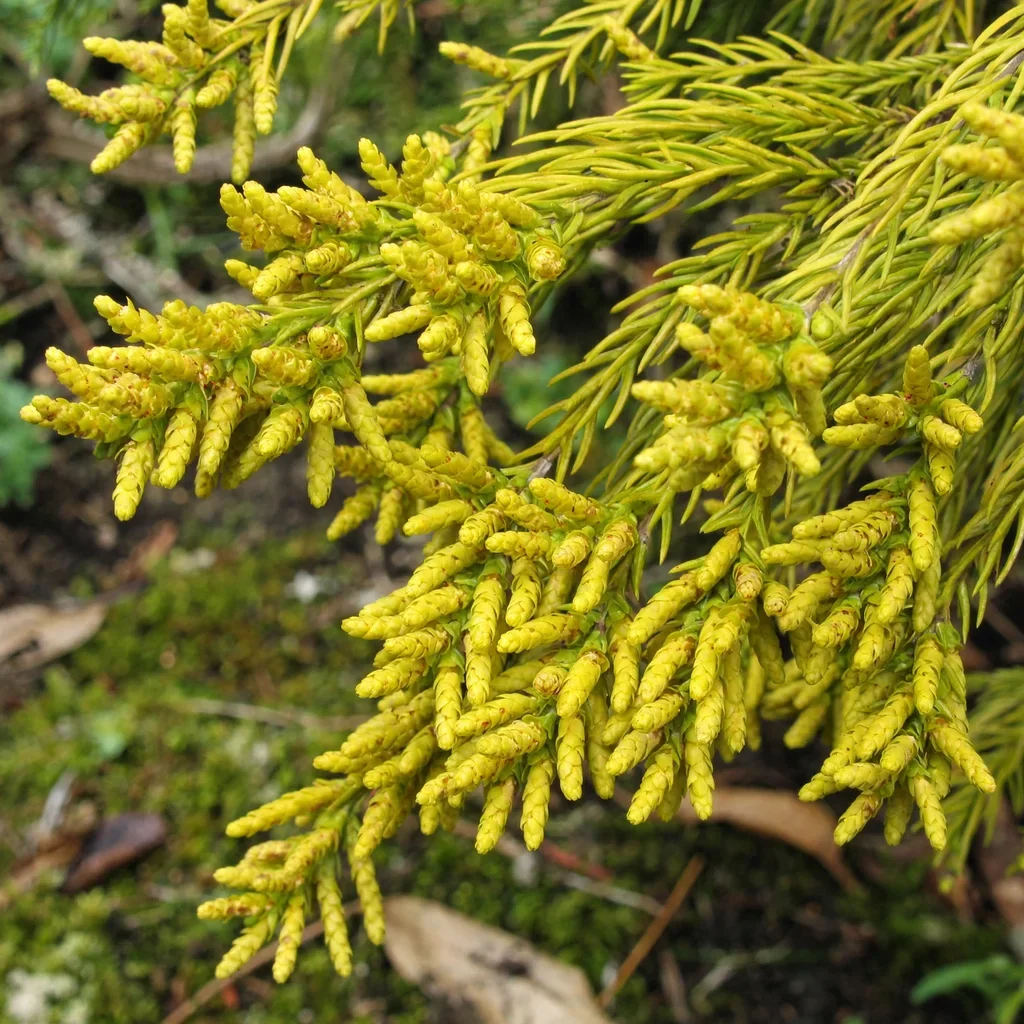
Japanese Cedar Yellow Twig
Cryptomeria japonica 'Yellow Twig'
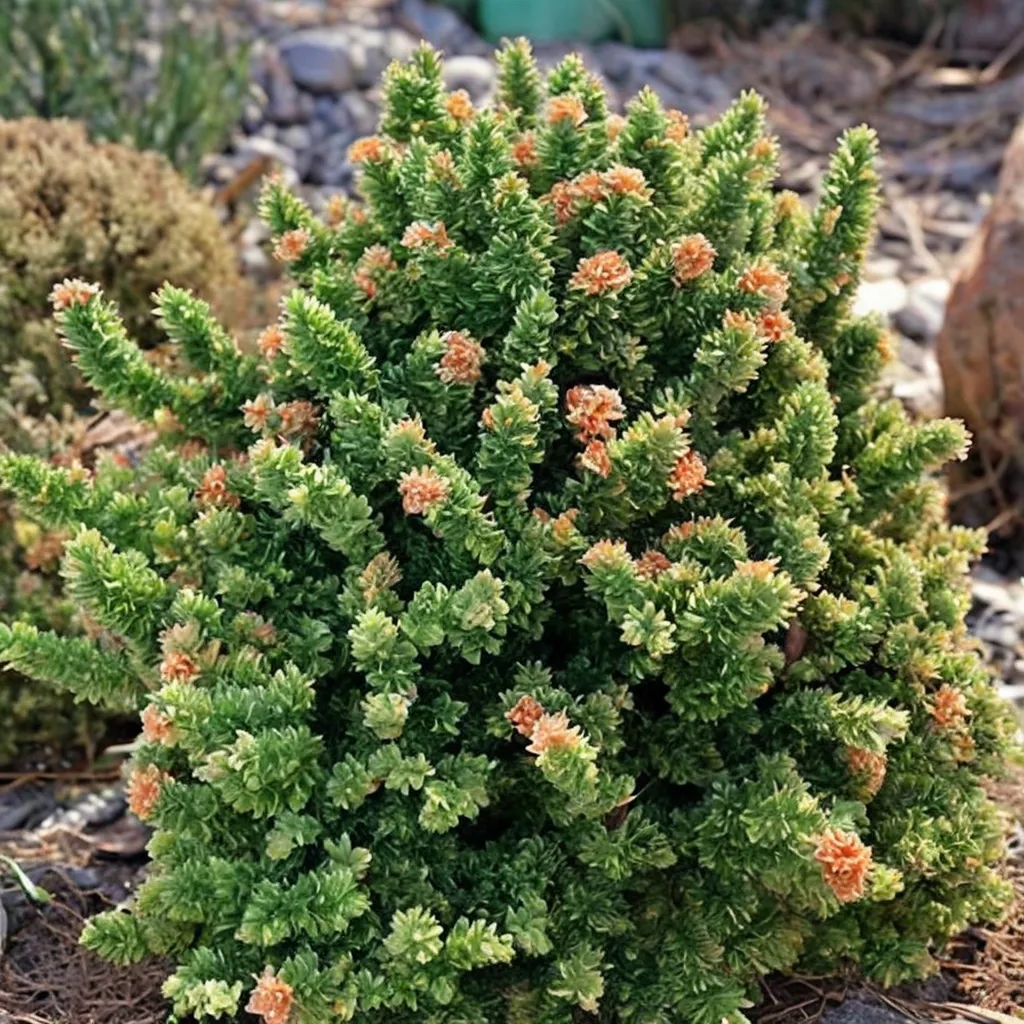
Vilmorin Dwarf Japanese Cedar
Cryptomeria japonica 'Vilmoriniana'
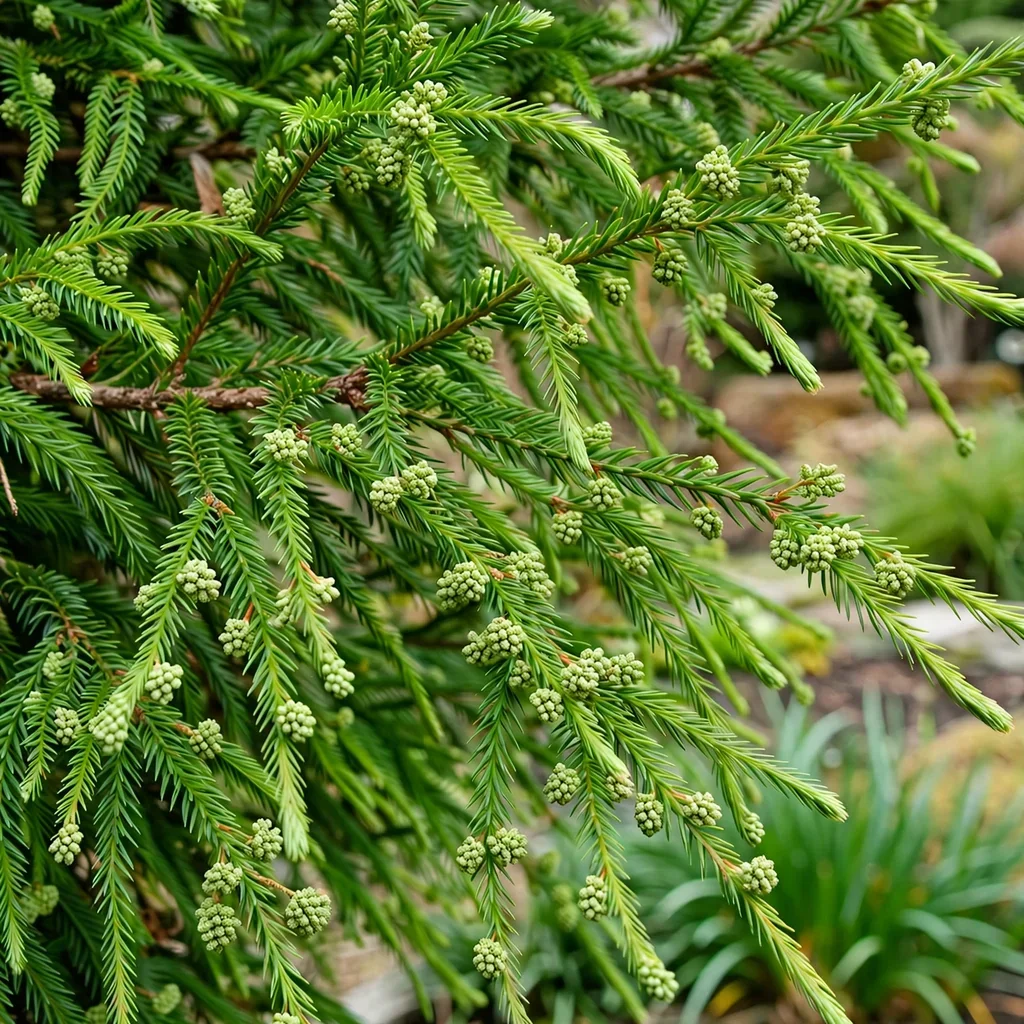
Japanese Cedar Jindai
Cryptomeria japonica 'Jindai'
Keep exploring
Explore the genus
Hardy in your zone?
Grow Japanese Cedar with confidence
See it in a design of your actual yard, get zone-matched care reminders, and track it season by season in your garden journal.