The Story
Plant Bio
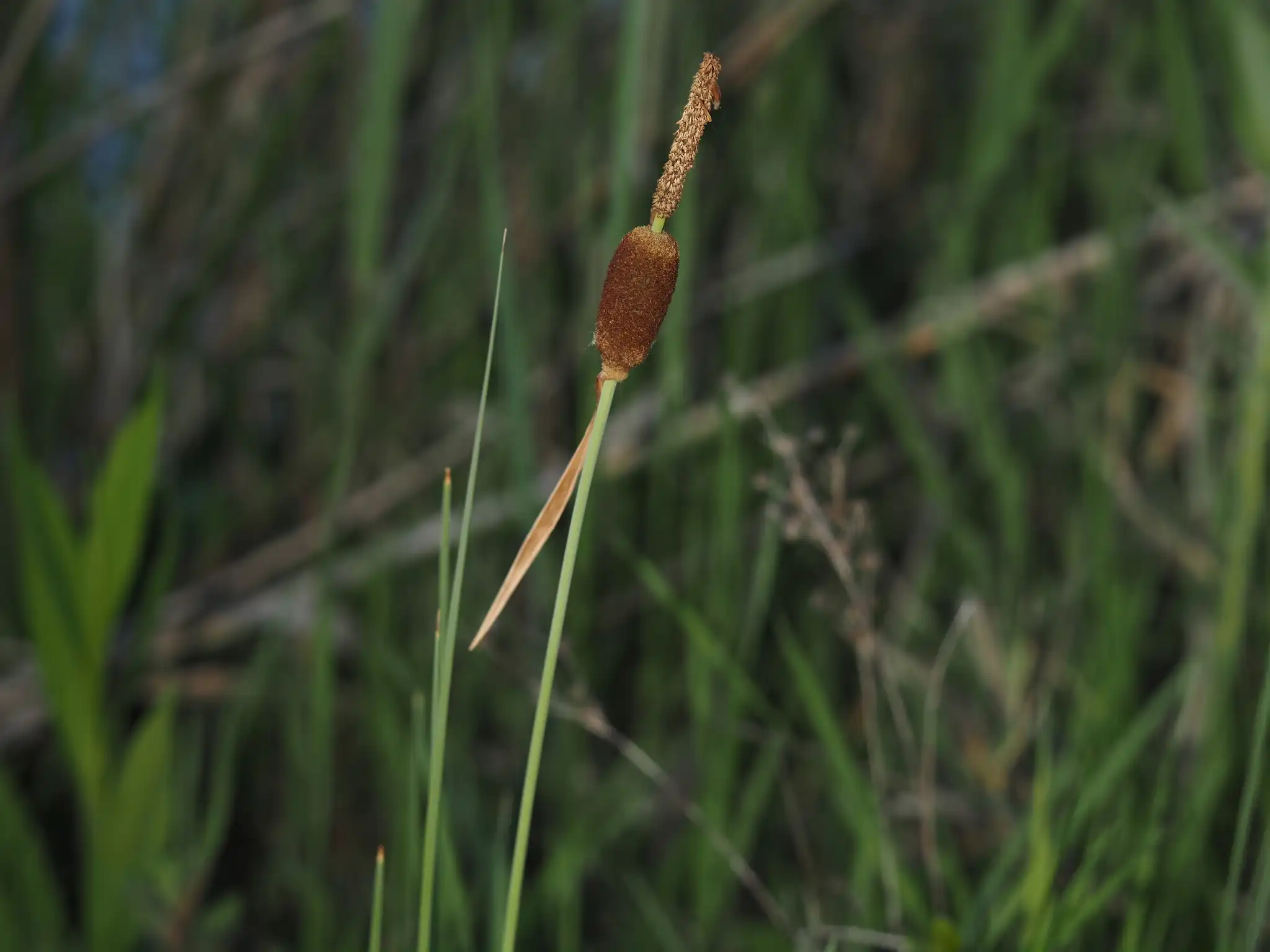
Typha minima is a small-scale herbaceous aquatic perennial native to Eurasia. It forms upright, fountain-like clumps of very fine, blue-green foliage that rise from creeping rhizomes.
This species is distinguished by its diminutive size, typically reaching only two feet in height, and its rounded, chestnut-brown female flower spikes. The tiny, sausage-shaped spikes are separated from the yellowish male flowers by a short section of bare stem.
Uses & Benefits:
Essentials
At a Glance
Plant Type
Aquatic
Height
24"
Width
18"
Light
Full Sun, Partial Sun
Zones
4, 5, 6, 7, 8, 9, 10
Water
High
Humidity
High
Lifespan
Perennial
Native To
Eurasia
Toxicity
Non-toxic
Bloom period
Summer
In flower about 3 months of the year
Planting
How to Grow
- Select a planting site in full sun to partial shade with consistently wet soil or shallow standing water up to six inches deep.
- Secure the plant inside a solid-walled aquatic container filled with heavy loam or clay soil to prevent the rhizomes from spreading.
- Submerge the container so the soil surface sits two to six inches below the water level.
- Cut back dead foliage and spent flower stalks close to the base in late winter or early spring before new growth emerges.
Pro Tip
Always plant this species inside solid-walled aquatic planting baskets or restricted tubs submerged in shallow water. Planting directly into open pond floors allows the creeping rhizomes to spread aggressively and potentially damage pond liners.
Keep It Thriving
Care Guide
Do
- Keep the soil continuously saturated or submerged in shallow water.
- Confine the root system in a solid container to control lateral spread.
- Grow in full sun to ensure robust flowering and strong stems.
Don't
- Never allow the soil to dry out completely.
- Do not plant directly into open pond beds without root restriction.
- Avoid pruning hard into old foliage during the active mid-season growth period.
Seasonal Care Calendar
| Task | Jan | Feb | Mar | Apr | May | Jun | Jul | Aug | Sep | Oct | Nov | Dec |
|---|---|---|---|---|---|---|---|---|---|---|---|---|
| Divide | ||||||||||||
| Fertilize | ||||||||||||
| Pest Check | ||||||||||||
| Prune |
Watch Out For
Pests & Diseases
Common Pests
Common Diseases
In the Garden
Landscape Uses & Companions
Landscape Uses
Companion Plants
Multiply
Propagation Methods
Good to Know
Common Questions
Dwarf Cattail questions
What zones can Dwarf Cattail grow in?
Dwarf Cattail is hardy in USDA Zones 4–10. Inside that range it survives winter in the ground; outside it, grow it as an annual or a container plant you protect.
Is Dwarf Cattail deer resistant?
Yes — Dwarf Cattail is rated deer-resistant. Deer typically pass it over, though extreme hunger can override any plant's defenses.
When does Dwarf Cattail bloom?
Dwarf Cattail typically blooms in summer through summer. Exact timing shifts a week or two with your zone — Sow's bloom calendar maps it to your garden.
Does Dwarf Cattail need full sun?
Dwarf Cattail does best in full sun to part shade. In hot climates, afternoon shade keeps blooms fresher longer.
More Typha to compare
Keep exploring
Explore the genus
Grow Dwarf Cattail with confidence
See it in a design of your actual yard, get zone-matched care reminders, and track it season by season in your garden journal.