The Story
Plant Bio
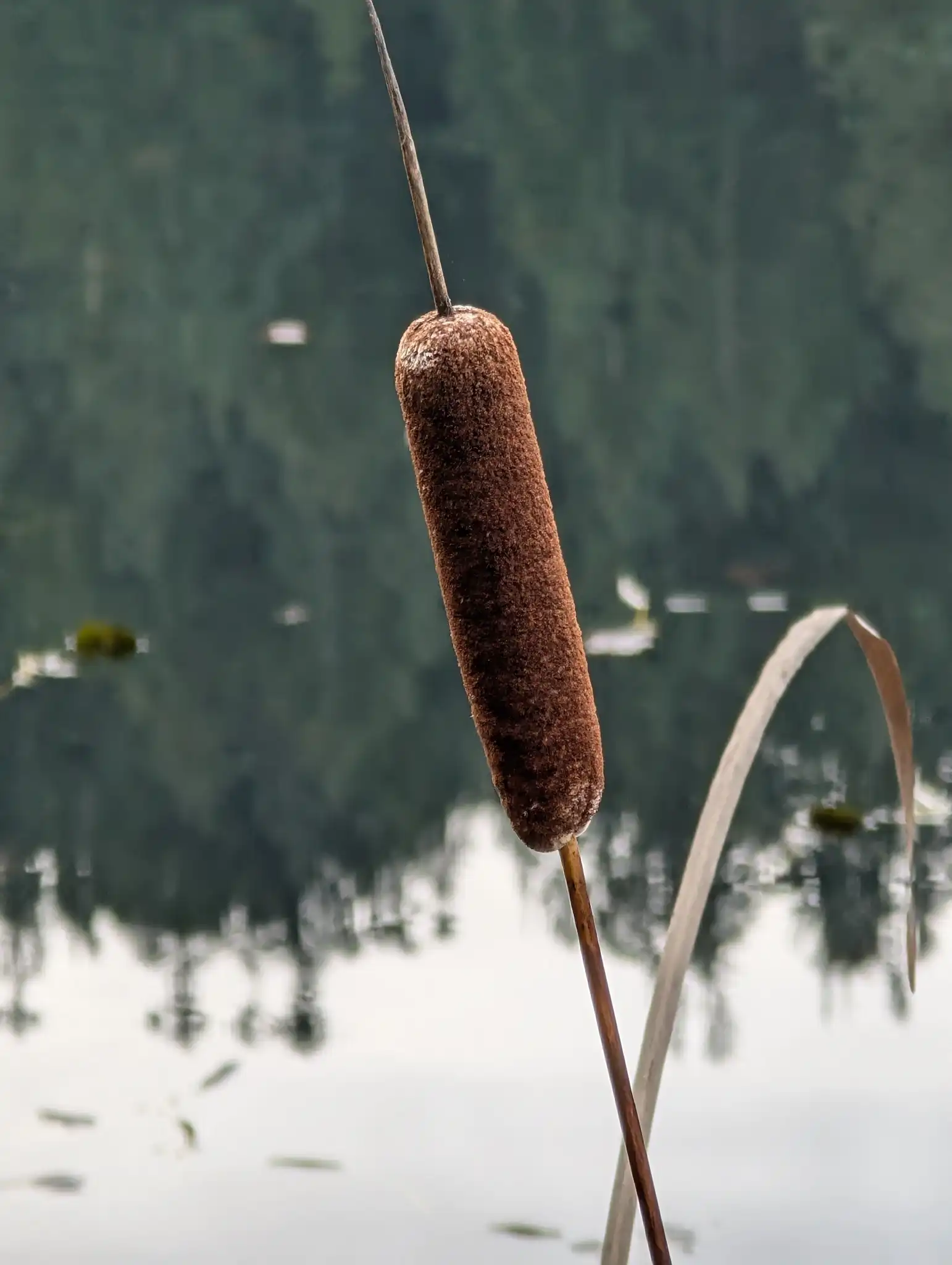
Typha latifolia, the broadleaf cattail, is a robust, emergent aquatic perennial native to North American wetlands, forming dense stands of erect, rigid stems and spongy, blue-green leaves. The summer inflorescence is a dense, velvety, sausage-shaped spike divided into a dark brown female lower section and a yellowish male upper section.
This species is distinguished by its exceptionally broad, flat leaves up to an inch wide and its contiguous male and female flower spikes that lack any gap between them. The aggressive rhizomatous root system expands indefinitely, making it a powerful colonizer of saturated soils and standing water up to two feet deep.
Uses & Benefits:
Essentials
At a Glance
Plant Type
Aquatic
Height
120"
Width
120"
Light
Full Sun
Zones
4, 5, 6, 7, 8, 9, 10
Water
Wet / Standing Water
Humidity
High
Lifespan
Perennial
Native To
North America, Europe, Asia, North Africa
Toxicity
Non-toxic
Bloom period
Summer
In flower about 3 months of the year
Planting
How to Grow
- Select a heavy, non-draining plastic container or planting basket to contain the aggressive rhizomes.
- Fill the container with heavy clay loam or organic muck, avoiding light potting mixes that float.
- Plant the rhizome horizontally two to three inches deep with any emerging green shoots pointing upward.
- Submerge the container in standing water, maintaining a depth of two to twenty-four inches above the soil level.
Pro Tip
Plant this species only in heavy, soil-filled containers submerged in water to restrict the rhizomes; planting directly into unlined ponds allows the roots to quickly puncture liners and overwhelm other aquatic vegetation.
Keep It Thriving
Care Guide
Do
- Grow in full sun to ensure strong stem development and abundant flowering.
- Keep the soil constantly saturated or submerged, as drying out kills the root system.
- Use heavy, solid-sided pots to prevent the sharp rhizomes from escaping into the wider pond.
Don't
- Do not plant directly into unlined earth ponds or near flexible pond liners.
- Do not prune into live, green tissue during the active summer growing season.
- Do not handle the leaves roughly without gloves, as the sharp margins can cause skin cuts.
Seasonal Care Calendar
| Task | Jan | Feb | Mar | Apr | May | Jun | Jul | Aug | Sep | Oct | Nov | Dec |
|---|---|---|---|---|---|---|---|---|---|---|---|---|
| Divide | ||||||||||||
| Pest Check | ||||||||||||
| Spring Cleanup | ||||||||||||
| Winter Prep |
Watch Out For
Pests & Diseases
Common Pests
Common Diseases
In the Garden
Landscape Uses & Companions
Landscape Uses
Companion Plants
Multiply
Propagation Methods
Good to Know
Common Questions
Broadleaf Cattail questions
What zones can Broadleaf Cattail grow in?
Broadleaf Cattail is hardy in USDA Zones 4–10. Inside that range it survives winter in the ground; outside it, grow it as an annual or a container plant you protect.
Is Broadleaf Cattail deer resistant?
Yes — Broadleaf Cattail is rated deer-resistant. Deer typically pass it over, though extreme hunger can override any plant's defenses.
When does Broadleaf Cattail bloom?
Broadleaf Cattail typically blooms in summer through summer. Exact timing shifts a week or two with your zone — Sow's bloom calendar maps it to your garden.
Does Broadleaf Cattail need full sun?
Broadleaf Cattail does best in full sun (6+ hours).
More Typha to compare
Keep exploring
Explore the genus
Grow Broadleaf Cattail with confidence
See it in a design of your actual yard, get zone-matched care reminders, and track it season by season in your garden journal.