The Story
Plant Bio
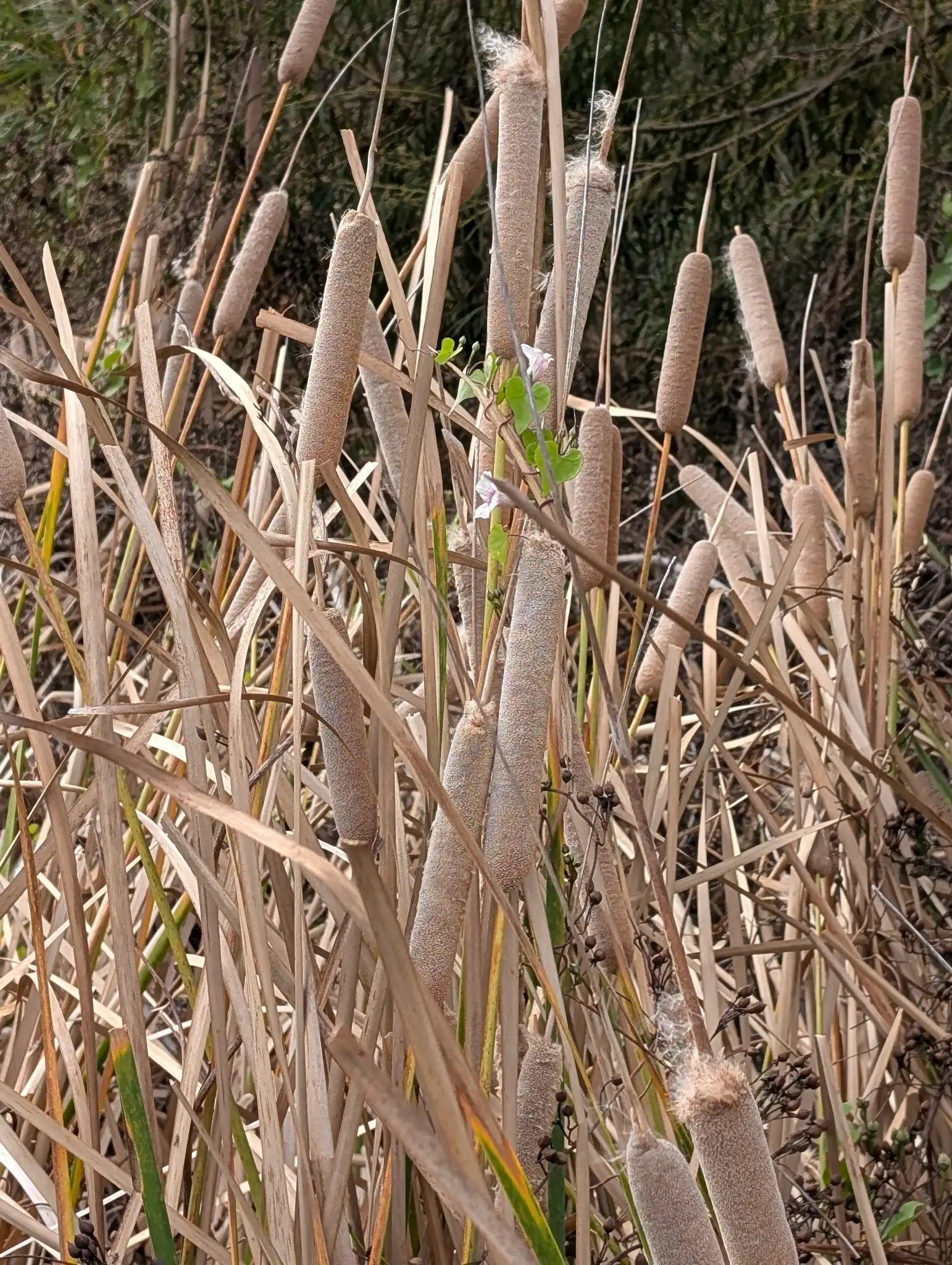
Typha domingensis, the Southern cattail, is a robust, emergent aquatic perennial native to warm-temperate and tropical wetlands. It forms dense, tall stands of stiff, linear leaves topped by distinctive cylindrical brown flower spikes in spring and summer.
This species is distinguished by a noticeable gap of up to two inches separating the upper male flowers from the lower female portion of the spike. The bright green foliage and persistent seed heads provide exceptional structural presence in large water features.
Uses & Benefits:
Essentials
At a Glance
Plant Type
Aquatic
Height
150"
Width
118"
Light
Full Sun
Zones
4, 5, 6, 7, 8, 9, 10
Water
High
Humidity
High
Lifespan
Perennial
Native To
North America, South America, Africa, Asia, Australia, Pacific Islands
Toxicity
Non-toxic
Bloom period
Spring – Summer
In flower about 6 months of the year
Planting
How to Grow
- Select a planting site in full sun with wet, saturated soil or standing water up to twelve inches deep.
- Plant rhizomes or plugs directly into heavy-duty aquatic containers filled with heavy clay or loam to restrict aggressive spreading.
- Submerge the container so the soil surface sits under twelve to thirty-nine inches of water.
- Leave the plants undisturbed to establish, as they require no supplemental fertilizer and scavenge nutrients directly from the water.
Pro Tip
Always plant this species in heavy-duty aquatic containment pots or lined cells; uncontained rhizomes will rapidly overwhelm open soil and unlined garden ponds.
Keep It Thriving
Care Guide
Do
- Grow in heavy-duty containment pots to control the aggressive rhizomatous spread.
- Cut dead foliage back to the water level once a year in late winter.
- Maintain permanent soil moisture or standing water during the active growing season.
Don't
- Do not plant directly into unlined garden ponds or earth-bottomed features without root barriers.
- Do not apply supplemental fertilizer, which can trigger aggressive overgrowth and weaken the plant.
- Do not prune green stems heavily into old leafless wood during the active summer growth period.
Seasonal Care Calendar
| Task | Jan | Feb | Mar | Apr | May | Jun | Jul | Aug | Sep | Oct | Nov | Dec |
|---|---|---|---|---|---|---|---|---|---|---|---|---|
| Divide | ||||||||||||
| Pest Check | ||||||||||||
| Spring Cleanup | ||||||||||||
| Winter Prep |
Watch Out For
Pests & Diseases
Common Pests
Common Diseases
In the Garden
Landscape Uses & Companions
Landscape Uses
Companion Plants
Multiply
Propagation Methods
Good to Know
Common Questions
Southern Cattail questions
What zones can Southern Cattail grow in?
Southern Cattail is hardy in USDA Zones 4–10. Inside that range it survives winter in the ground; outside it, grow it as an annual or a container plant you protect.
Is Southern Cattail deer resistant?
Not reliably. Deer may browse Southern Cattail, especially tender spring growth — plan on repellents or fencing where pressure is high.
When does Southern Cattail bloom?
Southern Cattail typically blooms in spring through summer. Exact timing shifts a week or two with your zone — Sow's bloom calendar maps it to your garden.
Does Southern Cattail need full sun?
Southern Cattail does best in full sun (6+ hours).
More Typha to compare
Keep exploring
Explore the genus
Grow Southern Cattail with confidence
See it in a design of your actual yard, get zone-matched care reminders, and track it season by season in your garden journal.