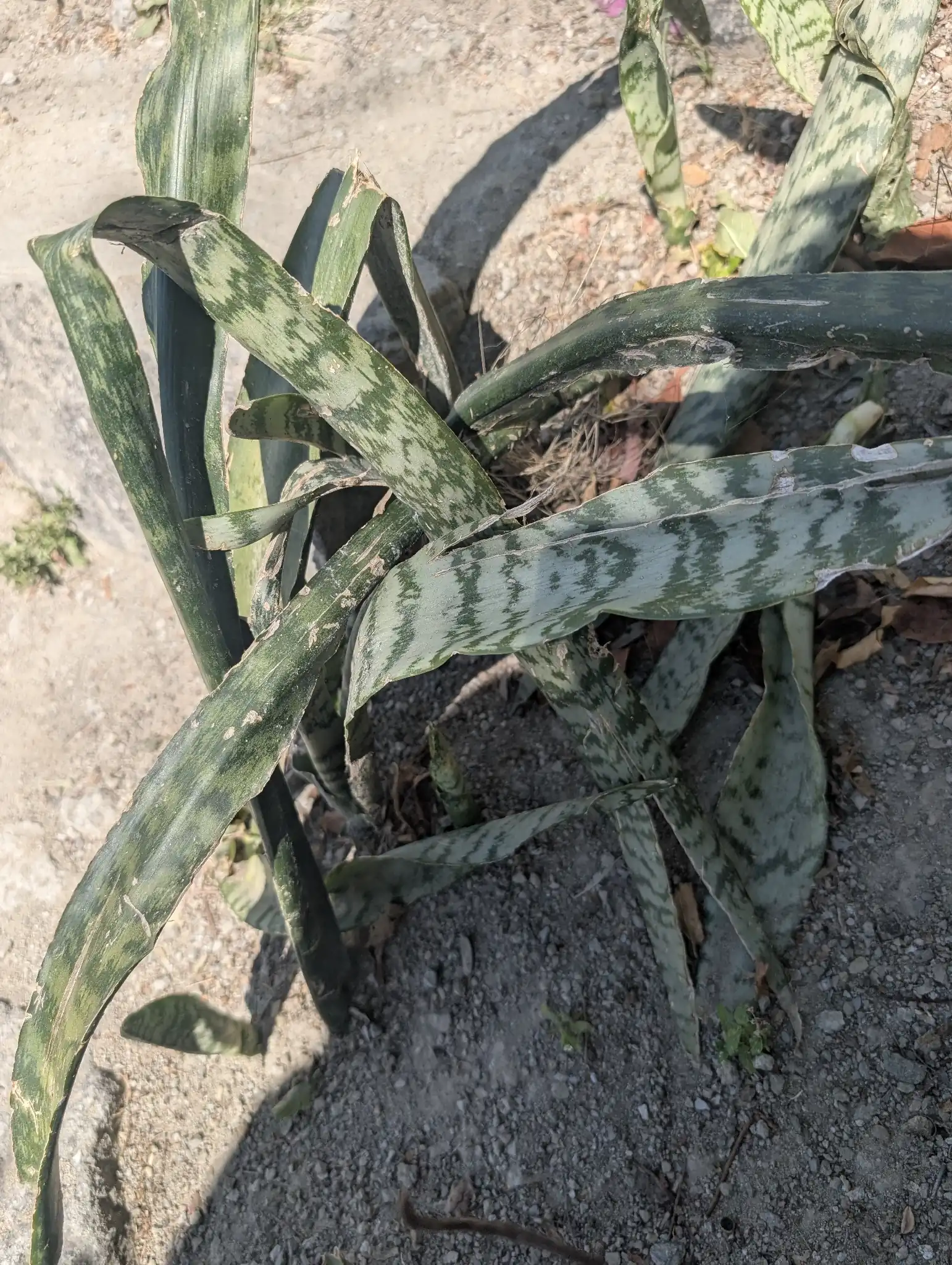
2 named cultivars
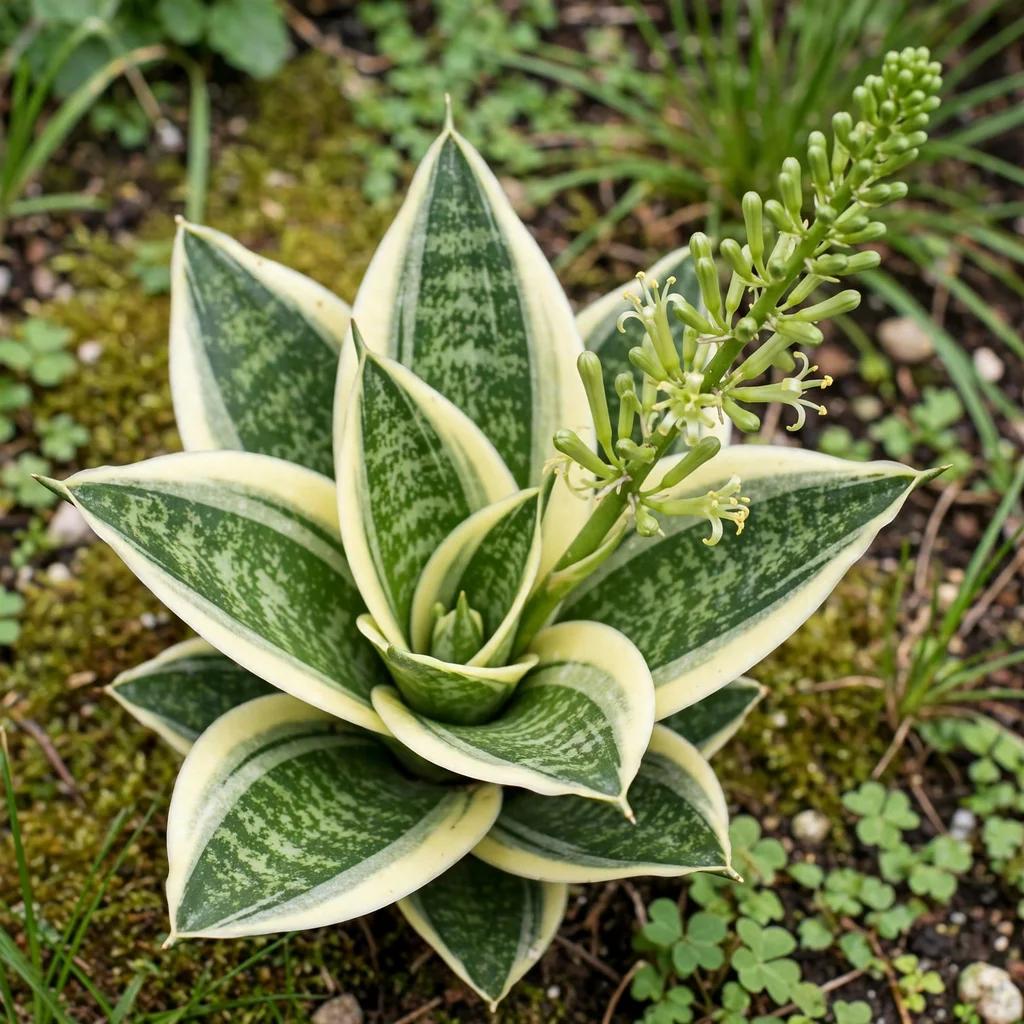

The Story
Plant Bio
Dracaena trifasciata is a stemless evergreen perennial native to tropical western Africa, characterized by its upright, sword-shaped leaves rising in vertical clusters from underground rhizomes. The species adapts to a wide range of light conditions, surviving in deep indoor shade as well as full outdoor sun in frost-free climates.
The stiff, succulent leaves feature dark green centers banded horizontally with light gray-green transverse stripes. New growth emerges with bright coloration matching the mature foliage pattern, slowly hardening into dense, water-storing colonies.
Uses & Benefits:
Essentials
At a Glance
Plant Type
Cactus Succulent
Height
48"
Width
24"
Light
Full Sun, Partial Sun, Shade
Zones
10
Water
Low
Humidity
Low to high
Lifespan
Perennial
Native To
Tropical western Africa
Toxicity
Toxic to pets and humans
Planting
How to Grow
- Select a heavy clay or ceramic pot with large drainage holes to prevent tipping and water retention.
- Fill the container with a fast-draining potting mix, such as a sandy loam or a succulent-specific blend.
- Position the plant at the same depth it was previously growing, ensuring the rhizomes are fully covered but the leaf bases remain dry.
- Place in bright indirect light for optimal growth, though the plant will tolerate low light or full sun.
Pro Tip
Water only when the potting medium dries out completely to the bottom of the container; excess moisture triggers rapid rhizome rot.
Keep It Thriving
Care Guide
Do
- Allow the soil to dry out completely between waterings, especially during winter.
- Wipe the leaves occasionally with a damp cloth to remove dust and maintain photosynthesis.
- Apply a balanced, diluted houseplant fertilizer sparingly during the active spring and summer growing season.
Don't
- Do not allow the plant to sit in standing water or waterlogged, compacted soil.
- Never cut into healthy green leaf tissue when removing damaged foliage.
- Avoid placing the plant in areas exposed to freezing temperatures or cold drafts.
Seasonal Care Calendar
| Task | Jan | Feb | Mar | Apr | May | Jun | Jul | Aug | Sep | Oct | Nov | Dec |
|---|---|---|---|---|---|---|---|---|---|---|---|---|
| Fertilize | ||||||||||||
| Pest Check | ||||||||||||
| Propagate | ||||||||||||
| Prune |
Watch Out For
Pests & Diseases
Common Pests
Common Diseases
In the Garden
Landscape Uses & Companions
Landscape Uses
Companion Plants
Multiply
Propagation Methods
Good to Know
Common Questions
Snake Plant questions
What zones can Snake Plant grow in?
Snake Plant is hardy in USDA Zone 10. Inside that range it survives winter in the ground; outside it, grow it as an annual or a container plant you protect.
Is Snake Plant deer resistant?
Yes — Snake Plant is rated deer-resistant. Deer typically pass it over, though extreme hunger can override any plant's defenses.
When does Snake Plant bloom?
Snake Plant typically blooms in spring through summer. Exact timing shifts a week or two with your zone — Sow's bloom calendar maps it to your garden.
Does Snake Plant need full sun?
Snake Plant does best in full sun to part shade. In hot climates, afternoon shade keeps blooms fresher longer.
Is Snake Plant drought tolerant?
Yes — once established (usually after the first full season), Snake Plant handles dry spells with minimal watering. Water deeply its first year to build the root system that makes that possible.
More Dracaena to compare
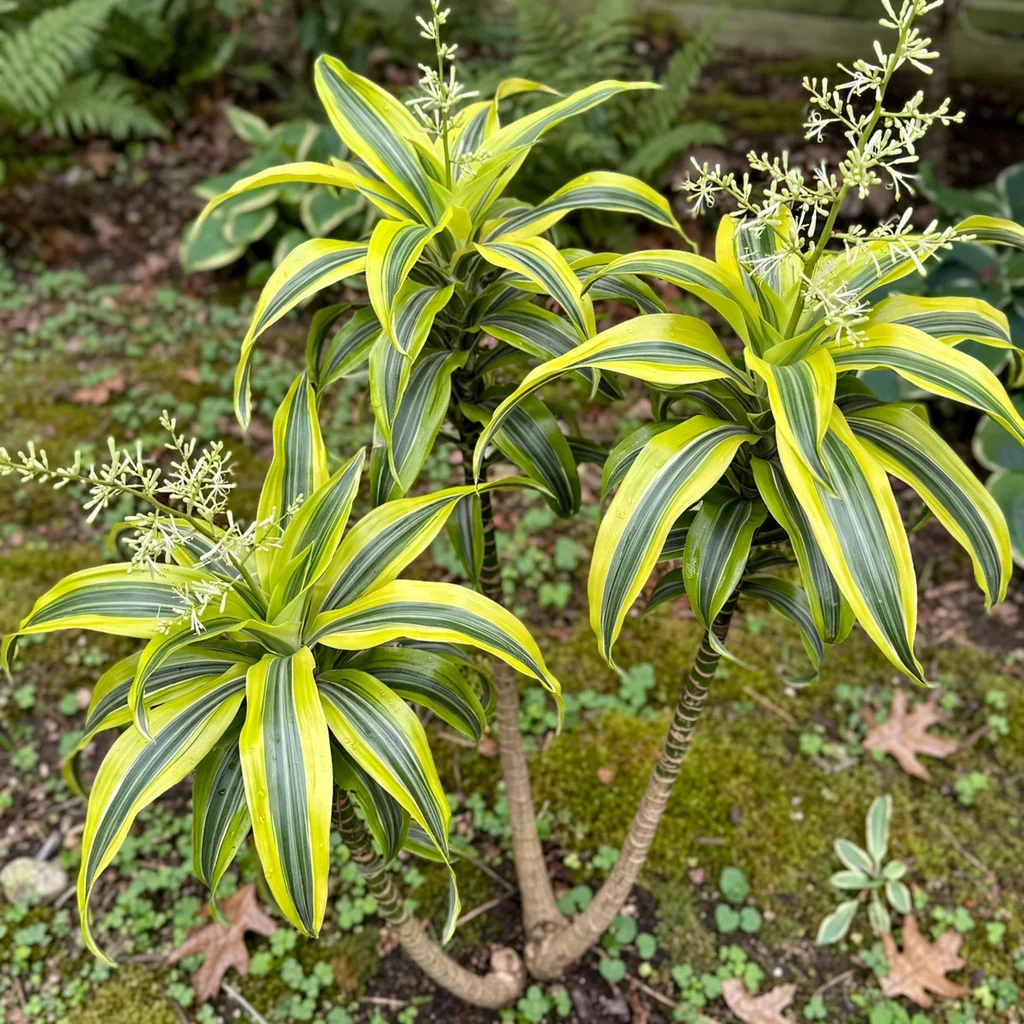
Lemon Surprise Corn Plant
Dracaena fragrans 'Lemon Surprise'
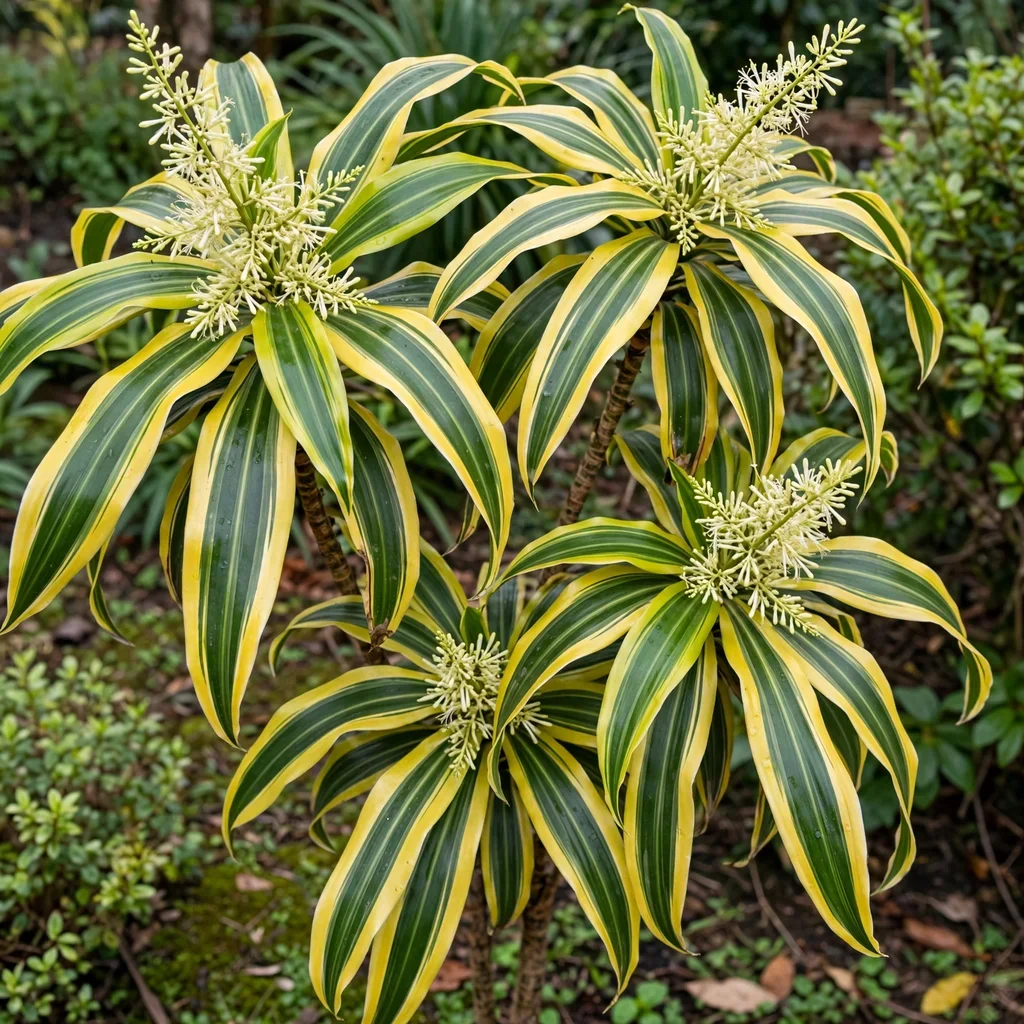
Corn Plant Dracaena Corn Plant
Dracaena fragrans 'Aureo Marginata'
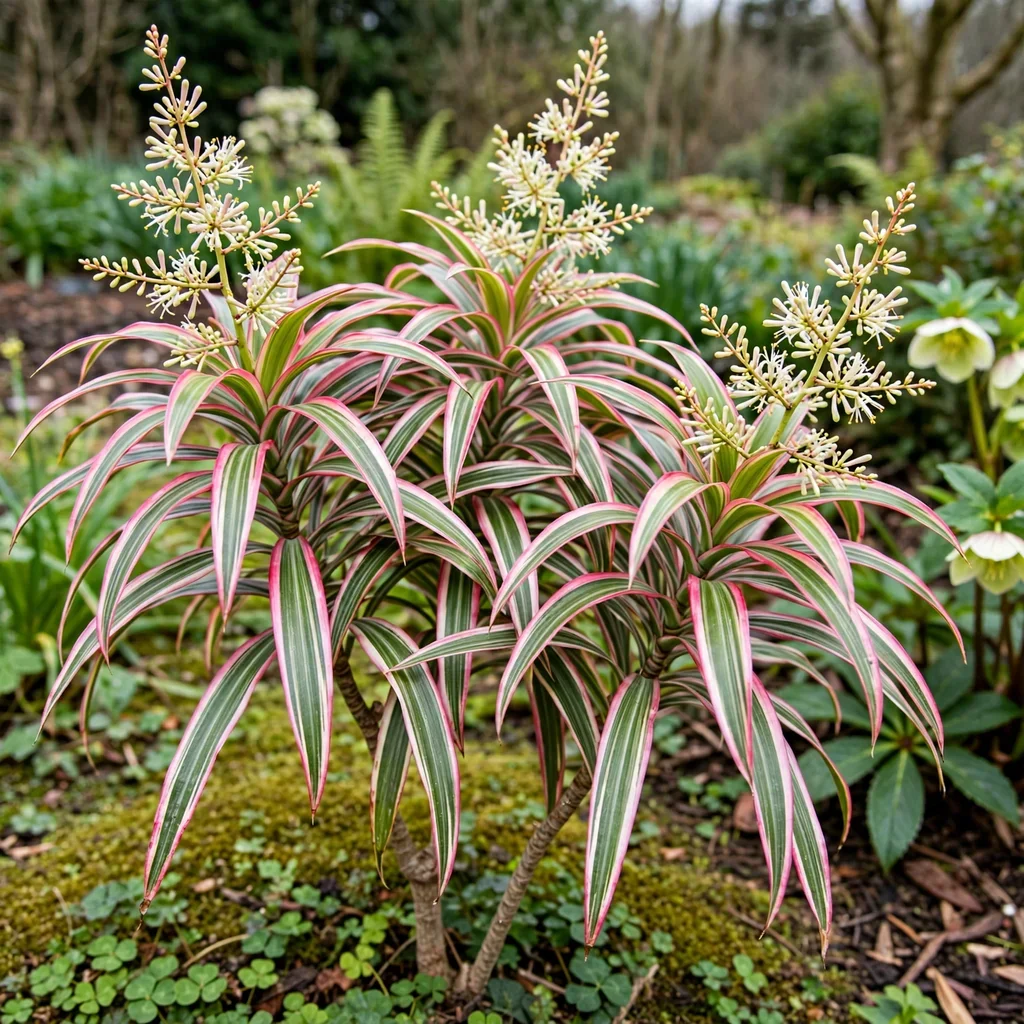
Madagascar Dragon Tree 'Colorama'
Dracaena fragrans 'Colorama'
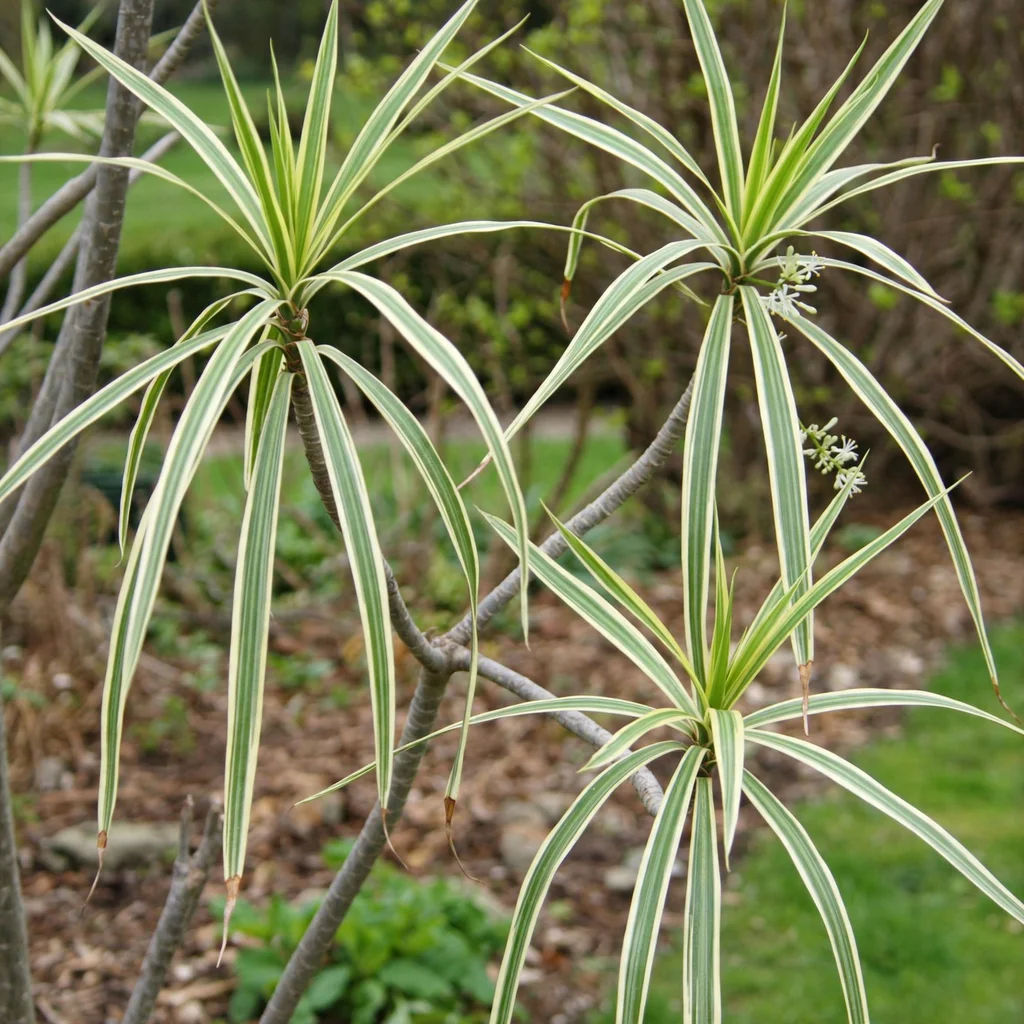
Madagascar Dragon Tree
Dracaena marginata
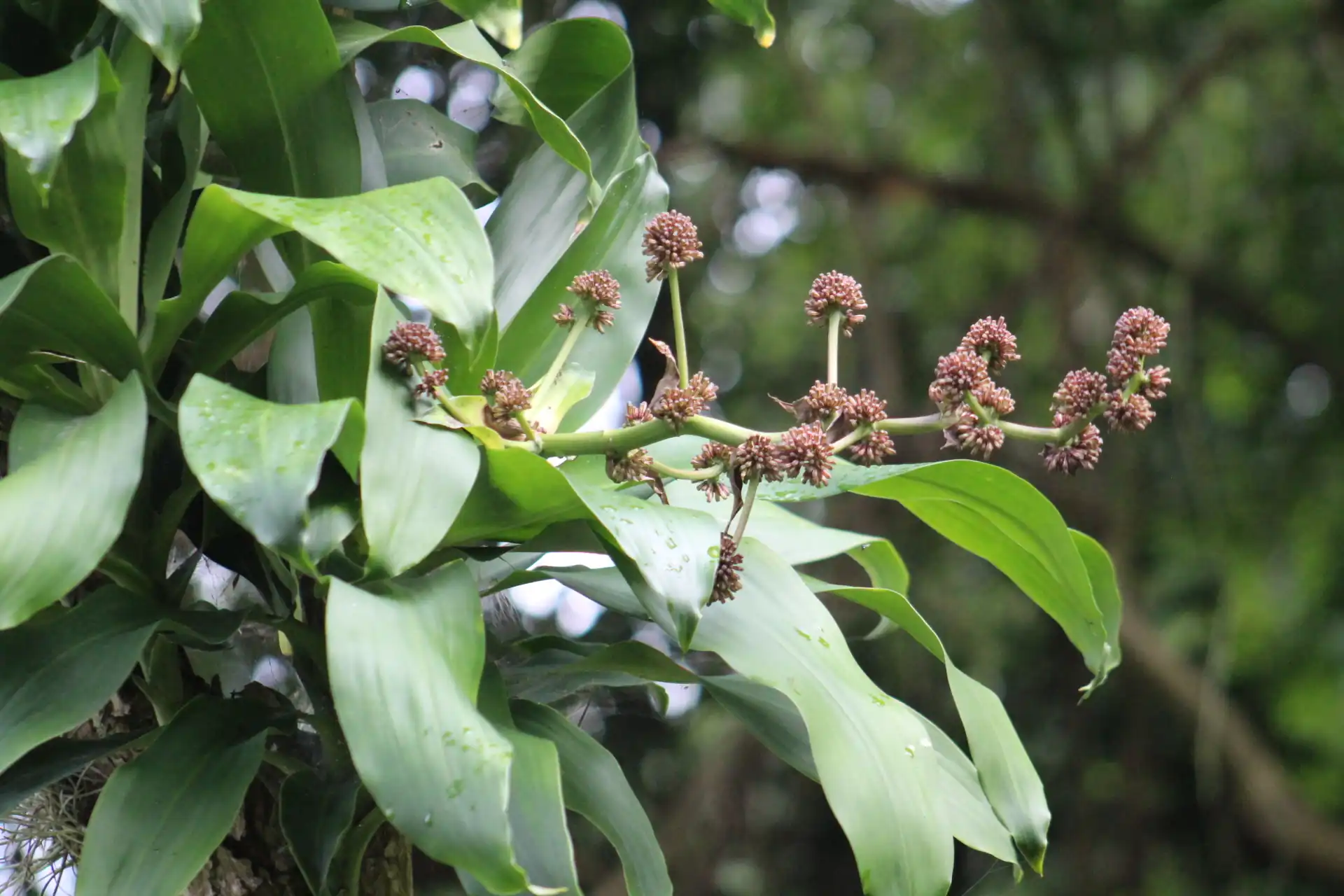
Corn Plant
Dracaena fragrans
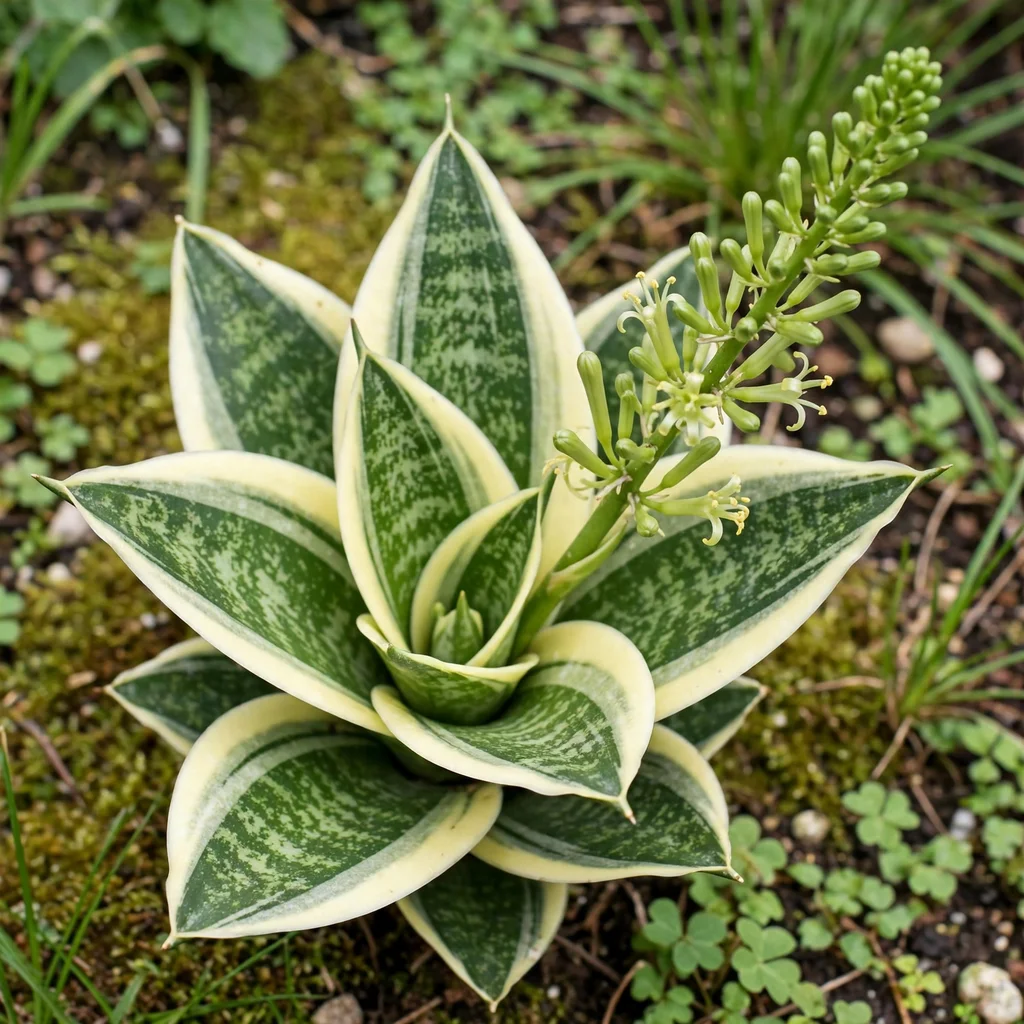
Bird's Nest Snake Plant
Dracaena trifasciata 'Hahnii'
Keep exploring
Explore the genus
Hardy in your zone?
Grow Snake Plant with confidence
See it in a design of your actual yard, get zone-matched care reminders, and track it season by season in your garden journal.