The Story
Plant Bio
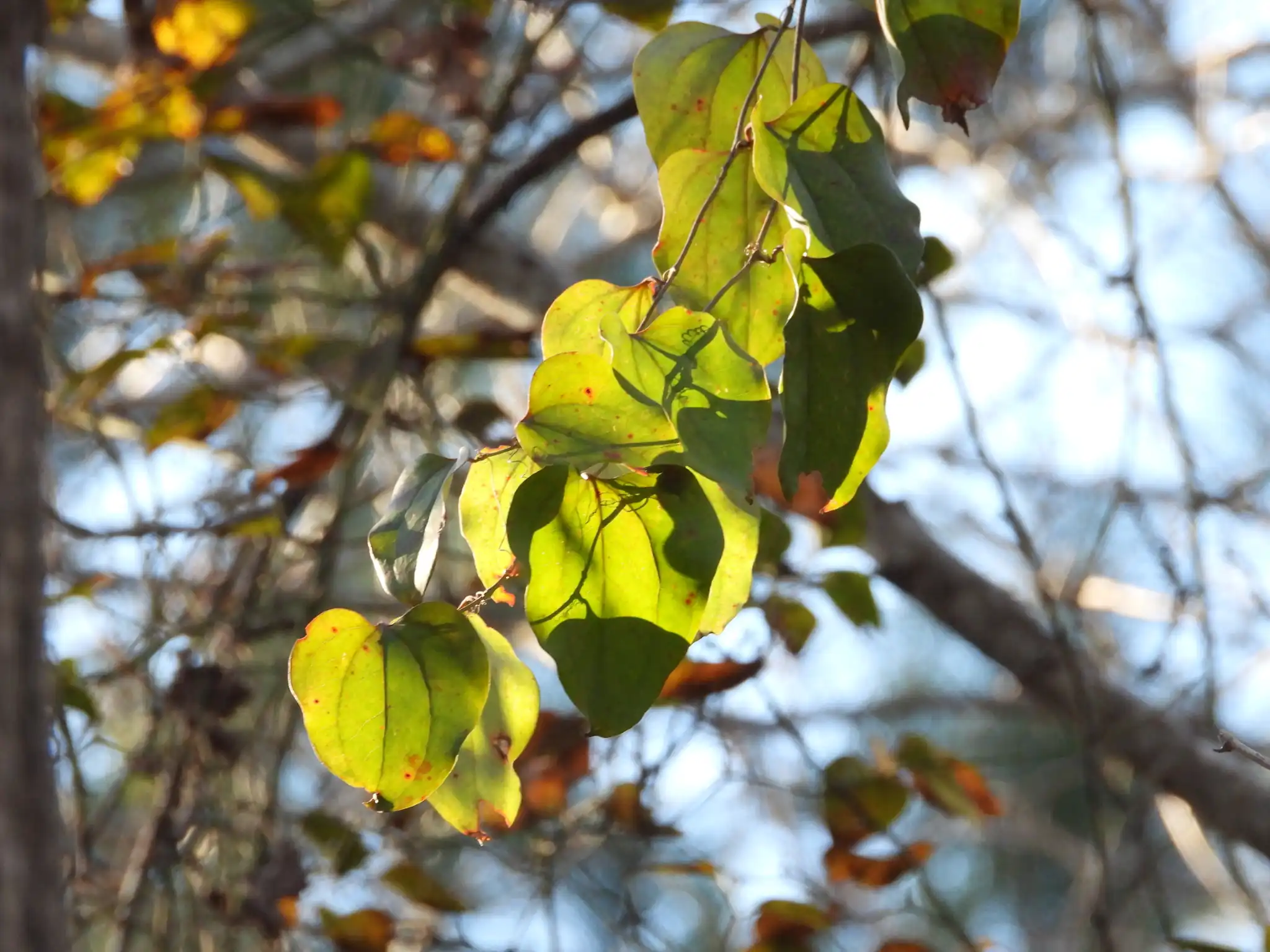
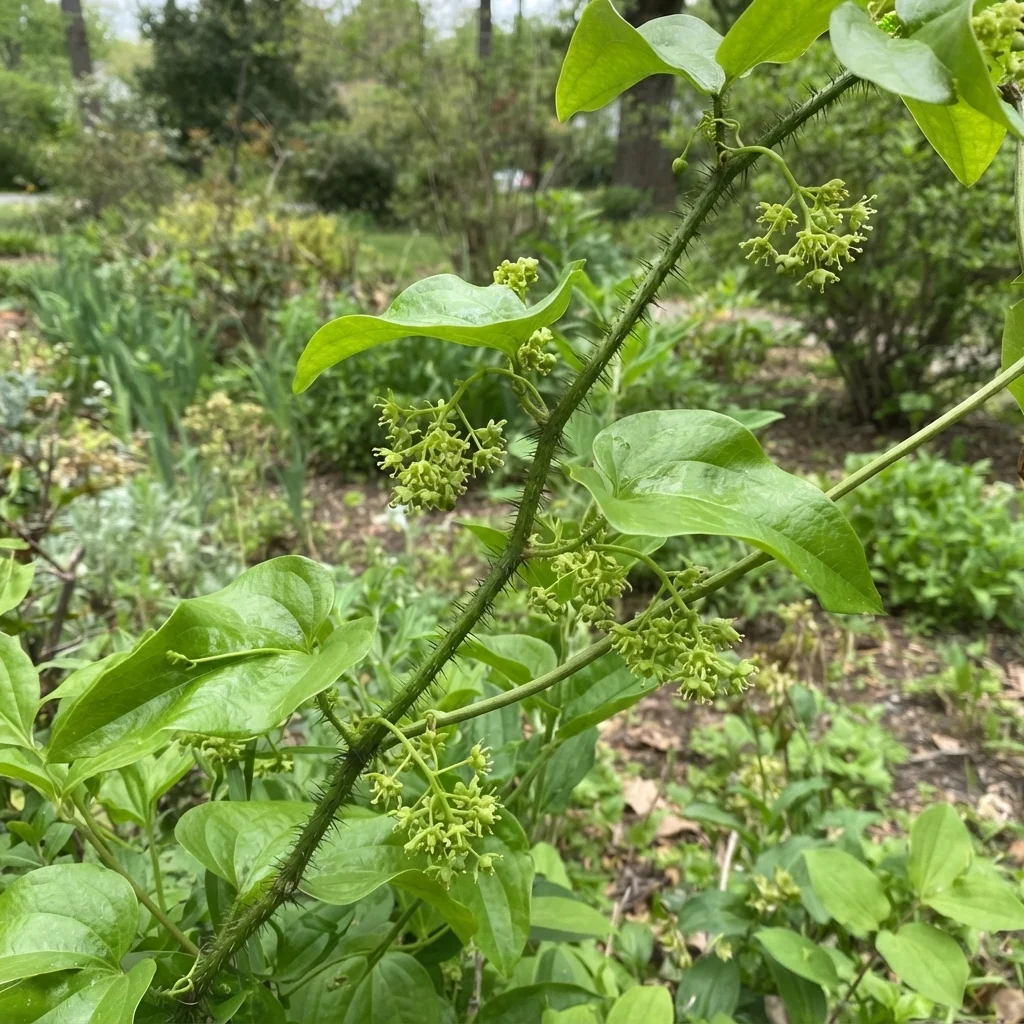
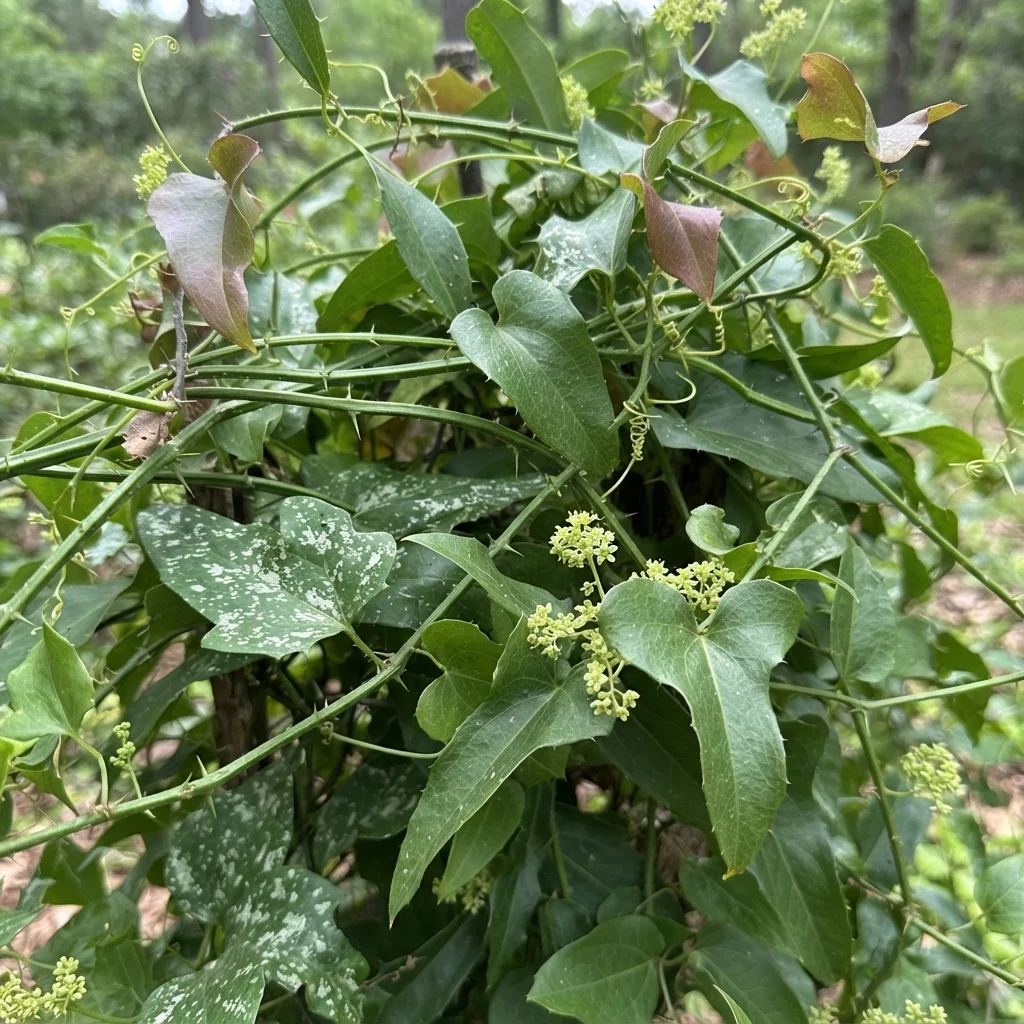
Smilax rotundifolia is a woody, scrambling native vine that climbs extensively via paired tendrils to form dense, impenetrable thickets. The green, four-angled stems are heavily armed with stiff, sharp prickles and carry glossy, alternate, rounded leaves.
This deciduous to semi-evergreen species produces small, greenish-yellow clusters of flowers in spring, followed on female plants by waxy, bluish-black berries that persist into winter. It spreads aggressively via a massive, deep-seated network of tuberous underground rhizomes.
Uses & Benefits:
Essentials
At a Glance
Plant Type
Vine
Height
240"
Width
236"
Light
Full Sun, Partial Sun, Shade
Zones
4, 5, 6, 7, 8, 9
Water
Medium
Humidity
High
Lifespan
Perennial
Native To
North America
Toxicity
Non-toxic
Bloom period
Spring – Summer
In flower about 6 months of the year
Planting
How to Grow
- Select a site with ample room to spread, ideally along forest edges or wild areas where its aggressive growth will not threaten formal garden beds.
- Plant container-grown specimens in well-drained soil ranging from full sun to full shade, watering regularly until the root system is established.
- Provide a sturdy support structure or allow the vine to scramble naturally over rough ground and existing wild vegetation.
- Wear thick, heavy-duty leather gloves whenever handling or training the stems to protect against the sharp, rigid prickles.
Pro Tip
Never cut back only the top growth of established plants, as this triggers rapid, vigorous resprouting from the massive underground tubers; complete eradication requires digging up every root fragment.
Keep It Thriving
Care Guide
Do
- Wear heavy leather gloves and protective clothing whenever pruning or clearing stems.
- Dig deep to extract the entire tuberous root system if attempting to remove or contain the plant.
- Allow the vine to colonize steep slopes or coastal areas where its tough root network helps control soil erosion.
Don't
- Do not plant this vine near formal garden borders, foundations, or shared property lines where its spread cannot be contained.
- Do not leave severed root fragments or underground tubers in the soil, as they will quickly regenerate into new plants.
- Do not apply supplemental fertilizer, as this species thrives and spreads rapidly even in low-fertility soils.
Seasonal Care Calendar
| Task | Jan | Feb | Mar | Apr | May | Jun | Jul | Aug | Sep | Oct | Nov | Dec |
|---|---|---|---|---|---|---|---|---|---|---|---|---|
| Pest Check | ||||||||||||
| Propagate | ||||||||||||
| Prune | ||||||||||||
| Spring Cleanup |
Watch Out For
Pests & Diseases
Common Pests
Common Diseases
In the Garden
Landscape Uses & Companions
Landscape Uses
Multiply
Propagation Methods
Good to Know
Common Questions
Common Greenbrier questions
What zones can Common Greenbrier grow in?
Common Greenbrier is hardy in USDA Zones 4–9. Inside that range it survives winter in the ground; outside it, grow it as an annual or a container plant you protect.
When does Common Greenbrier bloom?
Common Greenbrier typically blooms in spring through summer. Exact timing shifts a week or two with your zone — Sow's bloom calendar maps it to your garden.
Does Common Greenbrier need full sun?
Common Greenbrier does best in full sun to part shade. In hot climates, afternoon shade keeps blooms fresher longer.
Is Common Greenbrier drought tolerant?
Yes — once established (usually after the first full season), Common Greenbrier handles dry spells with minimal watering. Water deeply its first year to build the root system that makes that possible.
More Smilax to compare
Keep exploring
Explore the genus
Grow Common Greenbrier with confidence
See it in a design of your actual yard, get zone-matched care reminders, and track it season by season in your garden journal.