The Story
Plant Bio
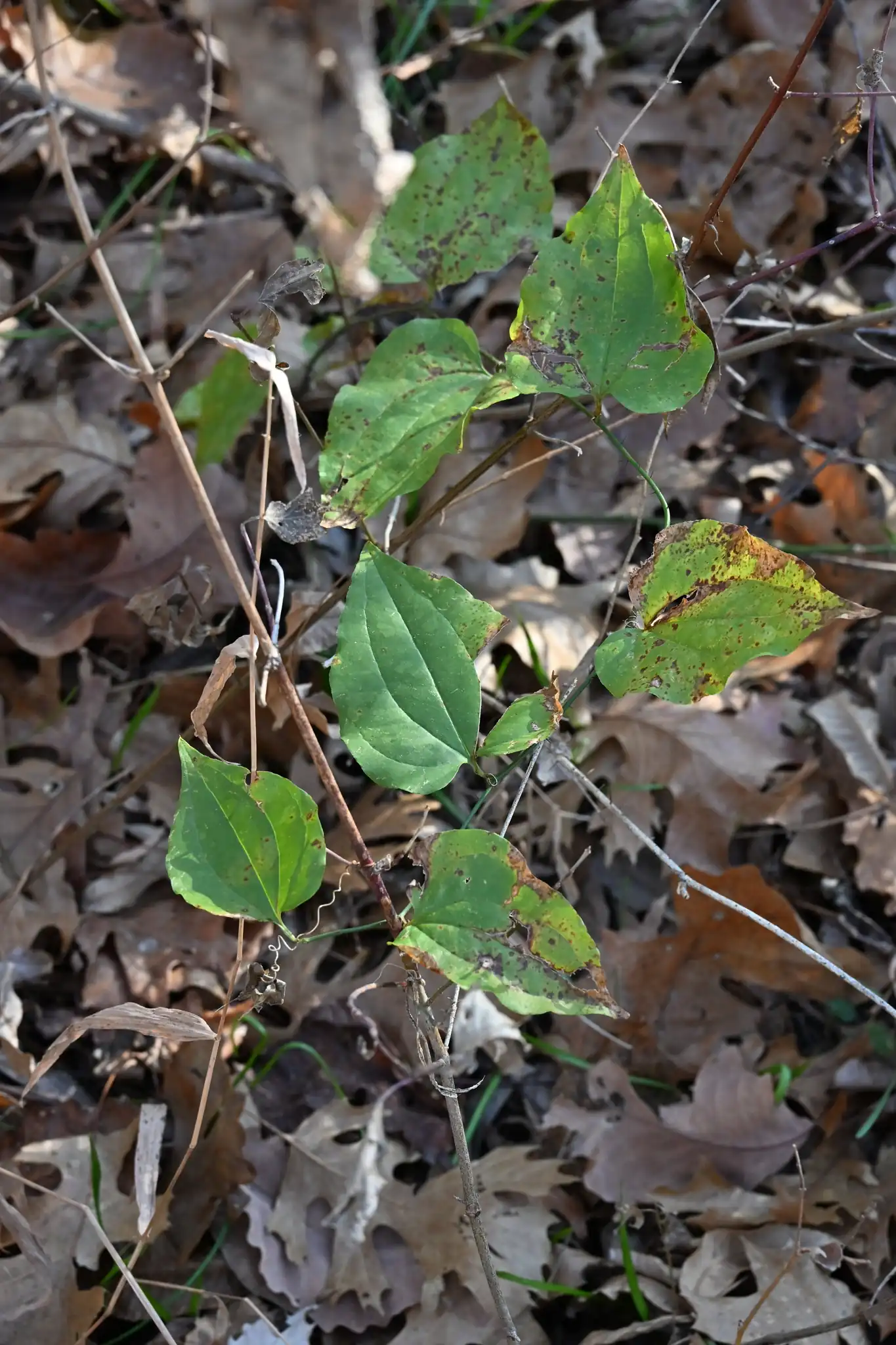
Smilax tamnoides, the bristly greenbrier, is a deciduous woody vine native to North America that climbs up to forty-five feet using paired tendrils at the leaf bases. The stems are heavily armed with stiff, needle-like, dark brown to blackish prickles that are particularly dense on the lower and older wood.
This species is distinguished by its lustrous, bright green, ovate leaves and its dioecious habit, producing small green to yellow-green flowers in drooping umbels. In fall, female plants produce dark berries that serve as a critical winter food source for songbirds and game birds.
Uses & Benefits:
Essentials
At a Glance
Plant Type
Vine
Height
360"
Width
180"
Light
Full Sun, Partial Sun, Shade
Zones
4, 5, 6, 7, 8, 9
Water
Moderate
Humidity
High
Lifespan
Perennial
Native To
North America
Toxicity
Non-toxic
Bloom period
Spring – Summer
In flower about 6 months of the year
Planting
How to Grow
- Select a planting site in full sun to dappled shade with moist, organic-rich soil.
- Dig a hole twice the width of the root ball and set the plant at its original container depth.
- Provide a sturdy trellis, fence, or allow it to scramble naturally over woodland edges.
- Water deeply during the first growing season to establish a deep, resilient root system.
Pro Tip
To eradicate or control unwanted specimens, dig out the entire woody root crown; surface mowing merely stimulates vigorous root sprouting and results in a denser thicket.
Keep It Thriving
Care Guide
Do
- Wear heavy leather gloves and protective clothing when handling or pruning the bristly stems.
- Mulch the root zone annually with organic compost to maintain moisture and soil structure.
Don't
- Do not shear the vine repeatedly into old, leafless wood, as this produces patchy, weak regrowth.
- Avoid planting near high-traffic walkways or garden borders where the sharp prickles can snag skin.
Seasonal Care Calendar
| Task | Jan | Feb | Mar | Apr | May | Jun | Jul | Aug | Sep | Oct | Nov | Dec |
|---|---|---|---|---|---|---|---|---|---|---|---|---|
| Mulch | ||||||||||||
| Pest Check | ||||||||||||
| Propagate | ||||||||||||
| Prune |
Watch Out For
Pests & Diseases
Common Pests
Common Diseases
In the Garden
Landscape Uses & Companions
Landscape Uses
Multiply
Propagation Methods
Good to Know
Common Questions
Bristly Greenbrier questions
What zones can Bristly Greenbrier grow in?
Bristly Greenbrier is hardy in USDA Zones 4–9. Inside that range it survives winter in the ground; outside it, grow it as an annual or a container plant you protect.
Is Bristly Greenbrier deer resistant?
Not reliably. Deer may browse Bristly Greenbrier, especially tender spring growth — plan on repellents or fencing where pressure is high.
When does Bristly Greenbrier bloom?
Bristly Greenbrier typically blooms in spring through summer. Exact timing shifts a week or two with your zone — Sow's bloom calendar maps it to your garden.
Does Bristly Greenbrier need full sun?
Bristly Greenbrier does best in full sun to part shade. In hot climates, afternoon shade keeps blooms fresher longer.
Is Bristly Greenbrier drought tolerant?
Yes — once established (usually after the first full season), Bristly Greenbrier handles dry spells with minimal watering. Water deeply its first year to build the root system that makes that possible.
More Smilax to compare
Keep exploring
Explore the genus
Grow Bristly Greenbrier with confidence
See it in a design of your actual yard, get zone-matched care reminders, and track it season by season in your garden journal.