0 saves
Smilax
We track 3 varieties; the ones most used by real gardeners.
The 3 most-saved Smilax varieties
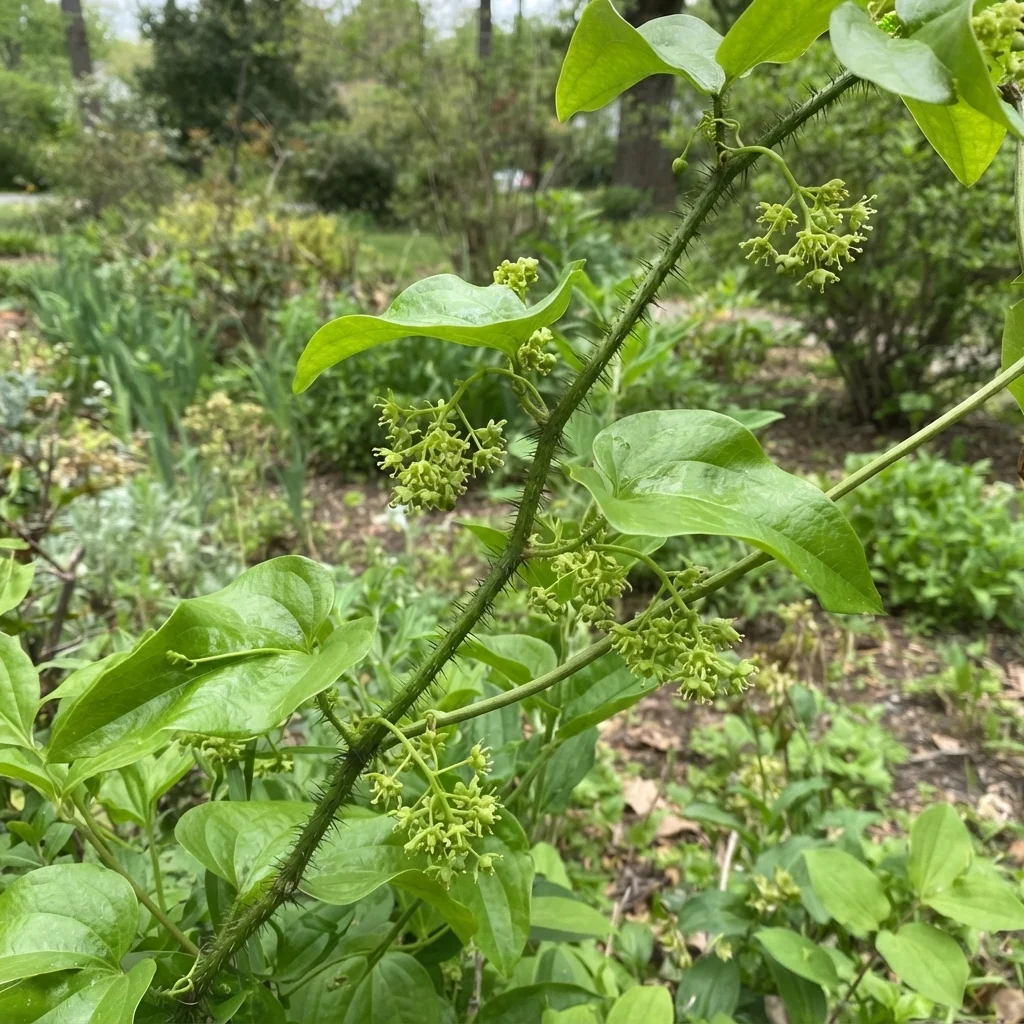
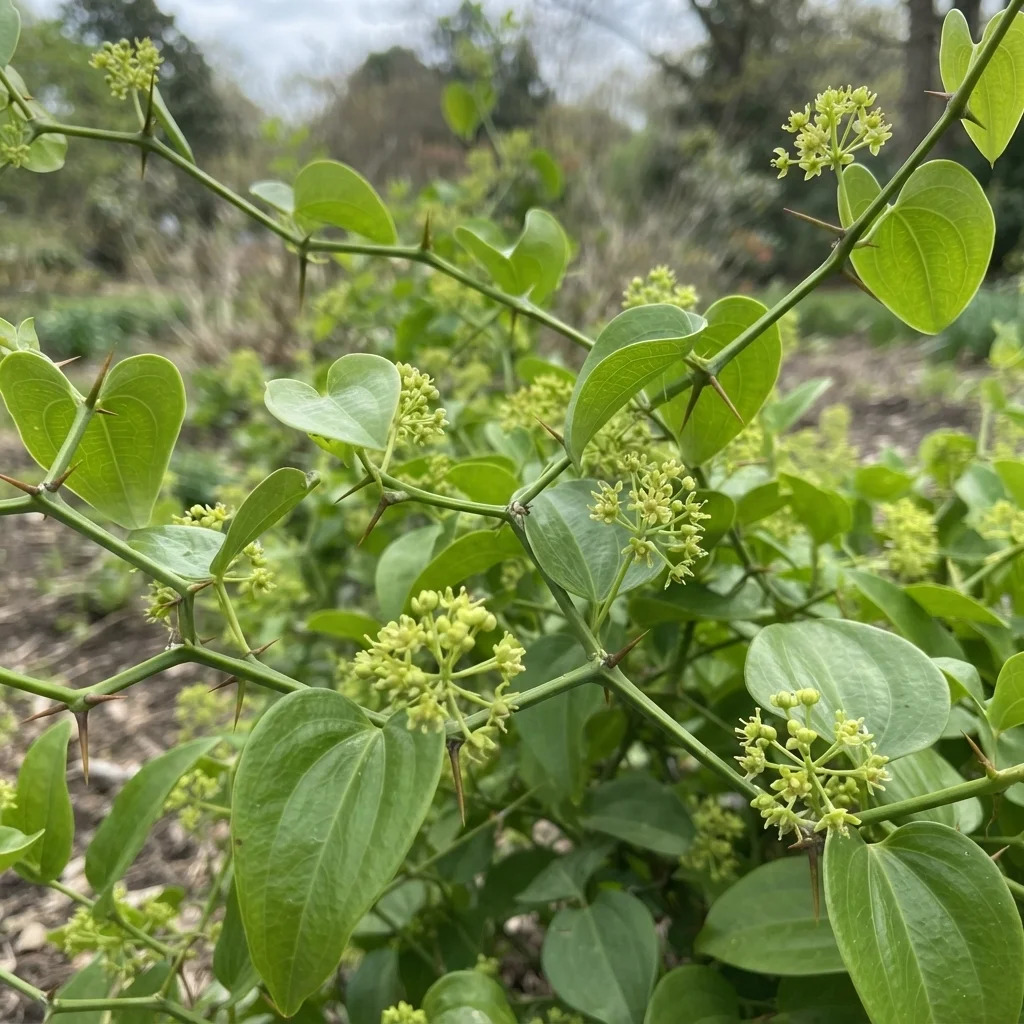
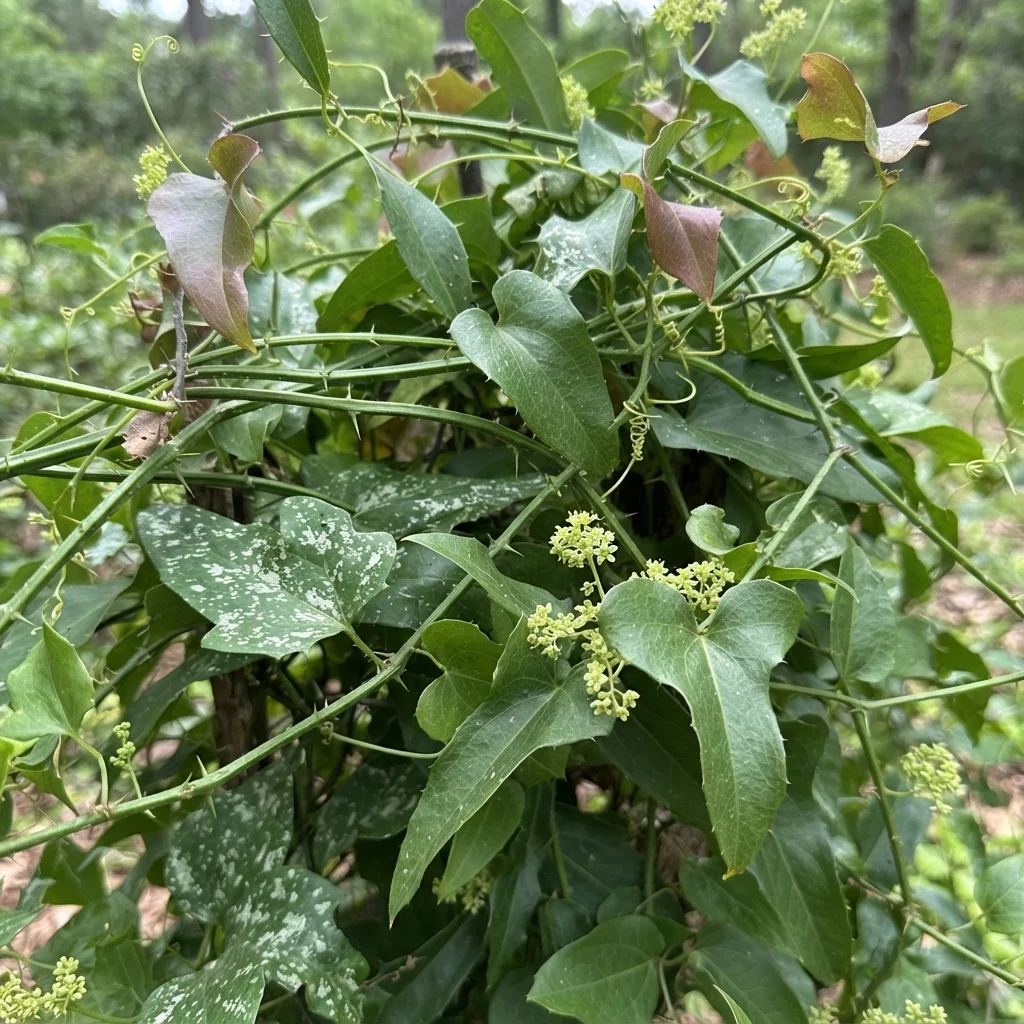
3 species of Smilax
Each one is a parent of the varieties above.
Track your Smilax in Sow
Save the Smilax you grow and get care reminders timed to your zone.
How to grow Smilax
Whats common across all Smilax varieties in our catalog — drawn from the care records of the 3 most-grown of them.
The Smilax year
- PruneFebruary and March100% of varieties
Prune selectively in late winter or early spring to control spread and remove dead wood.
- PropagateMarch and April100% of varieties
Divide rhizomatous offsets in early spring before active growth begins.
- Check for PestsMay and June100% of varieties
Inspect new growth for aphids and monitor for deer browse.


Do
- Wear heavy leather gloves and protective clothing when handling or pruning the bristly stems.
- Mulch the root zone annually with organic compost to maintain moisture and soil structure.
- Wear thick leather gloves and protective clothing whenever handling or pruning this vine.
- Prune in late winter to control the spread and remove dead wood.
- Use a sturdy, durable support structure that can withstand the weight of a mature woody vine.
Avoid
- Do not shear the vine repeatedly into old, leafless wood, as this produces patchy, weak regrowth.
- Avoid planting near high-traffic walkways or garden borders where the sharp prickles can snag skin.
- Do not apply supplemental fertilizer, as this accelerates its already aggressive growth rate.
- Do not plant near high-traffic pathways or play areas where the sharp prickles can cause injury.
What goes wrong with Smilax
| Problem | What you'll see | What to do |
|---|---|---|
| Aphids | Curled leaves and sticky honeydew deposits on new growth. | Knock insects off with a strong spray of water or apply insecticidal soap to heavily infested tips. |
| White-tailed deer | Torn, ragged foliage and chewed stem tips on new growth. | Apply scent- or taste-based repellents to young shoots, or exclude with physical barriers until the vine climbs out of reach. |
| Deer and rabbits | Browsing on young, tender spring shoots and stems before they develop protective thorns. | Install physical barriers or apply repellents around young plants until the stems mature and develop sharp prickles. |
| Scale insects | Minor sap extraction on stems and leaves, occasionally accompanied by sticky honeydew. | No treatment is typically necessary as mature plants are exceptionally tough and easily tolerate minor insect activity. |
| Fungal leaf spot | Brown or black spots on the upper leaf surfaces during humid weather. | Prune to improve air circulation and avoid overhead watering to keep foliage dry. |
| Root rot | Wilting, yellowing leaves and soft, blackened roots in waterlogged soil. | Ensure the planting site has adequate drainage and avoid overwatering heavy clay soils. |
| Foliar leaf spots | Small discolored spots on the leaves, particularly during periods of high humidity. | Ensure good air circulation and clear away fallen leaf debris; chemical treatment is rarely warranted. |
Making more Smilax
Division
- Locate a healthy rhizomatous offset near the base of an established clump in early spring.
- Sever the connecting rhizome from the parent plant using a sharp, clean spade.
- Dig up the offset, ensuring a generous portion of roots and at least one viable bud remain intact.
- Replant immediately into moist, organic-rich soil at the same depth and water thoroughly.
Seed
- Harvest mature black berries in late fall or winter.
- Remove the pulp to clean the seeds thoroughly.
- Sow the seeds directly into outdoor beds in autumn.
- Allow natural winter chilling to break dormancy for spring germination.
Smilax questions
How many types of Smilax are there?
The Sow catalog tracks 3 distinct Smilax varieties. The most popular — ranked by 0 real gardeners — are shown first above.
What zones does Smilax grow in?
Across its varieties, Smilax covers USDA Zones 4–10. Individual varieties differ — each plant page lists its exact range, and Sow filters the catalog to your zone automatically.
When does Smilax bloom?
Most Smilax varieties bloom in spring. Staggering early, mid, and late varieties extends the genus's season in one bed.
Which Smilax should I choose?
Start from the most-saved varieties above — popularity across thousands of gardens is a strong signal of reliability — then filter by your zone and sun. In the Sow app you can preview any of them in a photo of your actual yard before you buy.