The Story
Plant Bio
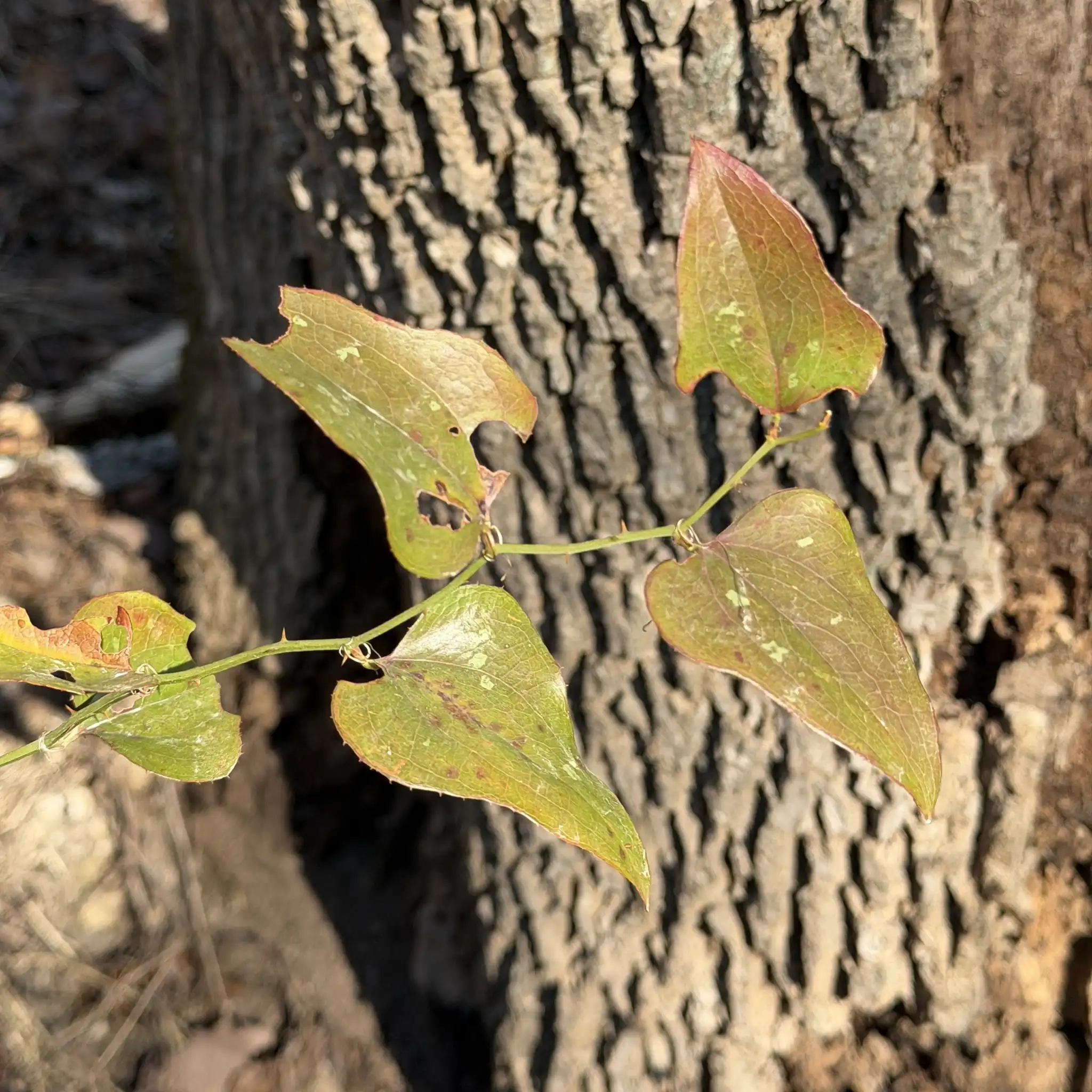
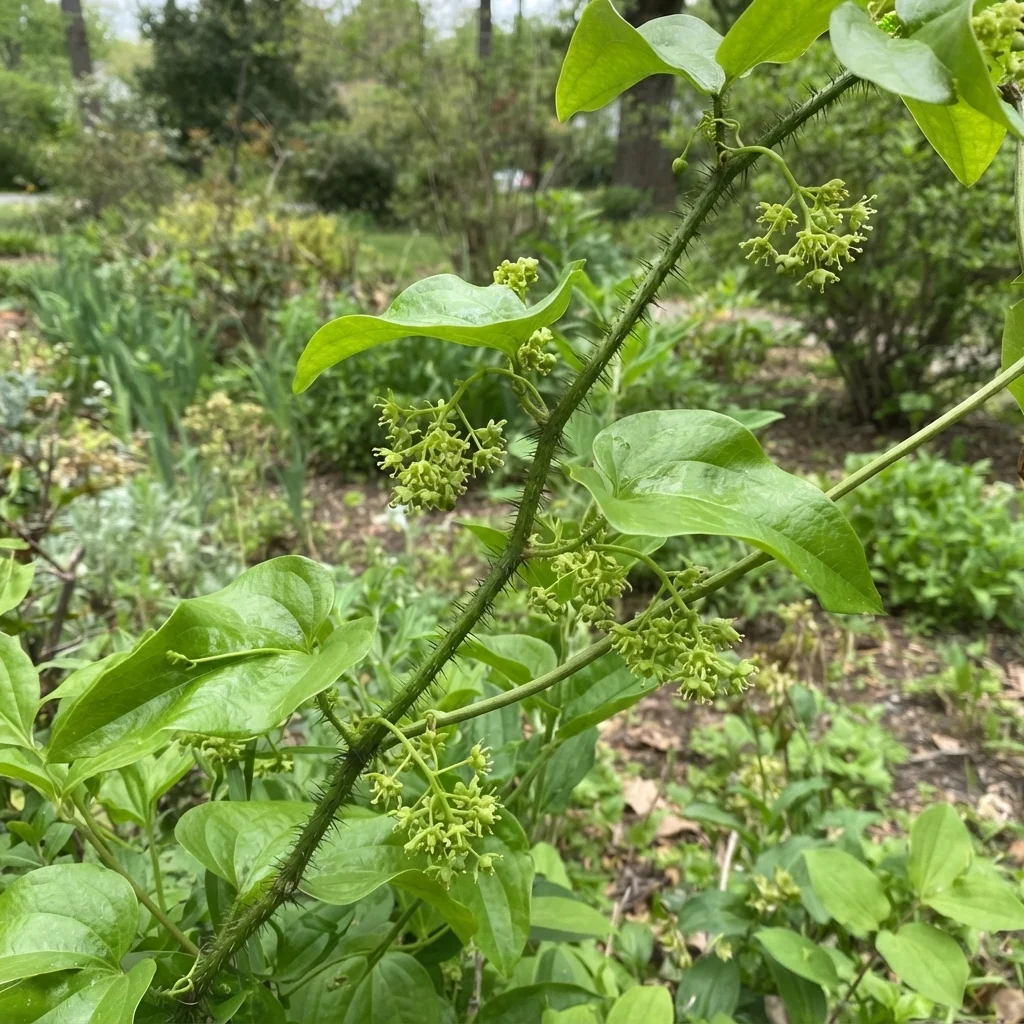
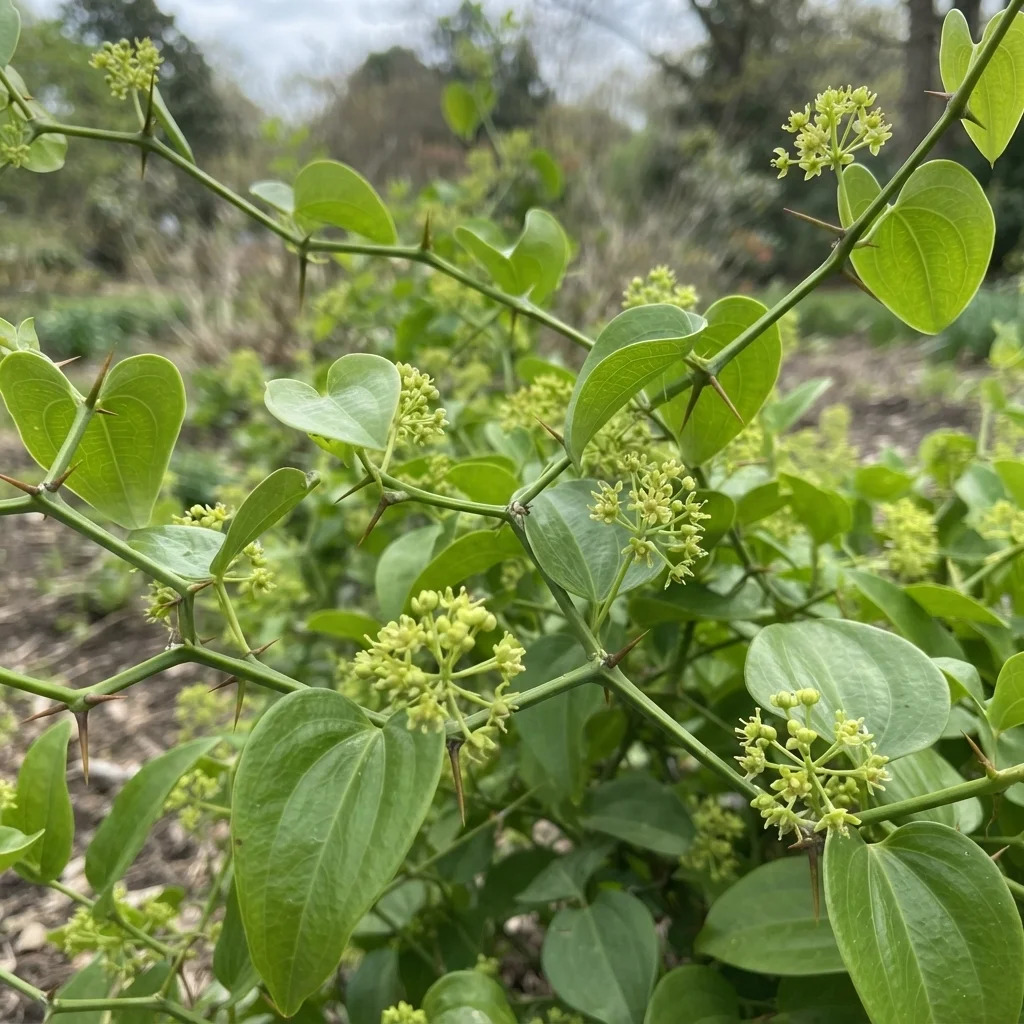
Smilax bona-nox, commonly known as saw greenbrier, is a vigorous, woody perennial vine native to the southern and eastern United States. It climbs or scrambles using tendrils borne on leaf petioles, developing four-ridged stems armed with stiff, sharp prickles on the lower sections.
The leathery, semi-evergreen foliage varies from heart-shaped to fiddle-shaped, often featuring distinctive white mottling and spine-like projections along the margins and midveins. As a dioecious species, only female plants produce the clusters of small, green flowers that mature into ornamental black winter berries.
Uses & Benefits:
Essentials
At a Glance
Plant Type
Vine
Height
180"
Width
120"
Light
Full Sun, Partial Sun, Shade
Zones
5, 6, 7, 8, 9, 10
Water
Low to high
Humidity
High
Lifespan
Perennial
Native To
North America
Toxicity
Non-toxic
Bloom period
Spring – Early summer
In flower about 4 months of the year
Planting
How to Grow
- Select a site with full sun to deep shade and any well-drained or periodically wet soil.
- Install a sturdy trellis, fence, or allow the vine to scramble over a natural woodland edge.
- Water regularly during the first growing season to establish a deep root system.
- Wear heavy leather gloves when handling the stems to protect skin from the sharp prickles.
Pro Tip
Eradicating established plants requires complete excavation of the deep, knotty underground woody rhizomes, as simple surface pulling or cutting will trigger rapid resprouting.
Keep It Thriving
Care Guide
Do
- Wear thick leather gloves and protective clothing whenever handling or pruning this vine.
- Prune in late winter to control the spread and remove dead wood.
- Use a sturdy, durable support structure that can withstand the weight of a mature woody vine.
Don't
- Do not apply supplemental fertilizer, as this accelerates its already aggressive growth rate.
- Do not plant near high-traffic pathways or play areas where the sharp prickles can cause injury.
- Do not rely on simple surface pulling to eradicate the plant, as it will resprout from the underground rhizomes.
Seasonal Care Calendar
| Task | Jan | Feb | Mar | Apr | May | Jun | Jul | Aug | Sep | Oct | Nov | Dec |
|---|---|---|---|---|---|---|---|---|---|---|---|---|
| Pest Check | ||||||||||||
| Propagate | ||||||||||||
| Prune |
Watch Out For
Pests & Diseases
Common Pests
Common Diseases
In the Garden
Landscape Uses & Companions
Landscape Uses
Multiply
Propagation Methods
Good to Know
Common Questions
Saw greenbrier questions
What zones can Saw greenbrier grow in?
Saw greenbrier is hardy in USDA Zones 5–10. Inside that range it survives winter in the ground; outside it, grow it as an annual or a container plant you protect.
Is Saw greenbrier deer resistant?
Not reliably. Deer may browse Saw greenbrier, especially tender spring growth — plan on repellents or fencing where pressure is high.
When does Saw greenbrier bloom?
Saw greenbrier typically blooms in spring through early summer. Exact timing shifts a week or two with your zone — Sow's bloom calendar maps it to your garden.
Does Saw greenbrier need full sun?
Saw greenbrier does best in full sun to part shade. In hot climates, afternoon shade keeps blooms fresher longer.
Is Saw greenbrier drought tolerant?
Yes — once established (usually after the first full season), Saw greenbrier handles dry spells with minimal watering. Water deeply its first year to build the root system that makes that possible.
More Smilax to compare
Keep exploring
Explore the genus
Grow Saw greenbrier with confidence
See it in a design of your actual yard, get zone-matched care reminders, and track it season by season in your garden journal.