The Story
Plant Bio
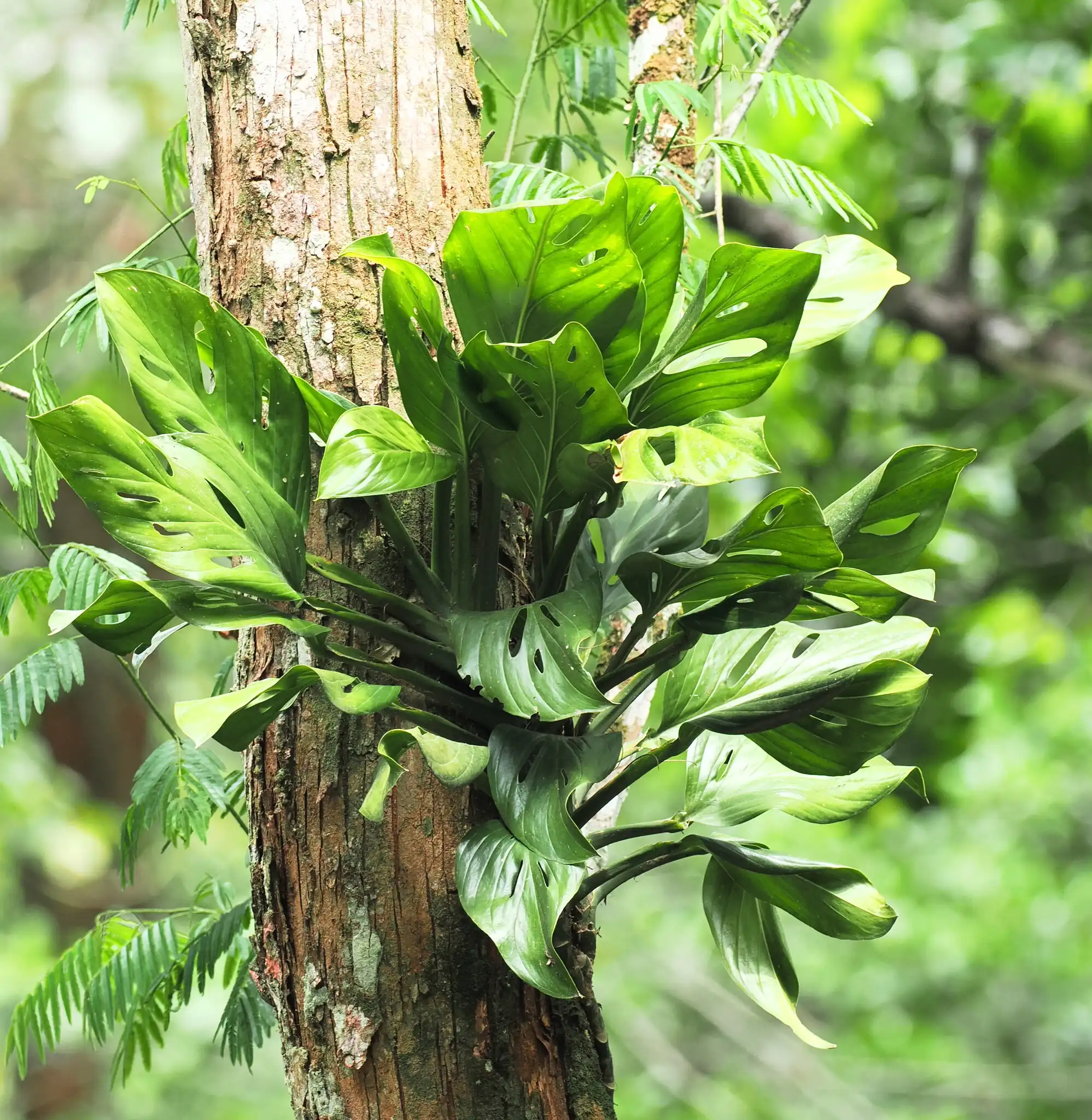
Monstera adansonii is an evergreen, herbaceous climbing vine native to the tropical rainforests of Central and South America, utilizing aerial roots to scale vertical structures. The glossy, heart-shaped green leaves develop characteristic enclosed oval perforations, known as fenestrations, that remain contained within the leaf margins.
This species is distinguished by its smaller, more elongated foliage and faster vining habit compared to larger members of the genus. New growth emerges as a bright chartreuse from a protective sheath before maturing to a deep green.
Uses & Benefits:
Essentials
At a Glance
Plant Type
Vine
Height
156"
Width
35"
Light
Partial Sun, Shade
Zones
10
Water
Medium
Humidity
High (50% or higher)
Lifespan
Perennial
Native To
Central America, South America
Toxicity
Toxic to humans, cats, and dogs
Bloom period
Spring – Summer
In flower about 6 months of the year
Marketplace
Where to Buy
Shipping costs Year-round shipping Free shipping
Planting
How to Grow
- Provide bright, indirect sunlight, avoiding direct hot sun which scorches and bleaches the foliage.
- Plant in a rich, organic, moisture-retentive potting mix that offers high drainage to prevent root rot.
- Water consistently to keep the soil moist, allowing the top inch to dry slightly before watering again.
- Maintain relative humidity levels at or above 50 percent to support healthy leaf development.
Pro Tip
Direct the aerial roots onto a moss pole or allow them to hang freely rather than burying them in the potting medium, as these roots are adapted for structural clinging and absorbing ambient humidity.
Keep It Thriving
Care Guide
Do
- Wipe dust from the leaves periodically with a damp cloth to maximize light absorption.
- Provide a moss pole or trellis to support the climbing habit of the aerial roots.
- Fertilize lightly with a balanced liquid houseplant fertilizer every four to six weeks during spring and summer.
Don't
- Do not bury the aerial roots or force them directly into the potting medium.
- Never prune aggressively into old, leafless woody stems where nodes cannot easily regenerate.
- Avoid placing the plant in cold drafts or areas where temperatures drop below 50 degrees Fahrenheit.
Seasonal Care Calendar
| Task | Jan | Feb | Mar | Apr | May | Jun | Jul | Aug | Sep | Oct | Nov | Dec |
|---|---|---|---|---|---|---|---|---|---|---|---|---|
| Fertilize | ||||||||||||
| Pest Check | ||||||||||||
| Propagate | ||||||||||||
| Prune |
Watch Out For
Pests & Diseases
Common Pests
Common Diseases
In the Garden
Landscape Uses & Companions
Landscape Uses
Companion Plants
Multiply
Propagation Methods
Good to Know
Common Questions
Swiss Cheese Vine questions
What zones can Swiss Cheese Vine grow in?
Swiss Cheese Vine is hardy in USDA Zone 10. Inside that range it survives winter in the ground; outside it, grow it as an annual or a container plant you protect.
When does Swiss Cheese Vine bloom?
Swiss Cheese Vine typically blooms in spring through summer. Exact timing shifts a week or two with your zone — Sow's bloom calendar maps it to your garden.
Does Swiss Cheese Vine need full sun?
Swiss Cheese Vine does best in part shade.
More Monstera to compare
Keep exploring
Explore the genus
Hardy in your zone?
Grow Swiss Cheese Vine with confidence
See it in a design of your actual yard, get zone-matched care reminders, and track it season by season in your garden journal.