
Species
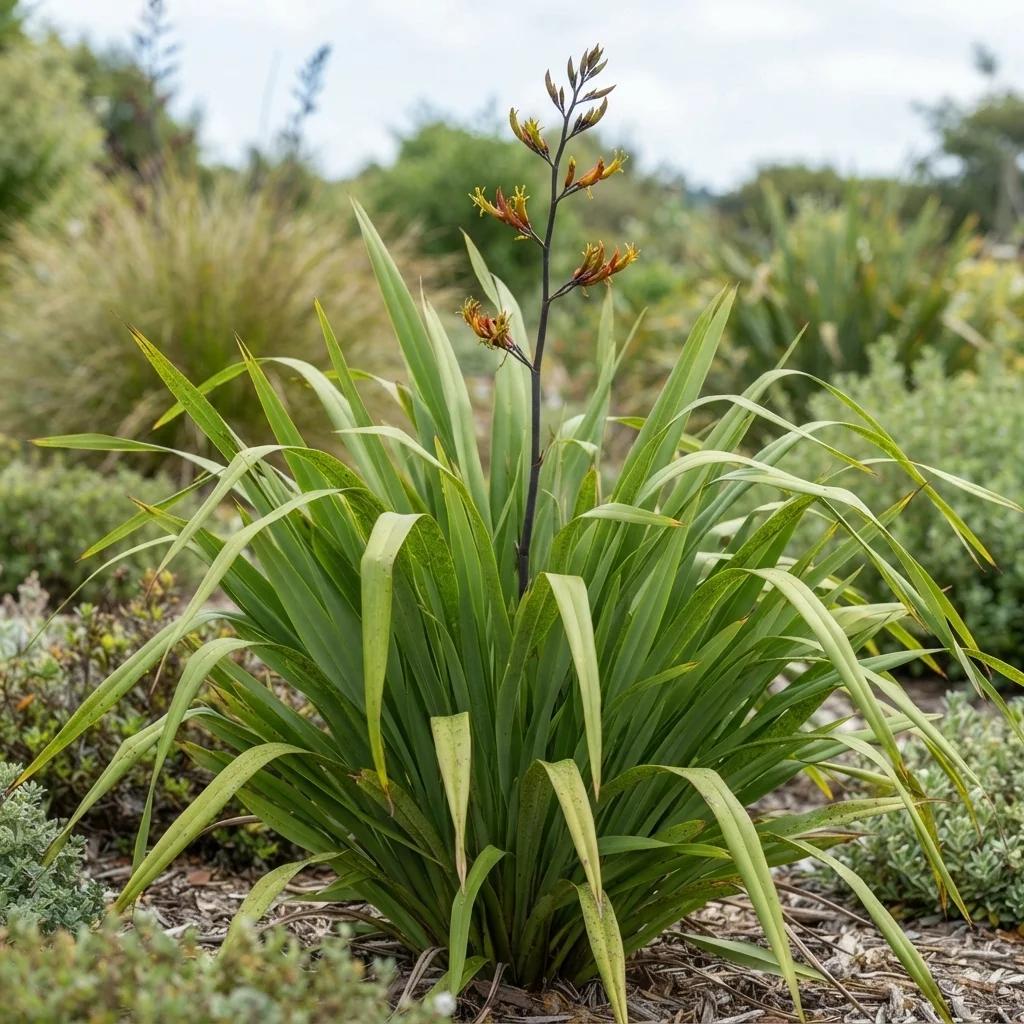 Phormium cookianumMountain Flax
1 other cultivar

The Story
Plant Bio
Phormium cookianum, known as mountain flax, is an evergreen perennial native to New Zealand that grows in habitats ranging from lowland river gorges to alpine slopes. The species forms clumps of arching, strap-like leaves and produces tall, vertical flowering scapes bearing tubular, nectar-rich blossoms.
'Emerald Gem' is a compact, densely clumping dwarf cultivar that reaches up to thirty inches in height and width with rich, emerald-green foliage. The upright-to-arching leaves form a tight, rounded bush that is highly resistant to coastal winds and more tolerant of temporary wetness than other flaxes.
Uses & Benefits:
Essentials
At a Glance
Plant Type
Perennial
Height
28"
Width
30"
Light
Full Sun, Partial Sun
Zones
8, 9, 10
Water
Low to Moderate
Humidity
Moderate to High
Lifespan
Perennial
Native To
New Zealand
Toxicity
Non-toxic (sharp leaf edges)
Bloom period
Late spring – Summer
In flower about 4 months of the year
Planting
How to Grow
- Select a planting site in full sun to partial shade with well-drained soil.
- Dig a hole twice the width of the root ball and plant at the same depth as the container.
- Water regularly until established, then reduce frequency to occasional deep watering during dry spells.
- Apply a thick layer of organic mulch around the base in winter if growing in USDA Zone 7.
Pro Tip
Remove spent or damaged leaves individually at the base of the plant in spring; shearing the clump with hedge trimmers ruins the fan architecture and kills emerging shoots.
Keep It Thriving
Care Guide
Do
- Remove damaged leaves cleanly at the ground level.
- Provide excellent drainage to prevent root rot.
- Water occasionally during extended dry summer periods.
Don't
- Never shear or cut the plant flat like a hedge.
- Do not plant in heavy, waterlogged soils without amending for drainage.
- Avoid cutting back into old, leafless wood.
Seasonal Care Calendar
| Task | Jan | Feb | Mar | Apr | May | Jun | Jul | Aug | Sep | Oct | Nov | Dec |
|---|---|---|---|---|---|---|---|---|---|---|---|---|
| Divide | ||||||||||||
| Fertilize | ||||||||||||
| Pest Check | ||||||||||||
| Spring Cleanup |
Watch Out For
Pests & Diseases
Common Pests
Common Diseases
In the Garden
Landscape Uses & Companions
Landscape Uses
Companion Plants
Multiply
Propagation Methods
Good to Know
Common Questions
Dwarf Mountain Flax questions
What zones can Dwarf Mountain Flax grow in?
Dwarf Mountain Flax is hardy in USDA Zones 8–10. Inside that range it survives winter in the ground; outside it, grow it as an annual or a container plant you protect.
Is Dwarf Mountain Flax deer resistant?
Not reliably. Deer may browse Dwarf Mountain Flax, especially tender spring growth — plan on repellents or fencing where pressure is high.
When does Dwarf Mountain Flax bloom?
Dwarf Mountain Flax typically blooms in late spring through summer. Exact timing shifts a week or two with your zone — Sow's bloom calendar maps it to your garden.
Does Dwarf Mountain Flax need full sun?
Dwarf Mountain Flax does best in full sun to part shade. In hot climates, afternoon shade keeps blooms fresher longer.
Is Dwarf Mountain Flax drought tolerant?
Yes — once established (usually after the first full season), Dwarf Mountain Flax handles dry spells with minimal watering. Water deeply its first year to build the root system that makes that possible.
More Phormium to compare
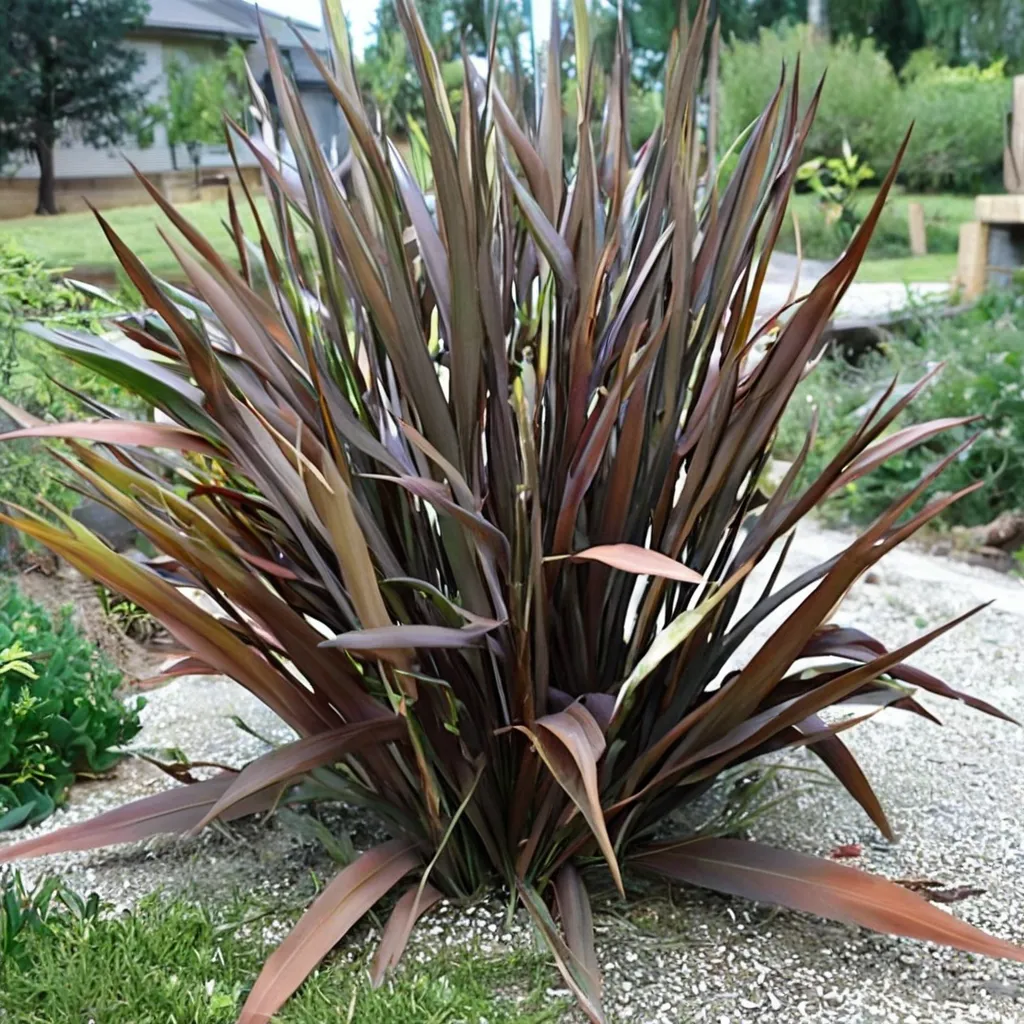
Atropurpureum New Zealand Flax
Phormium tenax 'Atropurpureum'
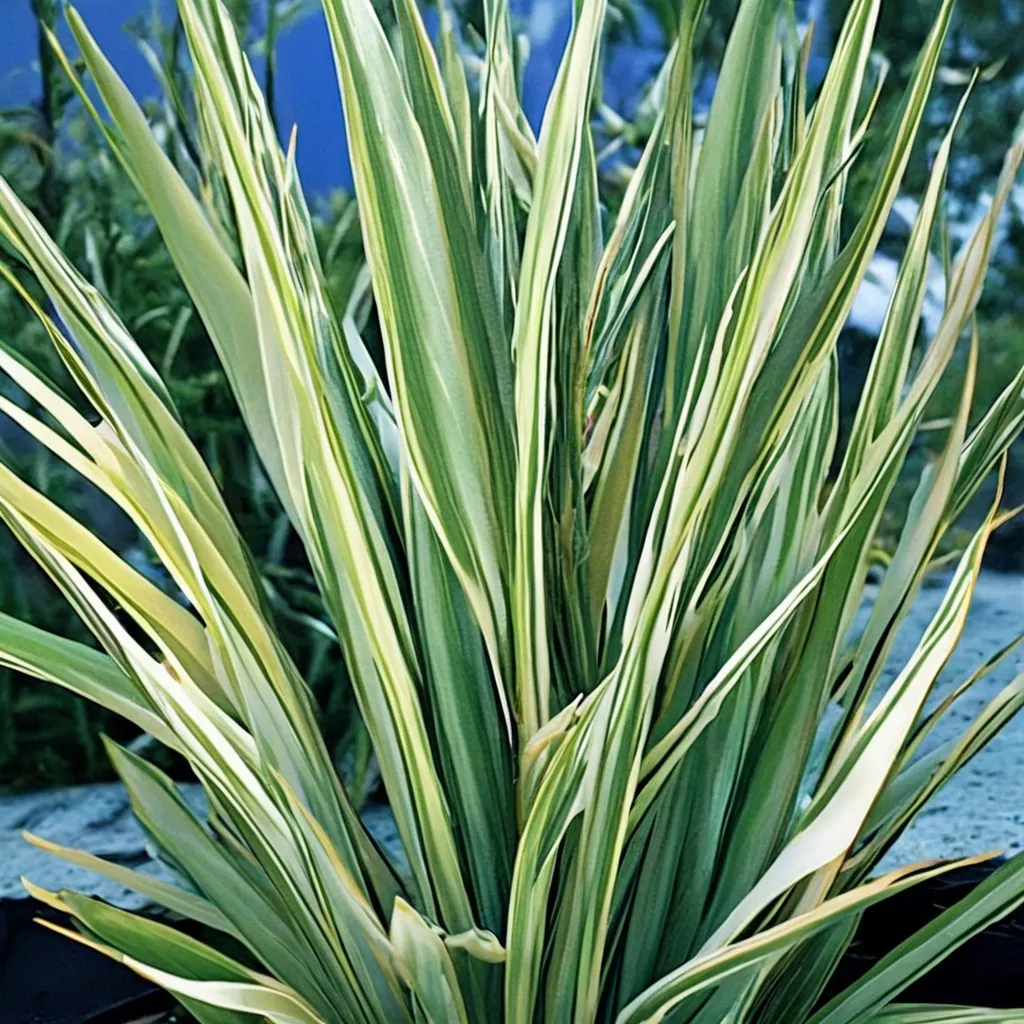
Lineata New Zealand Flax
Phormium tenax 'Lineata'
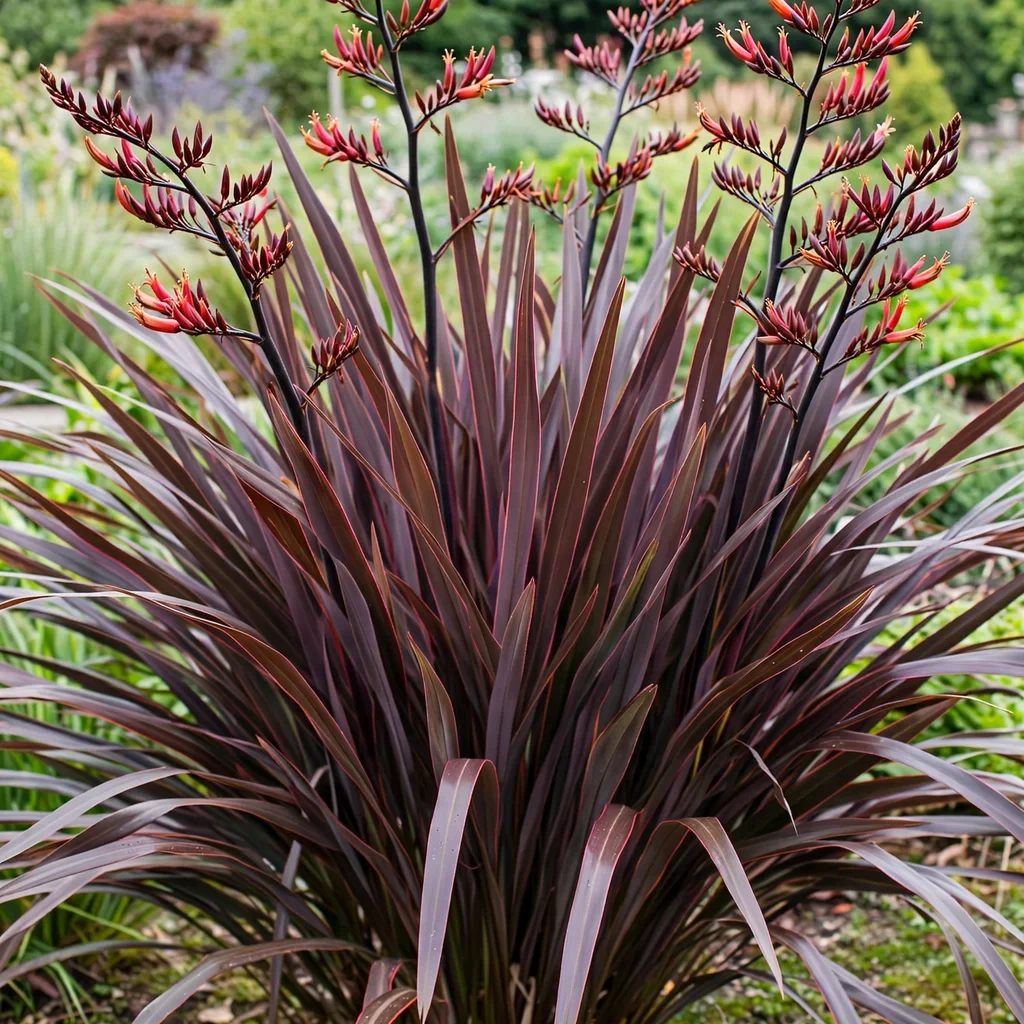
Red Phormium
Phormium tenax 'Rubra'
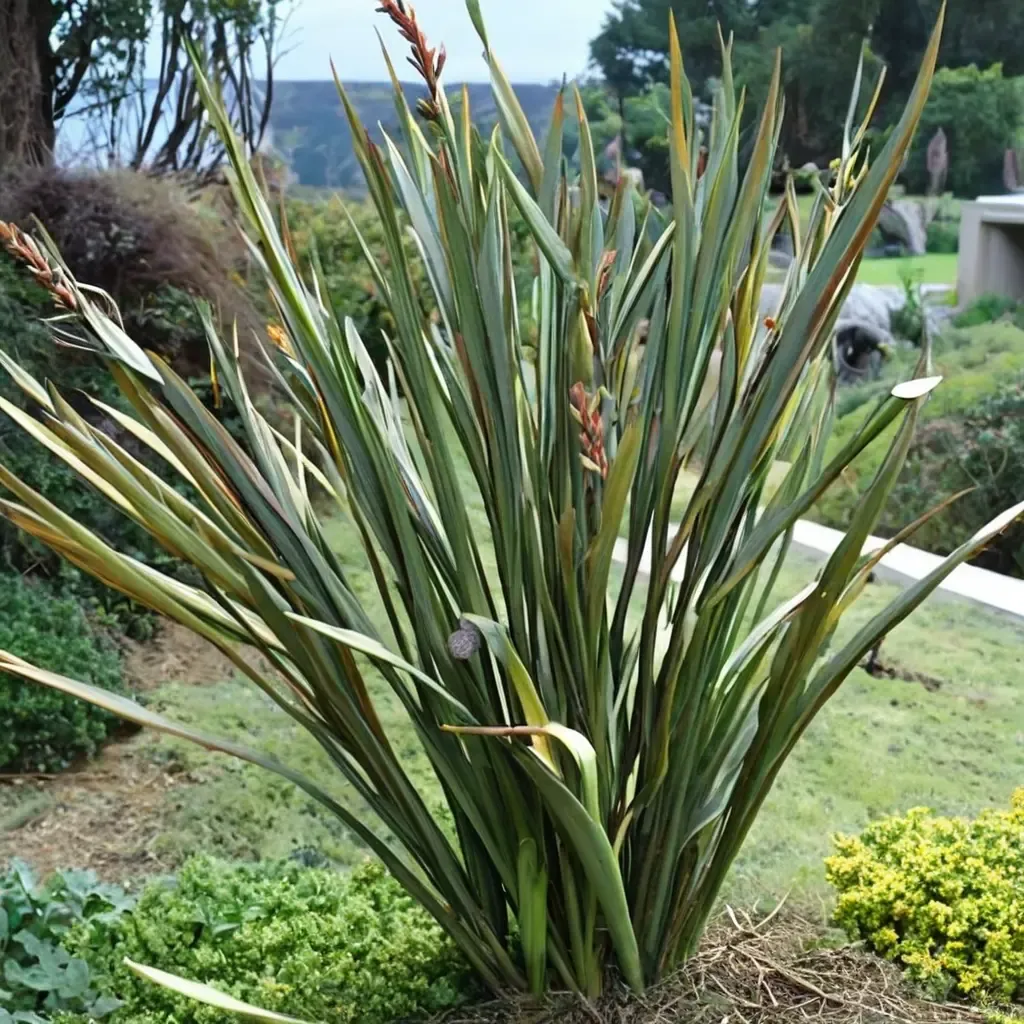
New Zealand Flax
Phormium tenax
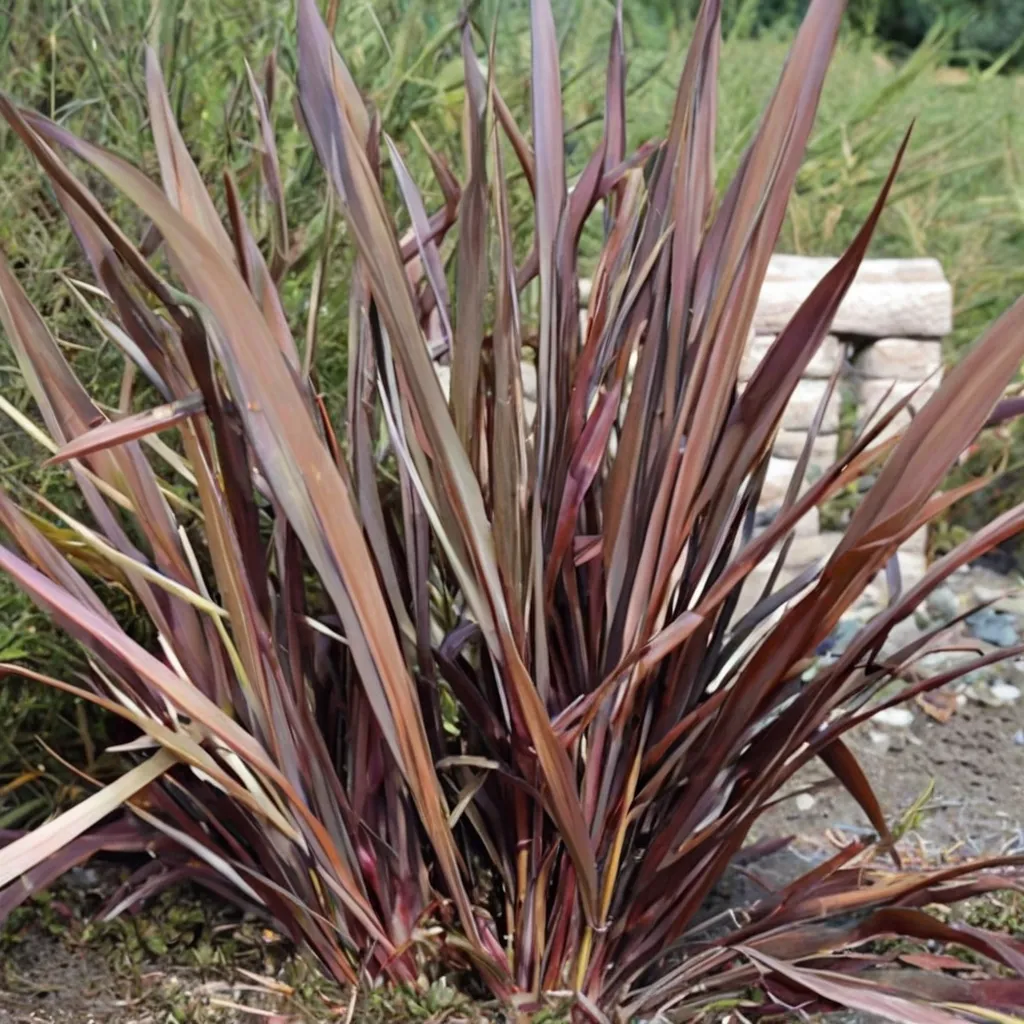
Dusky Chief Phormium
Phormium tenax 'Dusky Chief'
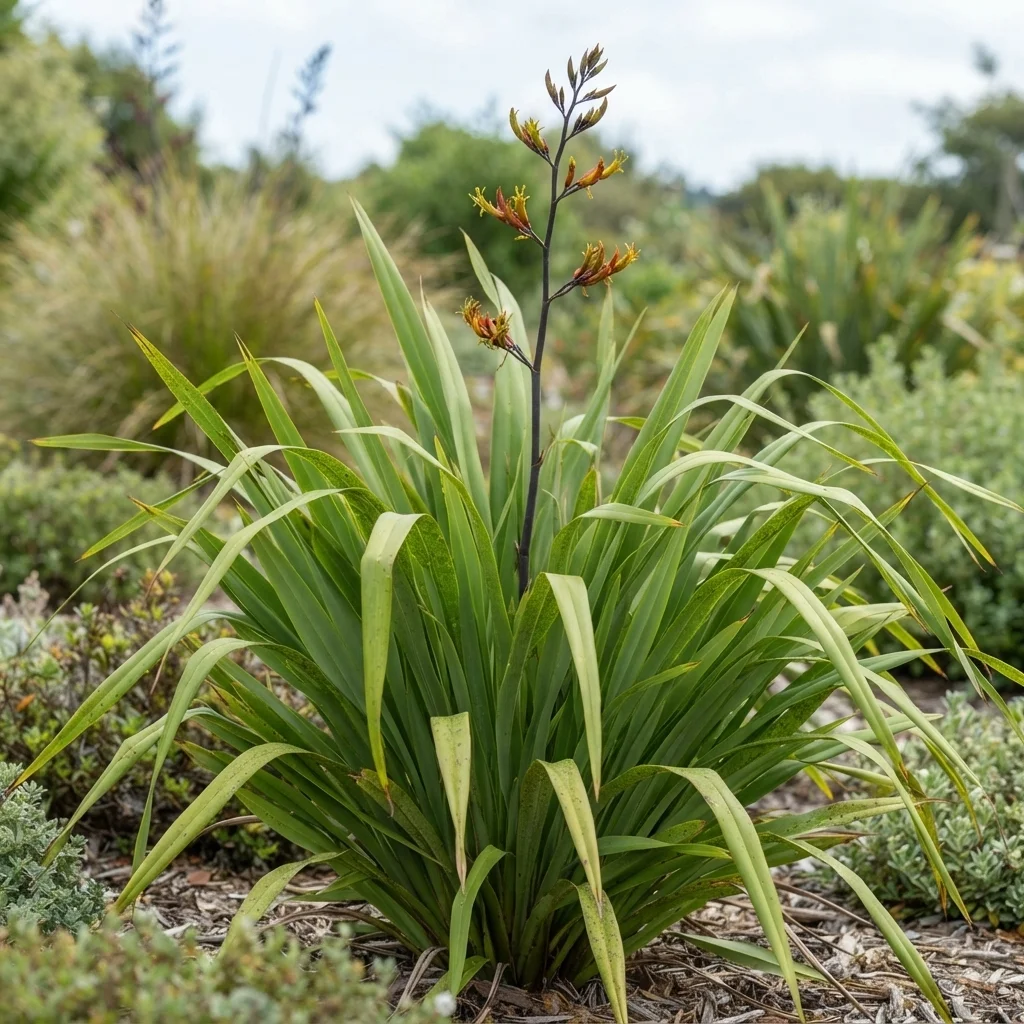
Mountain Flax
Phormium cookianum
Keep exploring
Explore the genus
Hardy in your zone?
Grow Dwarf Mountain Flax with confidence
See it in a design of your actual yard, get zone-matched care reminders, and track it season by season in your garden journal.