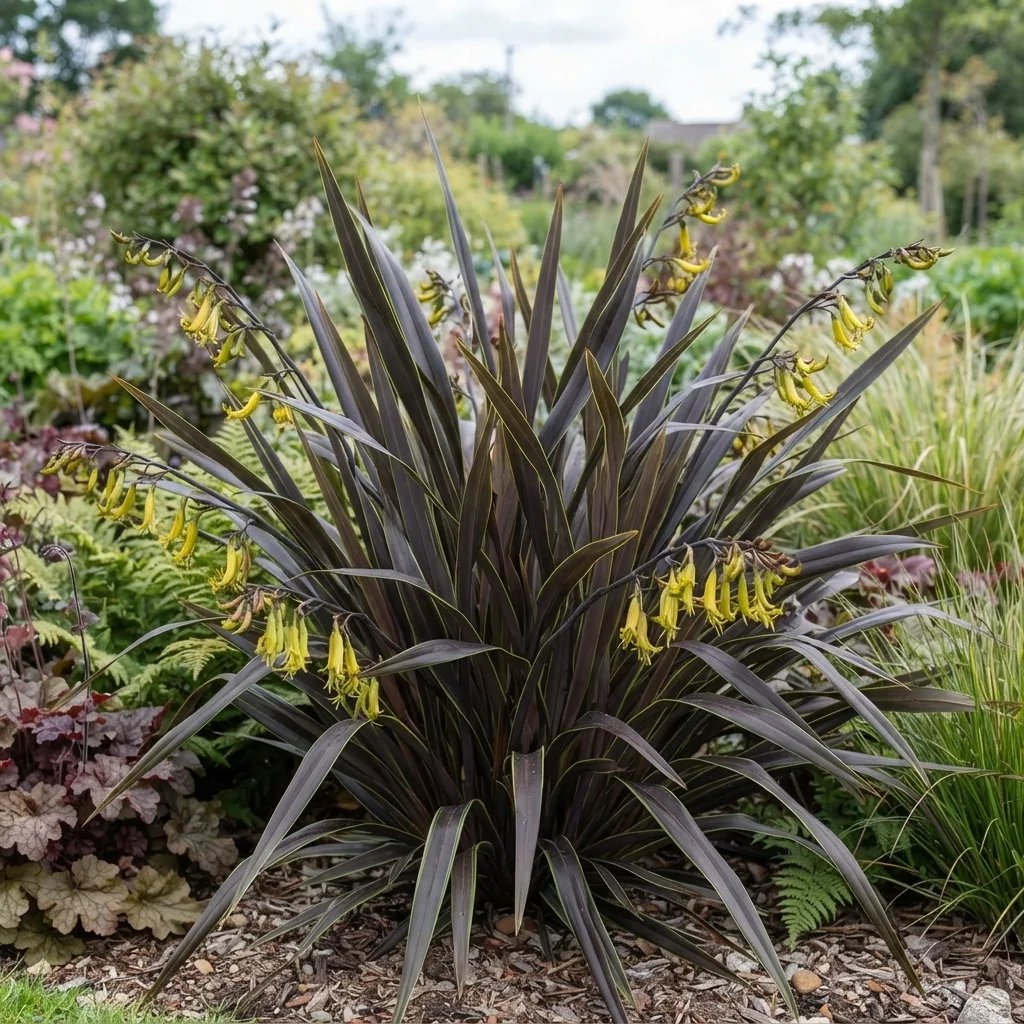
Species
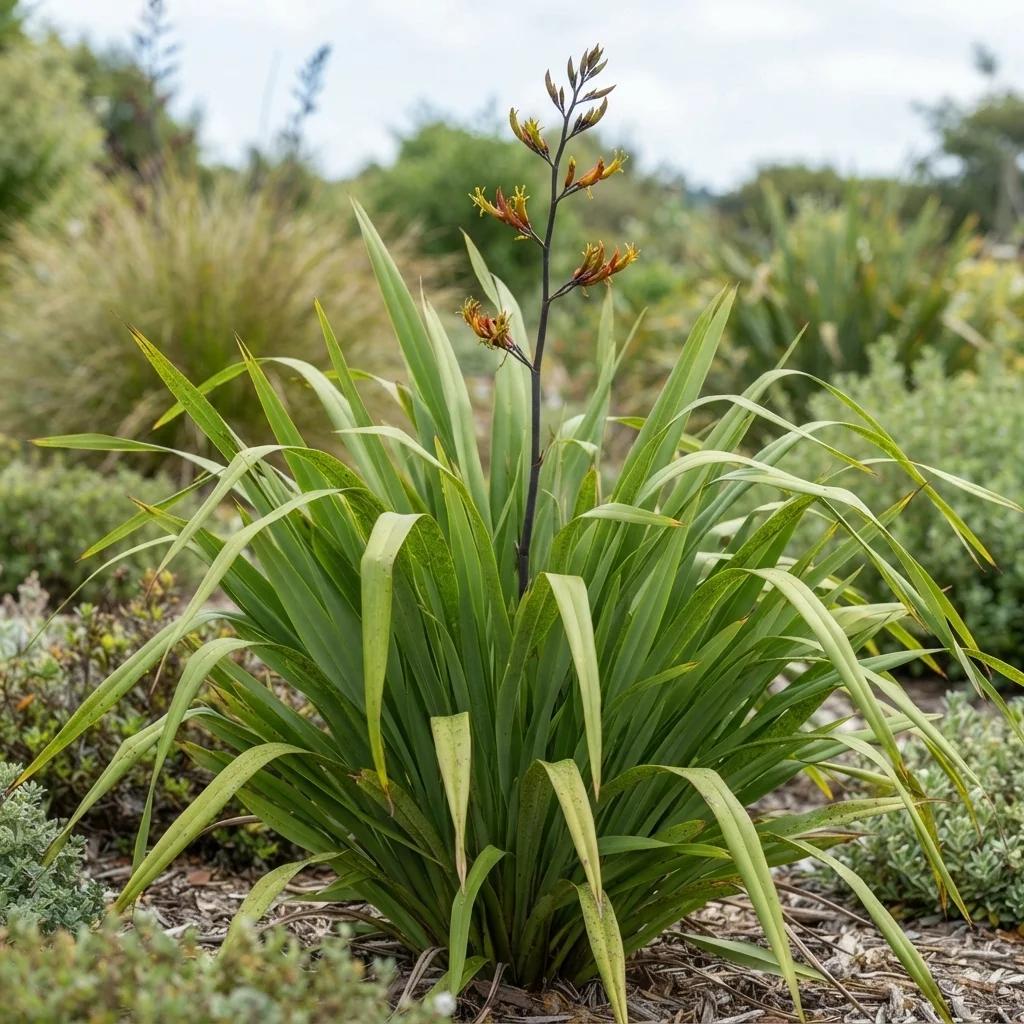
1 other cultivar

The Story
Plant Bio
Phormium is a genus of clump-forming evergreen perennials native to New Zealand, characterized by their architectural, strap-like foliage and tall summer flower spikes. These plants thrive in well-drained soils and coastal conditions, providing strong vertical structure to temperate landscapes.
'Black Magic' is a compact, dwarf cultivar distinguished by its narrow, sword-shaped leaves that emerge deep bronze and mature to a glossy jet-black with a fine lime-green margin. It reaches only 12 to 18 inches in height, making it highly suited for small gardens and container displays.
Uses & Benefits:
Essentials
At a Glance
Plant Type
Perennial
Height
18"
Width
12"
Light
Full Sun, Partial Sun
Zones
8, 9, 10
Water
Low
Humidity
Medium
Lifespan
Perennial
Native To
New Zealand
Toxicity
Mildly toxic to pets
Bloom period
Summer
In flower about 3 months of the year
Planting
How to Grow
- Select a planting site in full sun to partial shade with excellent drainage.
- Dig a hole twice the width of the root ball and backfill with native soil, avoiding heavy clay.
- Plant the crown slightly above the surrounding soil level to prevent water from pooling around the base.
- Water deeply to establish, then reduce frequency to allow the soil to dry between waterings.
Pro Tip
Never cut the entire fan of leaves back flat to the ground like an ornamental grass, as this destroys the growth point and kills the plant; instead, remove individual dead or damaged leaves by cutting them cleanly at the base.
Keep It Thriving
Care Guide
Do
- Plant in highly permeable, well-drained soil to prevent root rot.
- Grow in full sun to maintain the deepest black foliage coloration.
- Wear gloves when handling to avoid minor skin abrasions from the sharp leaf edges.
- Remove spent flower scapes at the base after summer blooming finishes.
Don't
- Do not overwater or allow the plant to sit in waterlogged, soggy soil.
- Do not prune into old, leafless wood or shear the entire clump to the ground.
- Do not apply heavy, high-phosphorus fertilizers.
Seasonal Care Calendar
| Task | Jan | Feb | Mar | Apr | May | Jun | Jul | Aug | Sep | Oct | Nov | Dec |
|---|---|---|---|---|---|---|---|---|---|---|---|---|
| Divide | ||||||||||||
| Fertilize | ||||||||||||
| Pest Check | ||||||||||||
| Prune | ||||||||||||
| Spring Cleanup |
Watch Out For
Pests & Diseases
Common Pests
Common Diseases
In the Garden
Landscape Uses & Companions
Landscape Uses
Companion Plants
Multiply
Propagation Methods
Good to Know
Common Questions
Black Magic New Zealand Flax questions
What zones can Black Magic New Zealand Flax grow in?
Black Magic New Zealand Flax is hardy in USDA Zones 8–10: in that range it survives winter in the ground. Colder than Zone 8, grow it in a container you can move to shelter for the winter, or as an annual.
When does Black Magic New Zealand Flax bloom?
Black Magic New Zealand Flax typically blooms in summer. Exact timing shifts a week or two with your zone — Sow's bloom calendar maps it to your garden.
Does Black Magic New Zealand Flax need full sun?
Black Magic New Zealand Flax does best in full sun to part shade. In hot climates, afternoon shade keeps blooms fresher longer.
Is Black Magic New Zealand Flax drought tolerant?
Yes — once established (usually after the first full season), Black Magic New Zealand Flax handles dry spells with minimal watering. Water deeply its first year to build the root system that makes that possible.
More Phormium to compare
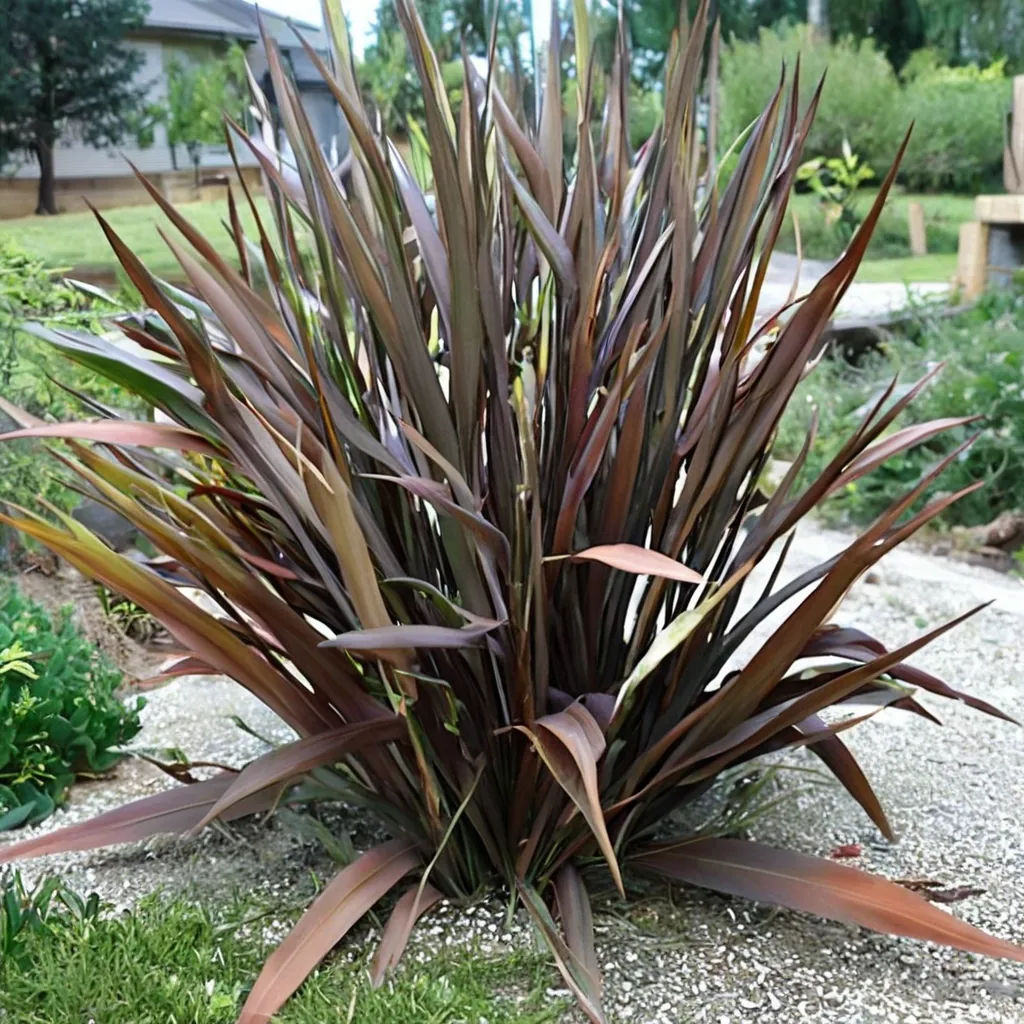
Atropurpureum New Zealand Flax
Phormium tenax 'Atropurpureum'
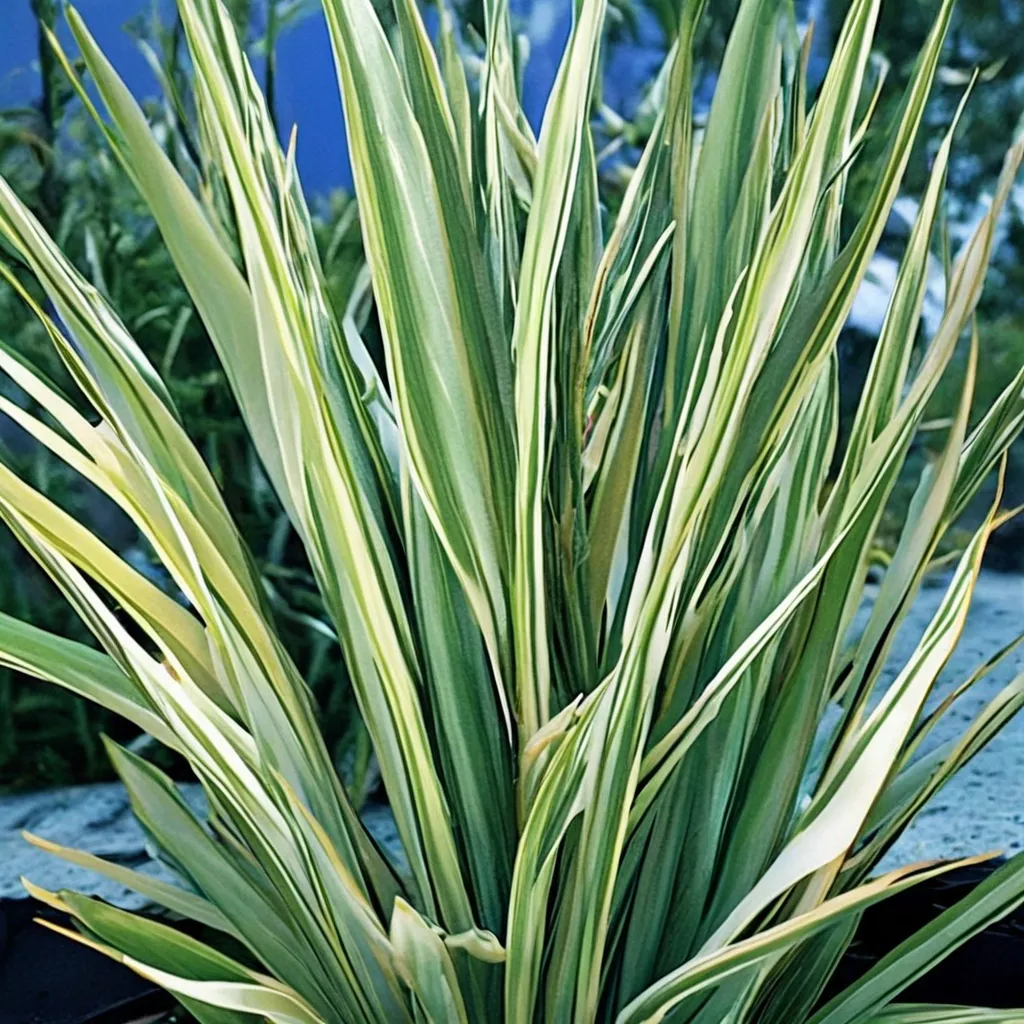
Lineata New Zealand Flax
Phormium tenax 'Lineata'
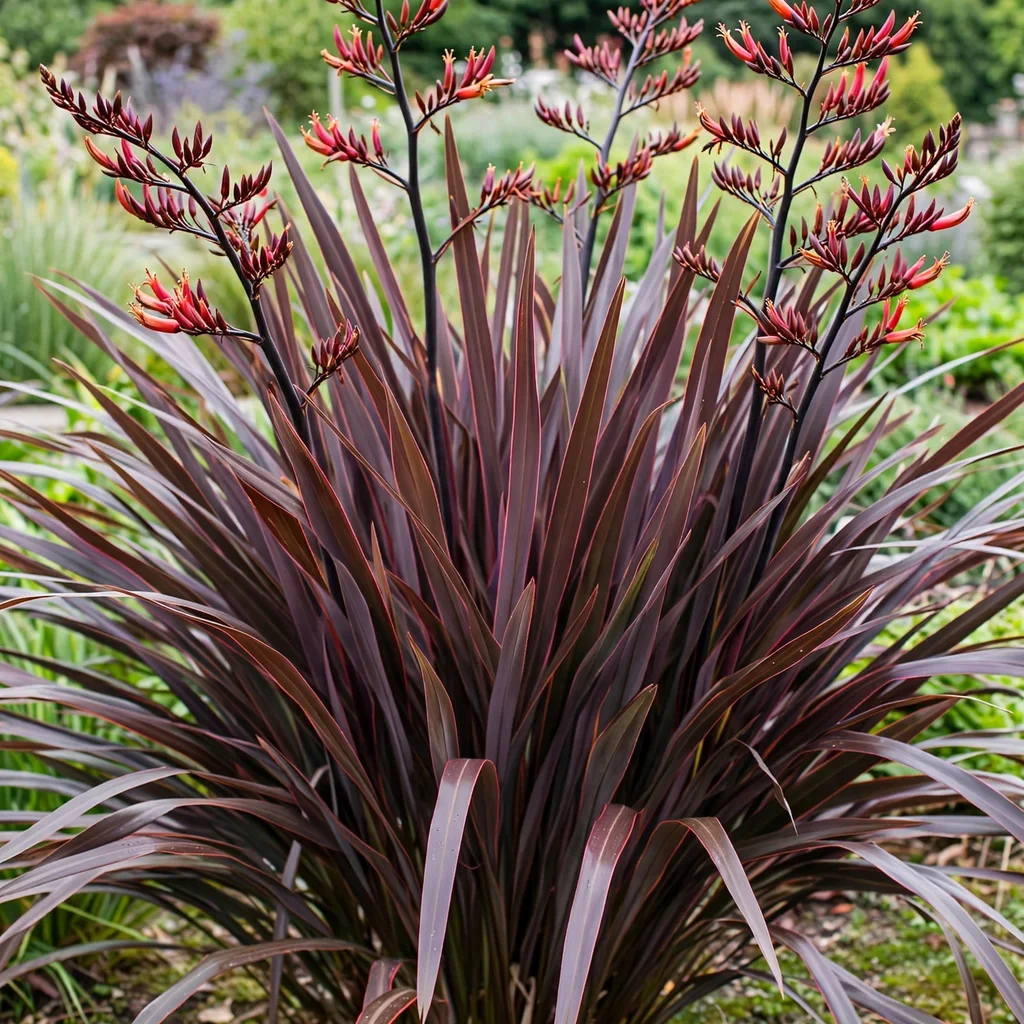
Red Phormium
Phormium tenax 'Rubra'
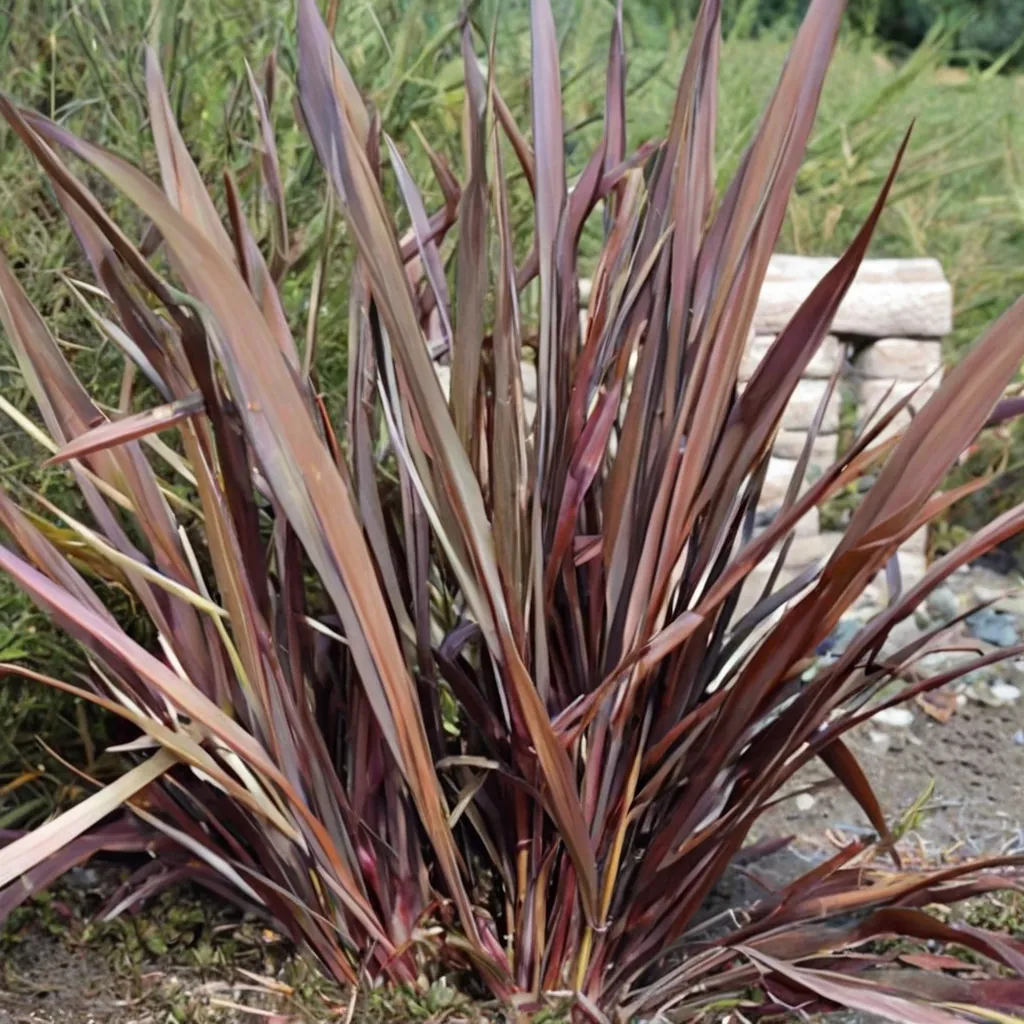
Dusky Chief Phormium
Phormium tenax 'Dusky Chief'
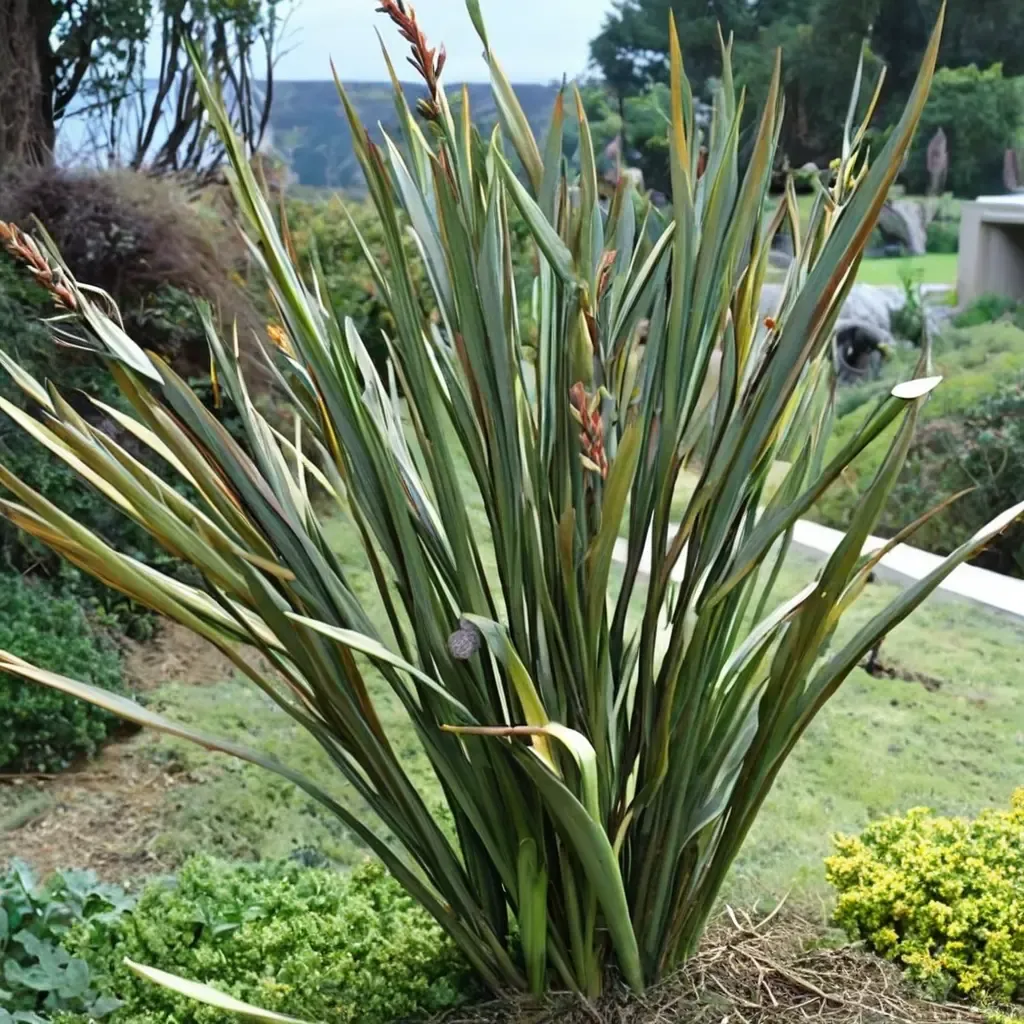
New Zealand Flax
Phormium tenax
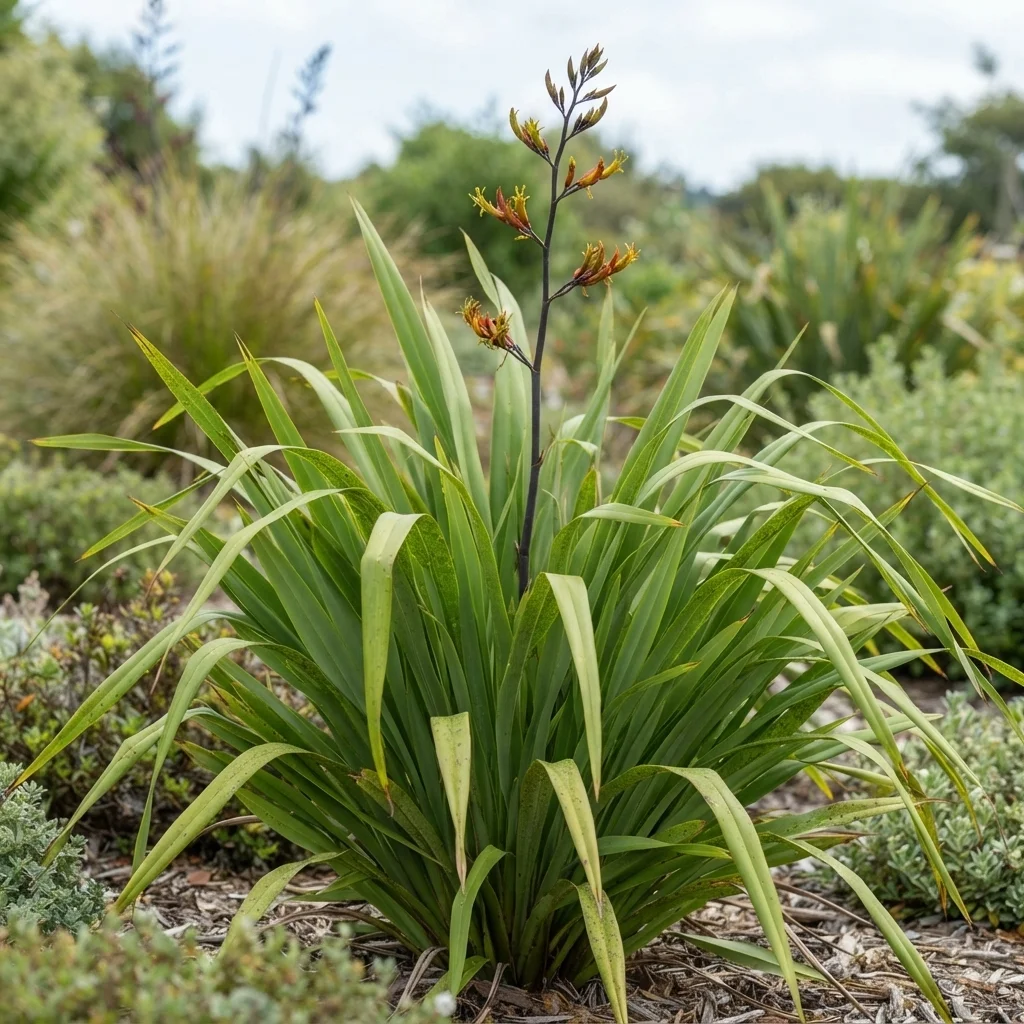
Mountain Flax
Phormium cookianum
Keep exploring
Explore the genus
Hardy in your zone?
Grow Black Magic New Zealand Flax with confidence
See it in a design of your actual yard, get zone-matched care reminders, and track it season by season in your garden journal.