The Story
Plant Bio
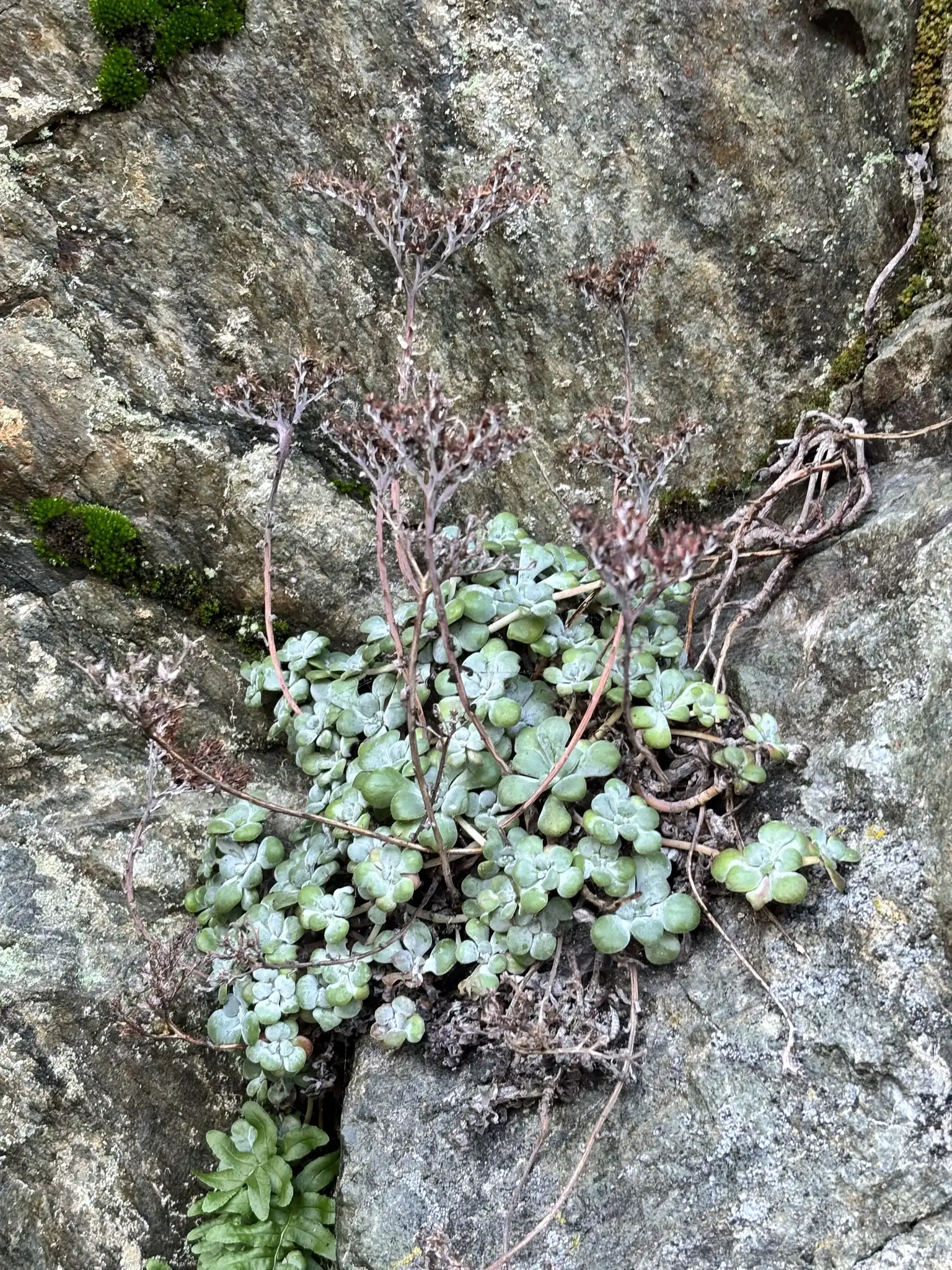
Sedum spathulifolium, the broadleaf stonecrop, is a mat-forming evergreen succulent native to western North American cliffs and coastal bluffs, spreading up to two feet wide via creeping stems. The fleshy, spoon-shaped leaves form tight rosettes with a powdery, waxy coating that shifts from chalky white to deep burgundy under environmental stress.
This species produces upright flowering stems topped with flat, three-branched clusters of star-shaped yellow flowers from late spring through summer. The glaucous foliage provides year-round ground cover and erosion control on steep, rocky slopes where few other plants can anchor.
Uses & Benefits:
Essentials
At a Glance
Plant Type
Cactus Succulent
Height
8"
Width
24"
Light
Full Sun, Partial Sun
Zones
5, 6, 7, 8, 9
Water
Low
Humidity
Low to Moderate
Lifespan
Perennial
Native To
North America
Toxicity
Mildly toxic if ingested
Bloom period
Late spring – Late summer
In flower about 4 months of the year
Planting
How to Grow
- Select a planting site with sharp drainage, such as a rock garden, gravel scree, or retaining wall crevice.
- Amend the soil with coarse sand or fine gravel to ensure water drains away from the crown instantly.
- Space plants twelve inches apart, settling the basal rosettes flush with the soil surface.
- Water lightly to settle the roots, then withhold water until the top two inches of soil dry out completely.
Pro Tip
Plant this succulent on sloped ground, rock walls, or in gritty gravel mixes rather than rich garden loam; crown moisture must shed immediately to prevent root rot.
Keep It Thriving
Care Guide
Do
- Plant on a slope or in raised beds to facilitate rapid drainage.
- Provide full sun to maintain the compact rosette form and intense foliage color.
- Clear fallen autumn leaves from the mats to prevent damp rot.
Don't
- Do not plant in heavy clay or moisture-retentive organic loam.
- Do not overwater, especially during cold winter months when the plant is semi-dormant.
- Do not apply heavy fertilizers, which cause weak, leggy, and unstable growth.
Seasonal Care Calendar
| Task | Jan | Feb | Mar | Apr | May | Jun | Jul | Aug | Sep | Oct | Nov | Dec |
|---|---|---|---|---|---|---|---|---|---|---|---|---|
| Deadhead | ||||||||||||
| Pest Check | ||||||||||||
| Plant | ||||||||||||
| Propagate | ||||||||||||
| Spring Cleanup |
Watch Out For
Pests & Diseases
Common Pests
Common Diseases
In the Garden
Landscape Uses & Companions
Landscape Uses
Multiply
Propagation Methods
Good to Know
Common Questions
Broadleaf Stonecrop questions
What zones can Broadleaf Stonecrop grow in?
Broadleaf Stonecrop is hardy in USDA Zones 5–9. Inside that range it survives winter in the ground; outside it, grow it as an annual or a container plant you protect.
Is Broadleaf Stonecrop deer resistant?
Not reliably. Deer may browse Broadleaf Stonecrop, especially tender spring growth — plan on repellents or fencing where pressure is high.
When does Broadleaf Stonecrop bloom?
Broadleaf Stonecrop typically blooms in late spring through late summer. Exact timing shifts a week or two with your zone — Sow's bloom calendar maps it to your garden.
Does Broadleaf Stonecrop need full sun?
Broadleaf Stonecrop does best in full sun to part shade. In hot climates, afternoon shade keeps blooms fresher longer.
Is Broadleaf Stonecrop drought tolerant?
Yes — once established (usually after the first full season), Broadleaf Stonecrop handles dry spells with minimal watering. Water deeply its first year to build the root system that makes that possible.
More Sedum to compare
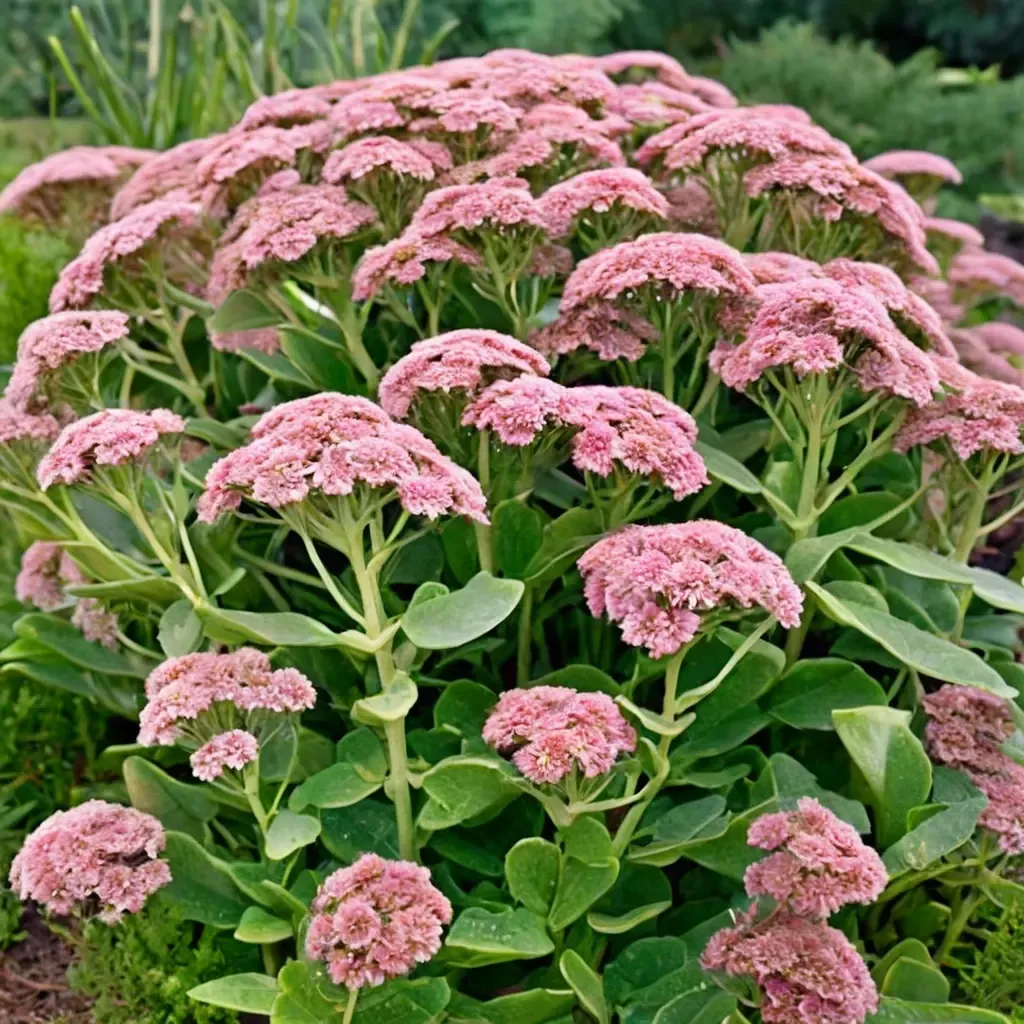
Autumn Joy Stonecrop
Sedum telephium 'Autumn Joy'
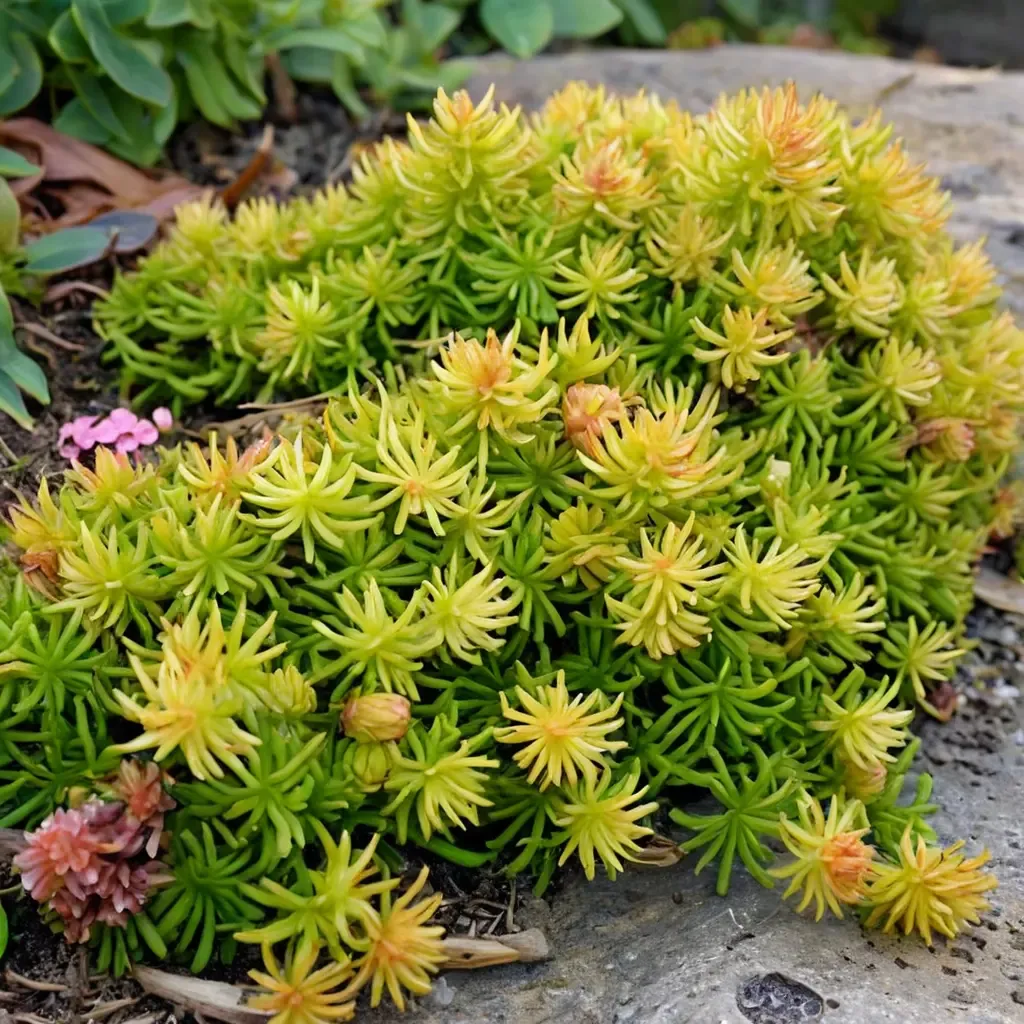
Angelina Stonecrop
Sedum rupestre 'Angelina'
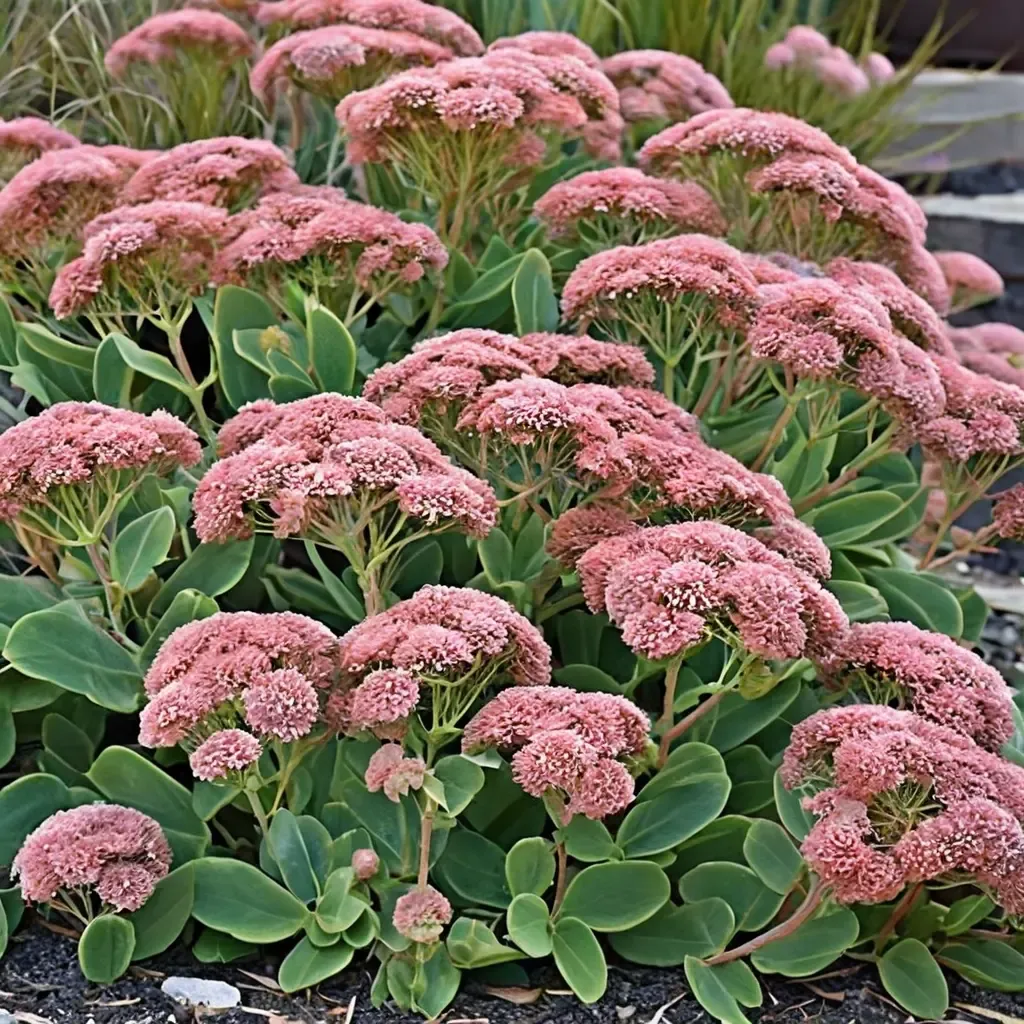
Autumn Fire Stonecrop
Sedum spectabile 'Autumn Fire'
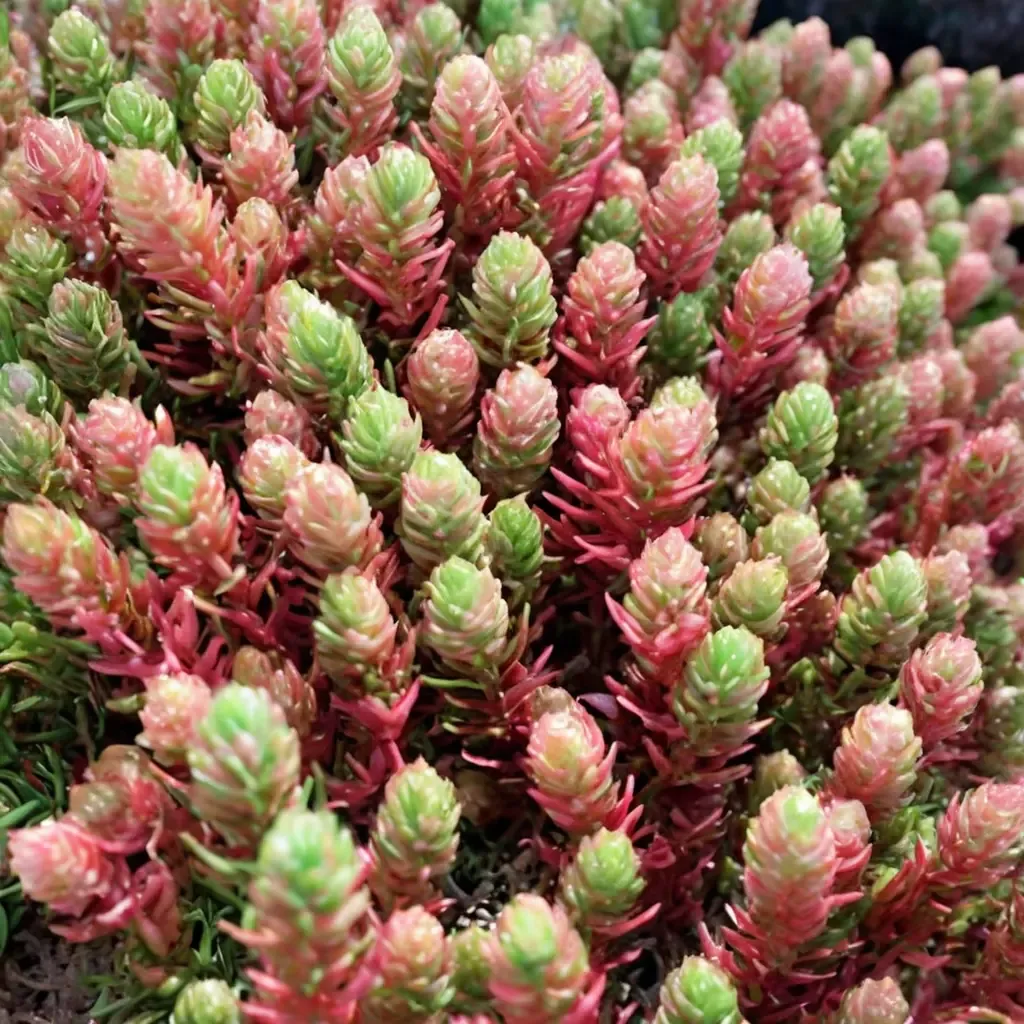
Red Wiggle Stonecrop
Sedum ochroleucum 'Red Wiggle'
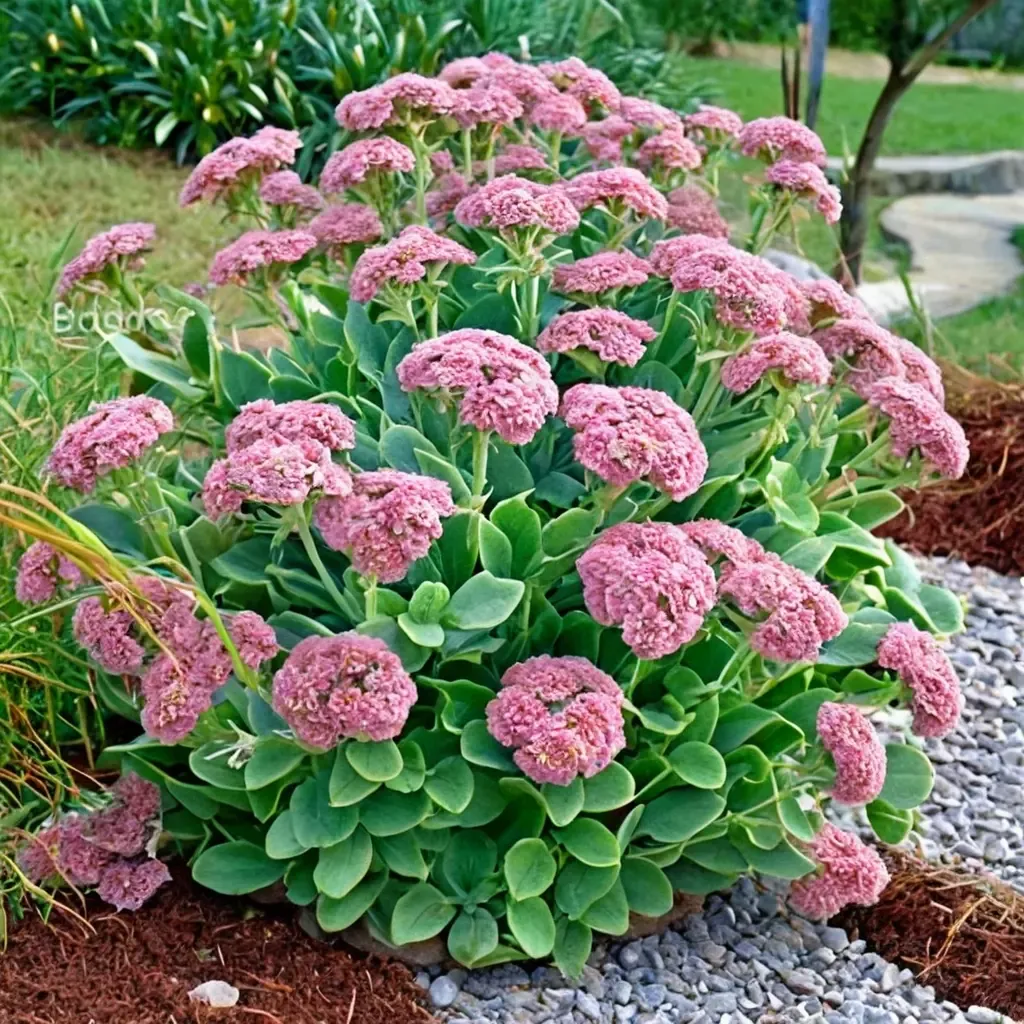
Autumn Joy Sedum
Sedum telephium 'Herbstfreude'
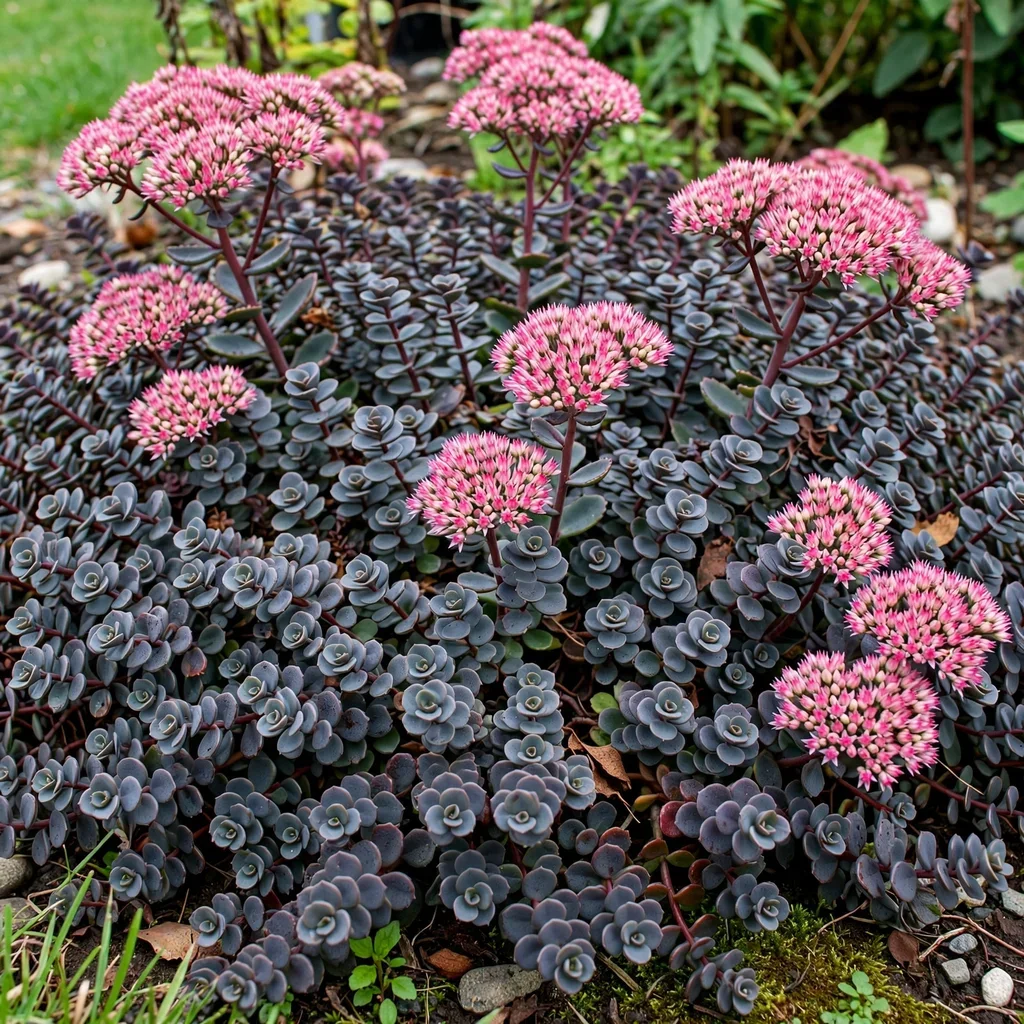
Dazzleberry Sedum
Sedum rubrotinctum 'Dazzleberry'
Keep exploring
Explore the genus
Hardy in your zone?
Grow Broadleaf Stonecrop with confidence
See it in a design of your actual yard, get zone-matched care reminders, and track it season by season in your garden journal.