Also known as Pigface · 12 saves
Carpobrotus
Carpobrotus, the genus most gardeners know as pigface. We track 3 varieties; the ones most used by real gardeners.
The 3 most-saved Carpobrotus varieties
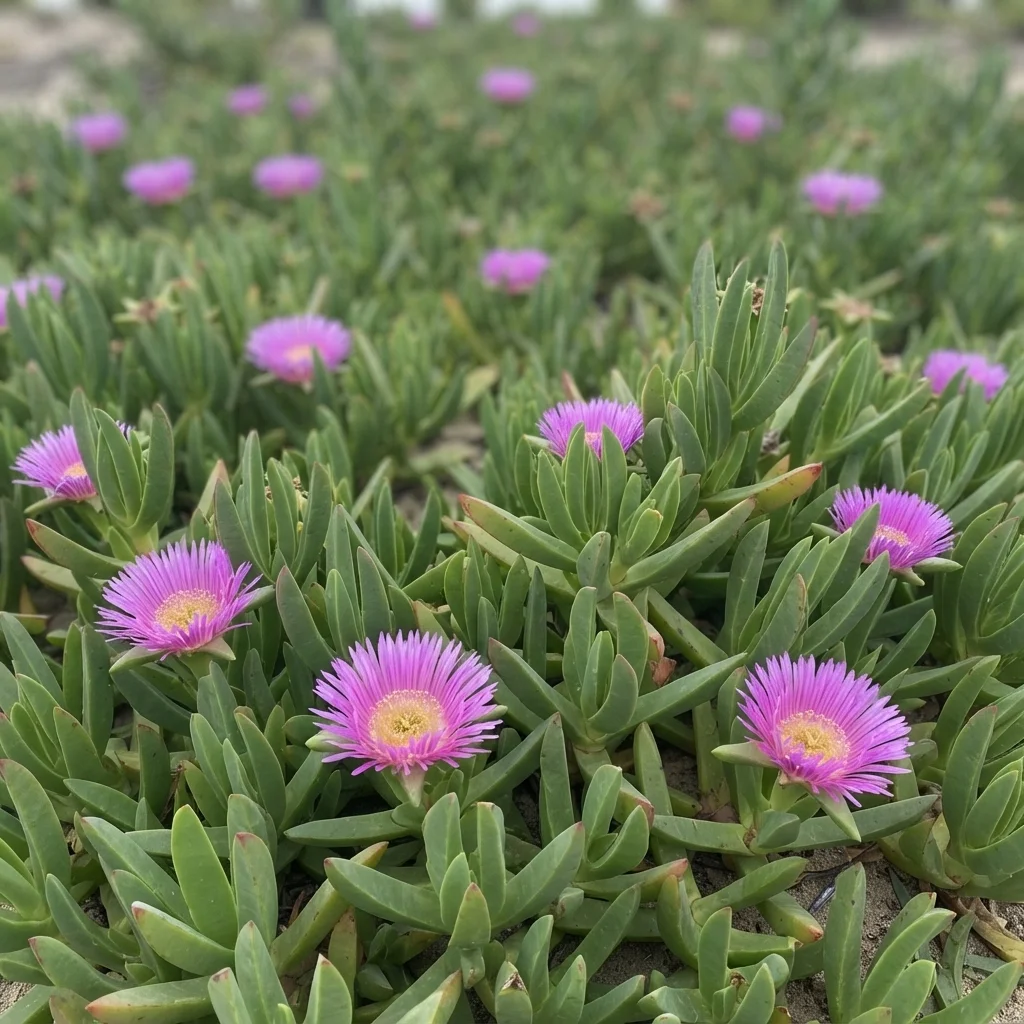
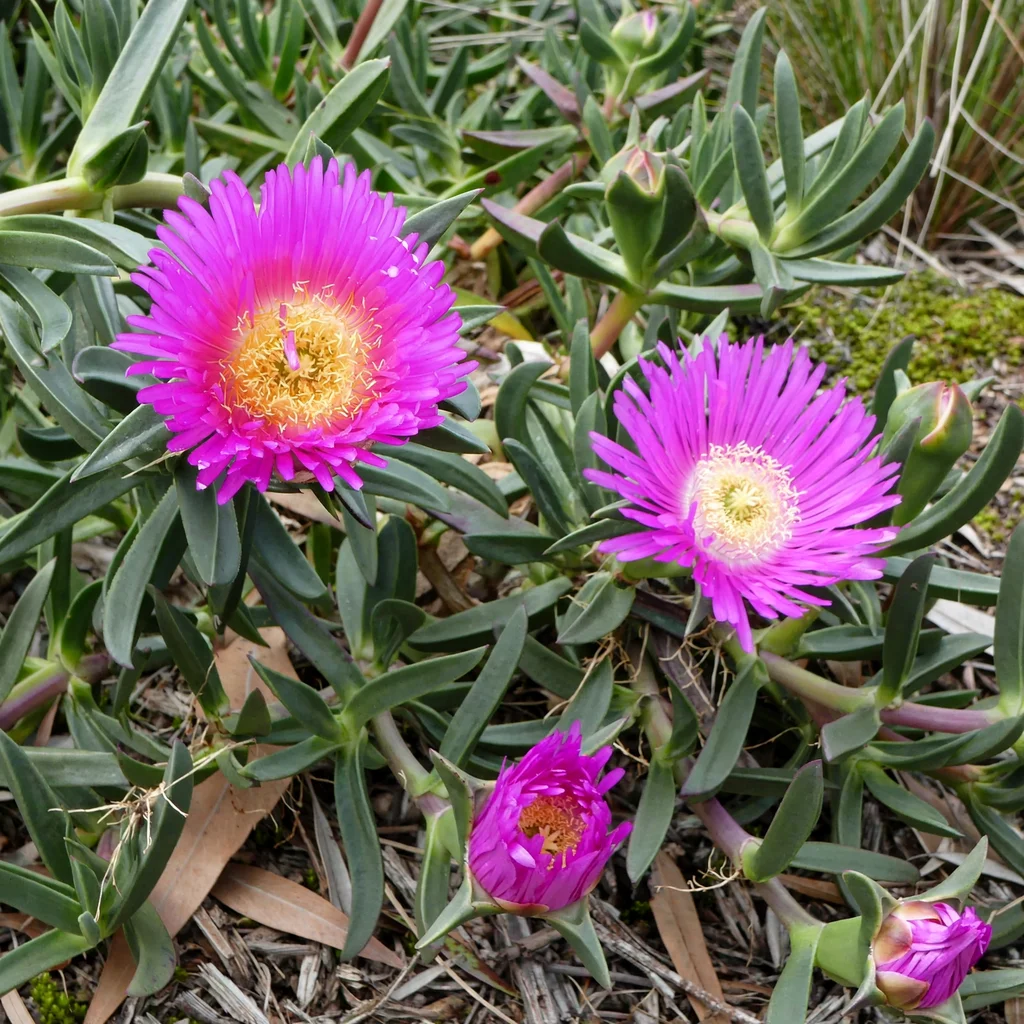
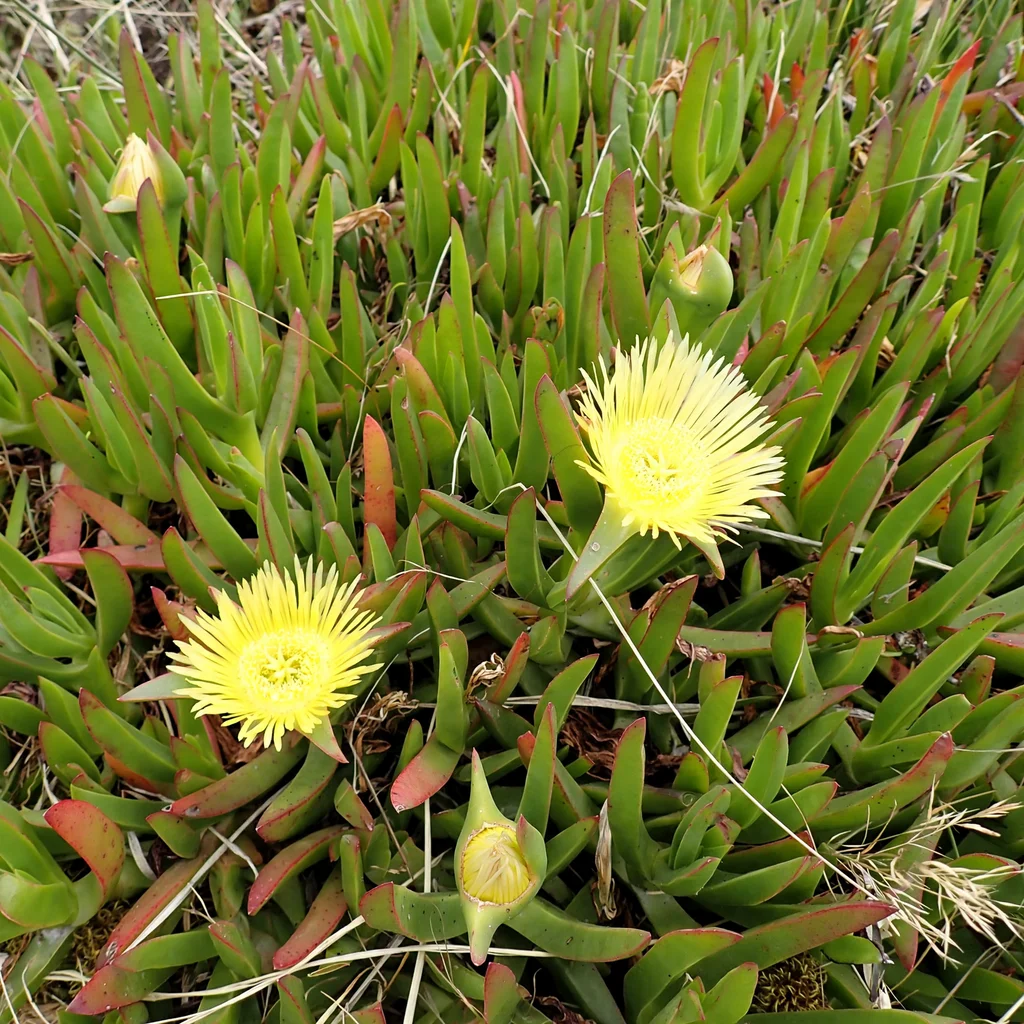
2 species of Carpobrotus
Each one is a parent of the varieties above.
Track your Carpobrotus in Sow
Save the Carpobrotus you grow and get care reminders timed to your zone.
How to grow Carpobrotus
Whats common across all Carpobrotus varieties in our catalog — drawn from the care records of the 3 most-grown of them.
The Carpobrotus year
- PruneSeptember100% of varieties
Trim back stray trailing stems after the main summer flowering flush.
- Check for PestsJune and July100% of varieties
Inspect leaf joints and undersides for mealybugs and scale during hot, dry weather.
- PropagateMay and June67% of varieties
Take stem cuttings during active warm-season growth.


Do
- Provide full sun to maintain the compact, glaucous foliage and encourage heavy flowering.
- Ensure the soil drains rapidly to prevent root and stem rot.
- Trim back trailing stems once a year after flowering to keep the plant within its boundaries.
- Grow in poor, sandy soils to maintain a compact, manageable habit.
- Clear away dead, rotting thatch from underneath the mats to prevent fungal issues.
Avoid
- Do not overwater or plant in heavy, moisture-retentive clay soils.
- Do not apply heavy organic composts or high-nitrogen fertilizers, which cause weak, bloated growth.
- Do not cut back into old, leafless, woody stems, as they fail to reshoot.
- Do not overwater or plant in heavy, poorly drained clay soils.
What goes wrong with Carpobrotus
| Problem | What you'll see | What to do |
|---|---|---|
| Mealybugs | White, cottony masses in the leaf axils and stem joints, leading to stunted growth. | Apply insecticidal soap or horticultural oil directly to the pests, or dab with rubbing alcohol. |
| Scale insects | Small, raised brown bumps on the fleshy leaves and stems, accompanied by sticky honeydew. | Scrape off light infestations manually or treat with a systemic insecticide or horticultural oil. |
| Spider mites | Fine webbing on the foliage and a dusty, speckled appearance on the leaves under dry conditions. | Increase humidity if grown indoors, or spray the foliage with a strong stream of water or insecticidal soap. |
| Deer | Chewed foliage and damaged trailing stems during periods of scarce alternative forage. | Protect young plantings with physical barriers or apply scent-based repellents. |
| Root and stem rot | Soft, mushy, blackened stems near the soil line and yellowing, collapsing foliage. | Immediately withhold water, improve soil drainage, and remove affected plant parts to prevent spread. |
| Root rot | Soft, blackened stems at the soil line and rapid wilting of the foliage. | Improve soil drainage immediately, reduce watering frequency, and discard severely infected plants. |
| Powdery mildew | White, powdery fungal patches on the leaves during warm, humid periods. | Ensure adequate spacing for air circulation and apply a bio-fungicide if necessary. |
Making more Carpobrotus
Stem Cuttings
- Cut a healthy trailing stem section containing at least two nodes.
- Allow the cut end to dry and callus over for a few days.
- Insert the callused end into a pot filled with dry, sandy propagation mix.
- Keep the medium barely moist until roots establish, then transition to dry conditions.
Stem cuttings
- Cut a 4- to 6-inch tip from a healthy, active trailing stem.
- Allow the cut end to callus in a dry, shaded area for two to three days.
- Insert the callused end into a pot filled with damp, sandy propagation mix.
- Keep the mix barely moist in a warm, bright spot until roots establish.
Carpobrotus questions
How many types of Carpobrotus are there?
The Sow catalog tracks 3 distinct Carpobrotus varieties. The most popular — ranked by 12 real gardeners — are shown first above.
What zones does Carpobrotus grow in?
Across its varieties, Carpobrotus covers USDA Zones 8–10. Individual varieties differ — each plant page lists its exact range, and Sow filters the catalog to your zone automatically.
When does Carpobrotus bloom?
Most Carpobrotus varieties bloom in spring. Staggering early, mid, and late varieties extends the genus's season in one bed.
Which Carpobrotus should I choose?
Start from the most-saved varieties above — popularity across thousands of gardens is a strong signal of reliability — then filter by your zone and sun. In the Sow app you can preview any of them in a photo of your actual yard before you buy.