1 named cultivar
The Story
Plant Bio
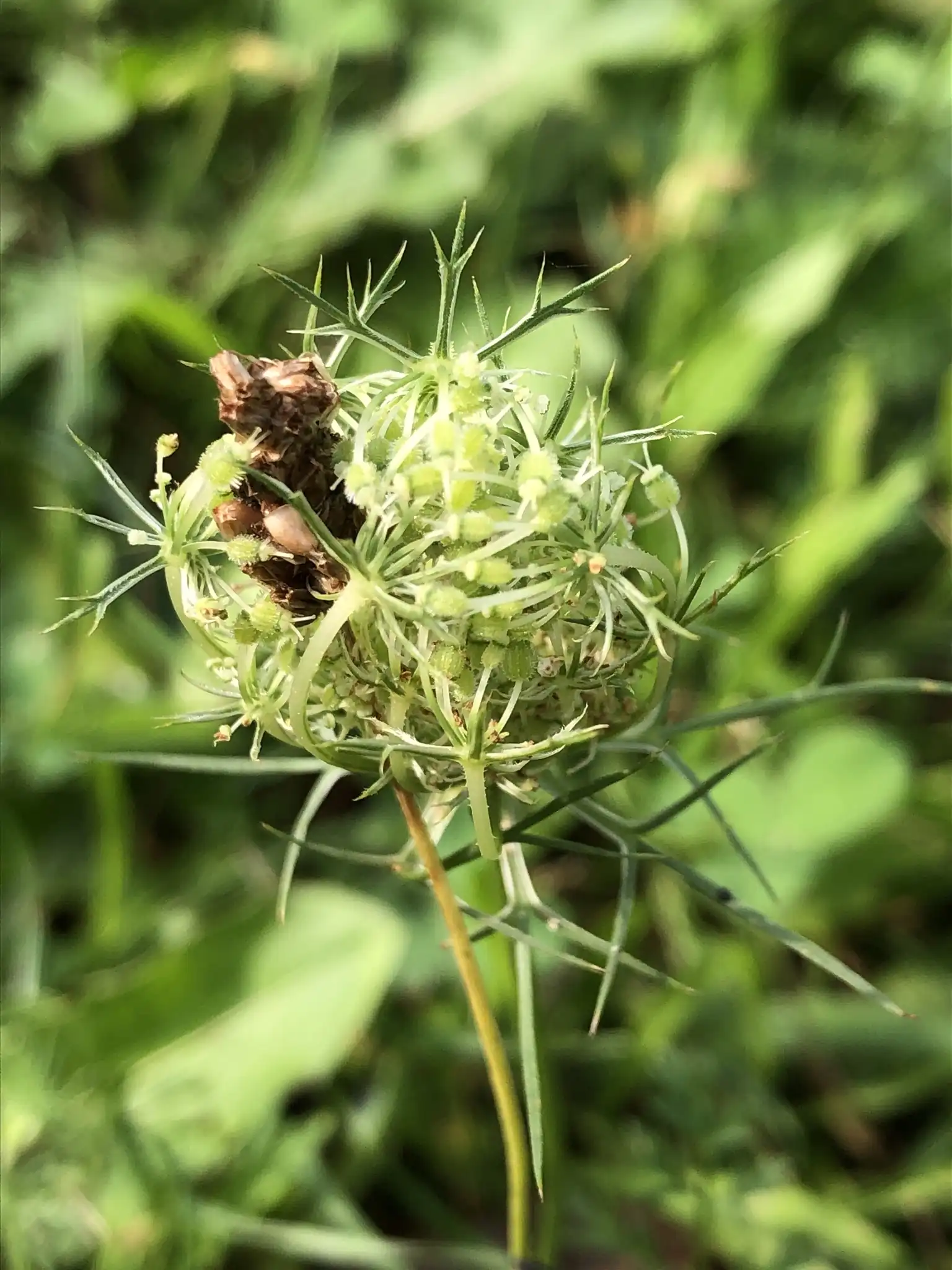
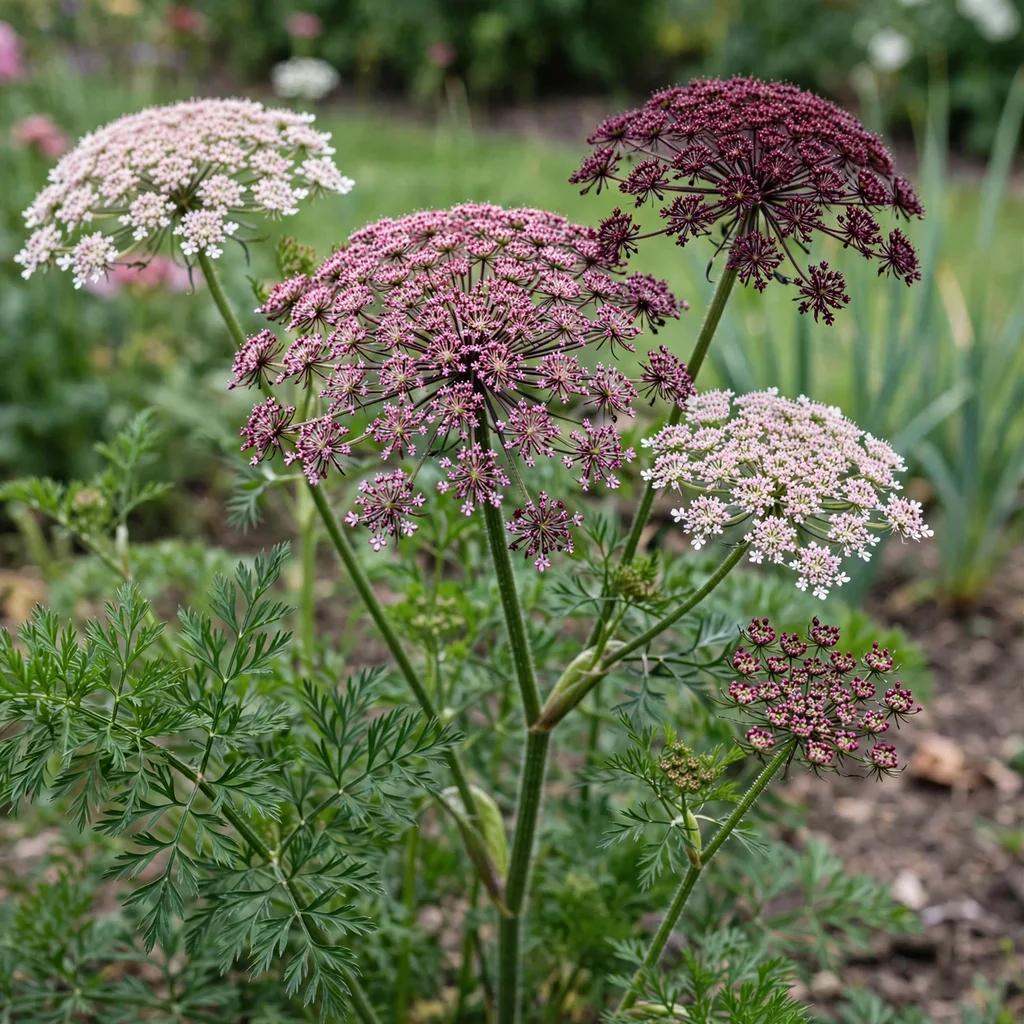
Daucus carota, wild carrot or Queen Anne's lace, is a biennial from Europe, western Asia and North Africa, now naturalised across North America. Finely divided ferny leaves form a rosette in the first year, and in the second a bristly hairy stem three to four feet tall carries a broad flat umbel of tiny white flowers, usually with a single dark purple floret at the centre.
The sap causes phytophotodermatitis: get it on your skin in sunlight and you can be left with blistering burns and stains that last months. Wear gloves and long sleeves to cut it. It is also the wild ancestor of the cultivated carrot, and the resemblance is the danger — it looks very like poison hemlock, which is lethal, so never forage it on a hunch.
Uses & Benefits:
Essentials
At a Glance
Plant Type
Fruit Vegetable
Height
42"
Width
18"
Light
Full Sun
Zones
4, 5, 6, 7, 8, 9, 10
Water
Low to moderate
Humidity
Moderate
Lifespan
Biennial
Native To
Europe, western Asia and North Africa
Toxicity
Sap burns skin in sunlight
Planting
How to Grow
- Wear gloves and long sleeves whenever you cut it.
- Cut in the evening or on an overcast day.
- Wash any sap off skin immediately, out of sunlight.
- Deadhead before seed sets to limit spread.
- Check state noxious weed listings before letting it stand.
- Never eat a wild root you have not positively identified.
Pro Tip
The burns need sap plus sunlight, so cutting it in the evening and washing before morning avoids nearly all of the damage.
Keep It Thriving
Care Guide
Do
- Wear gloves and cover your arms 🧤
- Cut it in the evening or under cloud 🌥️
- Wash sap off skin at once 🚿
- Deadhead before it seeds ✂️
Don't
- Handle it bare-armed in sunshine ❌
- Forage the root on a resemblance ❌
- Let it seed near pasture or crops ❌
Seasonal Care Calendar
| Task | Jan | Feb | Mar | Apr | May | Jun | Jul | Aug | Sep | Oct | Nov | Dec |
|---|---|---|---|---|---|---|---|---|---|---|---|---|
| Cut | ||||||||||||
| Identify |
Watch Out For
Pests & Diseases
Common Pests
Common Diseases
In the Garden
Landscape Uses & Companions
Landscape Uses
Multiply
Propagation Methods
Good to Know
Common Questions
Flowering Carrot questions
What zones can Flowering Carrot grow in?
Flowering Carrot is hardy in USDA Zones 4–10. Inside that range it survives winter in the ground; outside it, grow it as an annual or a container plant you protect.
Is Flowering Carrot deer resistant?
Not reliably. Deer may browse Flowering Carrot, especially tender spring growth — plan on repellents or fencing where pressure is high.
When does Flowering Carrot bloom?
Flowering Carrot typically blooms in summer through late summer. Exact timing shifts a week or two with your zone — Sow's bloom calendar maps it to your garden.
Does Flowering Carrot need full sun?
Flowering Carrot does best in full sun (6+ hours).
More Daucus to compare
Keep exploring
Explore the genus
Grow Flowering Carrot with confidence
See it in a design of your actual yard, get zone-matched care reminders, and track it season by season in your garden journal.