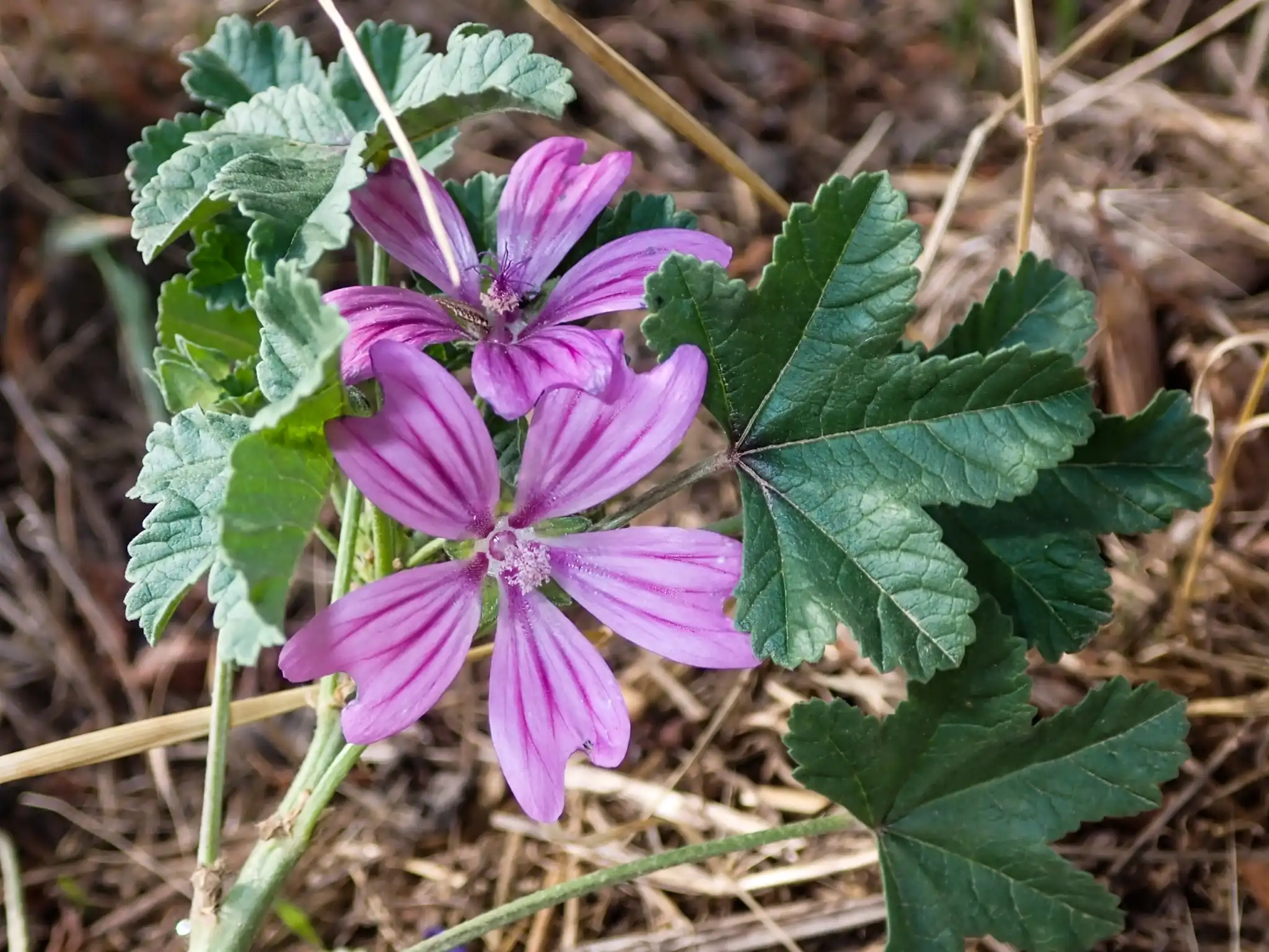
1 named cultivar
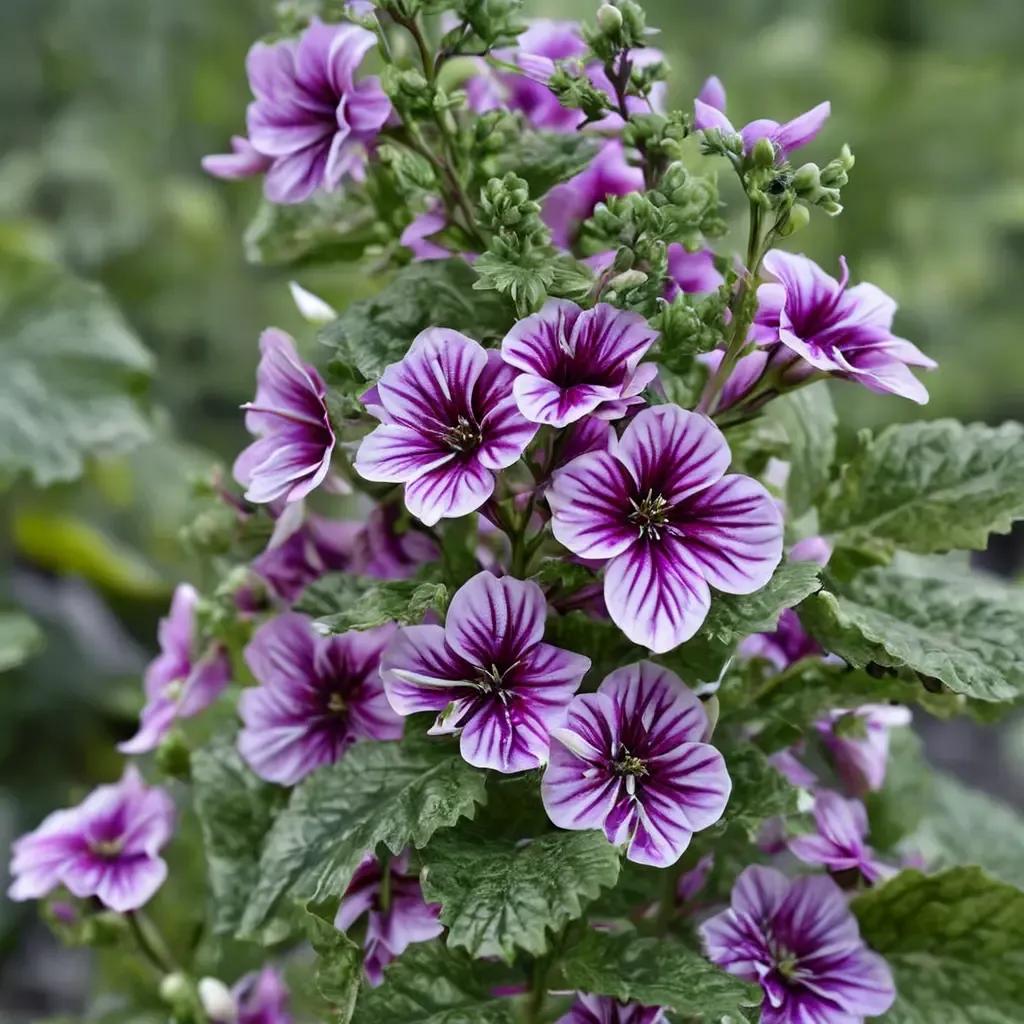
The Story
Plant Bio
Malva sylvestris, common or high mallow, is an upright perennial from northern Europe, northern Africa and southwestern Asia, standing two to four feet high and two to three across. Rounded lobed leaves clothe branching stems, and rose-purple flowers with darker radiating stripes open in succession from July to September along the upper stems.
It is short-lived and often behaves as a biennial, but it self-seeds so freely that a colony persists without any help, which suits a wildflower meadow better than a formal border. Rust develops on the foliage almost every year as summer wears on; it disfigures rather than kills, and removing the worst leaves is enough.
Uses & Benefits:
Essentials
At a Glance
Plant Type
Perennial
Height
36"
Width
24"
Light
Full Sun, Partial Sun
Zones
4, 5, 6, 7, 8
Water
Medium
Humidity
Average
Lifespan
Perennial, often short-lived
Native To
Northern Europe, northern Africa and southwestern Asia
Toxicity
Non-toxic
Planting
How to Grow
- Sow or plant in spring in full sun to part shade.
- Choose average, medium-moisture, well-drained soil.
- Space plants around two feet apart.
- Water moderately; it tolerates some dryness.
- Remove rust-affected lower leaves as summer goes on.
- Leave some seed to fall so the colony renews.
Pro Tip
Treat it as a self-renewing colony rather than a permanent plant; individual specimens rarely last more than a few years.
Keep It Thriving
Care Guide
Do
- Give it full sun to part shade ☀️
- Let some seed fall to renew the patch 🌱
- Remove rust-affected leaves in late summer 🍂
- Use it in cottage plantings and meadows 🌸
Don't
- Expect individual plants to be long-lived ❌
- Crowd it and worsen the annual rust ❌
- Plant it in wet, poorly drained ground ❌
Seasonal Care Calendar
| Task | Jan | Feb | Mar | Apr | May | Jun | Jul | Aug | Sep | Oct | Nov | Dec |
|---|---|---|---|---|---|---|---|---|---|---|---|---|
| Sow | ||||||||||||
| Tidy |
Watch Out For
Pests & Diseases
Common Pests
Common Diseases
In the Garden
Landscape Uses & Companions
Landscape Uses
Companion Plants
Multiply
Propagation Methods
Good to Know
Common Questions
Mallow questions
What zones can Mallow grow in?
Mallow is hardy in USDA Zones 4–8. Inside that range it survives winter in the ground; outside it, grow it as an annual or a container plant you protect.
Is Mallow deer resistant?
Yes — Mallow is rated deer-resistant. Deer typically pass it over, though extreme hunger can override any plant's defenses.
When does Mallow bloom?
Mallow typically blooms in midsummer to early fall through late summer. Exact timing shifts a week or two with your zone — Sow's bloom calendar maps it to your garden.
Does Mallow need full sun?
Mallow does best in full sun to part shade. In hot climates, afternoon shade keeps blooms fresher longer.
Is Mallow drought tolerant?
Yes — once established (usually after the first full season), Mallow handles dry spells with minimal watering. Water deeply its first year to build the root system that makes that possible.
More Malva to compare
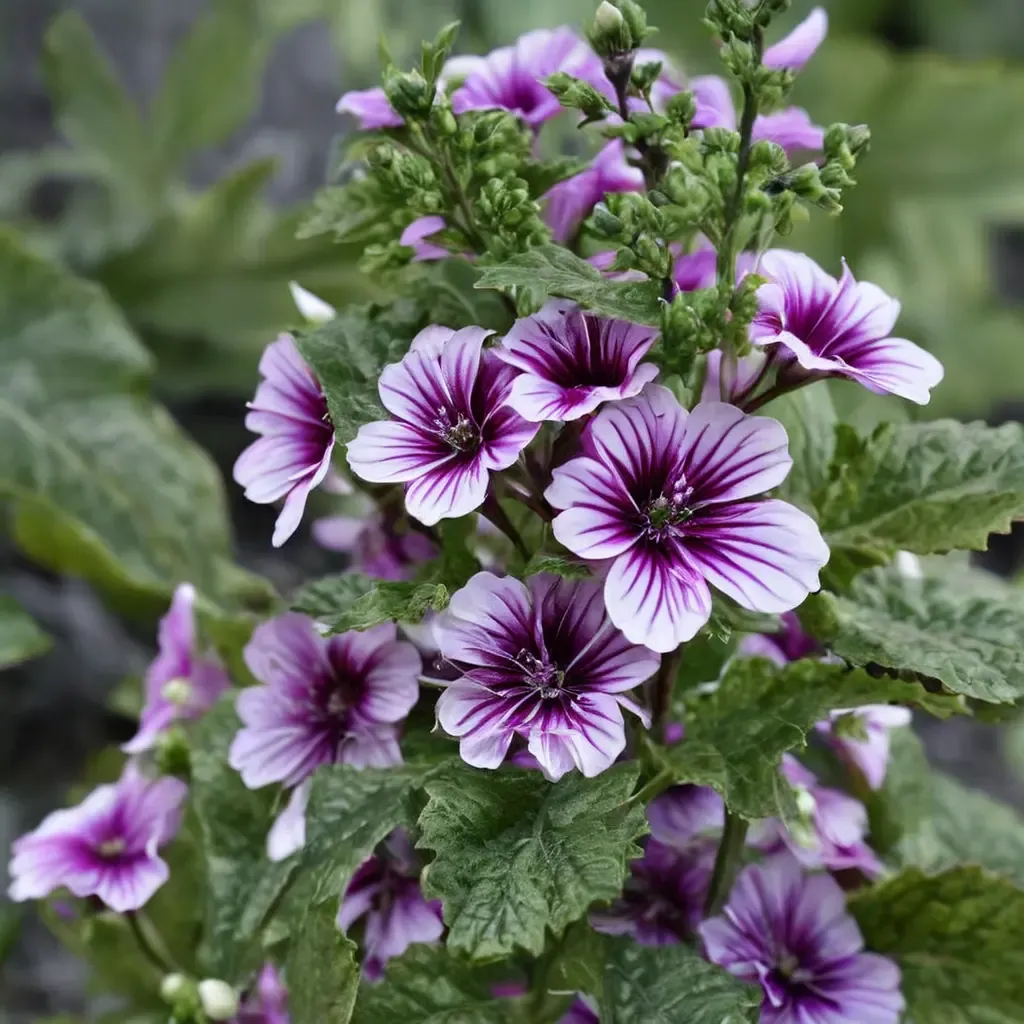
Zebra Mallow
Malva zebrina
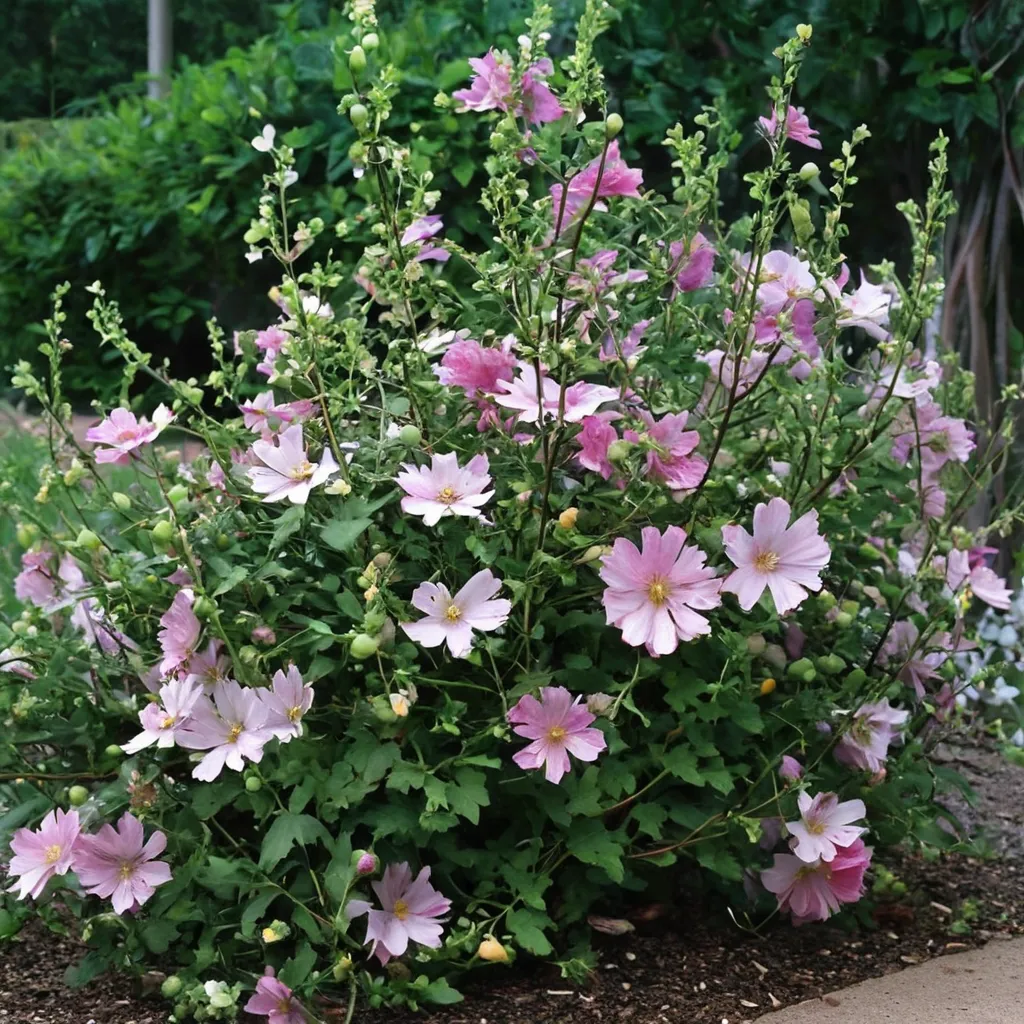
Thuringian Mallow
Malva thuringiaca
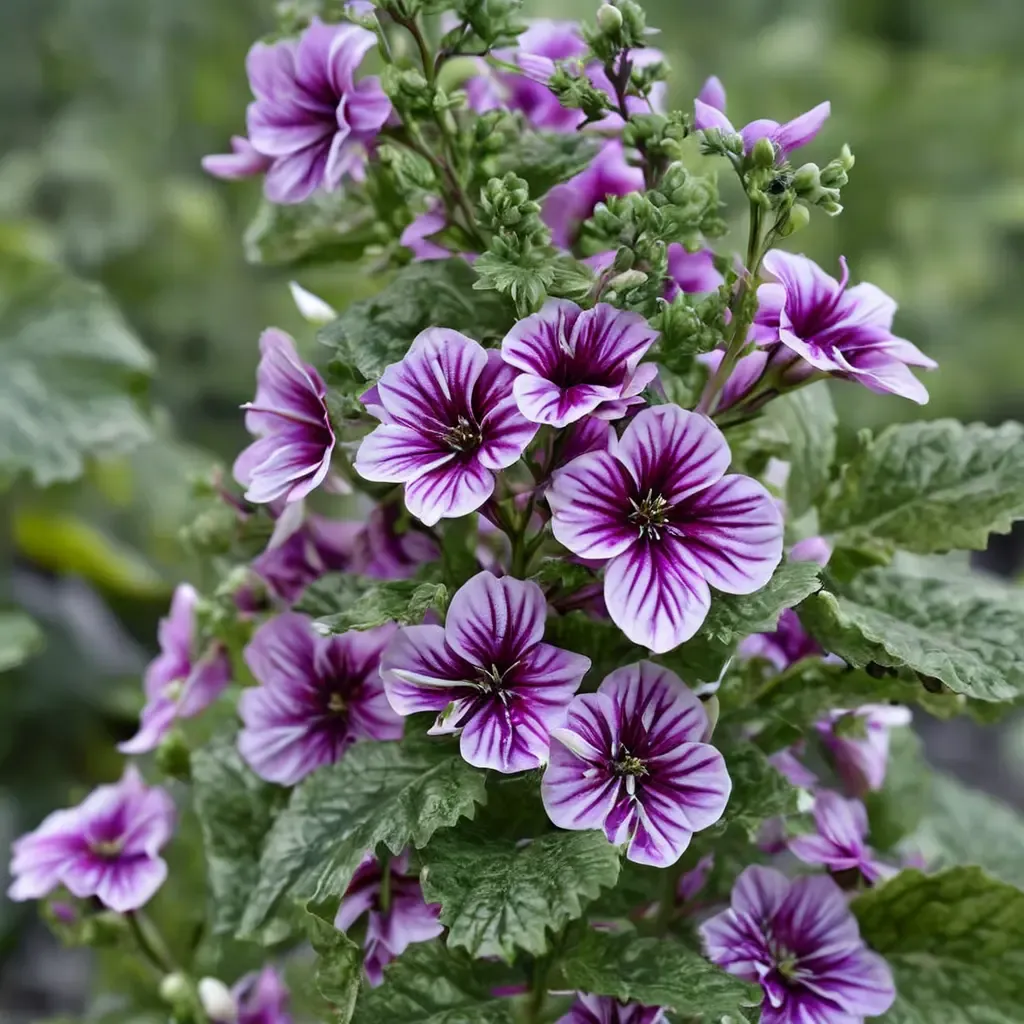
Zebrina Mallow
Malva sylvestris 'Zebrina'
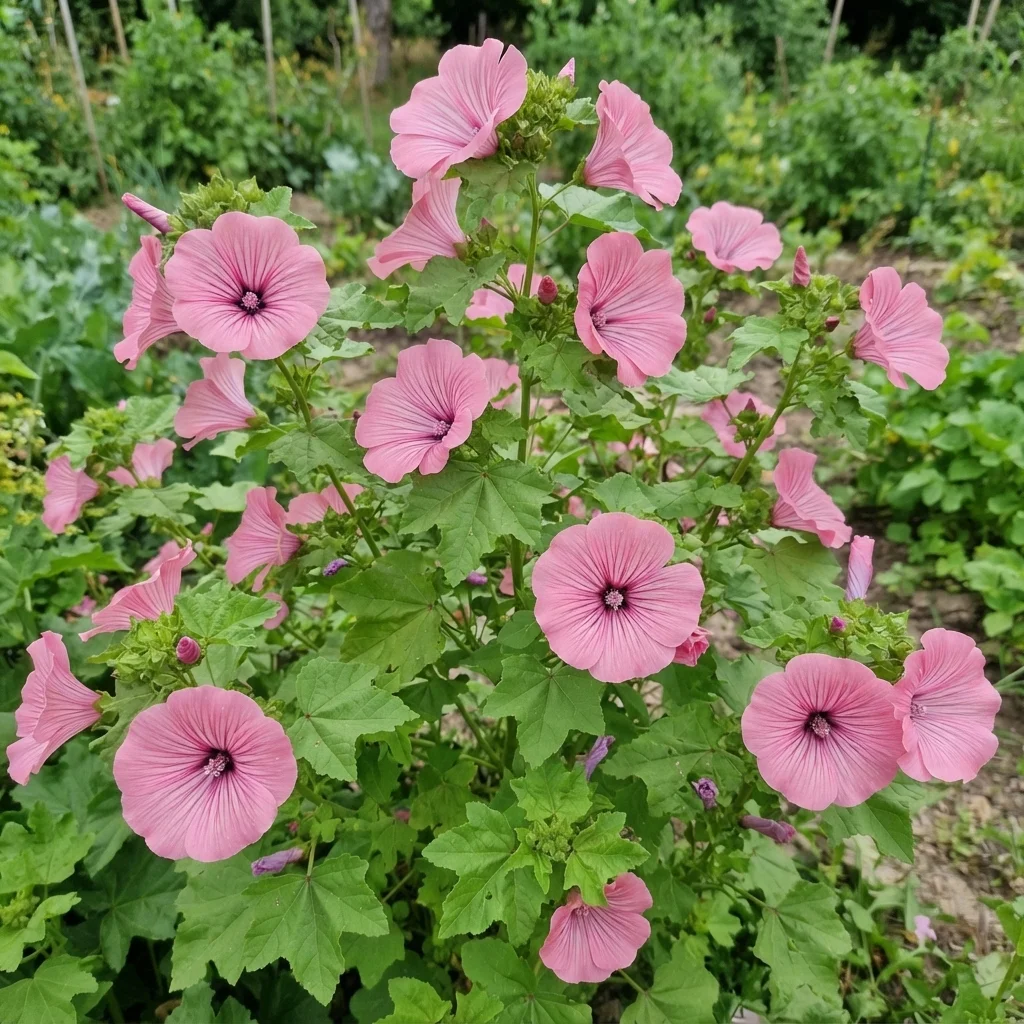
Annual Mallow
Malva trimestris
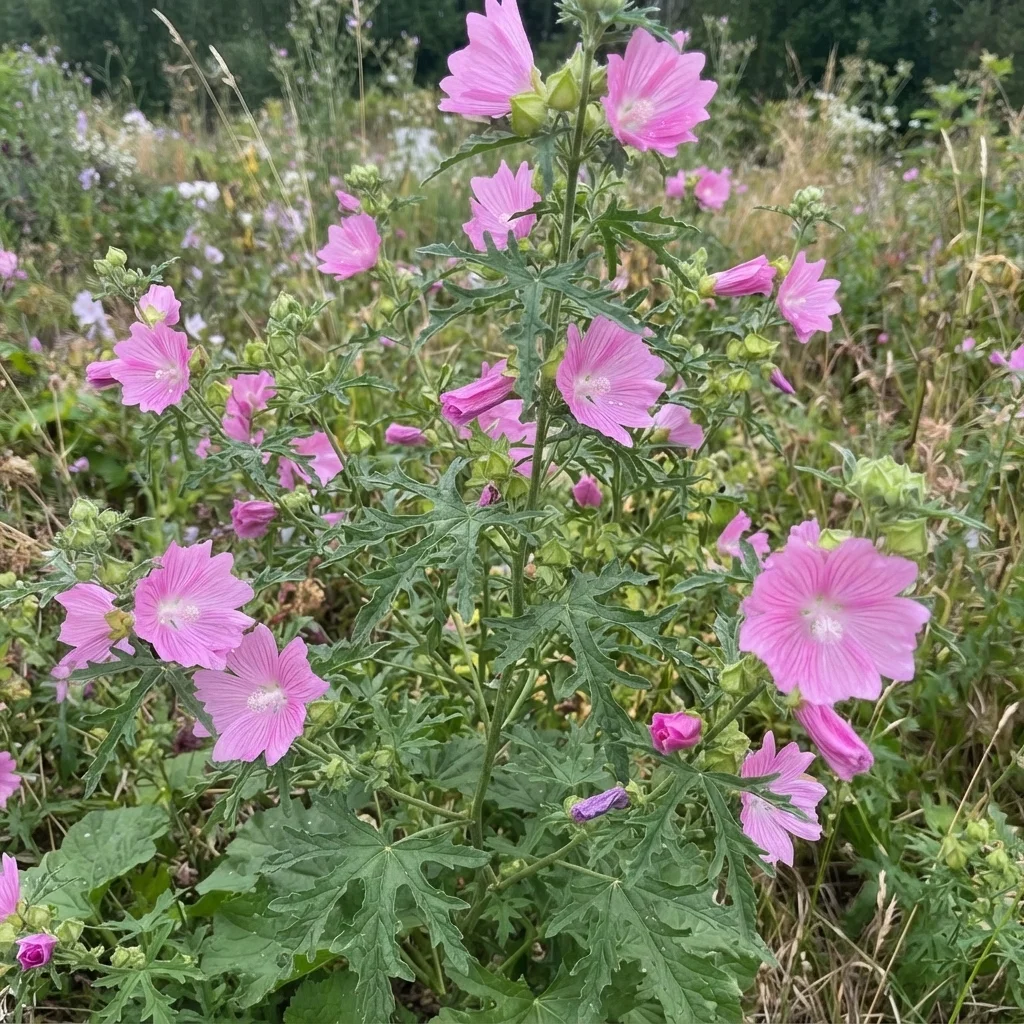
Hollyhock Mallow
Malva alcea
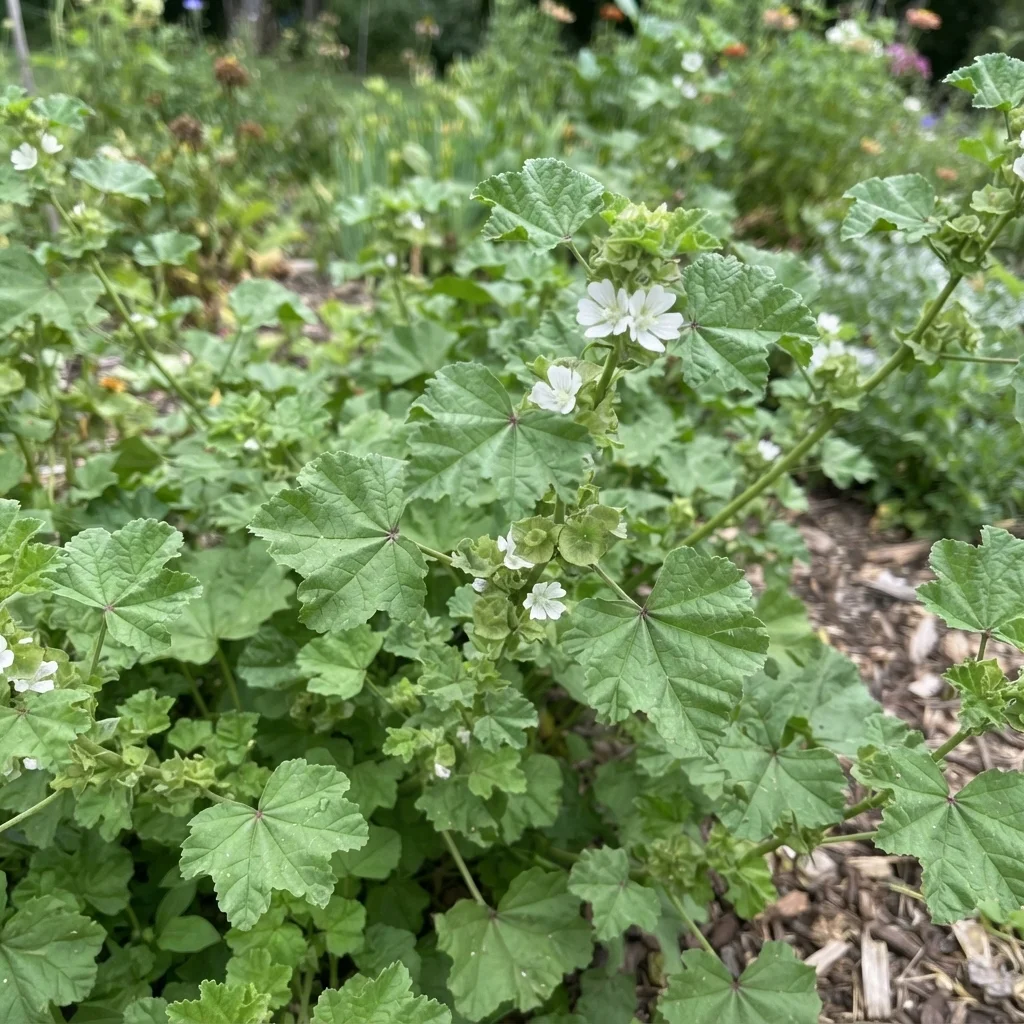
Cheeseweed Mallow
Malva parviflora
Keep exploring
Explore the genus
Hardy in your zone?
Grow Mallow with confidence
See it in a design of your actual yard, get zone-matched care reminders, and track it season by season in your garden journal.