The Story
Plant Bio
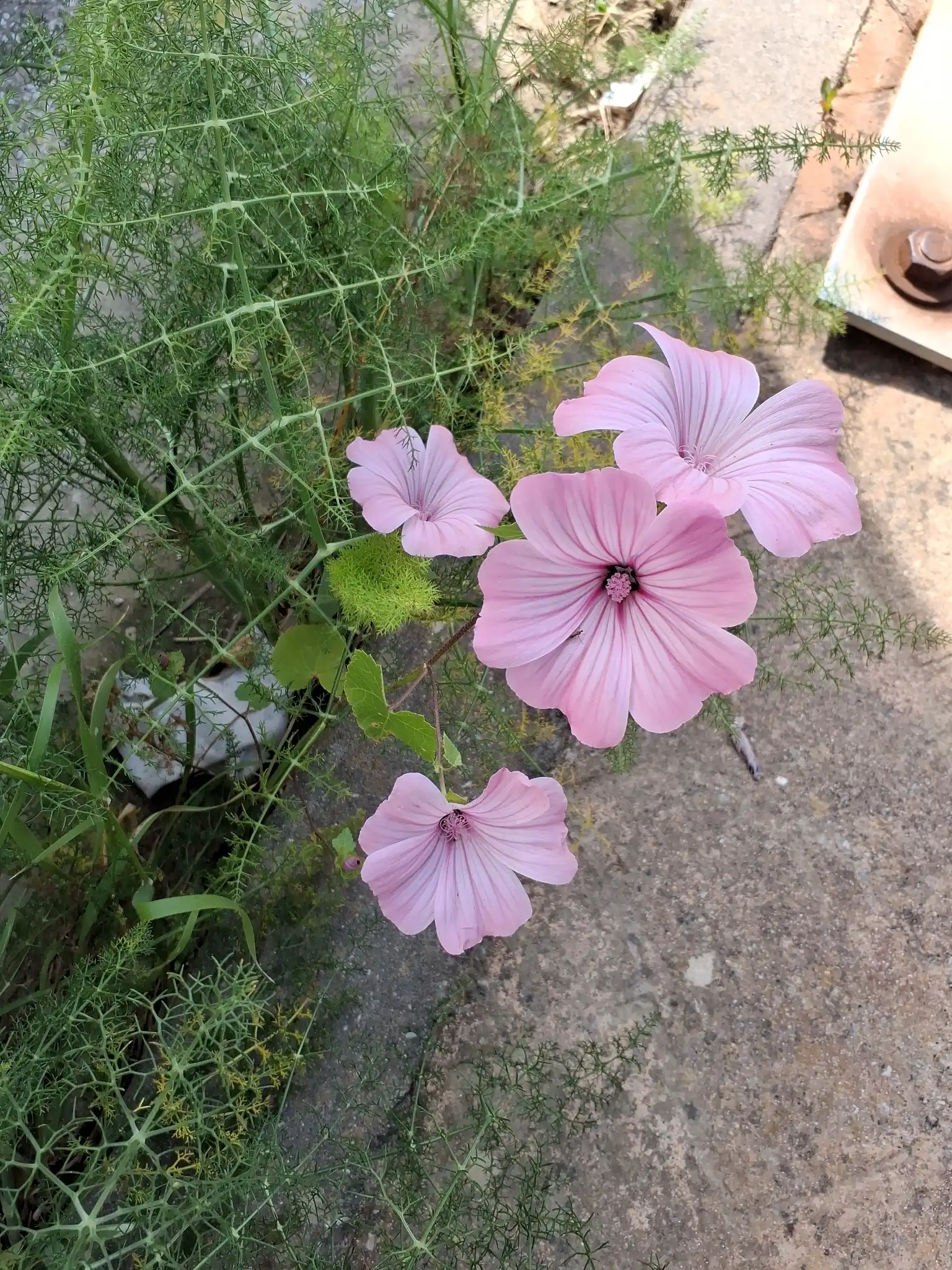
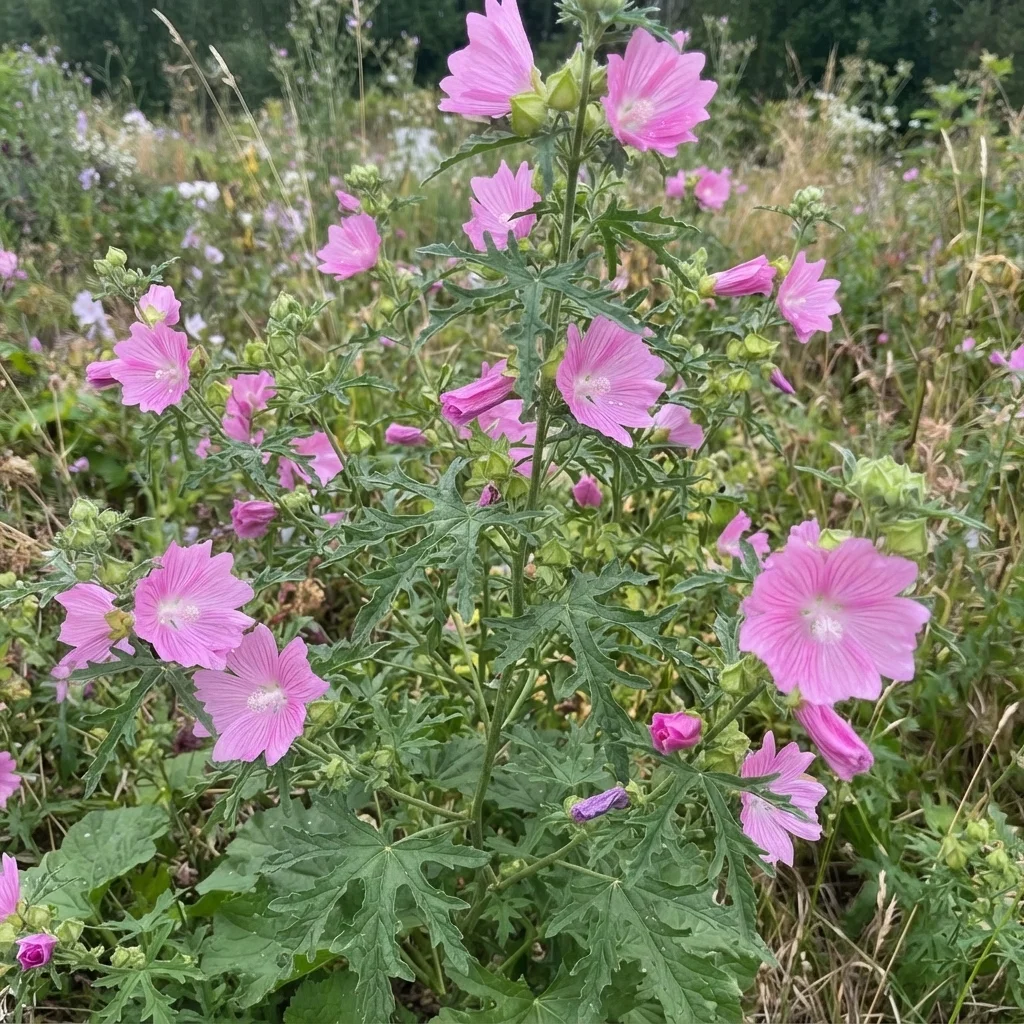
Malva trimestris is a fast-growing, upright herbaceous annual that reaches up to four feet in height, featuring branching stems covered in fine bristles. The plant produces large, shallowly funnel-shaped flowers in the leaf axils from summer through early fall, set against coarse, heart-shaped lower foliage.
The blossoms display prominent dark veining and deep maroon centers, contrasting against petals that range from white to deep cherry-pink. Unlike perennial mallows, this species completes its lifecycle in a single season, developing a robust, shrubby form within months of sowing.
Uses & Benefits:
Essentials
At a Glance
Plant Type
Annual
Height
47"
Width
18"
Light
Full Sun
Zones
4, 5, 6, 7, 8, 9, 10
Water
Moderate
Humidity
Moderate
Lifespan
Annual
Native To
Mediterranean region
Toxicity
Non-toxic (stems may cause mild skin irritation)
Bloom period
Summer – Early fall
In flower about 4 months of the year
Planting
How to Grow
- Sow seeds directly into well-drained soil after the last spring frost, covering them lightly with a quarter-inch of fine soil.
- Thin the emerged seedlings to a spacing of eighteen inches apart to ensure adequate air circulation and prevent fungal issues.
- Water regularly to keep the soil evenly moist until the plants are established, then transition to watering only when the top inch of soil is dry.
- Pinch the central stem of young plants to encourage a bushier, self-supporting habit with more flowering lateral branches.
Pro Tip
Pinch the growing tips of young seedlings when they reach six inches tall to stimulate lateral branching, which prevents a single leggy stem and significantly increases the total flower count.
Keep It Thriving
Care Guide
Do
- Deadhead spent flowers regularly to prevent early seed set and prolong the blooming period into early fall.
- Plant in full sun and sharply draining sandy or loamy soil to prevent root rot.
- Space plants adequately to maintain good airflow around the foliage, especially in humid summer climates.
Don't
- Do not over-fertilize with high-nitrogen feeds, which forces excessive leaf growth at the expense of flower production.
- Do not allow the soil to become waterlogged or soggy, as the root system is highly susceptible to rot.
- Do not attempt to prune the main stems back to old wood, as this is a true annual that will not regenerate.
Seasonal Care Calendar
| Task | Jan | Feb | Mar | Apr | May | Jun | Jul | Aug | Sep | Oct | Nov | Dec |
|---|---|---|---|---|---|---|---|---|---|---|---|---|
| Deadhead | ||||||||||||
| Fertilize | ||||||||||||
| Pest Check | ||||||||||||
| Pinch | ||||||||||||
| Plant |
Watch Out For
Pests & Diseases
Common Pests
Common Diseases
In the Garden
Landscape Uses & Companions
Landscape Uses
Companion Plants
Multiply
Propagation Methods
Good to Know
Common Questions
Annual Mallow questions
What zones can Annual Mallow grow in?
Annual Mallow is hardy in USDA Zones 4–10. Inside that range it survives winter in the ground; outside it, grow it as an annual or a container plant you protect.
When does Annual Mallow bloom?
Annual Mallow typically blooms in summer through early fall. Exact timing shifts a week or two with your zone — Sow's bloom calendar maps it to your garden.
Does Annual Mallow need full sun?
Annual Mallow does best in full sun (6+ hours).
Is Annual Mallow drought tolerant?
Yes — once established (usually after the first full season), Annual Mallow handles dry spells with minimal watering. Water deeply its first year to build the root system that makes that possible.
More Malva to compare
Keep exploring
Explore the genus
Grow Annual Mallow with confidence
See it in a design of your actual yard, get zone-matched care reminders, and track it season by season in your garden journal.