The Story
Plant Bio
Casuarina glauca, native to the eastern coast of Australia, grows as an upright tree in brackish coastal swamps and estuarine margins. The species features slender, segmented branchlets that function as leaves and performs exceptionally well in salty, wind-swept environments.
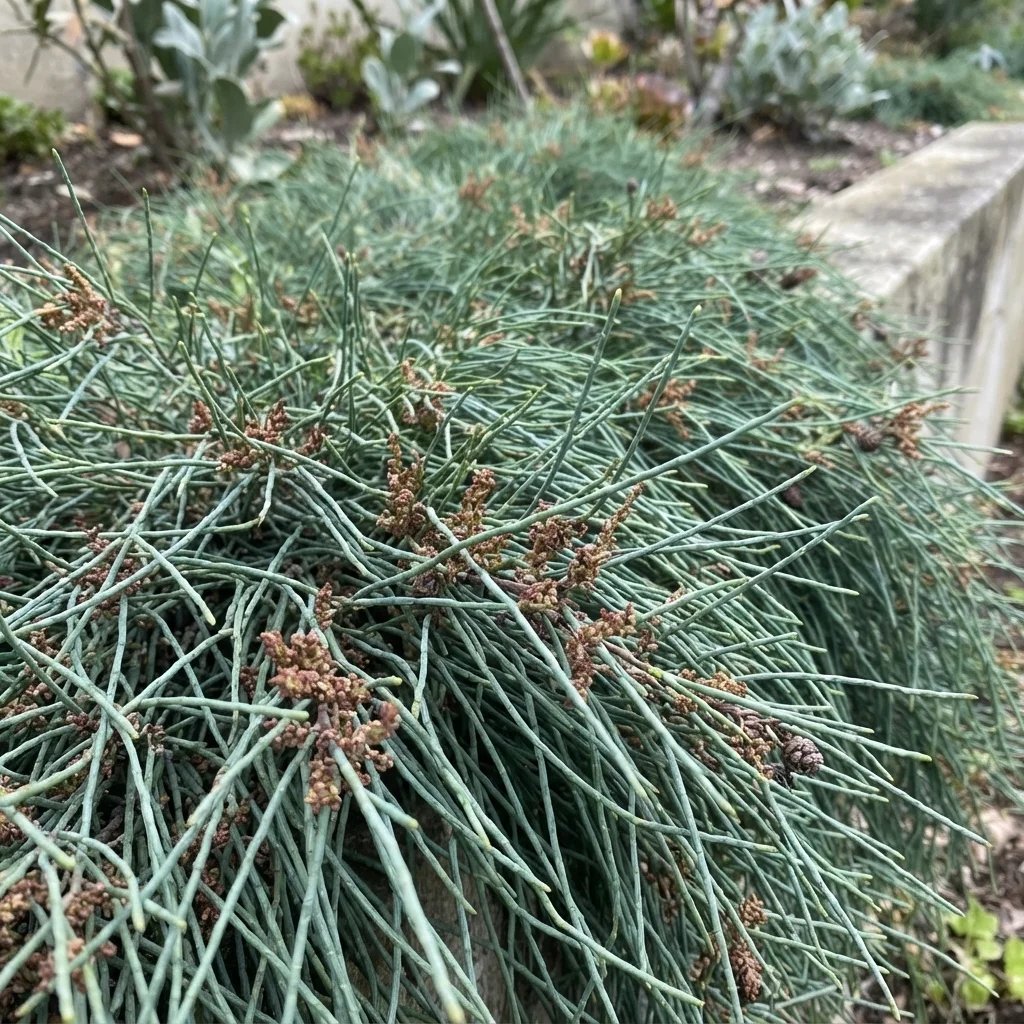
'Cousin It' is a prostrate, sterile cultivar that forms a dense, mounding groundcover of cascading, needle-like green branchlets. It spreads horizontally to drape over retaining walls and rocks without producing flowers or seeds.
Uses & Benefits:
Essentials
At a Glance
Plant Type
Groundcover
Height
18"
Width
96"
Light
Full Sun, Partial Sun
Zones
10
Water
Low
Humidity
High
Lifespan
Perennial
Native To
Australia
Toxicity
Non-toxic
Planting
How to Grow
- Select a planting site in full sun to light shade with well-drained soil.
- Dig a hole twice the width of the root ball and level with the soil surface.
- Backfill with native soil, pressing firmly to eliminate air pockets, and water thoroughly.
- Apply a light layer of mulch around the base, keeping it clear of the main stem to prevent rot.
Pro Tip
Avoid shearing into old, leafless woody stems, as this prevents new growth from regenerating and leaves permanent bare patches.
Keep It Thriving
Care Guide
Do
- Water regularly until the root system is fully established.
- Ensure the soil drains freely to prevent waterlogging around the root zone.
- Prune lightly along the edges to maintain the desired spread.
Don't
- Do not cut back into old, bare woody stems.
- Do not over-irrigate once the plant is established in the landscape.
- Do not plant in low-lying areas prone to standing water.
Seasonal Care Calendar
| Task | Jan | Feb | Mar | Apr | May | Jun | Jul | Aug | Sep | Oct | Nov | Dec |
|---|---|---|---|---|---|---|---|---|---|---|---|---|
| Fertilize | ||||||||||||
| Mulch | ||||||||||||
| Pest Check | ||||||||||||
| Prune |
Watch Out For
Pests & Diseases
Common Pests
Common Diseases
In the Garden
Landscape Uses & Companions
Landscape Uses
Companion Plants
Multiply
Propagation Methods
Good to Know
Common Questions
Prostrate Swamp Oak questions
What zones can Prostrate Swamp Oak grow in?
Prostrate Swamp Oak is hardy in USDA Zone 10. Inside that range it survives winter in the ground; outside it, grow it as an annual or a container plant you protect.
Is Prostrate Swamp Oak deer resistant?
Yes — Prostrate Swamp Oak is rated deer-resistant. Deer typically pass it over, though extreme hunger can override any plant's defenses.
Does Prostrate Swamp Oak need full sun?
Prostrate Swamp Oak does best in full sun to part shade. In hot climates, afternoon shade keeps blooms fresher longer.
Is Prostrate Swamp Oak drought tolerant?
Yes — once established (usually after the first full season), Prostrate Swamp Oak handles dry spells with minimal watering. Water deeply its first year to build the root system that makes that possible.
More Casuarina to compare
Keep exploring
Explore the genus
Hardy in your zone?
Grow Prostrate Swamp Oak with confidence
See it in a design of your actual yard, get zone-matched care reminders, and track it season by season in your garden journal.