The Story
Plant Bio
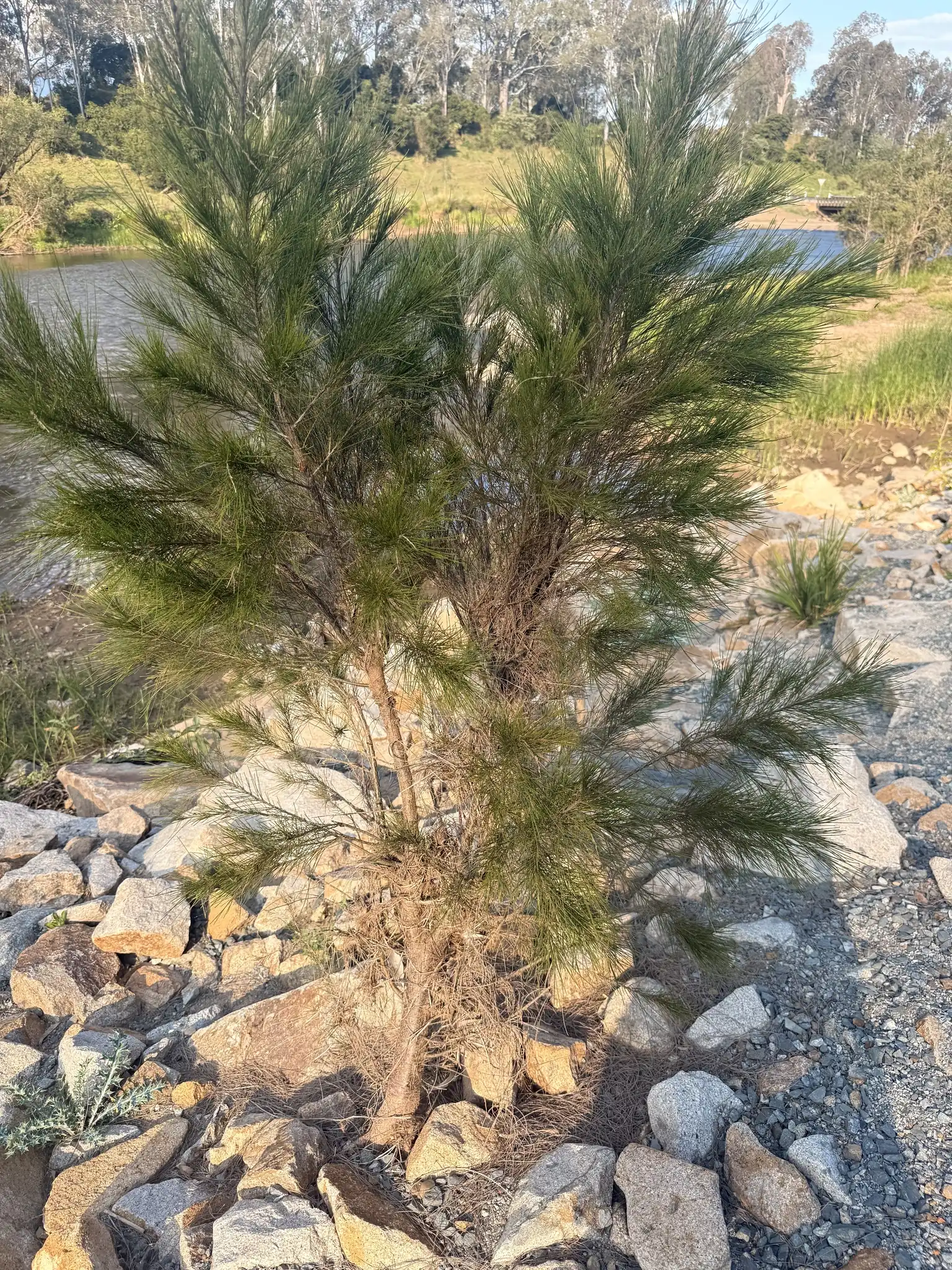
Casuarina cunninghamiana, the river she-oak, is a fast-growing evergreen tree native to eastern and northern Australia, reaching heights of up to 115 feet. It features a straight trunk and graceful, weeping branchlets of jointed, pine-like green cladodes that perform photosynthesis in place of true leaves.
This dioecious species produces tiny, brownish-yellow male flower spikes at the branch tips, while female trees bear small, vivid red clusters on short side stems. The dense, needle-like foliage and aggressive, water-seeking root system make it highly effective for erosion control along banks, though it is invasive in parts of the southern United States.
Uses & Benefits:
Essentials
At a Glance
Plant Type
Tree
Height
1380"
Width
590"
Light
Full Sun, Partial Sun
Zones
8, 9, 10
Water
Medium
Humidity
High
Lifespan
Long
Native To
Australia
Toxicity
Non-toxic
Bloom period
Late winter – Spring
In flower about 4 months of the year
Planting
How to Grow
- Select a planting site in full sun with moist, well-drained sandy loam or alluvial soil.
- Dig a hole twice as wide as the root ball and of equal depth, ensuring the root flare sits level with the surrounding soil.
- Water deeply immediately after planting to settle the soil, and maintain consistent moisture during the first growing season.
- Avoid applying any fertilizer, as the tree is adapted to low-nutrient soils and supplemental feeding produces weak, structurally unsound wood.
Pro Tip
Never prune back into old, bare wood, as this species lacks dormant buds on mature timber and will fail to reshoot.
Keep It Thriving
Care Guide
Do
- Water young trees regularly until their deep root systems are fully established.
- Plant well away from septic lines, foundations, and swimming pools to avoid damage from aggressive roots.
- Maintain a clear zone around the base of young specimens to protect them from lawnmowers.
Don't
- Do not fertilize, as excess nutrients cause rapid, weak growth prone to wind damage.
- Do not prune into old, leafless brown wood, which causes permanent dieback.
- Do not plant in highly alkaline or calcareous soils where the foliage will become chlorotic.
Seasonal Care Calendar
| Task | Jan | Feb | Mar | Apr | May | Jun | Jul | Aug | Sep | Oct | Nov | Dec |
|---|---|---|---|---|---|---|---|---|---|---|---|---|
| Mulch | ||||||||||||
| Pest Check | ||||||||||||
| Propagate | ||||||||||||
| Prune |
Watch Out For
Pests & Diseases
Common Pests
Common Diseases
In the Garden
Landscape Uses & Companions
Landscape Uses
Companion Plants
Multiply
Propagation Methods
Good to Know
Common Questions
River She-oak questions
What zones can River She-oak grow in?
River She-oak is hardy in USDA Zones 8–10. Inside that range it survives winter in the ground; outside it, grow it as an annual or a container plant you protect.
Is River She-oak deer resistant?
Not reliably. Deer may browse River She-oak, especially tender spring growth — plan on repellents or fencing where pressure is high.
When does River She-oak bloom?
River She-oak typically blooms in late winter through spring. Exact timing shifts a week or two with your zone — Sow's bloom calendar maps it to your garden.
Does River She-oak need full sun?
River She-oak does best in full sun to part shade. In hot climates, afternoon shade keeps blooms fresher longer.
Is River She-oak drought tolerant?
Yes — once established (usually after the first full season), River She-oak handles dry spells with minimal watering. Water deeply its first year to build the root system that makes that possible.
More Casuarina to compare
Keep exploring
Explore the genus
Hardy in your zone?
Grow River She-oak with confidence
See it in a design of your actual yard, get zone-matched care reminders, and track it season by season in your garden journal.