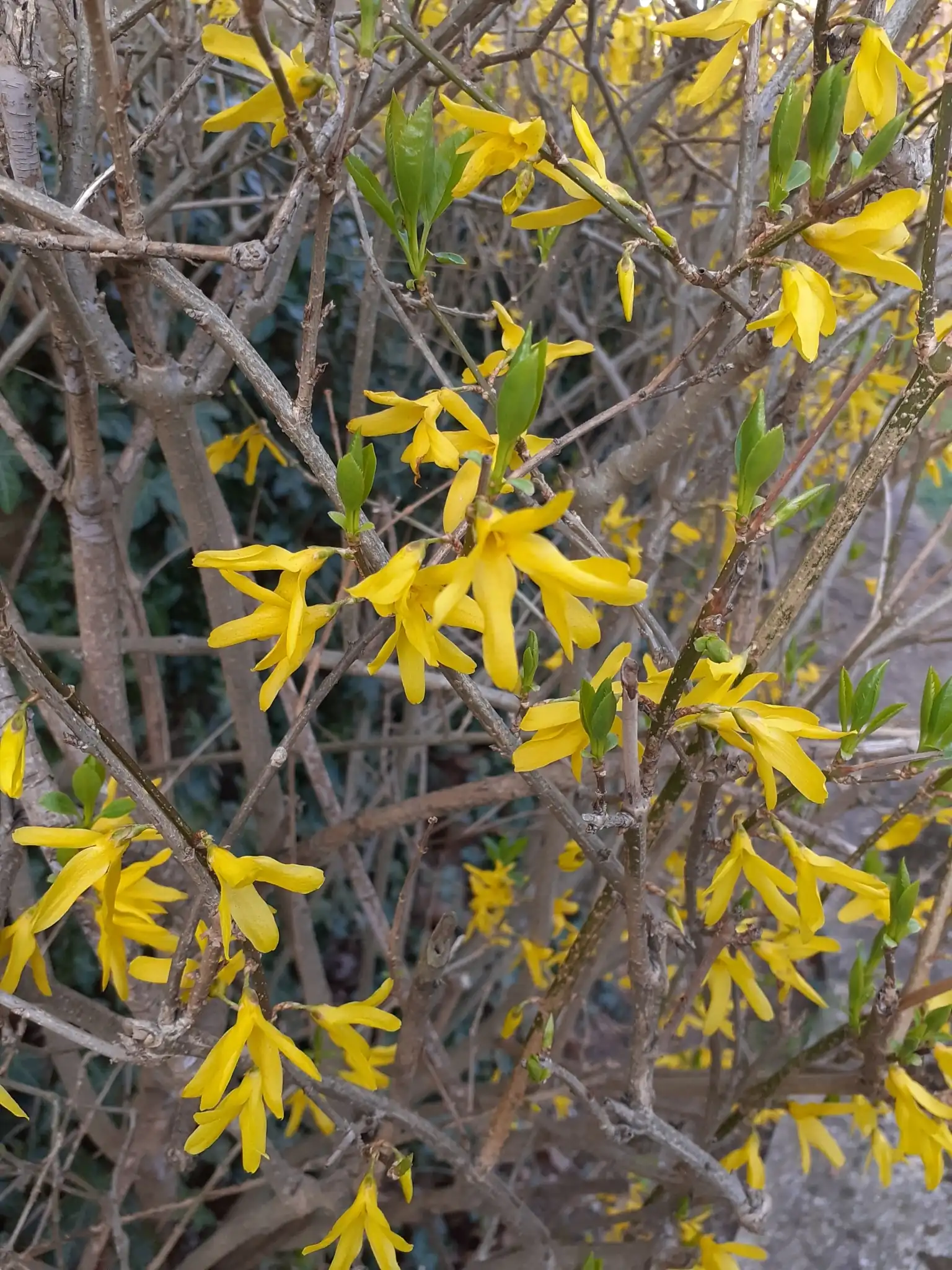
14 named cultivars
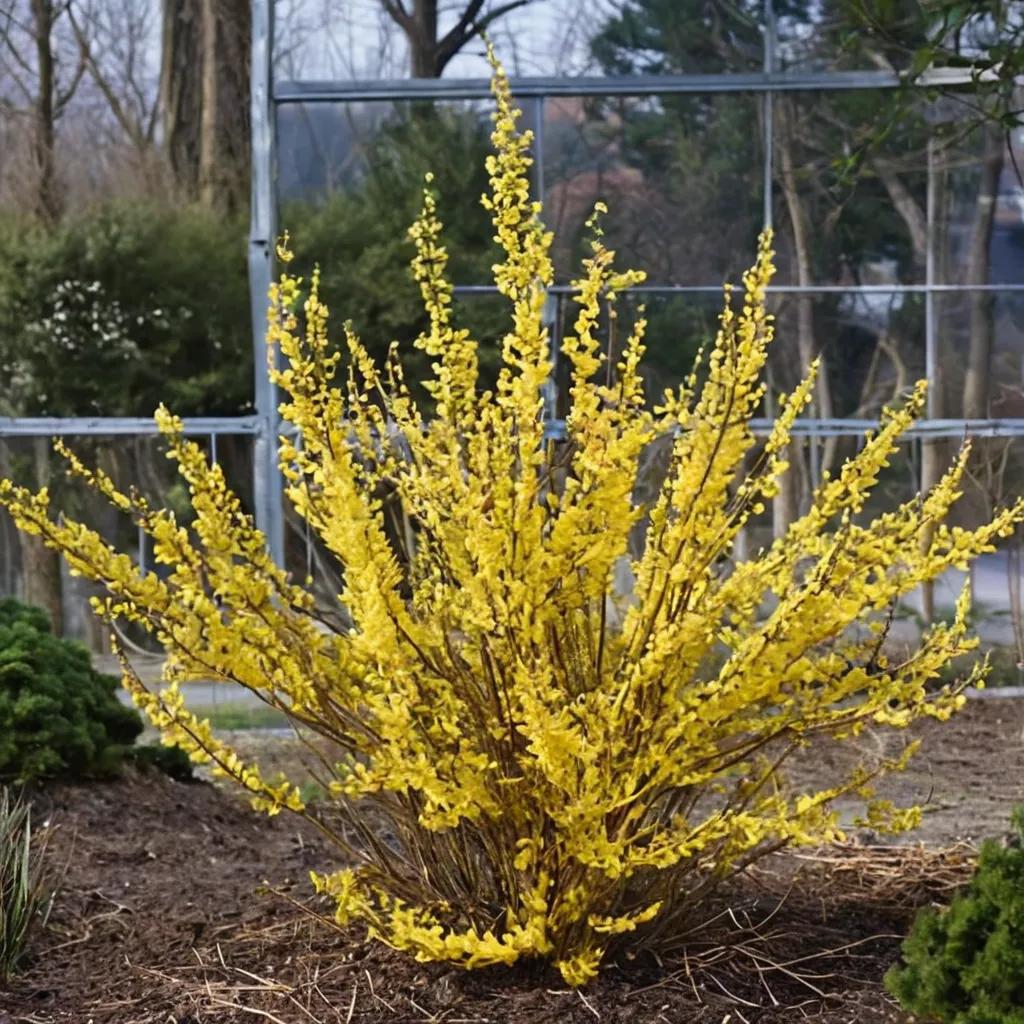 ‘Show Off’Show Off Forsythia
 ‘Lynwood Gold’Lynwood Gold Forsythia
 ‘Magical Gold’Magical Gold Forsythia
 ‘Nimbus’Nimbus Forsythia
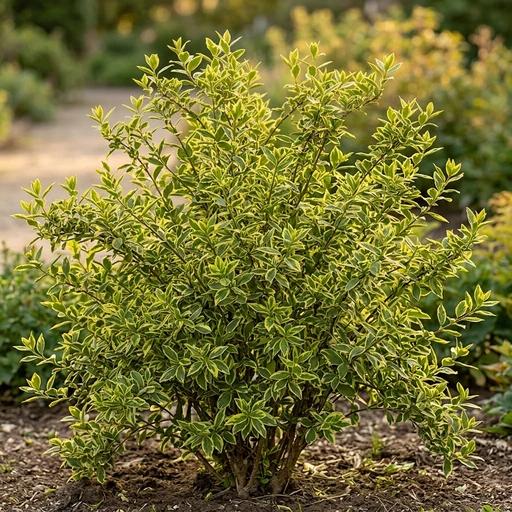 ‘New Hampshire Gold’New Hampshire Gold Forsythia
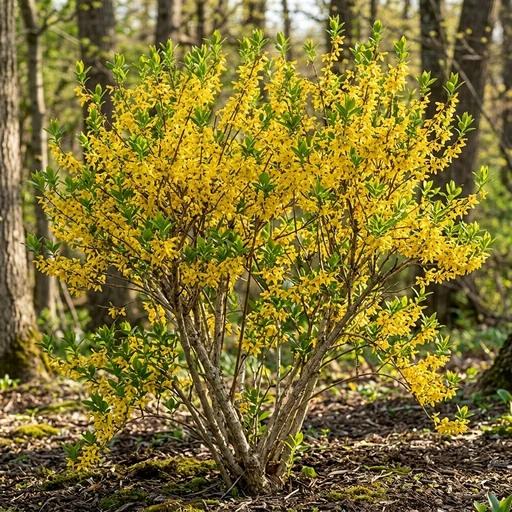 ‘Showy Border’Showy Border Forsythia
 ‘Kolgold’Kolgold Magical Gold Forsythia
 ‘Mindor’Mindor Forsythia
 ‘Northern Gold’Northern Gold Forsythia
 ‘Courtasol’Gold Tide Forsythia
 ‘Spring Fling’Spring Fling Forsythia
 ‘Minfor6’Show Off Starlet Forsythia
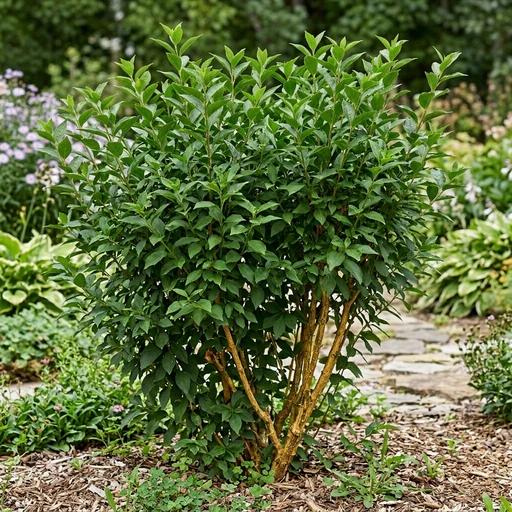 ‘Spring Glory’Spring Glory Border Forsythia
 ‘Beatrix Farrand’Border Forsythia
The Story
Plant Bio
Forsythia x intermedia is a fast, arching deciduous shrub raised from two Chinese species, reaching eight to ten feet tall and wider still. Before the leaves appear, the bare stems are covered along their whole length with small four-petalled golden-yellow flowers, making it one of the earliest and most conspicuous shrubs of spring.
It flowers on wood made the previous summer, so prune it within a few weeks of the flowers fading; a late-winter tidy removes exactly the growth that would have bloomed. It is also far larger than most people plan for — ten feet across is normal — so shearing it into a ball each year is what produces those bare, twiggy, flowerless shrubs seen in front gardens.
Uses & Benefits:
Essentials
At a Glance
Plant Type
Shrub
Height
108"
Width
132"
Light
Full Sun, Partial Sun
Zones
5, 6, 7, 8
Water
Moderate
Humidity
Moderate
Lifespan
Perennial
Native To
Garden hybrid of Chinese species
Toxicity
Non-toxic
Planting
How to Grow
- Plant in full sun for the heaviest flowering.
- Allow ten to twelve feet of width at maturity.
- Give it any reasonably drained soil; it is not fussy.
- Prune within weeks of flowering, never later.
- Cut a third of the oldest stems to the ground each year.
- Choose a dwarf cultivar if space is genuinely tight.
Pro Tip
Stems cut in late winter and brought indoors will open in a vase within a fortnight, well ahead of the garden display.
Keep It Thriving
Care Guide
Do
- Prune straight after the flowers fade ✂️
- Remove a third of the oldest stems yearly 🪵
- Give it full sun for the best flowering ☀️
- Allow it ten feet of width 📏
Don't
- Prune in late winter — that is next spring's flowers ❌
- Shear it into a formal ball ❌
- Squeeze the full-size hybrid into a small bed ❌
Seasonal Care Calendar
| Task | Jan | Feb | Mar | Apr | May | Jun | Jul | Aug | Sep | Oct | Nov | Dec |
|---|---|---|---|---|---|---|---|---|---|---|---|---|
| Force | ||||||||||||
| Prune |
Watch Out For
Pests & Diseases
Common Pests
Common Diseases
In the Garden
Landscape Uses & Companions
Landscape Uses
Companion Plants
Multiply
Propagation Methods
Good to Know
Common Questions
Forsythia questions
What zones can Forsythia grow in?
Forsythia is hardy in USDA Zones 5–8. Inside that range it survives winter in the ground; outside it, grow it as an annual or a container plant you protect.
Is Forsythia deer resistant?
Yes — Forsythia is rated deer-resistant. Deer typically pass it over, though extreme hunger can override any plant's defenses.
When does Forsythia bloom?
Forsythia typically blooms in early spring through mid-spring. Exact timing shifts a week or two with your zone — Sow's bloom calendar maps it to your garden.
Does Forsythia need full sun?
Forsythia does best in full sun to part shade. In hot climates, afternoon shade keeps blooms fresher longer.
Is Forsythia drought tolerant?
Yes — once established (usually after the first full season), Forsythia handles dry spells with minimal watering. Water deeply its first year to build the root system that makes that possible.
More Forsythia to compare
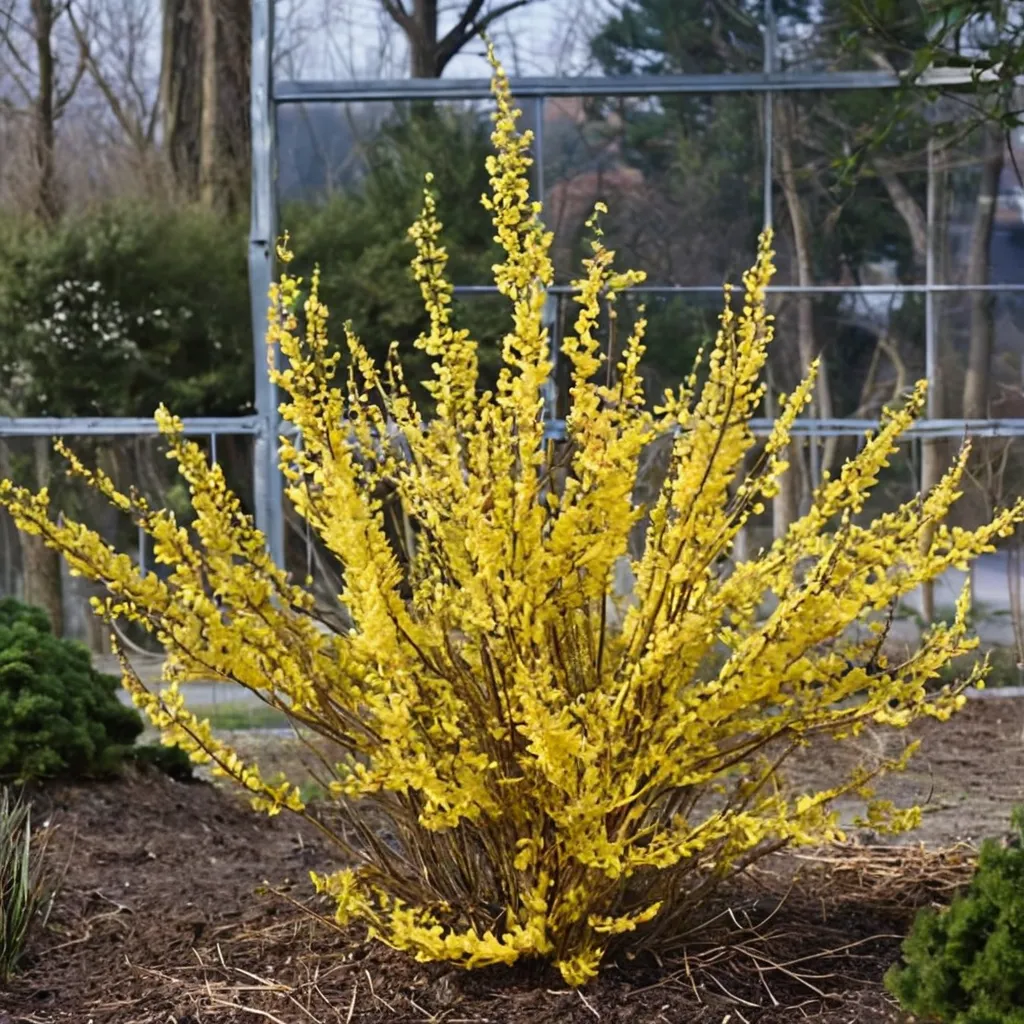
Show Off Forsythia
Forsythia x intermedia 'Show Off'
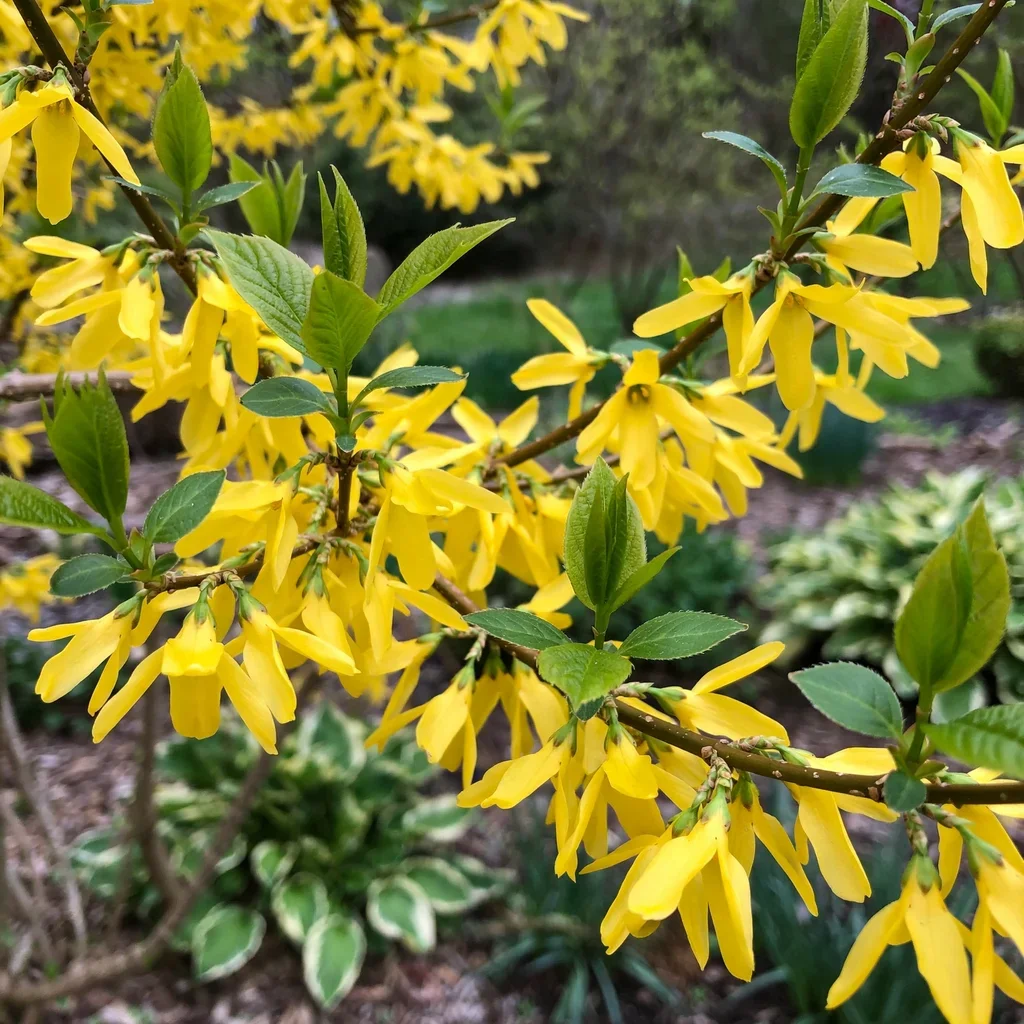
Lynwood Gold Forsythia
Forsythia x intermedia 'Lynwood Gold'
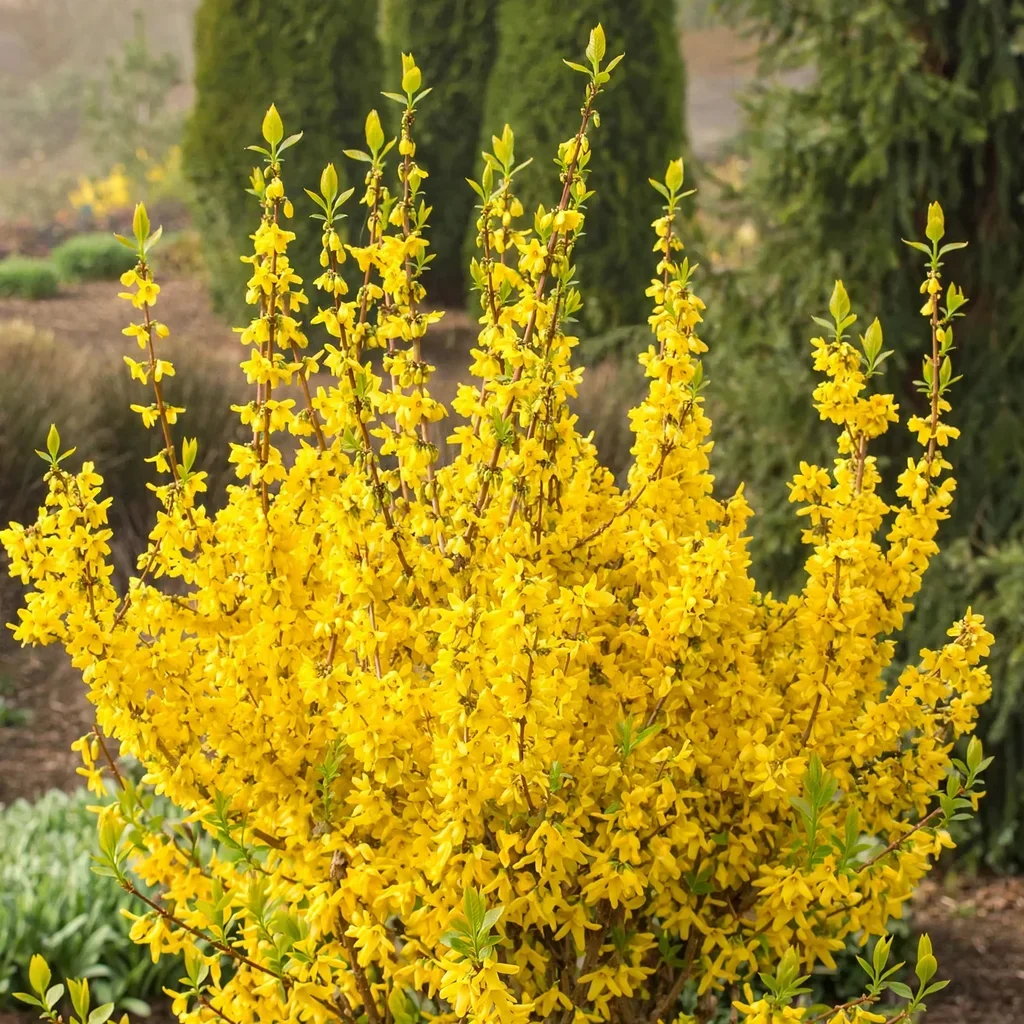
Magical Gold Forsythia
Forsythia x intermedia 'Magical Gold'
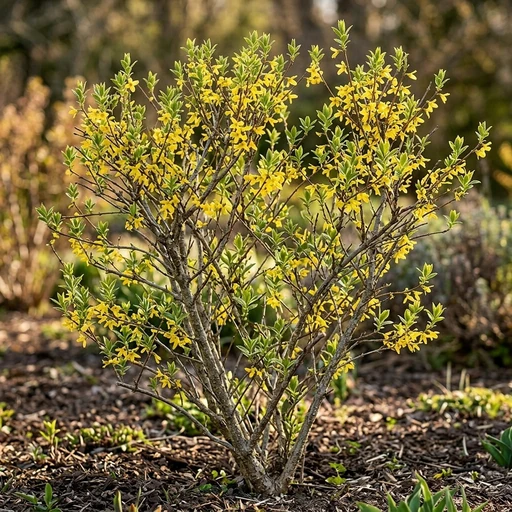
Meadowlark Forsythia
Forsythia x hybrida 'Meadowlark'
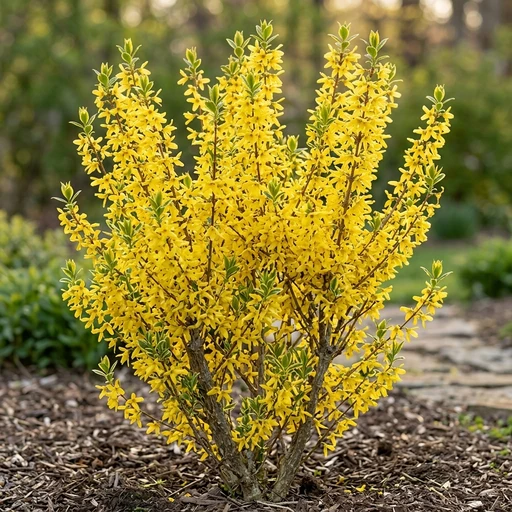
Nimbus Forsythia
Forsythia x intermedia 'Nimbus'
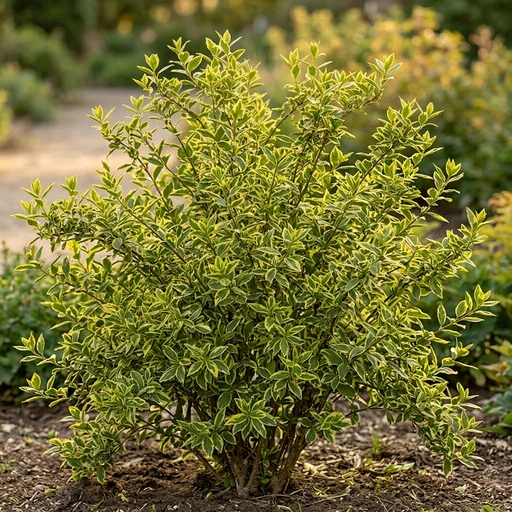
New Hampshire Gold Forsythia
Forsythia x intermedia 'New Hampshire Gold'
Keep exploring
Explore the genus
Hardy in your zone?
Grow Forsythia with confidence
See it in a design of your actual yard, get zone-matched care reminders, and track it season by season in your garden journal.