The Story
Plant Bio
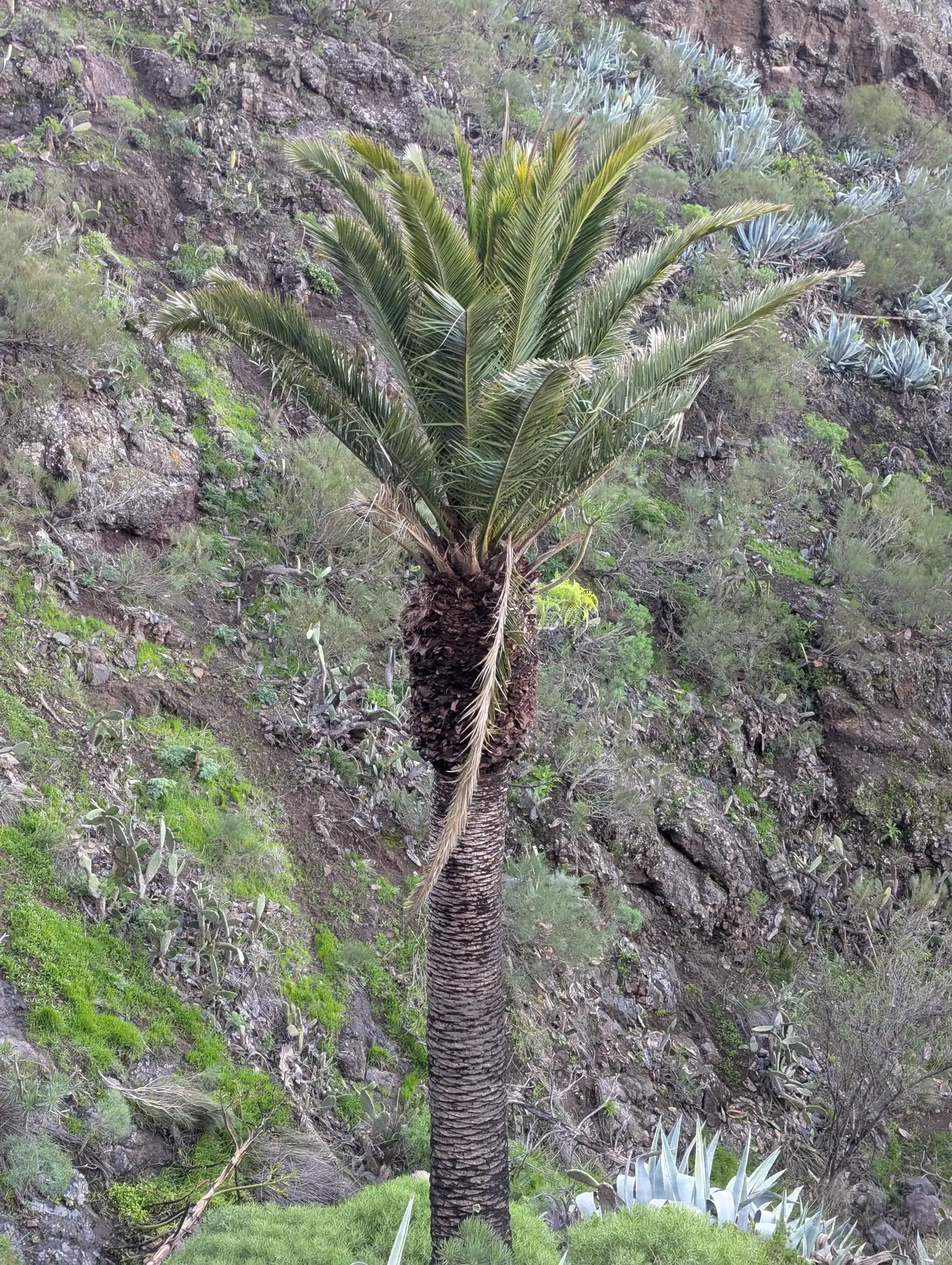
Phoenix canariensis is a solitary, heavy-trunked palm native to the Canary Islands, forming a massive crown of stiff, pinnate fronds. Its trunk is distinctively covered in diamond-shaped patterns from old leaf bases.
The deep green fronds can reach up to 500 cm long and feature sharp spines near the base of the petiole. New creamy-yellow to yellowish-orange flowers emerge upright from the center crown in spring on large, branching inflorescences.
Uses & Benefits:
Essentials
At a Glance
Plant Type
Tree
Height
591"
Width
354"
Light
Full Sun
Zones
9, 10
Water
Low once established
Humidity
Adaptable to low or moderate humidity
Lifespan
Long-lived
Native To
Canary Islands (Africa)
Toxicity
Sharp spines, pollen allergen
Bloom period
Spring
In flower about 3 months of the year
Marketplace
Where to Buy
Shipping costs Year-round shipping Free shipping
Planting
How to Grow
- Plant in full sun in well-draining soil, ensuring high drainage to prevent standing water.
- Water regularly until the palm is established, then it will exhibit high drought tolerance.
- Fertilize 2 to 3 times a year using a specialized palm fertilizer that includes micronutrients.
- Prune only completely dead, brown fronds annually or as needed, never cutting into green fronds.
Pro Tip
Avoid 'hurricane pruning' or removing green fronds, as this severely starves the palm and weakens its structure. Only remove completely dead, brown fronds, following the '9 to 3 o'clock' rule to maintain photosynthetic capacity.
Keep It Thriving
Care Guide
Do
- Plant in full sun.
- Ensure high soil drainage.
- Fertilize with a specialized palm fertilizer.
- Prune only dead fronds.
Don't
- Do not tolerate standing water.
- Do not 'hurricane prune' or cut green fronds.
- Do not over-fertilize, as this can contribute to diseases like pink rot.
Seasonal Care Calendar
| Task | Jan | Feb | Mar | Apr | May | Jun | Jul | Aug | Sep | Oct | Nov | Dec |
|---|---|---|---|---|---|---|---|---|---|---|---|---|
| Fertilize | ||||||||||||
| Pest Check | ||||||||||||
| Plant | ||||||||||||
| Prune |
Watch Out For
Pests & Diseases
Common Pests
Common Diseases
In the Garden
Landscape Uses & Companions
Landscape Uses
Multiply
Propagation Methods
Good to Know
Common Questions
Canary Island Date Palm questions
What zones can Canary Island Date Palm grow in?
Canary Island Date Palm is hardy in USDA Zones 9–10. Inside that range it survives winter in the ground; outside it, grow it as an annual or a container plant you protect.
When does Canary Island Date Palm bloom?
Canary Island Date Palm typically blooms in spring through spring. Exact timing shifts a week or two with your zone — Sow's bloom calendar maps it to your garden.
Does Canary Island Date Palm need full sun?
Canary Island Date Palm does best in full sun (6+ hours).
Is Canary Island Date Palm drought tolerant?
Yes — once established (usually after the first full season), Canary Island Date Palm handles dry spells with minimal watering. Water deeply its first year to build the root system that makes that possible.
More Phoenix to compare
Keep exploring
Explore the genus
Hardy in your zone?
Grow Canary Island Date Palm with confidence
See it in a design of your actual yard, get zone-matched care reminders, and track it season by season in your garden journal.