The Story
Plant Bio
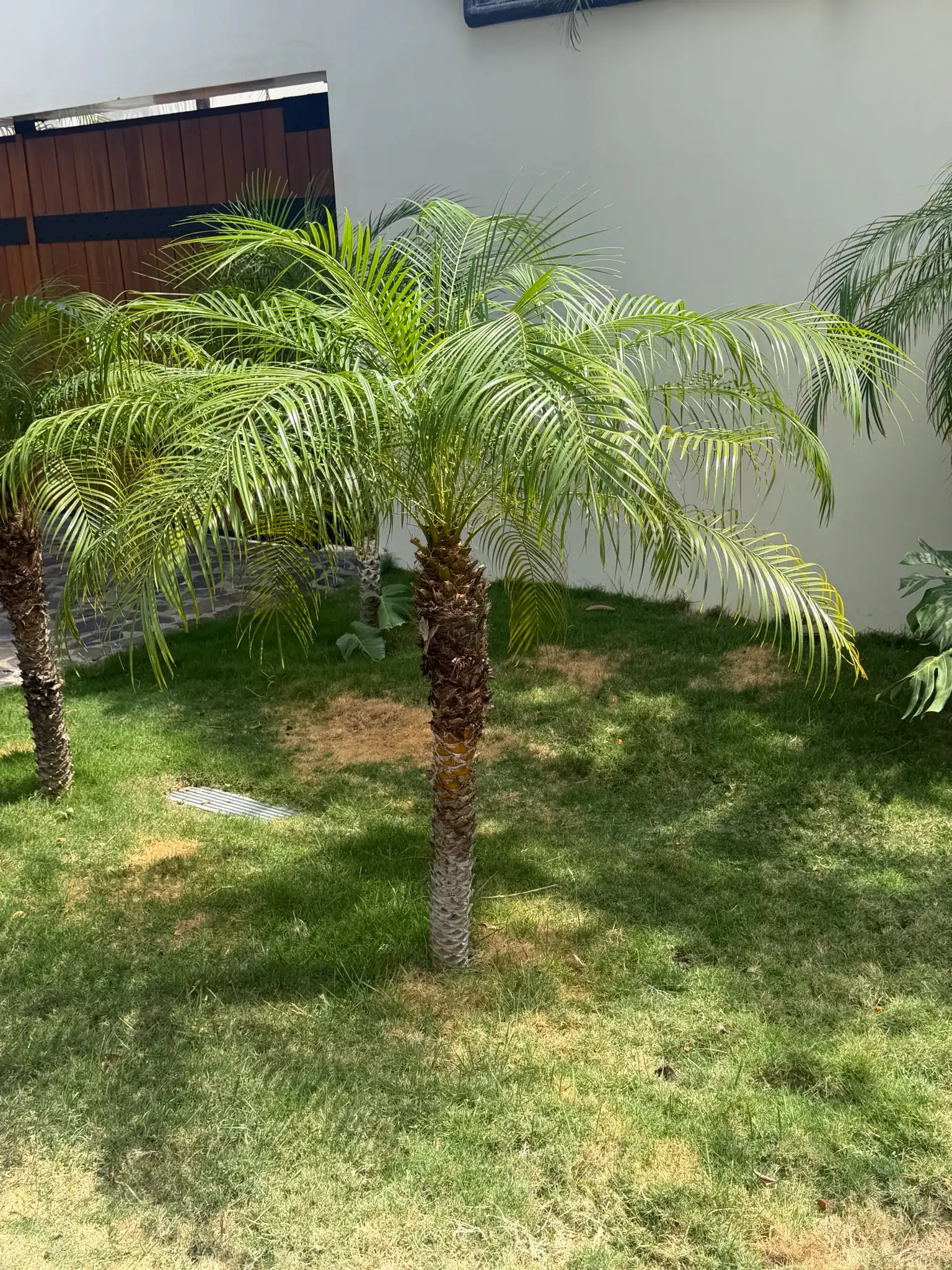
Phoenix roebelenii is a slow-growing evergreen palm native to southeastern Asia, characterized by its slender trunk and fine-textured fronds. The species naturally develops a solitary habit but is frequently cultivated in close-planted groups to create a multi-stemmed appearance.
The trunk is heavily textured with prominent, peg-like scars left by old leaf bases, while the lower leaflets transform into sharp, rigid spines up to three inches long near the petiole. In spring, branched panicles of creamy-white to yellowish flowers emerge from among the foliage.
Uses & Benefits:
Essentials
At a Glance
Plant Type
Tropical
Height
144"
Width
94"
Light
Full Sun, Partial Sun
Zones
9, 10
Water
Moderate
Humidity
High
Lifespan
Multi-decade
Native To
Southeastern Asia
Toxicity
Non-toxic
Bloom period
Spring
In flower about 3 months of the year
Marketplace
Where to Buy
Shipping costs Year-round shipping Free shipping
Planting
How to Grow
- Plant in well-drained loamy or sandy soil in a location receiving full sun to partial shade, ensuring protection from intense afternoon heat in desert climates.
- Water regularly during the active growing season to maintain even soil moisture, but allow the substrate to dry slightly between waterings to prevent root rot.
- Apply a specialized, slow-release palm fertilizer containing potassium, magnesium, and manganese two to three times per year during the growing season.
- Reduce watering frequency significantly during the winter months when growth slows.
Pro Tip
Do not prune yellowing lower fronds prematurely, as this accelerates potassium deficiency by depriving the palm of mobile nutrients stored in older leaves. Only remove completely dead, brown fronds, and avoid shaving the trunk closely to prevent nutrient starvation.
Keep It Thriving
Care Guide
Do
- Wear thick protective gloves when working near the inner fronds to avoid painful puncture wounds from the sharp basal spines.
- Ensure the planting site or container has excellent drainage to prevent standing water.
- Apply a slow-release fertilizer formulated specifically for palms to supply essential micronutrients.
Don't
- Do not cut off green or partially yellowed fronds, as this deprives the plant of essential nutrients.
- Do not plant in heavy, waterlogged soils or areas prone to standing water.
- Do not attempt to divide multi-stemmed specimens, as these are separate seedlings grown together and share a tangled root system.
Seasonal Care Calendar
| Task | Jan | Feb | Mar | Apr | May | Jun | Jul | Aug | Sep | Oct | Nov | Dec |
|---|---|---|---|---|---|---|---|---|---|---|---|---|
| Fertilize | ||||||||||||
| Pest Check | ||||||||||||
| Prune | ||||||||||||
| Winter Prep |
Watch Out For
Pests & Diseases
Common Pests
Common Diseases
In the Garden
Landscape Uses & Companions
Landscape Uses
Multiply
Propagation Methods
Good to Know
Common Questions
Pygmy Date Palm questions
What zones can Pygmy Date Palm grow in?
Pygmy Date Palm is hardy in USDA Zones 9–10. Inside that range it survives winter in the ground; outside it, grow it as an annual or a container plant you protect.
Is Pygmy Date Palm deer resistant?
Not reliably. Deer may browse Pygmy Date Palm, especially tender spring growth — plan on repellents or fencing where pressure is high.
When does Pygmy Date Palm bloom?
Pygmy Date Palm typically blooms in spring through spring. Exact timing shifts a week or two with your zone — Sow's bloom calendar maps it to your garden.
Does Pygmy Date Palm need full sun?
Pygmy Date Palm does best in full sun to part shade. In hot climates, afternoon shade keeps blooms fresher longer.
Is Pygmy Date Palm drought tolerant?
Yes — once established (usually after the first full season), Pygmy Date Palm handles dry spells with minimal watering. Water deeply its first year to build the root system that makes that possible.
More Phoenix to compare
Keep exploring
Explore the genus
Hardy in your zone?
Grow Pygmy Date Palm with confidence
See it in a design of your actual yard, get zone-matched care reminders, and track it season by season in your garden journal.