The Story
Plant Bio
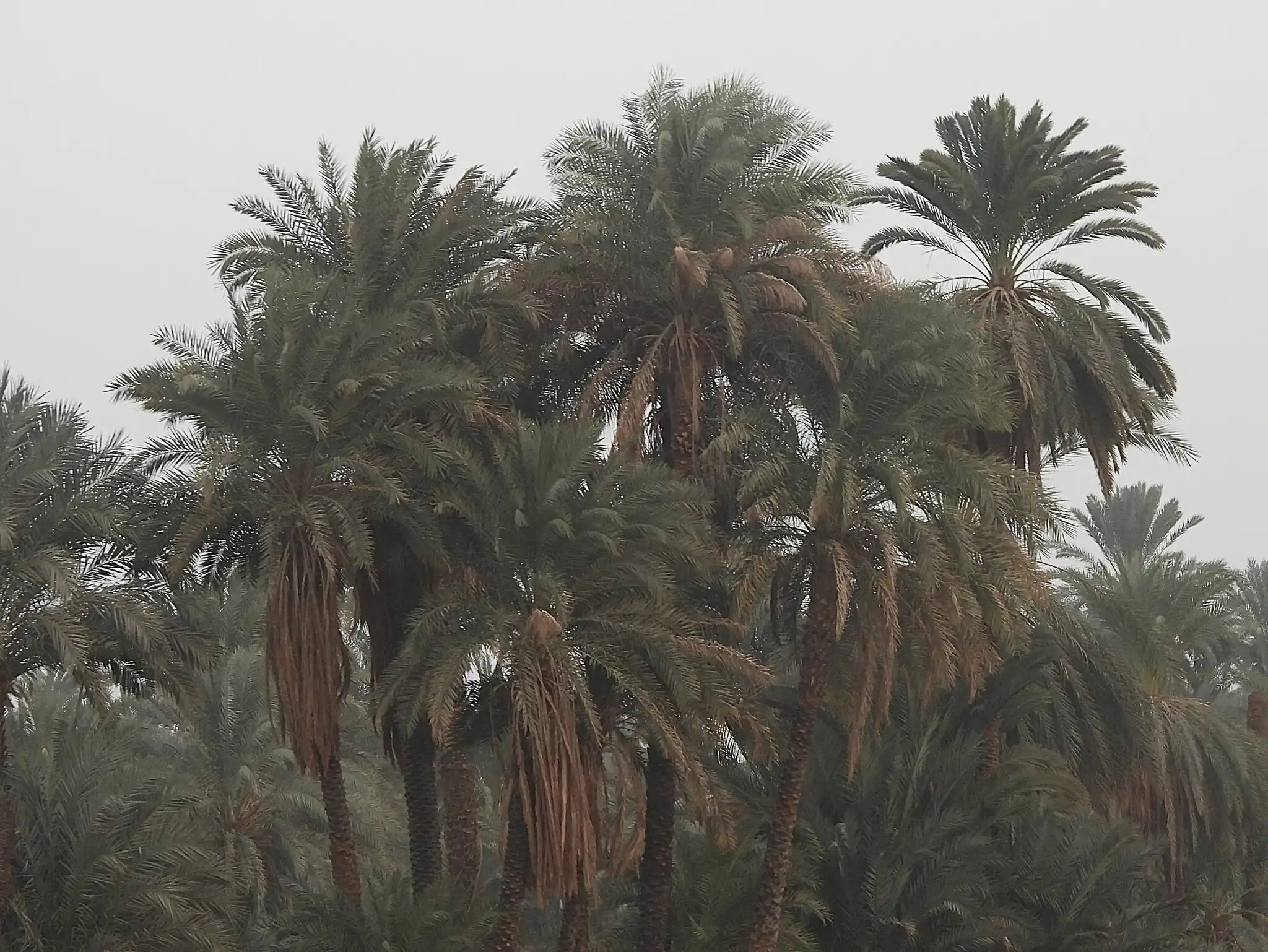
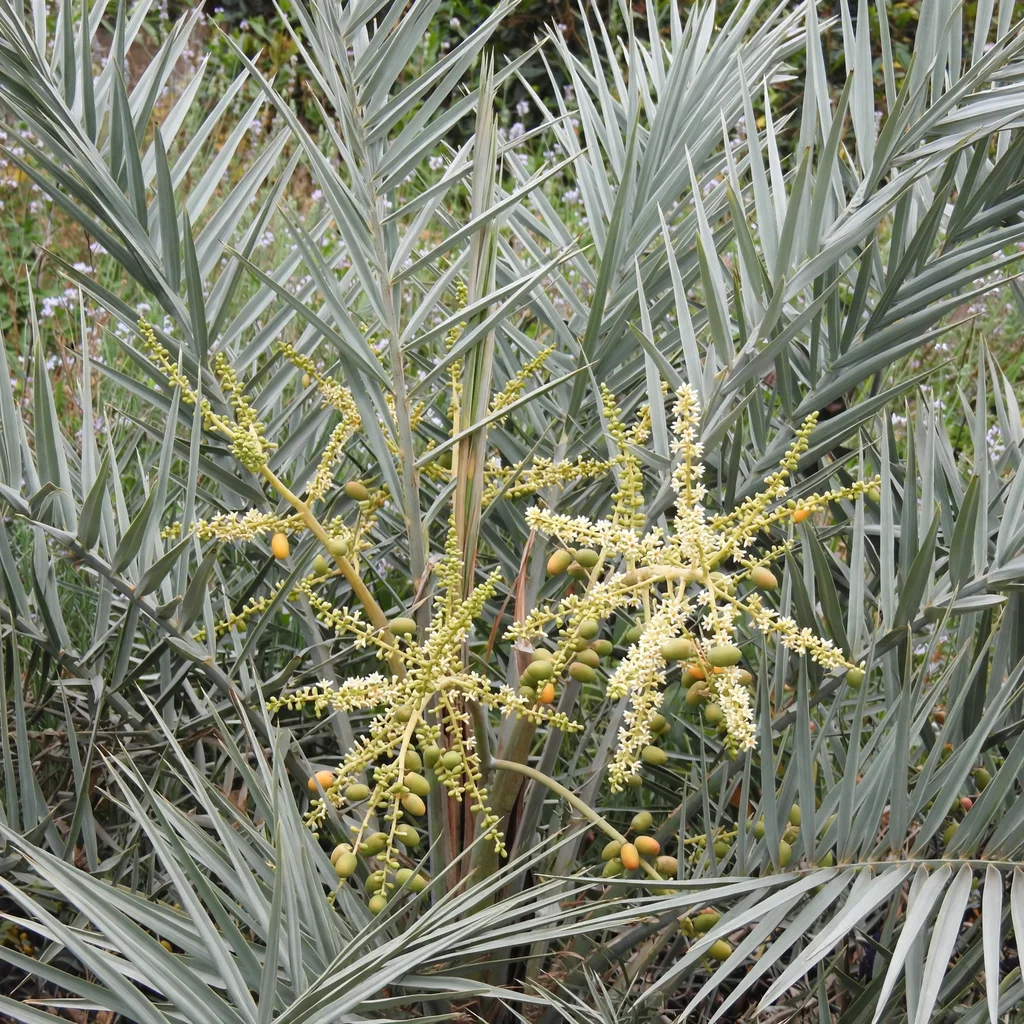
Phoenix dactylifera, the date palm, is a massive, slow-growing desert palm that develops a heavy, textured trunk covered in persistent diamond-shaped leaf bases. The crown consists of stiff, arching, grey-green to glaucous-blue pinnate fronds with sharp, spiny modified leaflets lining the lower petioles.
This species is dioecious, requiring separate male and female plants to produce the familiar sweet, edible orange-brown date fruits. In spring, small yellowish-white flowers emerge in large, pendulous, heavily branched clusters from woody spathes among the leaf bases.
Uses & Benefits:
Essentials
At a Glance
Plant Type
Tree
Height
984"
Width
236"
Light
Full Sun
Zones
8, 9, 10
Water
Low
Humidity
Low to Moderate
Lifespan
Long-lived
Native To
Middle East, North Africa
Toxicity
Non-toxic
Bloom period
Spring
In flower about 3 months of the year
Planting
How to Grow
- Select a planting site in full sun with excellent drainage, avoiding low-lying areas prone to standing water.
- Dig a hole twice as wide as the root ball but equal in depth, ensuring the top of the root ball sits flush with or slightly above the surrounding soil grade.
- Water deeply and regularly during the first two growing seasons to establish a deep, resilient root system.
- Apply a balanced, slow-release palm fertilizer containing magnesium, manganese, and iron two to three times during the warm growing season.
Pro Tip
Avoid the common practice of 'hurricane cutting' or pruning green fronds above the horizontal plane, which starves the palm of carbohydrates and invites pests. Plant the root ball flush with or slightly above the surrounding grade to prevent crown suffocation and rot.
Keep It Thriving
Care Guide
Do
- Remove completely dead, brown lower fronds and spent fruit stalks once a year.
- Provide deep, infrequent irrigation once the palm is fully established.
- Monitor the central bud regularly for signs of weevil activity or crown rot.
- Prune away basal suckers regularly to maintain a clean, single-trunked specimen.
Don't
- Do not prune green, living fronds that point upward or horizontally.
- Do not plant the palm deeper than its original container level, which suffocates the crown.
- Do not use overhead irrigation, as excess moisture on the foliage promotes fungal diseases.
- Do not cut into the old, bare wood of the trunk when pruning.
Seasonal Care Calendar
| Task | Jan | Feb | Mar | Apr | May | Jun | Jul | Aug | Sep | Oct | Nov | Dec |
|---|---|---|---|---|---|---|---|---|---|---|---|---|
| Fertilize | ||||||||||||
| Harvest | ||||||||||||
| Pest Check | ||||||||||||
| Prune | ||||||||||||
| Winter Prep |
Watch Out For
Pests & Diseases
Common Pests
Common Diseases
In the Garden
Landscape Uses & Companions
Landscape Uses
Multiply
Propagation Methods
Good to Know
Common Questions
Date Palm questions
What zones can Date Palm grow in?
Date Palm is hardy in USDA Zones 8–10: in that range it survives winter in the ground. Colder than Zone 8, winters are too cold for it to survive outdoors.
When does Date Palm bloom?
Date Palm typically blooms in spring. Exact timing shifts a week or two with your zone — Sow's bloom calendar maps it to your garden.
Does Date Palm need full sun?
Date Palm does best in full sun (6+ hours).
Is Date Palm drought tolerant?
Yes — once established (usually after the first full season), Date Palm handles dry spells with minimal watering. Water deeply its first year to build the root system that makes that possible.
More Phoenix to compare
Keep exploring
Explore the genus
Hardy in your zone?
Grow Date Palm with confidence
See it in a design of your actual yard, get zone-matched care reminders, and track it season by season in your garden journal.