The Story
Plant Bio
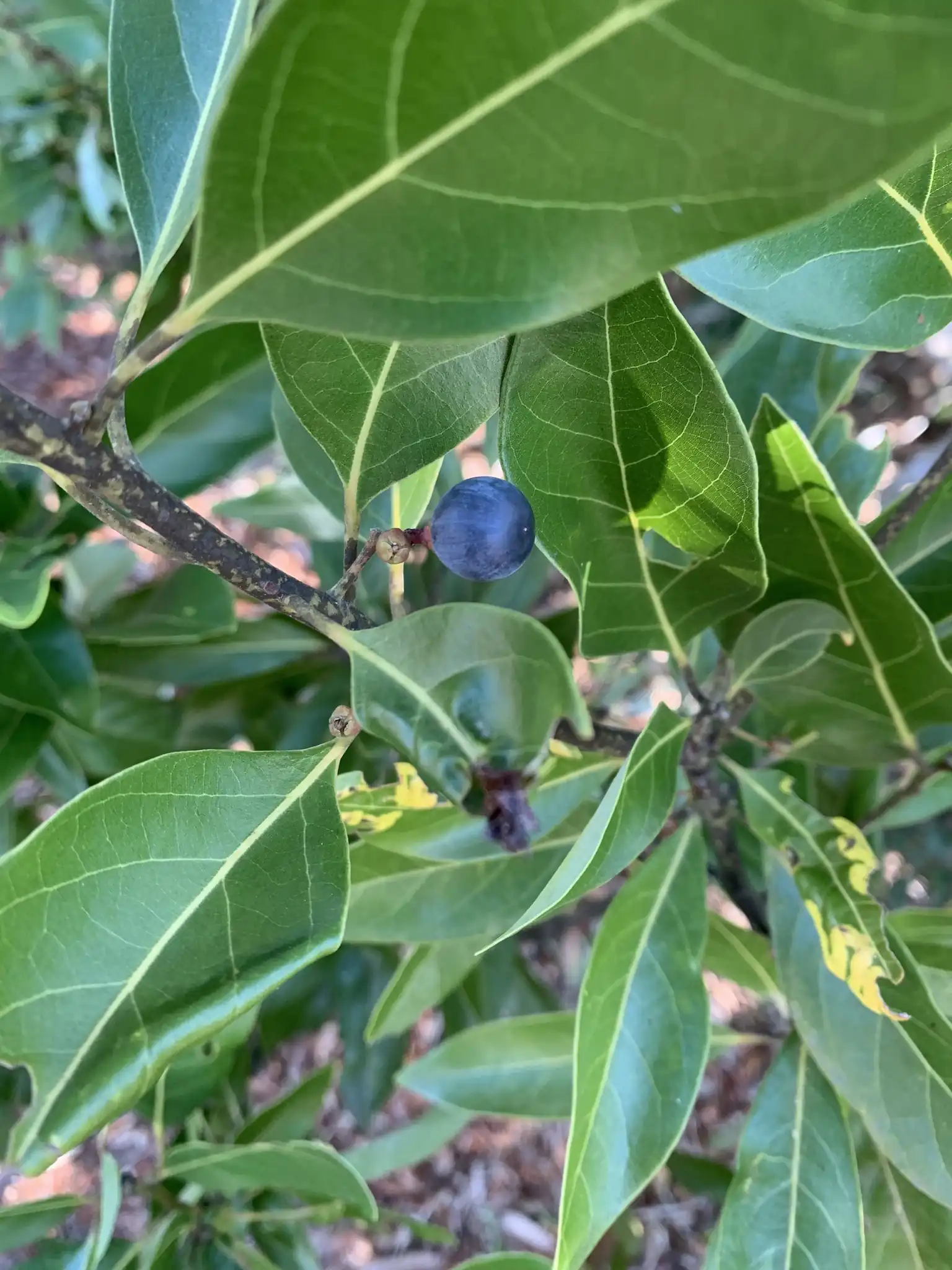
Persea borbonia, the redbay, is an evergreen tree native to the coastal plains of the southeastern United States, forming a dense, rounded crown of aromatic, leathery foliage. The inconspicuous, yellowish-green spring flowers are followed by dark blue drupes that serve as a critical food source for native songbirds and game birds.
This species is distinguished by its lanceolate leaves that emit a spicy, bay-like fragrance when crushed, and by the rusty, reddish pubescence coating its young twigs and buds. It serves as an essential larval host plant for the Palamedes swallowtail and spicebush swallowtail butterflies.
Uses & Benefits:
Essentials
At a Glance
Plant Type
Tree
Height
826"
Width
590"
Light
Full Sun, Partial Sun
Zones
7, 8, 9, 10
Water
Medium to wet
Humidity
High
Lifespan
Moderate
Native To
Southeastern United States, Bahamas
Toxicity
Non-toxic (culinary use, but beware lookalikes)
Bloom period
Spring – Early summer
In flower about 4 months of the year
Planting
How to Grow
- Select a planting site in full sun to partial shade with moist, acidic to neutral soil.
- Dig a hole twice as wide as the root ball and of equal depth, ensuring the root flare sits level with the soil surface.
- Backfill with native soil, water deeply to settle the roots, and apply a thick layer of organic mulch to retain moisture.
- Water regularly during the first growing season to establish a deep, resilient root system.
Pro Tip
Avoid heavy pruning, as fresh pruning wounds release volatile compounds that attract the redbay ambrosia beetle, which is the vector for the fatal laurel wilt disease.
Keep It Thriving
Care Guide
Do
- Keep the soil consistently moist, especially during dry spells while the tree is establishing.
- Apply an organic mulch around the base to mimic the natural forest floor and conserve moisture.
- Monitor the trunk and branches regularly for tiny entry holes or sawdust tubes indicating beetle activity.
Don't
- Do not prune heavily or unnecessarily, as open wounds invite wood-boring insect vectors.
- Do not transport firewood or raw wood from redbay trees, which spreads the destructive laurel wilt pathogen.
- Do not plant in highly alkaline soils where the foliage is prone to chlorosis.
Seasonal Care Calendar
| Task | Jan | Feb | Mar | Apr | May | Jun | Jul | Aug | Sep | Oct | Nov | Dec |
|---|---|---|---|---|---|---|---|---|---|---|---|---|
| Fertilize | ||||||||||||
| Mulch | ||||||||||||
| Pest Check | ||||||||||||
| Prune |
Watch Out For
Pests & Diseases
Common Pests
Common Diseases
In the Garden
Landscape Uses & Companions
Landscape Uses
Companion Plants
Multiply
Propagation Methods
Good to Know
Common Questions
Redbay questions
What zones can Redbay grow in?
Redbay is hardy in USDA Zones 7–10. Inside that range it survives winter in the ground; outside it, grow it as an annual or a container plant you protect.
Is Redbay deer resistant?
Not reliably. Deer may browse Redbay, especially tender spring growth — plan on repellents or fencing where pressure is high.
When does Redbay bloom?
Redbay typically blooms in spring through early summer. Exact timing shifts a week or two with your zone — Sow's bloom calendar maps it to your garden.
Does Redbay need full sun?
Redbay does best in full sun to part shade. In hot climates, afternoon shade keeps blooms fresher longer.
Is Redbay drought tolerant?
Yes — once established (usually after the first full season), Redbay handles dry spells with minimal watering. Water deeply its first year to build the root system that makes that possible.
More Persea to compare
Keep exploring
Explore the genus
Hardy in your zone?
Grow Redbay with confidence
See it in a design of your actual yard, get zone-matched care reminders, and track it season by season in your garden journal.