
Species
 Persea americanaAvocado
2 other cultivars

The Story
Plant Bio
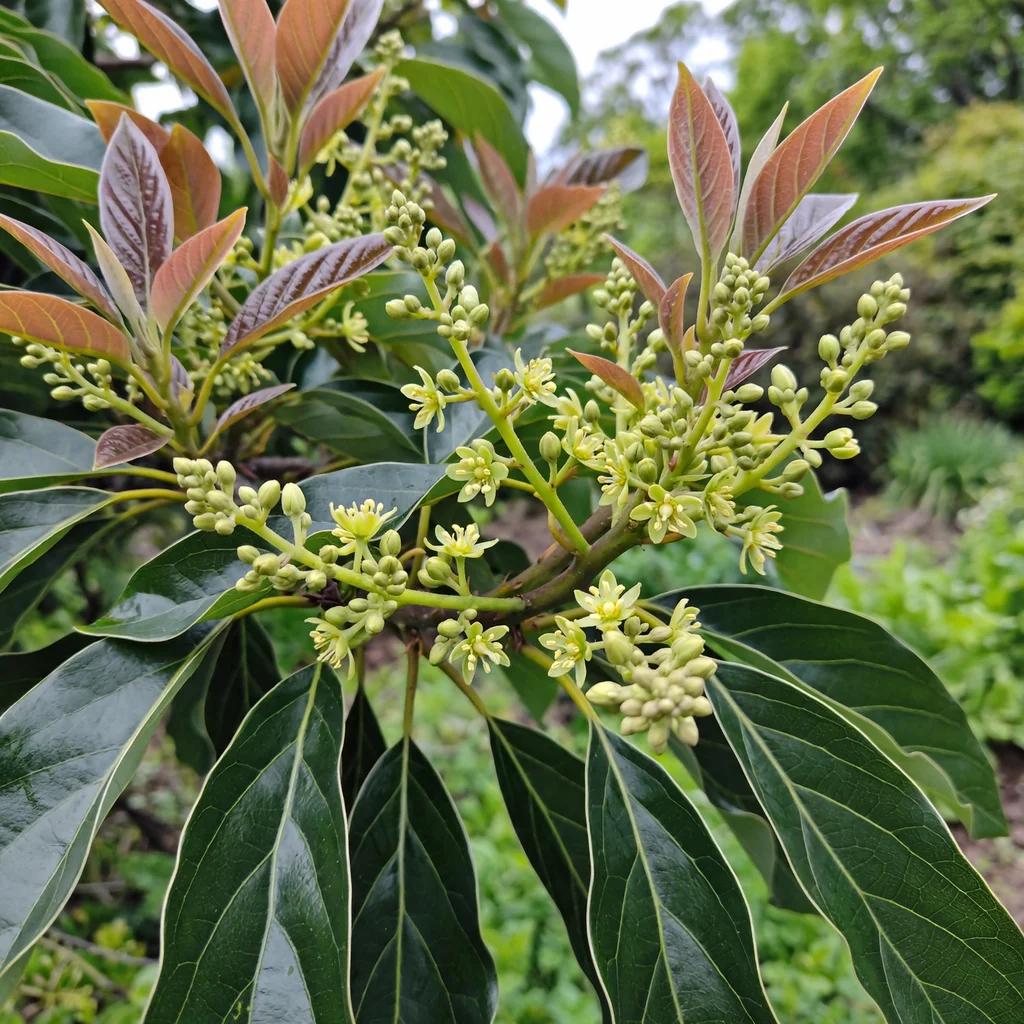
Persea americana is a broad-leaved evergreen tree native to Mexico and Central America, widely cultivated in warm climates for its oil-rich fruit. The species forms a large, spreading canopy and produces small, inconspicuous greenish-yellow flowers in terminal panicles.
'Wurtz' is a true dwarf cultivar that reaches only eight to fifteen feet in height with a compact, dense canopy. It is highly suited for container culture and tight garden spaces, producing standard-sized fruit on a low-branching frame.
Uses & Benefits:
Essentials
At a Glance
Plant Type
Tree
Height
180"
Width
120"
Light
Full Sun
Zones
9, 10
Water
Medium
Humidity
Moderate to High
Lifespan
Multi-decade
Native To
Mexico and Central/South America
Toxicity
Toxic to pets and livestock
Bloom period
Late winter – Spring
In flower about 4 months of the year
Planting
How to Grow
- Select a site in full sun with exceptional drainage, as heavy or waterlogged soil causes rapid root decline.
- Dig a hole twice as wide as the root ball but no deeper, keeping the graft union well above the soil level.
- Water deeply and regularly to maintain even moisture, especially during the flowering and fruiting phases.
- Protect young trees from frost using frost cloth, and shield the trunk from sunburn if the canopy is sparse.
Pro Tip
Planting too deep is the single fastest way to kill an avocado tree via collar rot; ensure the root flare sits slightly above the surrounding soil line.
Keep It Thriving
Care Guide
Do
- Grow in containers in zones colder than USDA Zone 9 so the plant can be overwintered indoors.
- Apply a thick layer of organic mulch to protect the shallow root system and retain moisture.
- Fertilize moderately with a balanced citrus and avocado fertilizer during the spring and summer.
Don't
- Do not plant in heavy clay or poorly draining areas where water pools after rain.
- Do not prune heavily into old, leafless wood, as it fails to regenerate new shoots.
- Do not allow pets, horses, or livestock to consume the leaves, bark, or fruit skins.
Seasonal Care Calendar
| Task | Jan | Feb | Mar | Apr | May | Jun | Jul | Aug | Sep | Oct | Nov | Dec |
|---|---|---|---|---|---|---|---|---|---|---|---|---|
| Fertilize | ||||||||||||
| Harvest | ||||||||||||
| Pest Check | ||||||||||||
| Prune | ||||||||||||
| Winter Prep |
Watch Out For
Pests & Diseases
Common Pests
Common Diseases
In the Garden
Landscape Uses & Companions
Landscape Uses
Companion Plants
Multiply
Propagation Methods
Good to Know
Common Questions
Little Cado Avocado questions
What zones can Little Cado Avocado grow in?
Little Cado Avocado is hardy in USDA Zones 9–10. Inside that range it survives winter in the ground; outside it, grow it as an annual or a container plant you protect.
Is Little Cado Avocado deer resistant?
Not reliably. Deer may browse Little Cado Avocado, especially tender spring growth — plan on repellents or fencing where pressure is high.
When does Little Cado Avocado bloom?
Little Cado Avocado typically blooms in late winter through spring. Exact timing shifts a week or two with your zone — Sow's bloom calendar maps it to your garden.
Does Little Cado Avocado need full sun?
Little Cado Avocado does best in full sun (6+ hours).
More Persea to compare
Keep exploring
Explore the genus
Hardy in your zone?
Grow Little Cado Avocado with confidence
See it in a design of your actual yard, get zone-matched care reminders, and track it season by season in your garden journal.