

The Story
Plant Bio
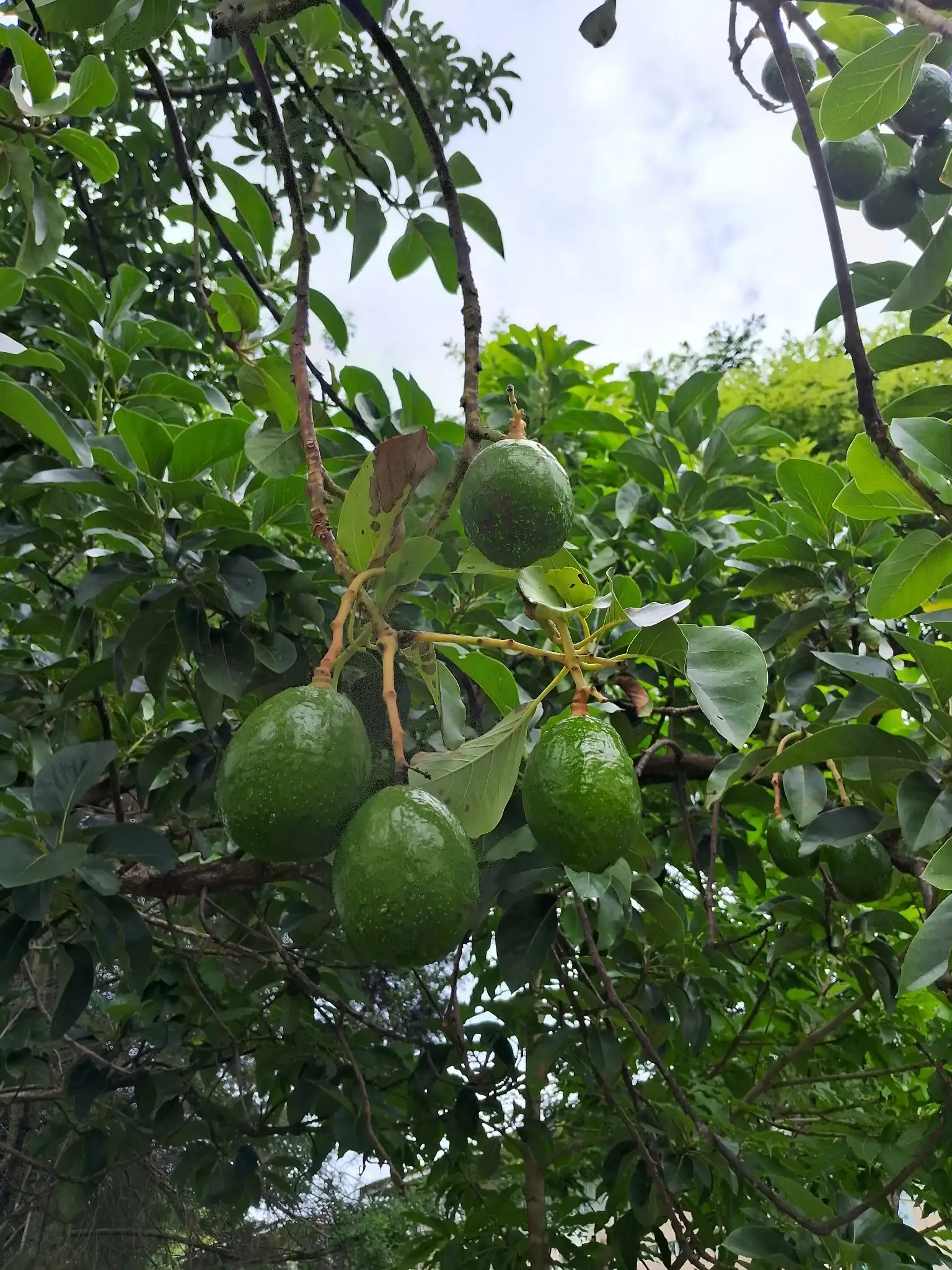
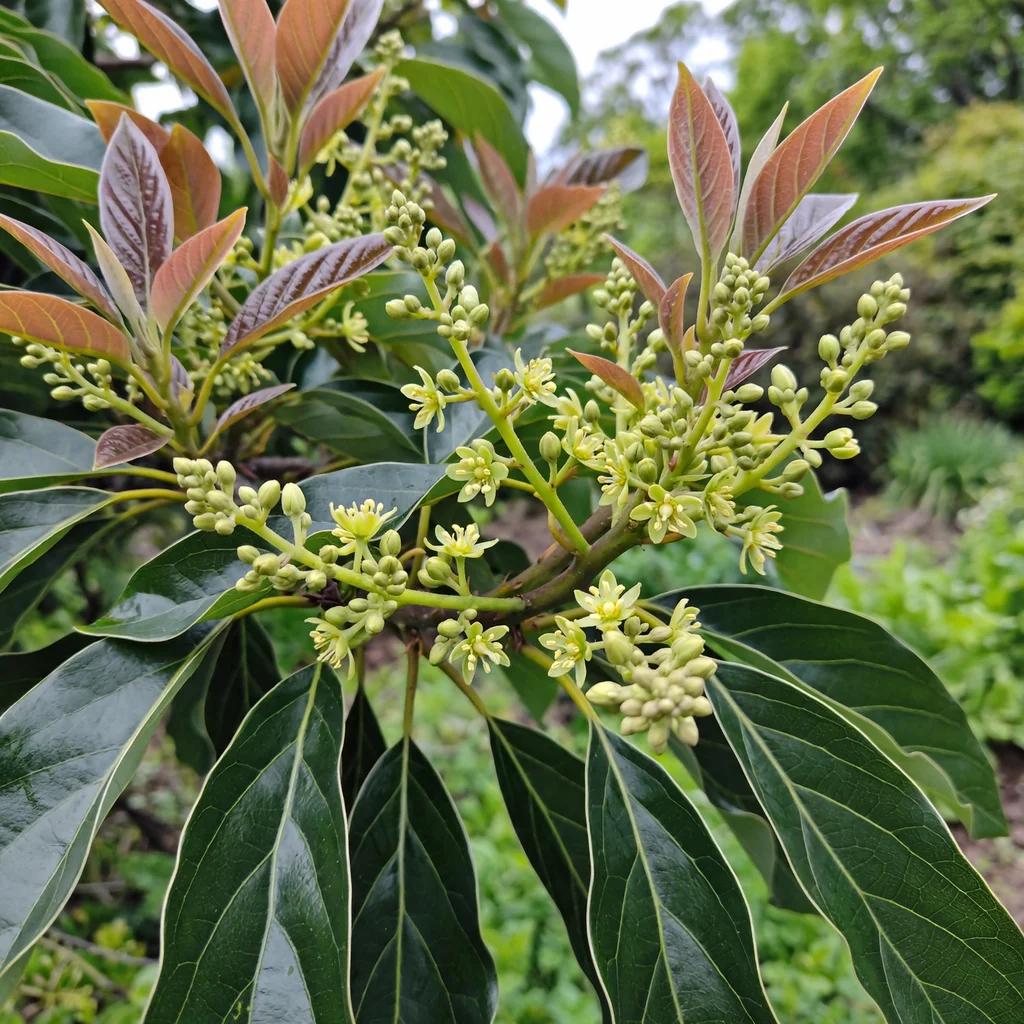
Persea americana, the avocado, is a dense, evergreen tree native to Mesoamerica that develops a spreading, rounded crown of leathery, deep green leaves. Small, greenish-yellow flowers emerge in terminal panicles during spring, followed by large, oil-rich pear-shaped fruits containing a single large seed.
New foliage flushes with a distinct reddish or coppery tint before maturing to a glossy dark green with paler undersides. Cold hardiness varies significantly by horticultural race, with Mexican types tolerating brief drops to 20 degrees Fahrenheit, while West Indian types remain strictly tropical.
Uses & Benefits:
Essentials
At a Glance
Plant Type
Tree
Height
708"
Width
1181"
Light
Full Sun
Zones
8, 9, 10
Water
Low to moderate
Humidity
Moderate to high
Lifespan
50+ years
Native To
Mesoamerica
Toxicity
Toxic to domestic animals, horses, and birds
Marketplace
Where to Buy
Shipping costs Year-round shipping Free shipping
Planting
How to Grow
- Select a planting site in full sun with exceptional drainage, avoiding low spots or heavy clay soils.
- Dig a hole twice as wide as the root ball but no deeper, planting the tree slightly elevated on a shallow mound.
- Water deeply at the base immediately after planting, then establish a regular watering schedule that allows the top few inches of soil to dry between applications.
- Apply a thick layer of coarse mulch over the root zone, keeping it several inches away from the trunk to prevent bark rot.
Pro Tip
Plant exclusively in loose, highly permeable soil on a mound or slope; even brief periods of standing water trigger fatal root rot.
Keep It Thriving
Care Guide
Do
- Apply balanced nitrogen fertilizer split across active growth flushes in spring and summer.
- Protect young trunks from sunburn using white latex tree paint or physical guards.
- Provide supplemental micronutrients like zinc and iron if leaves show signs of chlorosis.
Don't
- Do not plant in heavy clay soils or areas prone to standing water.
- Do not prune heavily into old, leafless wood, as regrowth will be extremely slow and patchy.
- Do not allow domestic animals, horses, or birds to ingest the leaves, bark, or fruit.
Seasonal Care Calendar
| Task | Jan | Feb | Mar | Apr | May | Jun | Jul | Aug | Sep | Oct | Nov | Dec |
|---|---|---|---|---|---|---|---|---|---|---|---|---|
| Fertilize | ||||||||||||
| Mulch | ||||||||||||
| Pest Check | ||||||||||||
| Prune |
Watch Out For
Pests & Diseases
Common Pests
Common Diseases
In the Garden
Landscape Uses & Companions
Landscape Uses
Companion Plants
Multiply
Propagation Methods
Good to Know
Common Questions
Avocado questions
What zones can Avocado grow in?
Avocado is hardy in USDA Zones 8–10. Inside that range it survives winter in the ground; outside it, grow it as an annual or a container plant you protect.
When does Avocado bloom?
Avocado typically blooms in spring through spring. Exact timing shifts a week or two with your zone — Sow's bloom calendar maps it to your garden.
Does Avocado need full sun?
Avocado does best in full sun (6+ hours).
More Persea to compare
Keep exploring
Explore the genus
Hardy in your zone?
Grow Avocado with confidence
See it in a design of your actual yard, get zone-matched care reminders, and track it season by season in your garden journal.