
The Story
Plant Bio
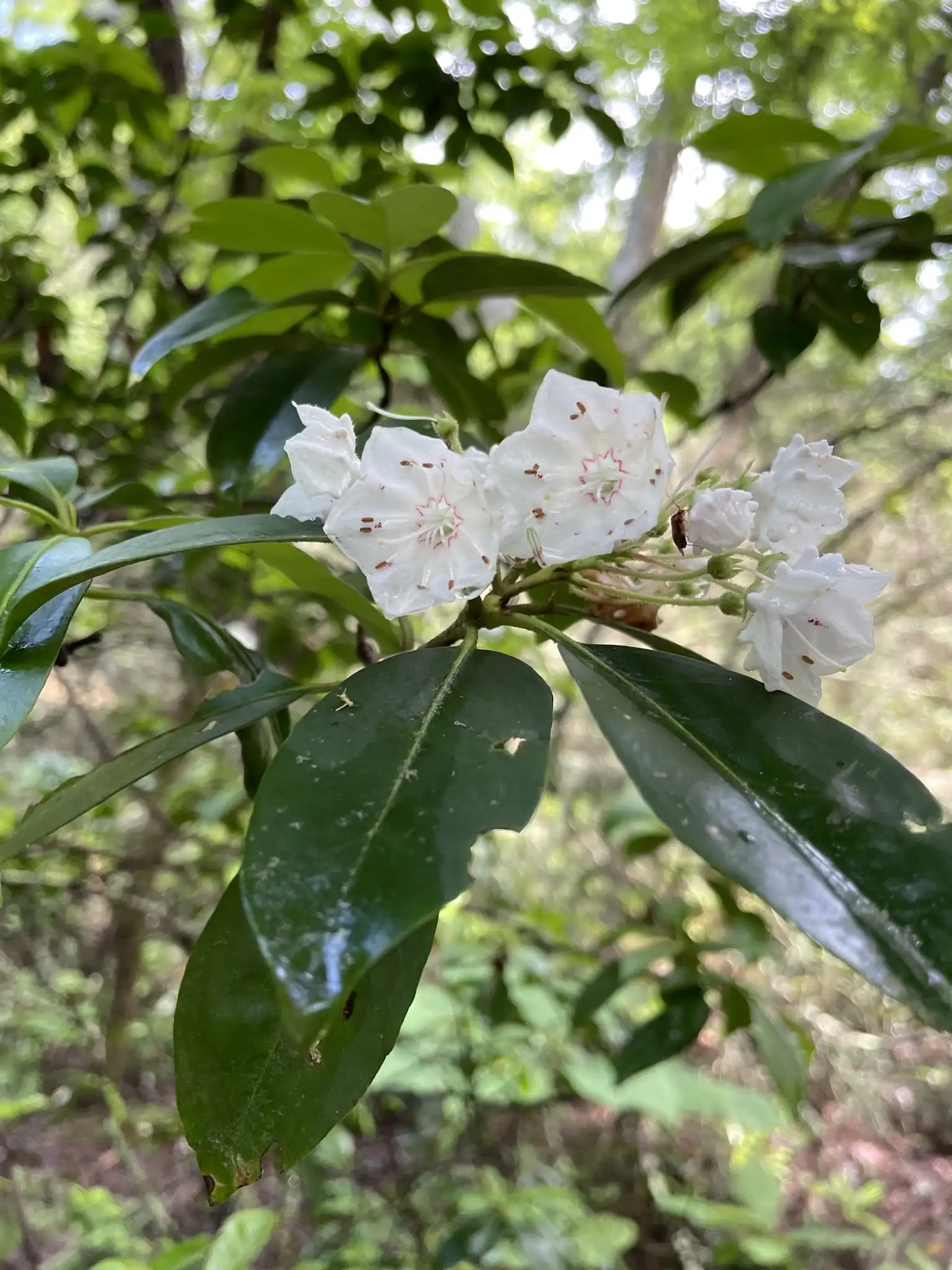
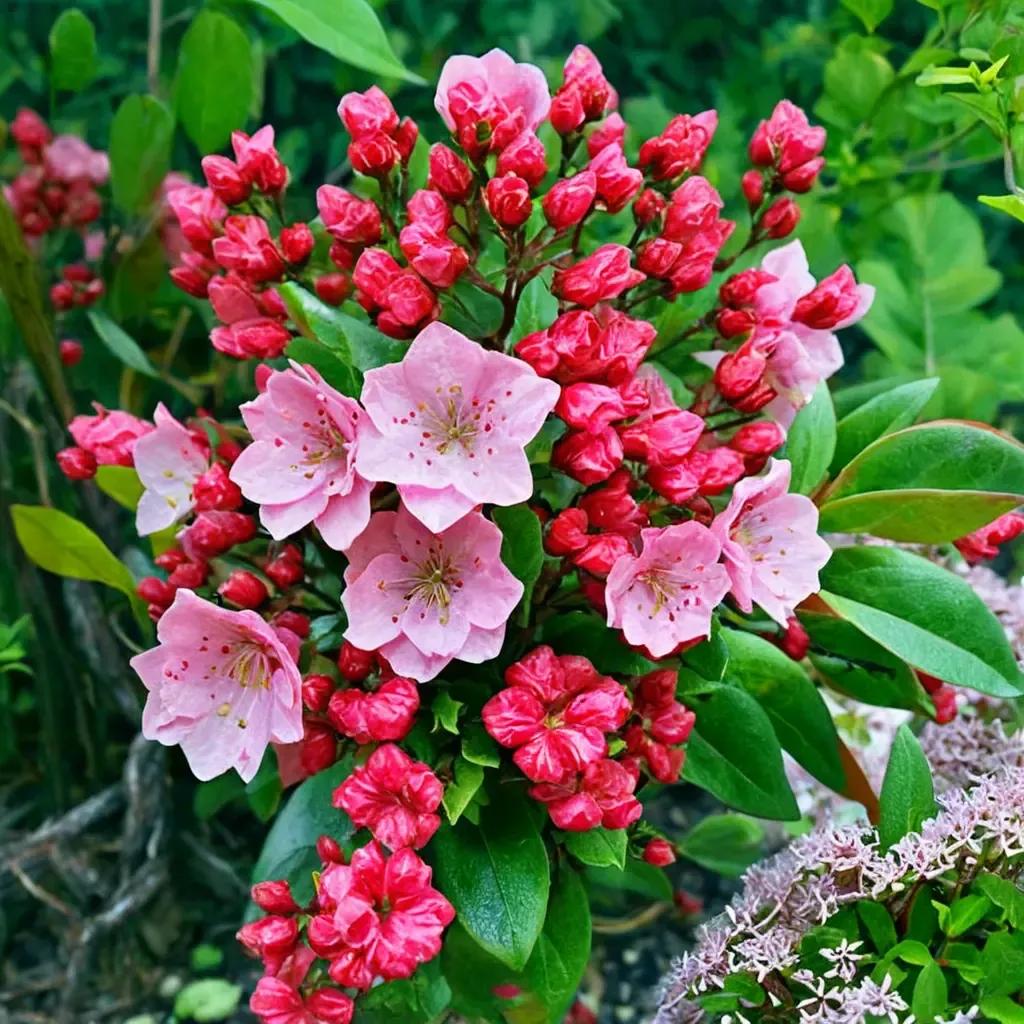
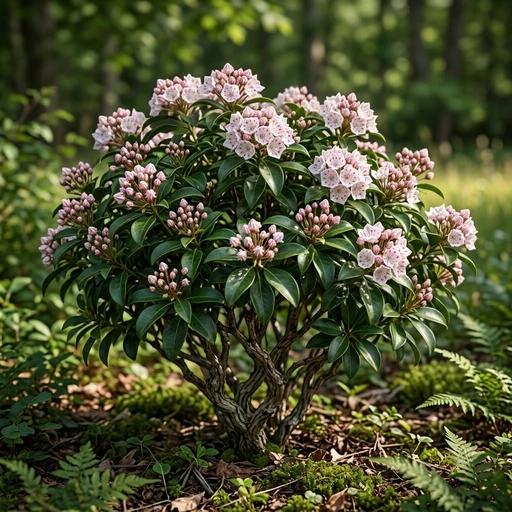
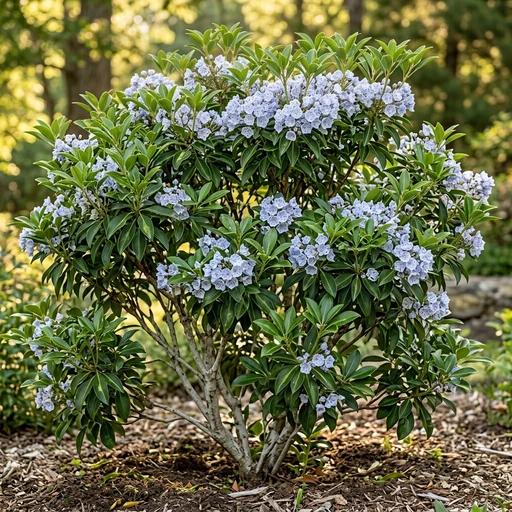
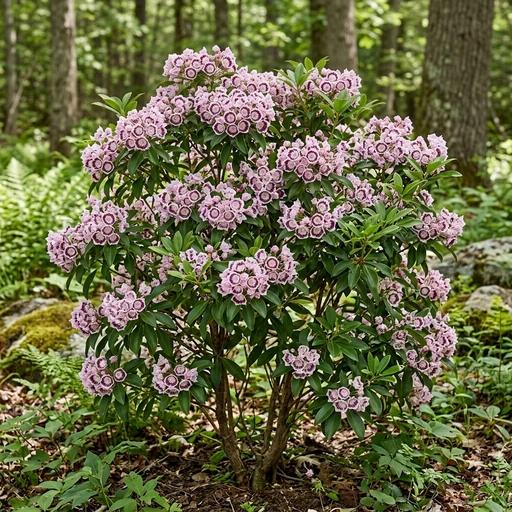
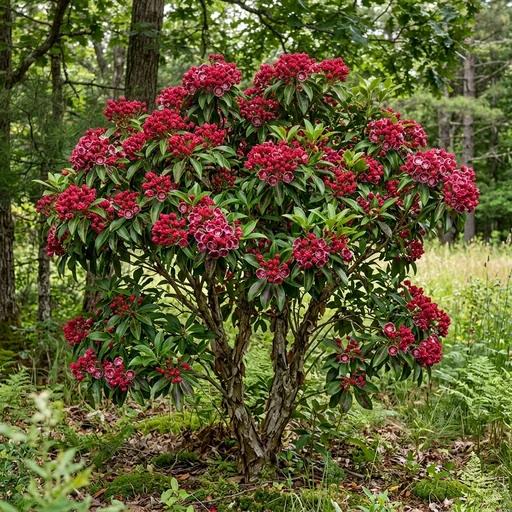
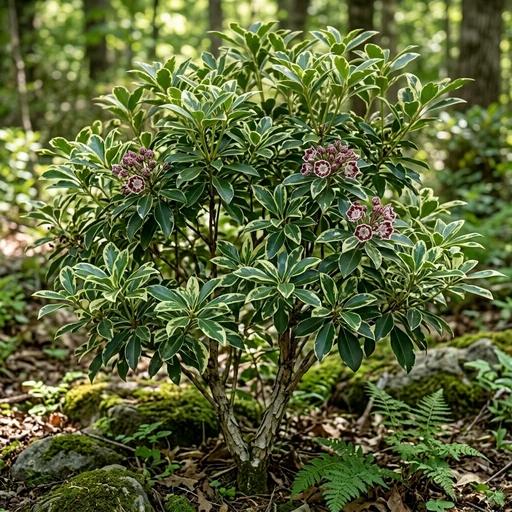
Kalmia latifolia, mountain laurel, is a broadleaf evergreen shrub native to the eastern United States, reaching four to fifteen feet. Glossy leathery leaves form a dense rounded mass, and in late spring the plant carries tight clusters of cup-shaped flowers, white through deep pink, each marked with purple and opening from crimped, distinctly ridged buds.
The flowers have a spring-loaded mechanism: the anthers are held under tension in pockets in the petals and snap forward to dust a visiting bee with pollen. Every part of the plant contains grayanotoxins and is seriously poisonous — to people, dogs and especially livestock — and honey made from the flowers is toxic too.
Uses & Benefits:
Essentials
At a Glance
Plant Type
Shrub
Height
114"
Width
72"
Light
Partial Sun, Shade
Zones
5, 6, 7, 8, 9
Water
Moderate
Humidity
Moderate
Lifespan
Perennial
Native To
Eastern United States
Toxicity
Toxic if ingested
Marketplace
Where to Buy
Shipping costs Year-round shipping Free shipping
Planting
How to Grow
- Plant in spring in moist, acidic, humus-rich soil.
- Choose dappled or partial shade; avoid hot afternoon sun.
- Ensure sharp drainage; it will not tolerate wet feet.
- Mulch with leaf litter or pine needles.
- Deadhead spent flower clusters to improve next year's bloom.
- Prune lightly after flowering only.
Pro Tip
Give it acidic soil that drains sharply but never dries — that combination is what mountain laurel actually needs, and most failures come from getting it wrong.
Keep It Thriving
Care Guide
Do
- Plant in acidic, sharply drained soil 🌱
- Give dappled shade, not hot sun 🌳
- Deadhead after flowering ✂️
- Mulch with pine needles or leaf mould 🍂
Don't
- Plant in heavy wet or alkaline soil ❌
- Let livestock, dogs or children near it ❌
- Prune hard into old wood ❌
Seasonal Care Calendar
| Task | Jan | Feb | Mar | Apr | May | Jun | Jul | Aug | Sep | Oct | Nov | Dec |
|---|---|---|---|---|---|---|---|---|---|---|---|---|
| Monitor | ||||||||||||
| Prune |
Watch Out For
Pests & Diseases
Common Pests
Common Diseases
In the Garden
Landscape Uses & Companions
Landscape Uses
Multiply
Propagation Methods
Good to Know
Common Questions
Mountain Laurel questions
What zones can Mountain Laurel grow in?
Mountain Laurel is hardy in USDA Zones 5–9. Inside that range it survives winter in the ground; outside it, grow it as an annual or a container plant you protect.
Is Mountain Laurel deer resistant?
Yes — Mountain Laurel is rated deer-resistant. Deer typically pass it over, though extreme hunger can override any plant's defenses.
When does Mountain Laurel bloom?
Mountain Laurel typically blooms in late spring through early summer. Exact timing shifts a week or two with your zone — Sow's bloom calendar maps it to your garden.
Does Mountain Laurel need full sun?
Mountain Laurel does best in part shade.
More Kalmia to compare
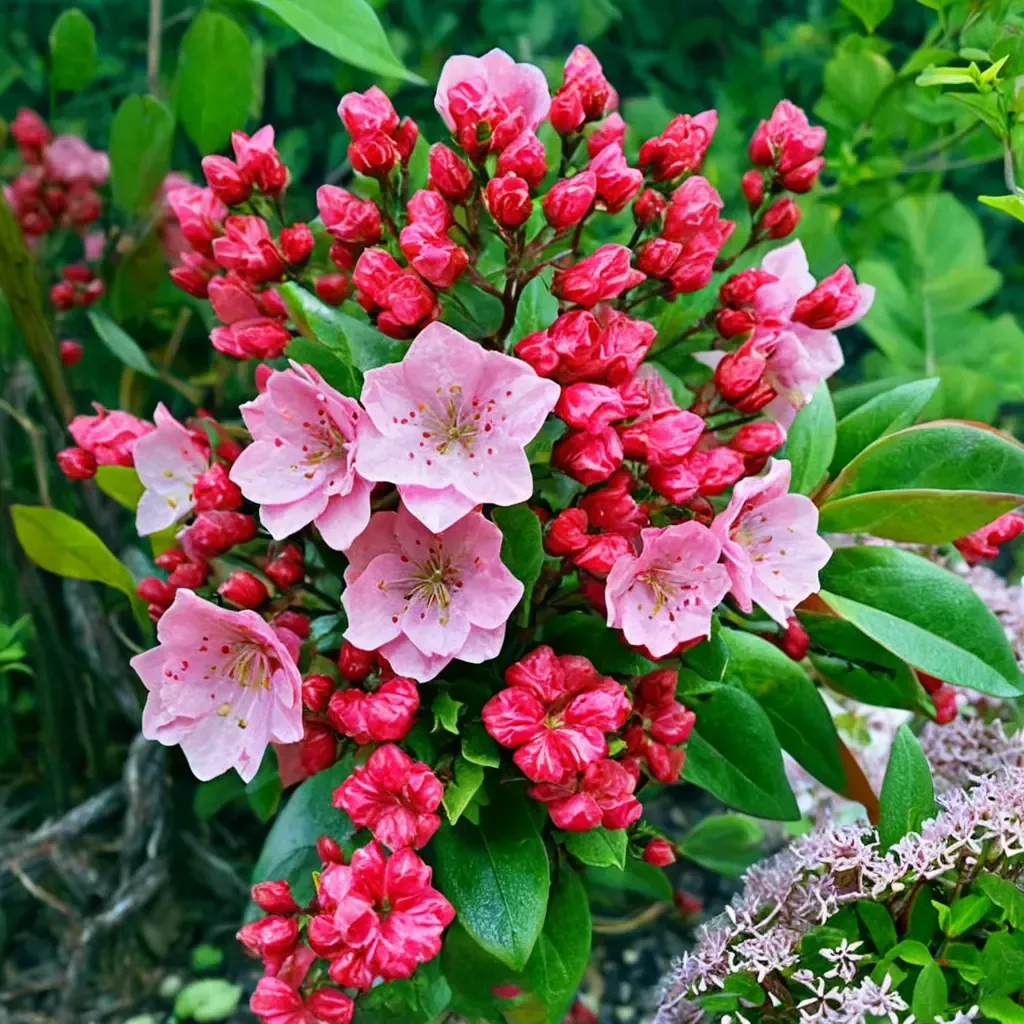
Firecracker Mountain Laurel
Kalmia latifolia 'Firecracker'
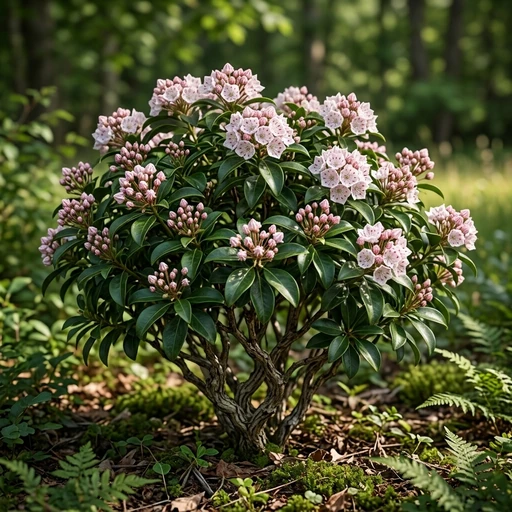
Elf Mountain Laurel
Kalmia latifolia 'Elf'
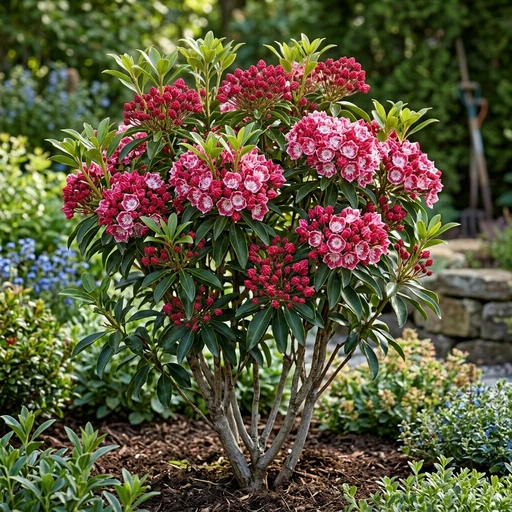
Olympic Fire Mountain Laurel
Kalmia latifolia 'Olympic Fire'
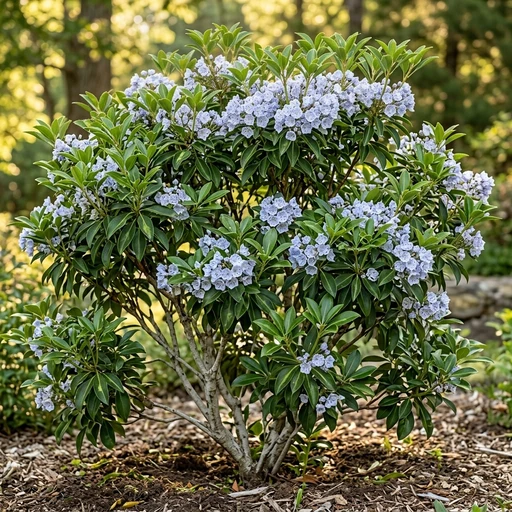
Carol Mountain Laurel
Kalmia latifolia 'Carol'
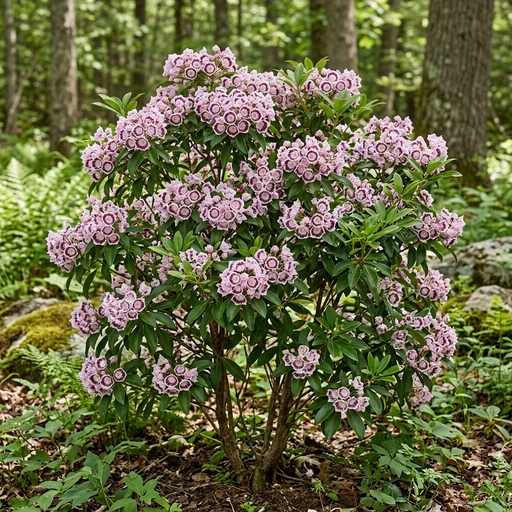
Minuet Mountain Laurel
Kalmia latifolia 'Minuet'
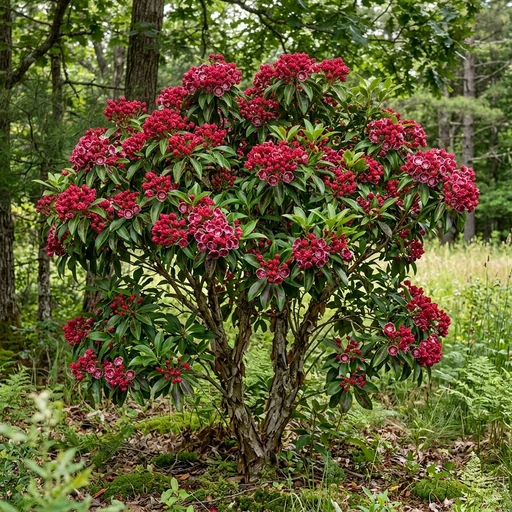
Sarah Mountain Laurel
Kalmia latifolia 'Sarah'
Keep exploring
Explore the genus
Hardy in your zone?
Grow Mountain Laurel with confidence
See it in a design of your actual yard, get zone-matched care reminders, and track it season by season in your garden journal.