The Story
Plant Bio
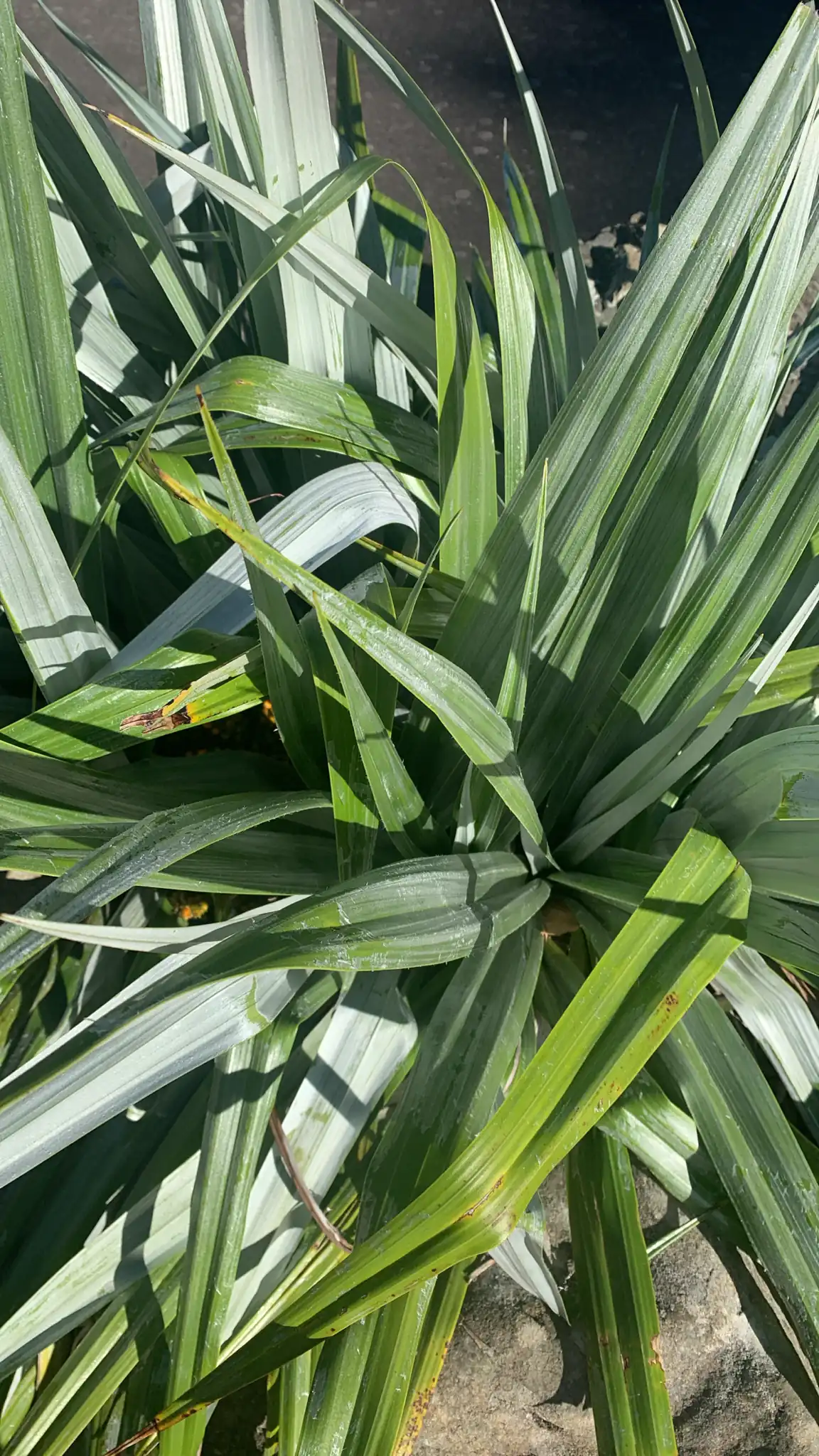
Astelia chathamica is a robust, evergreen perennial native to the Chatham Islands of New Zealand, forming a dense rosette of stiff, sword-shaped leaves. The foliage features a metallic silver-green upper surface and a densely white-scaly underside, creating a highly reflective architectural form.
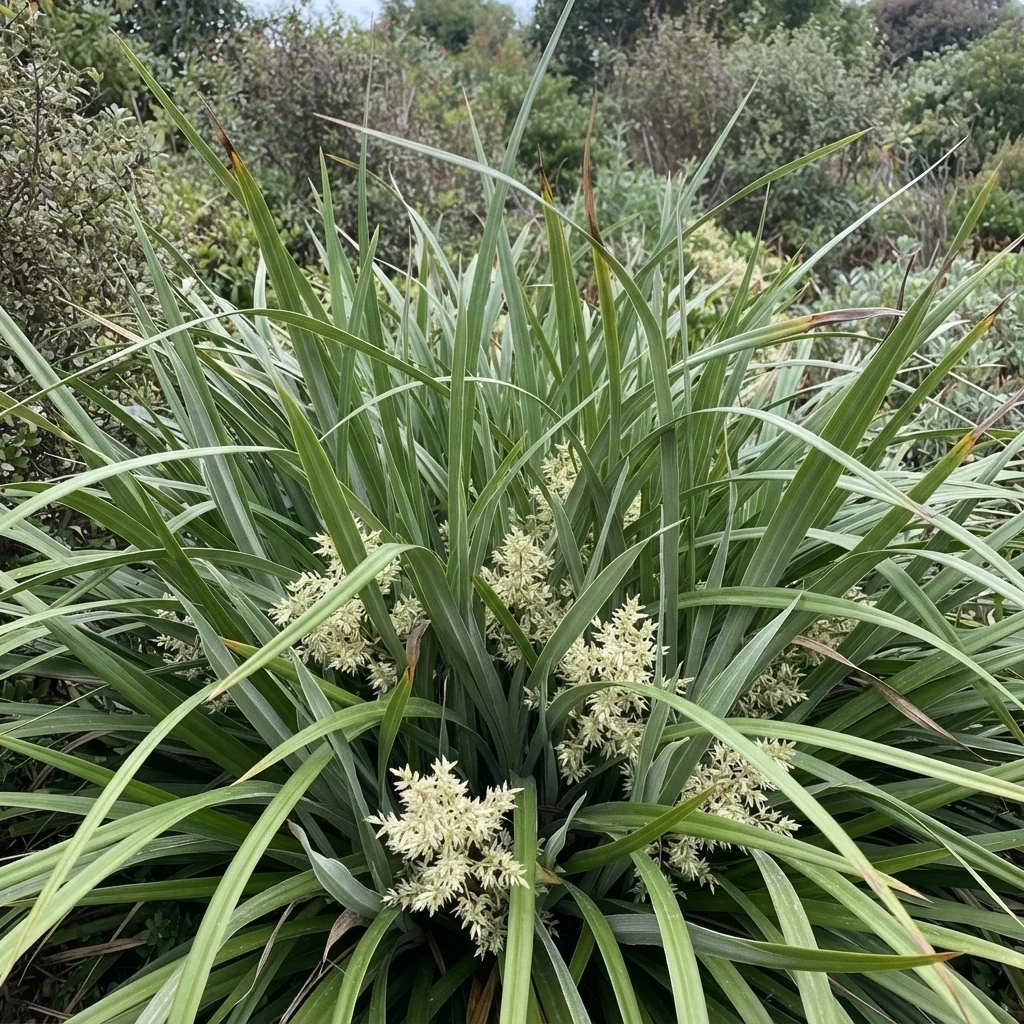
This species is distinguished by its exceptionally broad, strap-like leaves that arch outward as they mature, reaching up to five feet in height and width. Female plants produce inconspicuous greenish-yellow panicles nestled low in the foliage, which mature into bright orange-red berries if pollinated.
Uses & Benefits:
Essentials
At a Glance
Plant Type
Perennial
Height
60"
Width
60"
Light
Full Sun, Partial Sun
Zones
8, 9, 10
Water
Moderate
Humidity
Moderate
Lifespan
Perennial
Native To
New Zealand (Chatham Islands)
Toxicity
Non-toxic
Bloom period
Spring – Summer
In flower about 6 months of the year
Planting
How to Grow
- Select a planting site with rich, organic loam or sandy soil that drains rapidly, as waterlogged winter soil causes crown rot.
- Position the plant in full sun to partial shade, opting for morning sun or light filtered shade in hot inland climates to prevent leaf scorch.
- Water regularly during the first growing season to establish a deep root system, maintaining consistent moisture without saturating the soil.
- Apply a balanced, slow-release fertilizer around the base of the plant in early spring to support new foliage development.
Pro Tip
To maintain the clean architectural form, pull or cut dead lower leaves cleanly at the very base of the crown. Never shear the entire clump or cut back into the central growing point, as this destroys the rosette structure and can kill the plant.
Keep It Thriving
Care Guide
Do
- Plant in highly permeable, well-drained soil to prevent root rot.
- Provide light afternoon shade in hot, dry inland regions.
- Trim away only the dead or damaged outer leaves at the base.
Don't
- Do not allow the plant to sit in standing water or heavy, waterlogged winter soils.
- Do not shear the foliage or cut back into the central growing crown.
- Do not plant in areas with heavy foot traffic where the stiff, sharp-tipped leaves could cause puncture injuries.
Seasonal Care Calendar
| Task | Jan | Feb | Mar | Apr | May | Jun | Jul | Aug | Sep | Oct | Nov | Dec |
|---|---|---|---|---|---|---|---|---|---|---|---|---|
| Divide | ||||||||||||
| Fertilize | ||||||||||||
| Prune | ||||||||||||
| Winter Prep |
Watch Out For
Pests & Diseases
Common Pests
Common Diseases
In the Garden
Landscape Uses & Companions
Landscape Uses
Companion Plants
Multiply
Propagation Methods
Good to Know
Common Questions
Silver Spear questions
What zones can Silver Spear grow in?
Silver Spear is hardy in USDA Zones 8–10. Inside that range it survives winter in the ground; outside it, grow it as an annual or a container plant you protect.
Is Silver Spear deer resistant?
Yes — Silver Spear is rated deer-resistant. Deer typically pass it over, though extreme hunger can override any plant's defenses.
When does Silver Spear bloom?
Silver Spear typically blooms in spring through summer. Exact timing shifts a week or two with your zone — Sow's bloom calendar maps it to your garden.
Does Silver Spear need full sun?
Silver Spear does best in full sun to part shade. In hot climates, afternoon shade keeps blooms fresher longer.
Is Silver Spear drought tolerant?
Yes — once established (usually after the first full season), Silver Spear handles dry spells with minimal watering. Water deeply its first year to build the root system that makes that possible.
More Astelia to compare
Keep exploring
Explore the genus
Hardy in your zone?
Grow Silver Spear with confidence
See it in a design of your actual yard, get zone-matched care reminders, and track it season by season in your garden journal.