The Story
Plant Bio
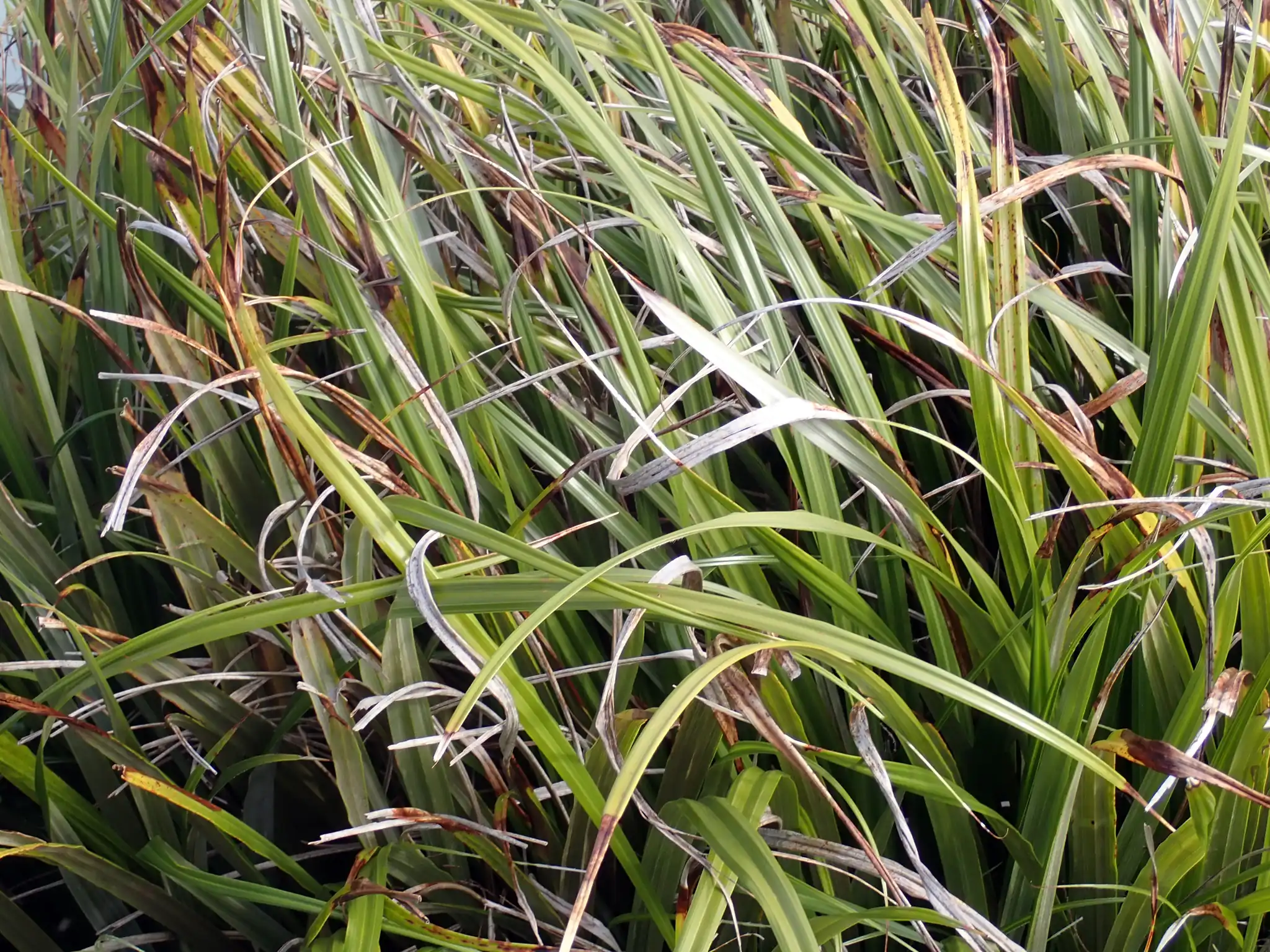
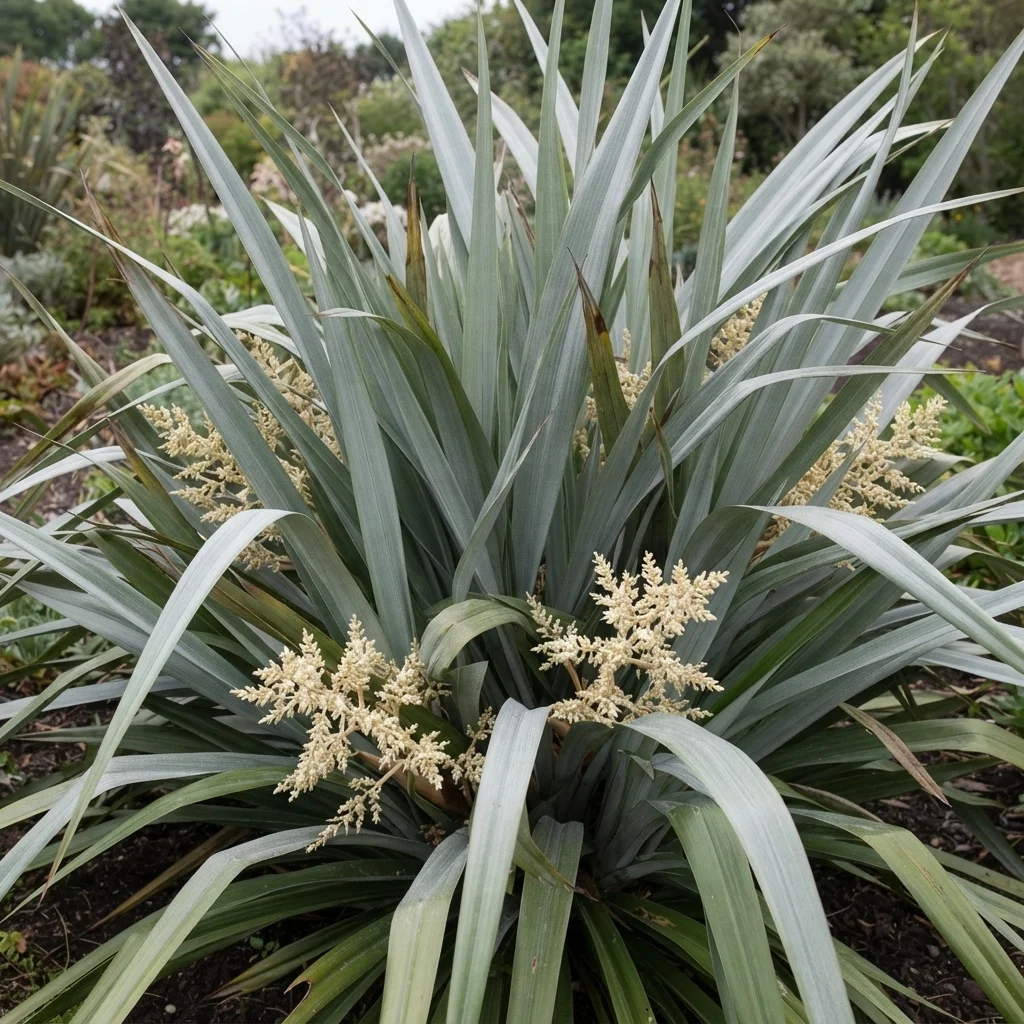
Astelia banksii, commonly known as shore astelia, is an evergreen, clump-forming perennial native to the coastal forests of New Zealand that forms dense, architectural tussocks of arching, grass-like foliage. The long, strap-shaped leaves feature a metallic, silvery-green upper surface and densely scaly, silver undersides that catch the light.
This species is dioecious, bearing small, inconspicuous creamy-white to pale green flowers nestled deep within the foliage during spring. Female plants produce small fall berries that transition from orange-red to purple-black, providing subtle seasonal interest.
Uses & Benefits:
Essentials
At a Glance
Plant Type
Perennial
Height
48"
Width
60"
Light
Full Sun, Partial Sun
Zones
9, 10
Water
Low to moderate
Humidity
Moderate
Lifespan
Perennial
Native To
New Zealand
Toxicity
Non-toxic (leaves have sharp edges)
Bloom period
Spring – Late spring
In flower about 3 months of the year
Planting
How to Grow
- Select a planting site with excellent drainage, such as a sandy slope, raised bed, or gritty container mix.
- Dig a hole twice as wide as the root ball but of equal depth to ensure the crown sits slightly above the soil line.
- Backfill with a mix of native soil and organic matter, pressing lightly to secure the plant without compacting the root zone.
- Water moderately to settle the soil, then allow the top few inches to dry completely between subsequent waterings.
Pro Tip
Plant in sharply draining, gritty soil and avoid burying the crown; cutting back hard into old, leafless stem tissue will kill the division rather than stimulating new growth.
Keep It Thriving
Care Guide
Do
- Plant in highly permeable, gritty soil to prevent waterlogging.
- Remove dead or tattered outer leaves by cutting them manually at the base.
- Provide light, organic fertilizer in spring if growth appears sluggish.
Don't
- Do not shear or cut the plant back into old, leafless wood.
- Do not bury the central crown below the soil level when planting.
- Do not allow the roots to sit in standing water or heavy, wet clay.
Seasonal Care Calendar
| Task | Jan | Feb | Mar | Apr | May | Jun | Jul | Aug | Sep | Oct | Nov | Dec |
|---|---|---|---|---|---|---|---|---|---|---|---|---|
| Divide | ||||||||||||
| Fertilize | ||||||||||||
| Pest Check | ||||||||||||
| Spring Cleanup |
Watch Out For
Pests & Diseases
Common Pests
Common Diseases
In the Garden
Landscape Uses & Companions
Landscape Uses
Companion Plants
Multiply
Propagation Methods
Good to Know
Common Questions
Shore Astelia questions
What zones can Shore Astelia grow in?
Shore Astelia is hardy in USDA Zones 9–10. Inside that range it survives winter in the ground; outside it, grow it as an annual or a container plant you protect.
Is Shore Astelia deer resistant?
Yes — Shore Astelia is rated deer-resistant. Deer typically pass it over, though extreme hunger can override any plant's defenses.
When does Shore Astelia bloom?
Shore Astelia typically blooms in spring through late spring. Exact timing shifts a week or two with your zone — Sow's bloom calendar maps it to your garden.
Does Shore Astelia need full sun?
Shore Astelia does best in full sun to part shade. In hot climates, afternoon shade keeps blooms fresher longer.
Is Shore Astelia drought tolerant?
Yes — once established (usually after the first full season), Shore Astelia handles dry spells with minimal watering. Water deeply its first year to build the root system that makes that possible.
More Astelia to compare
Keep exploring
Explore the genus
Hardy in your zone?
Grow Shore Astelia with confidence
See it in a design of your actual yard, get zone-matched care reminders, and track it season by season in your garden journal.