



The Story
Plant Bio
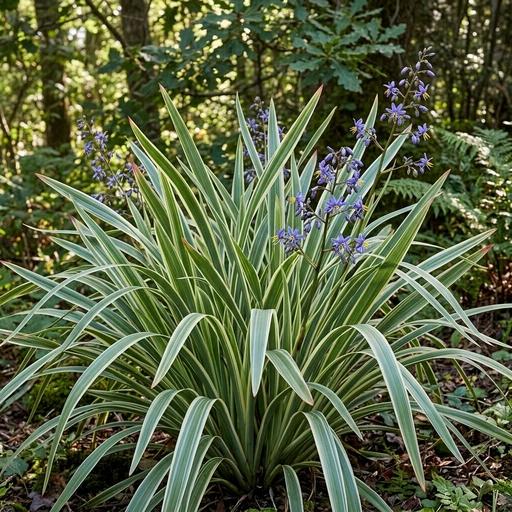
Dianella tasmanica is a rhizomatous evergreen perennial native to southeastern Australia, forming dense, upright fans of broad, strap-like foliage. In spring, it produces tall, airy panicles of small, star-shaped blue to violet flowers with prominent yellow stamens, followed by glossy blue berries.
'Emerald Arch' is a compact, clumping cultivar selected for its broad, glossy, deep emerald green leaves that arch gracefully without producing aggressive above-ground canes. This cultivar rarely flowers in cultivation, making it primarily a structural foliage plant for shaded or coastal gardens.
Uses & Benefits:
Essentials
At a Glance
Plant Type
Grass
Height
22"
Width
20"
Light
Full Sun, Partial Sun, Shade
Zones
8, 9, 10
Water
Low to moderate
Humidity
Low to moderate
Lifespan
Perennial
Native To
Australia
Toxicity
Berries are toxic
Bloom period
Spring
In flower about 3 months of the year
Planting
How to Grow
- Select a site with well-drained sandy loam or clay loam, ideally in partial to heavy shade in hot climates.
- Dig a hole twice the width of the root ball and plant at the same depth as the container soil level.
- Water thoroughly after planting and maintain consistent moisture until the root system is established.
- Apply a low-phosphorus, slow-release fertilizer once annually in early spring to support foliage growth.
Pro Tip
Do not shear this plant to the ground with hedge clippers in late winter; instead, groom it by pulling or cutting individual spent leaves at the base to avoid killing the crown.
Keep It Thriving
Care Guide
Do
- Grow in partial to heavy shade in hot, dry inland regions.
- Ensure the soil drains freely to prevent root rot.
- Remove individual dead or damaged leaves at the base by hand.
Don't
- Do not shear the entire plant back to old woody wood.
- Do not overwater or plant in heavy, waterlogged soils.
- Do not plant in regions with high summer humidity where it performs poorly.
Seasonal Care Calendar
| Task | Jan | Feb | Mar | Apr | May | Jun | Jul | Aug | Sep | Oct | Nov | Dec |
|---|---|---|---|---|---|---|---|---|---|---|---|---|
| Fertilize | ||||||||||||
| Mulch | ||||||||||||
| Pest Check | ||||||||||||
| Prune |
Watch Out For
Pests & Diseases
Common Pests
Common Diseases
In the Garden
Landscape Uses & Companions
Landscape Uses
Multiply
Propagation Methods
Good to Know
Common Questions
Tasman Flax Lily questions
What zones can Tasman Flax Lily grow in?
Tasman Flax Lily is hardy in USDA Zones 8–10. Inside that range it survives winter in the ground; outside it, grow it as an annual or a container plant you protect.
Is Tasman Flax Lily deer resistant?
Not reliably. Deer may browse Tasman Flax Lily, especially tender spring growth — plan on repellents or fencing where pressure is high.
When does Tasman Flax Lily bloom?
Tasman Flax Lily typically blooms in spring through spring. Exact timing shifts a week or two with your zone — Sow's bloom calendar maps it to your garden.
Does Tasman Flax Lily need full sun?
Tasman Flax Lily does best in full sun to part shade. In hot climates, afternoon shade keeps blooms fresher longer.
Is Tasman Flax Lily drought tolerant?
Yes — once established (usually after the first full season), Tasman Flax Lily handles dry spells with minimal watering. Water deeply its first year to build the root system that makes that possible.
More Dianella to compare
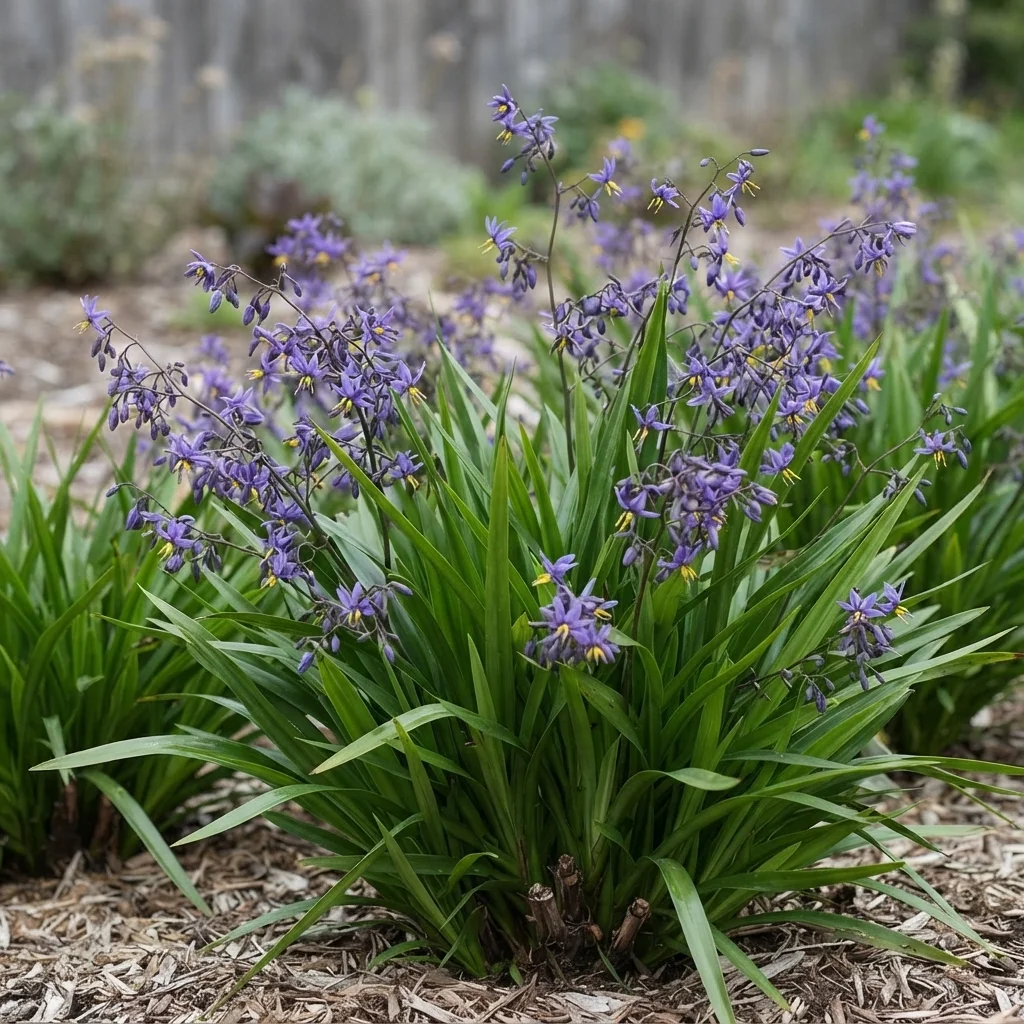
Blue Flax-Lily
Dianella caerulea 'Little Jess'
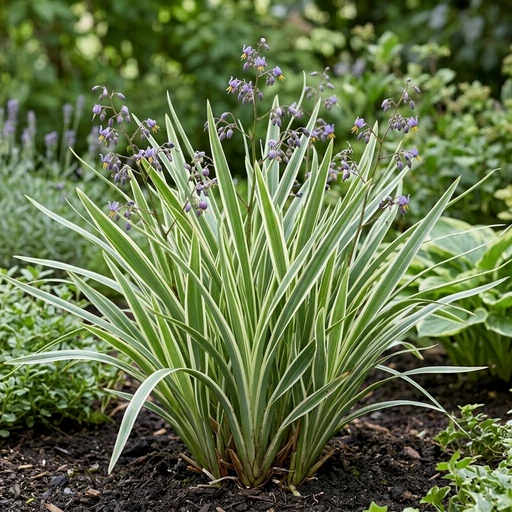
Variegated Flax Lily
Dianella caerulea 'Variegata'
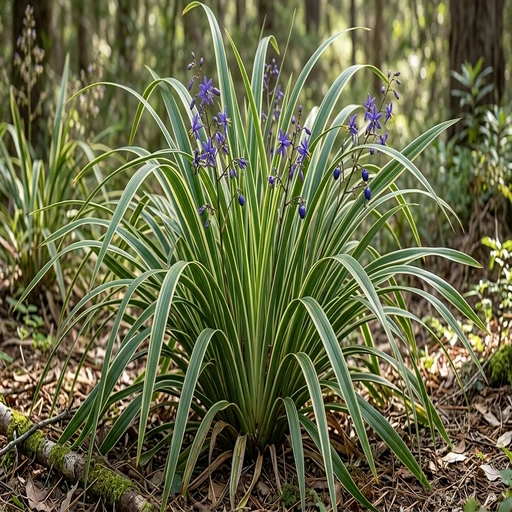
Tasmanian Flax Lily
Dianella tasmanica
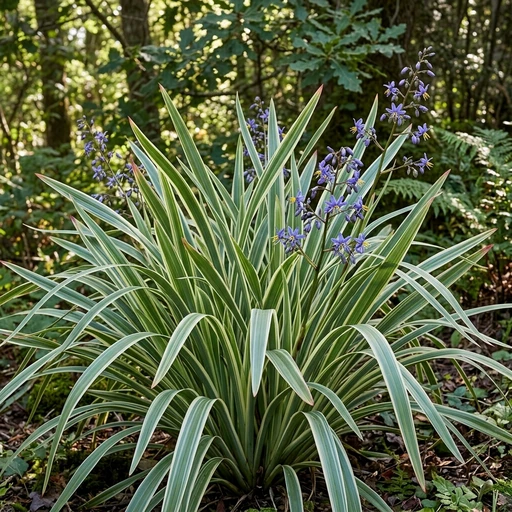
Blueberry Flax Lily
Dianella tasmanica 'Variegata'
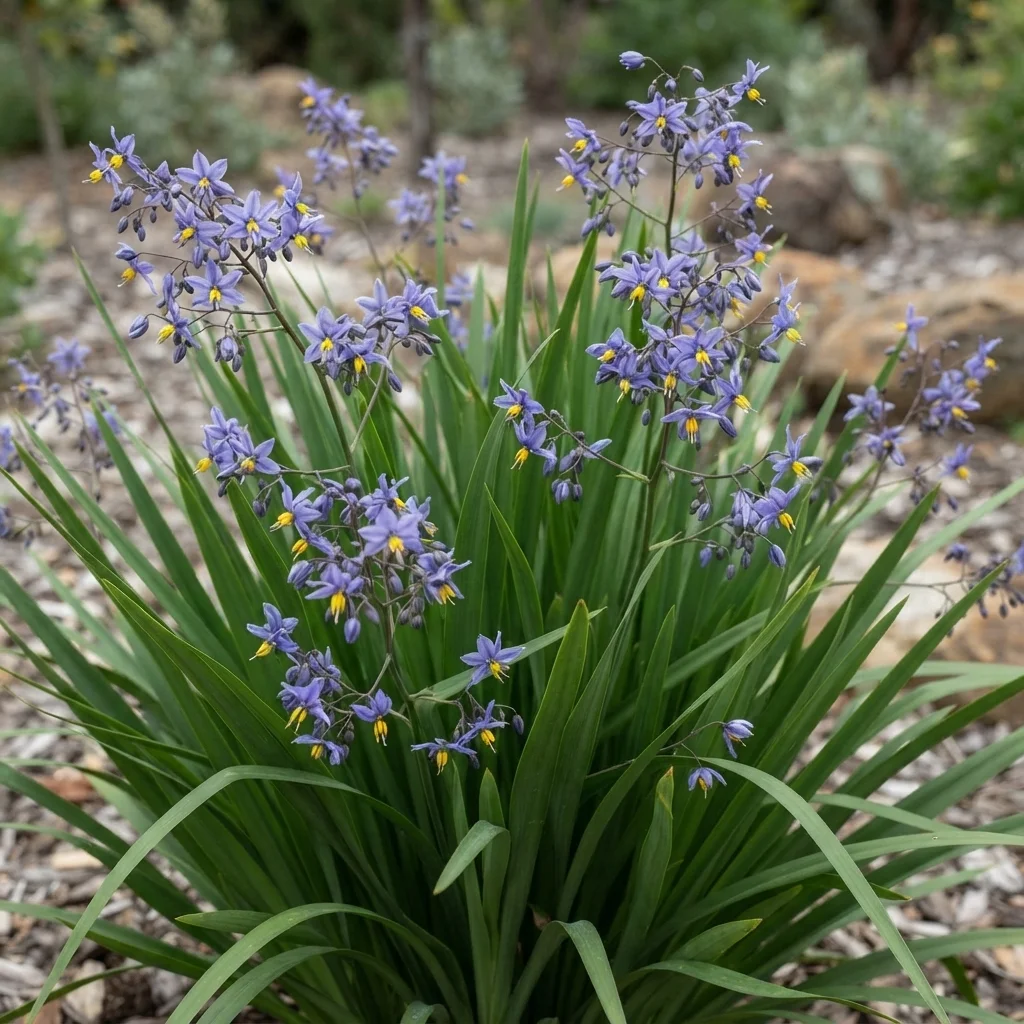
Blue Flax Lily
Dianella caerulea 'King Alfred'
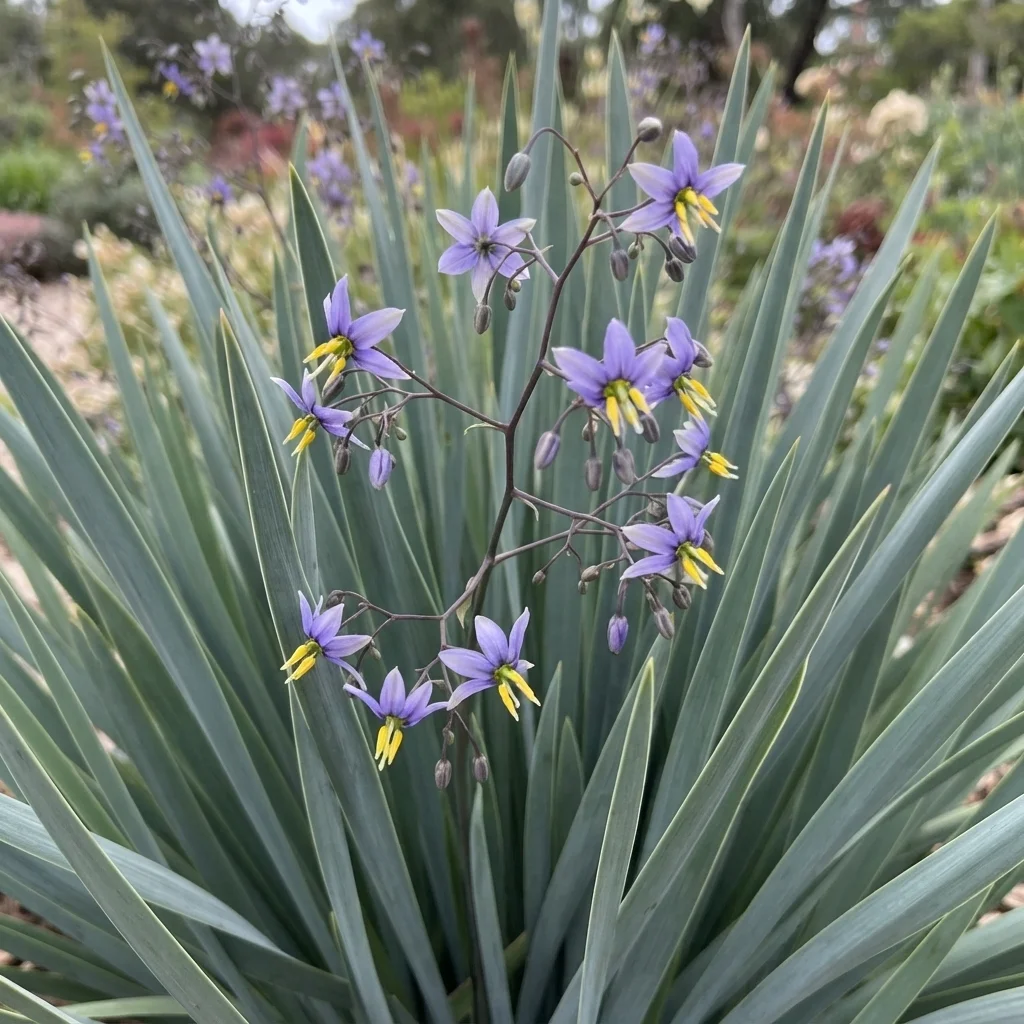
Baby Bliss Flax Lily
Dianella revoluta 'Baby Bliss'
Keep exploring
Explore the genus
Hardy in your zone?
Grow Tasman Flax Lily with confidence
See it in a design of your actual yard, get zone-matched care reminders, and track it season by season in your garden journal.