6 named cultivars




The Story
Plant Bio
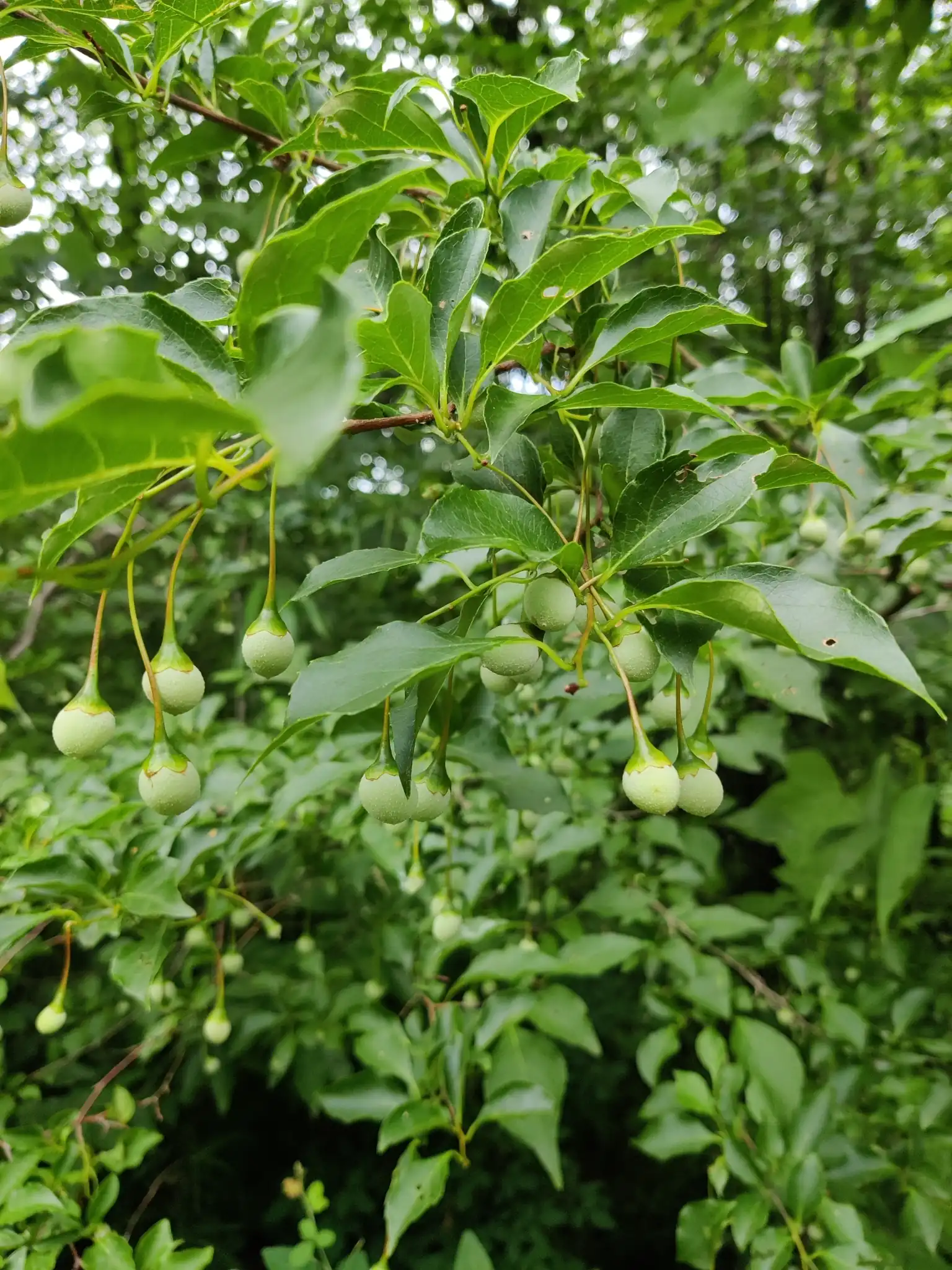
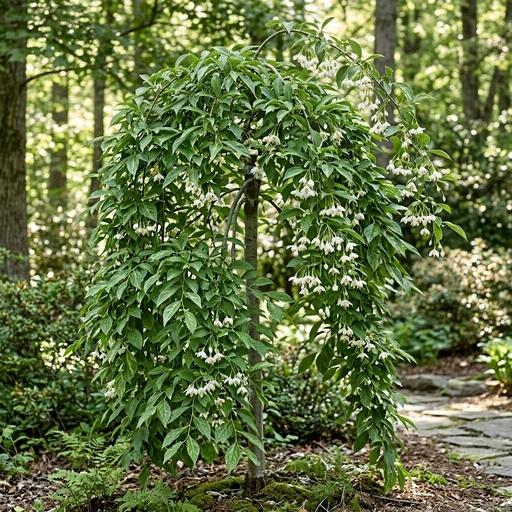
Styrax japonicus, Japanese snowbell, is a small deciduous tree from China, Japan and the northern Philippines, growing to roughly 20 to 30 ft tall and as wide. The habit is broad, spreading and horizontally layered, often vase-shaped when young. Glossy dark green leaves 1 to 3 in long sit above the branches on zig-zagging stems.
Because the leaves are held above the shoots and the bell-shaped white flowers hang below them, the whole tree reads as a ceiling of blossom seen from underneath. That makes it a tree to sit under rather than look at. Grey-brown bark with orange interlacing fissures carries the interest through winter.
Uses & Benefits:
Essentials
At a Glance
Plant Type
Tree
Height
300"
Width
300"
Light
Full Sun, Partial Sun
Zones
5, 6, 7, 8
Water
Medium; consistent moisture, never waterlogged
Humidity
Average; dislikes hot drying wind
Lifespan
Long-lived; many decades in a suitable site
Native To
China, Japan and the northern Philippines
Toxicity
No significant toxicity reported
Marketplace
Where to Buy
Shipping costs Year-round shipping Free shipping
Planting
How to Grow
- Choose full sun to partial shade with shelter from drying wind.
- Test the soil; it needs acid to neutral ground with good drainage.
- Plant in autumn or early spring, allowing 20 ft of clear width.
- Set the root ball level with grade and avoid deep planting.
- Mulch widely and water through the first three summers.
- Prune only to remove crossing or damaged wood, in late winter.
Pro Tip
Site it where you will walk or sit beneath it; the flowers hang below the foliage and are largely invisible from above.
Keep It Thriving
Care Guide
Do
- Plant it over a bench, path or patio to see the flowers 🌸
- Keep the soil acid, moist and organically rich 🍂
- Mulch to protect the shallow root system 🌳
- Water deeply during summer drought while young 💧
Don't
- Do not plant in alkaline or badly drained soil ❌
- Do not let it dry out in its first three seasons ❌
- Do not prune heavily; it resents hard cutting back ❌
Seasonal Care Calendar
| Task | Jan | Feb | Mar | Apr | May | Jun | Jul | Aug | Sep | Oct | Nov | Dec |
|---|---|---|---|---|---|---|---|---|---|---|---|---|
| Structural Pruning |
Watch Out For
Pests & Diseases
Common Pests
Common Diseases
In the Garden
Landscape Uses & Companions
Landscape Uses
Companion Plants
Multiply
Propagation Methods
Good to Know
Common Questions
Japanese Snowbell questions
What zones can Japanese Snowbell grow in?
Japanese Snowbell is hardy in USDA Zones 5–8. Inside that range it survives winter in the ground; outside it, grow it as an annual or a container plant you protect.
Is Japanese Snowbell deer resistant?
Yes — Japanese Snowbell is rated deer-resistant. Deer typically pass it over, though extreme hunger can override any plant's defenses.
When does Japanese Snowbell bloom?
Japanese Snowbell typically blooms in late spring, fragrant white bells through early summer. Exact timing shifts a week or two with your zone — Sow's bloom calendar maps it to your garden.
Does Japanese Snowbell need full sun?
Japanese Snowbell does best in full sun to part shade. In hot climates, afternoon shade keeps blooms fresher longer.
More Styrax to compare
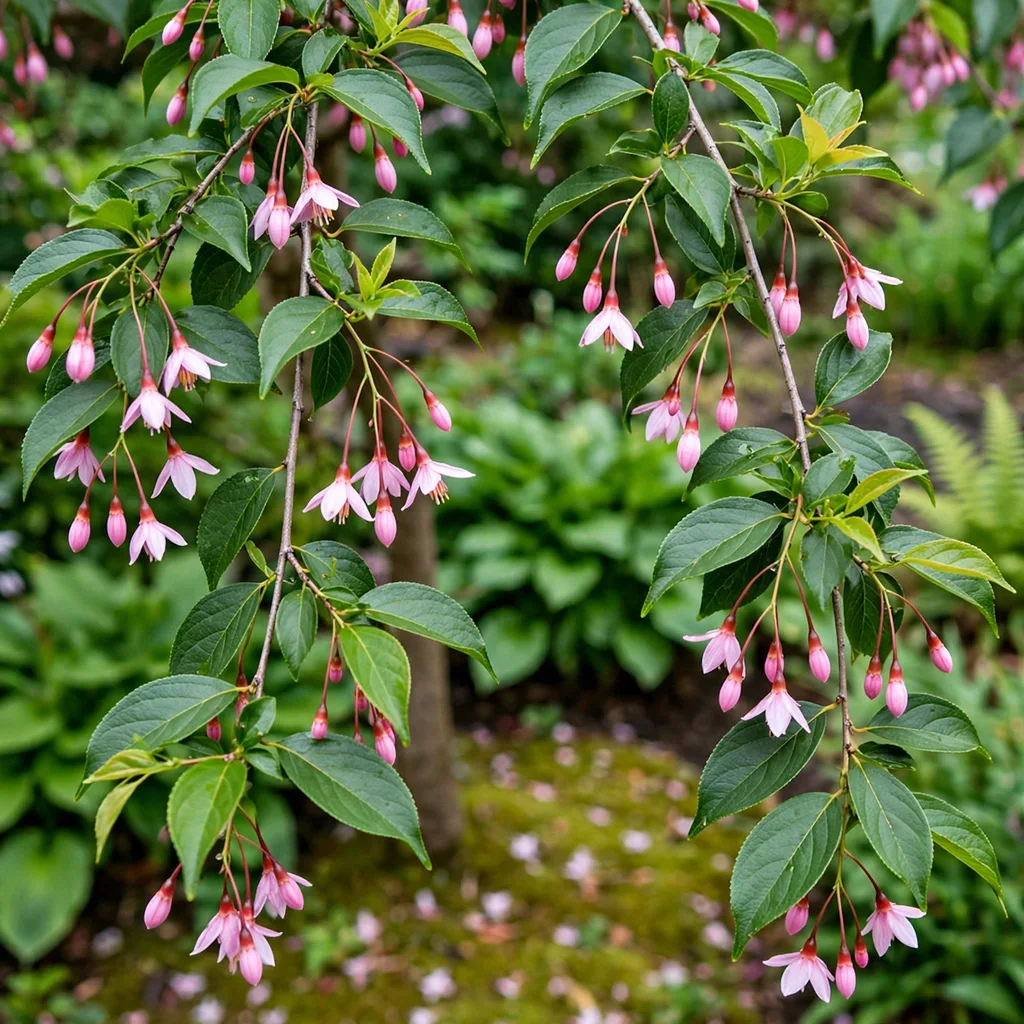
Marley's Pink Japanese Snowbell
Styrax japonicus 'Marley's Pink'
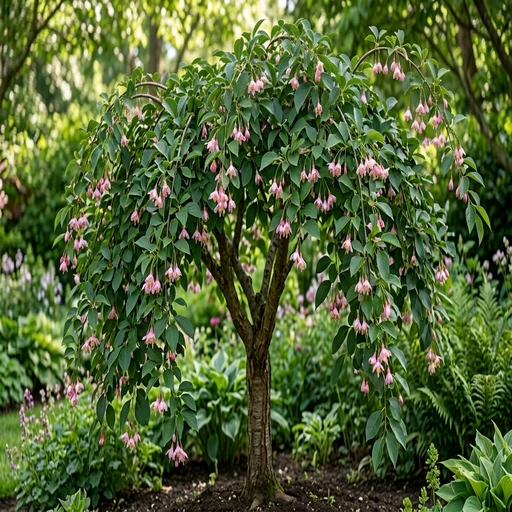
Marley's Pink Parasol Japanese Snowbell
Styrax japonicus 'Marley'S Pink Parasol'
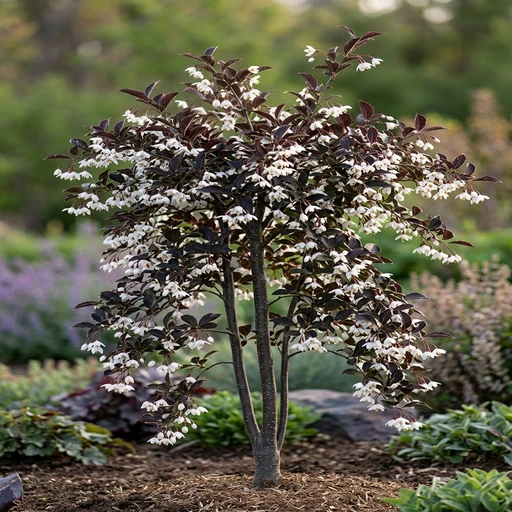
Evening Light Japanese Snowbell
Styrax japonicus 'Evening Light'
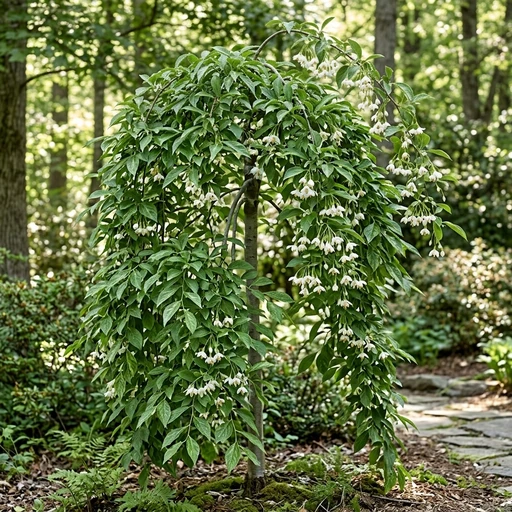
Fragrant Fountain Japanese Snowbell
Styrax japonicus 'Fragrant Fountain'
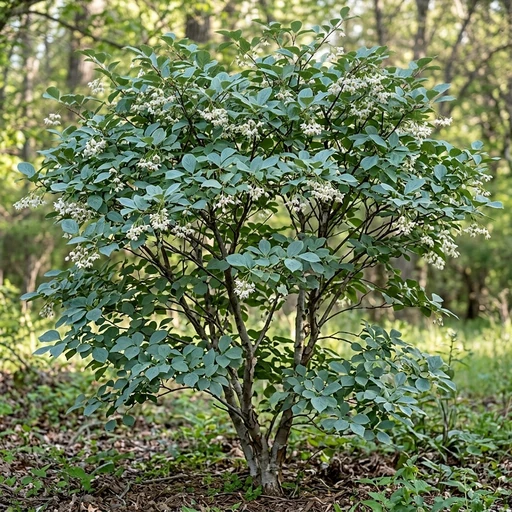
Snow Cone Japanese Snowbell
Styrax japonicus 'Snow Cone'
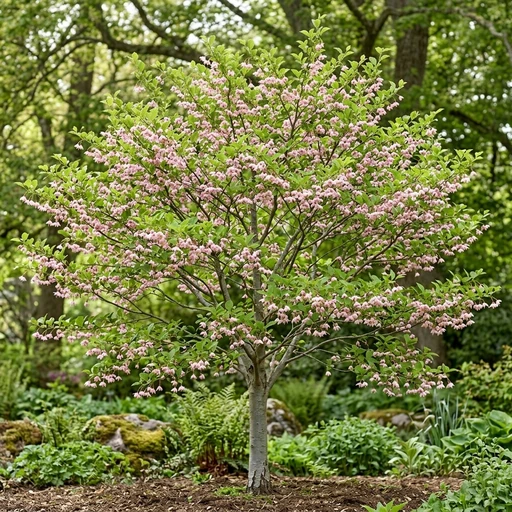
Pink Chimes Japanese Snowbell
Styrax japonicus 'Pink Chimes'
Keep exploring
Explore the genus
Hardy in your zone?
Grow Japanese Snowbell with confidence
See it in a design of your actual yard, get zone-matched care reminders, and track it season by season in your garden journal.