Species
 Persea americanaAvocado
2 other cultivars


The Story
Plant Bio
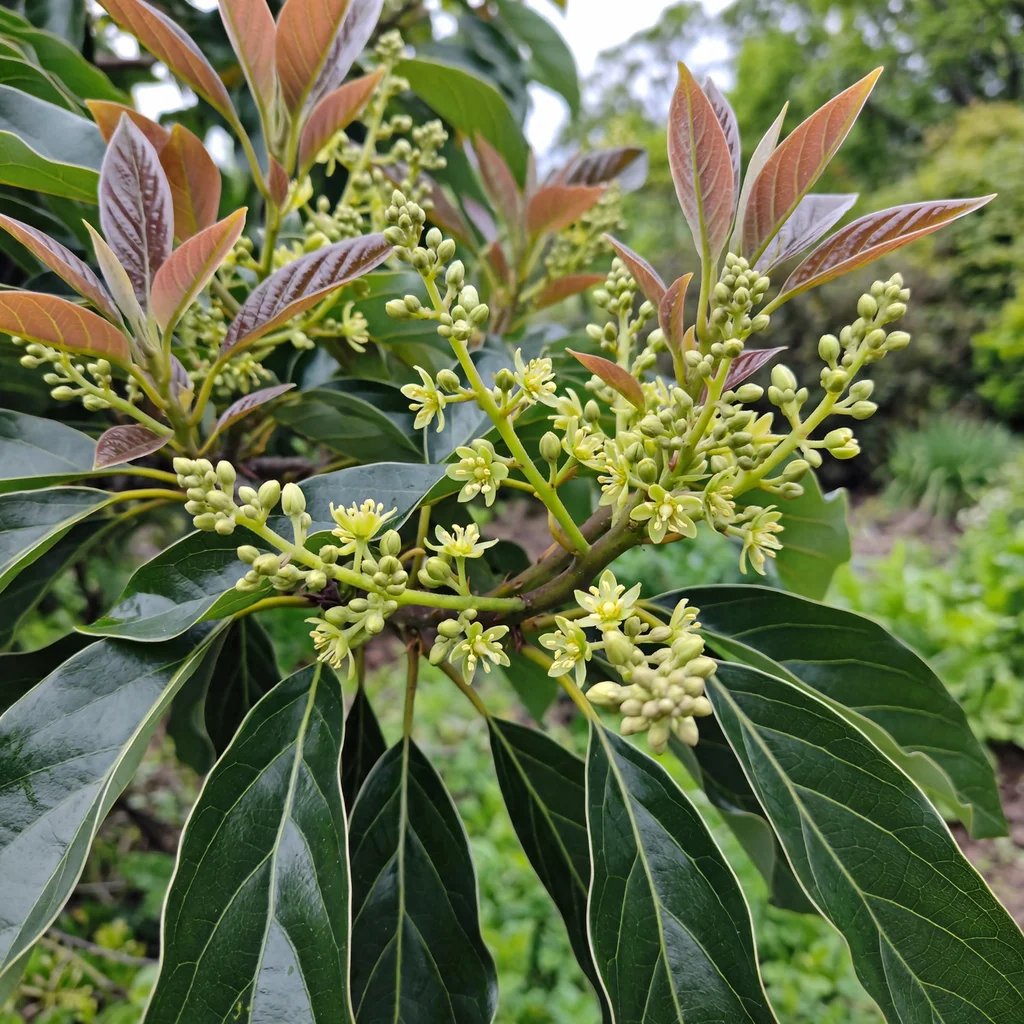
Persea americana, the avocado, is an evergreen tree native to Mexico and Central America, forming a dense, rounded canopy of leathery, dark green leaves. In spring, the branches bear terminal panicles of small, yellow-green to cream flowers that attract bees and other generalist insect pollinators.
'Hass' is a widely cultivated, moderately frost-sensitive cultivar that matures to a height of twenty to thirty-three feet with a spreading habit. It is highly prized for its rich, dark-skinned fruit, though the tree itself features attractive bronze to reddish-purple new foliage flushes.
Uses & Benefits:
Essentials
At a Glance
Plant Type
Tree
Height
394"
Width
236"
Light
Full Sun
Zones
9, 10
Water
Moderate
Humidity
Moderate to High
Lifespan
Long-lived
Native To
Mexico and Central America
Toxicity
Toxic to domestic animals
Bloom period
Spring
In flower about 3 months of the year
Marketplace
Where to Buy
Shipping costs Year-round shipping Free shipping
Planting
How to Grow
- Select a planting site in full sun with deep, well-draining loam or sandy loam soil.
- Dig a hole twice as wide as the root ball but no deeper, ensuring the graft union remains well above the soil line.
- Apply a thick layer of coarse organic mulch around the base to retain moisture and regulate soil temperature, keeping it away from the trunk.
- Water deeply and regularly, allowing the top few inches of soil to dry out completely between waterings.
Pro Tip
Plant on a raised mound or slope to guarantee exceptional drainage, as even brief soil saturation triggers fatal Phytophthora root rot.
Keep It Thriving
Care Guide
Do
- Water deeply but infrequently to let the upper soil layer dry out.
- Apply a balanced, slow-release citrus or avocado fertilizer during the warm spring and summer growing season.
- Protect young trunks from deer and rabbit browsing using physical tree guards.
Don't
- Do not plant in heavy clay soils without significant amendment or raised mounds.
- Do not prune heavily or cut back into old, bare structural wood, as the tree regenerates poorly from leafless branches.
- Do not allow irrigation water to pool around the root zone.
Seasonal Care Calendar
| Task | Jan | Feb | Mar | Apr | May | Jun | Jul | Aug | Sep | Oct | Nov | Dec |
|---|---|---|---|---|---|---|---|---|---|---|---|---|
| Fertilize | ||||||||||||
| Mulch | ||||||||||||
| Pest Check | ||||||||||||
| Prune |
Watch Out For
Pests & Diseases
Common Pests
Common Diseases
In the Garden
Landscape Uses & Companions
Landscape Uses
Multiply
Propagation Methods
Good to Know
Common Questions
Avocado questions
What zones can Avocado grow in?
Avocado is hardy in USDA Zones 9–10. Inside that range it survives winter in the ground; outside it, grow it as an annual or a container plant you protect.
Is Avocado deer resistant?
Not reliably. Deer may browse Avocado, especially tender spring growth — plan on repellents or fencing where pressure is high.
When does Avocado bloom?
Avocado typically blooms in spring through spring. Exact timing shifts a week or two with your zone — Sow's bloom calendar maps it to your garden.
Does Avocado need full sun?
Avocado does best in full sun (6+ hours).
More Persea to compare
Keep exploring
Explore the genus
Hardy in your zone?
Grow Avocado with confidence
See it in a design of your actual yard, get zone-matched care reminders, and track it season by season in your garden journal.